How to Test Tea Leaves for Adulteration (Spent Tea Leaves, Iron Filings, Coal Tar Dyes)
⚡ Quick 60-Second Tea Leaves Purity & Dye Verdict
Used Tea Waste, Coal-Tar Dyes & Iron Filings: Spent tea leaves are re-processed, dyed with carcinogenic coal-tar dyes or Prussian Blue, and weighted with magnetic iron dust from crushing machinery.
Sprinkle 1 tsp dry tea leaves on a wet white filter paper or paper towel. Pure unadulterated tea does not release color in cold water immediately. Dyed tea leaves release instant brown, red, or dark blue stains.
Spread a thin layer of tea leaves on a white plate and pass a strong magnet across the surface. If tiny black metallic particles cling to the magnet, dangerous machine iron filings are present.
Take a pinch of dry tea leaves on a moist palm and rub vigorously. If your palm is stained with synthetic coloring pigments or chalky powder, artificial dye treatment is confirmed.
To learn more about food safety tests and home adulteration detection, read our guides on Coffee Powder and Groundnut (Peanuts).
Drop Tea Leaves (Chai Patti) photo here to test purity
or click to browse • Supports JPG, PNG, WEBP • Paste with Ctrl+V
Inspection Guide
Click to enlarge
Tea (Chai) Purity & Adulteration Test
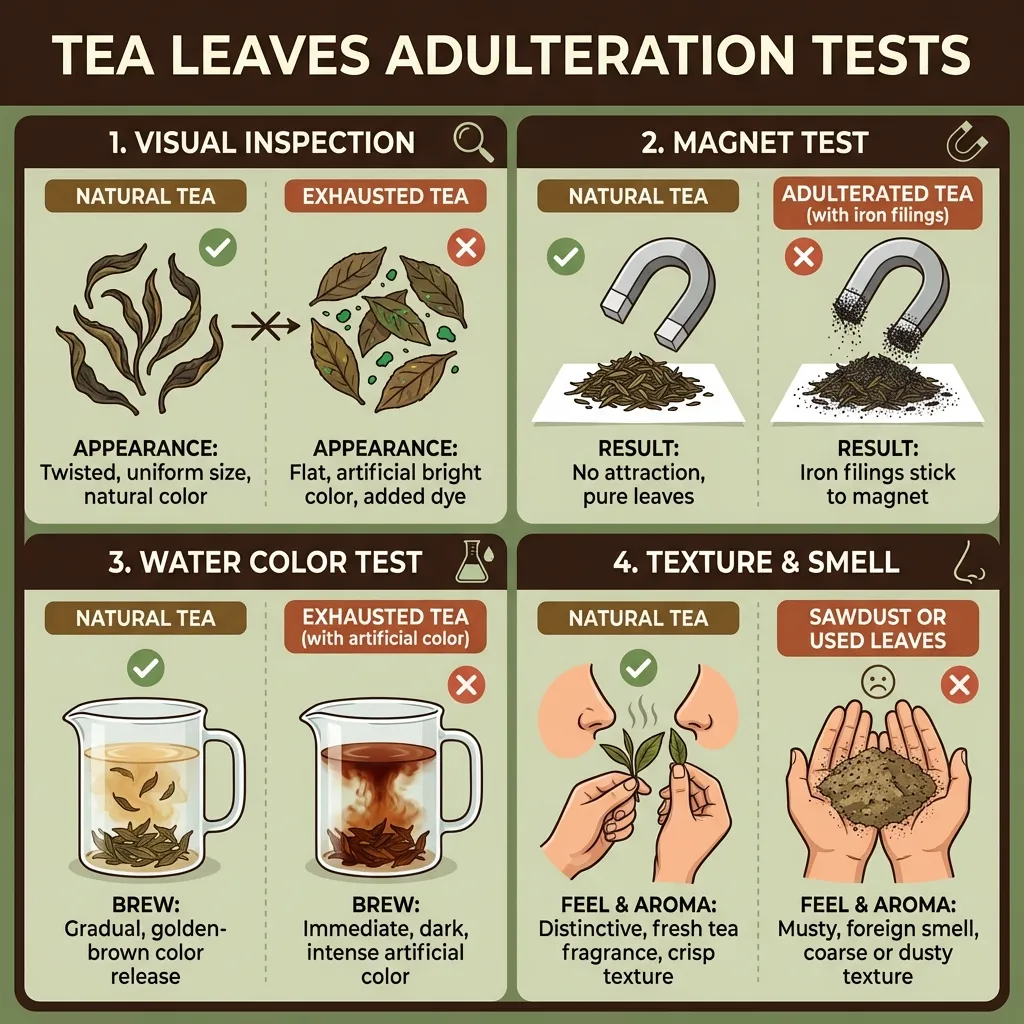
Tea is often adulterated with "spent" (already used and dried) leaves, which are then dyed with toxic coal tar colors to look fresh. Iron filings are also added to increase weight.
1. The Filter Paper Test (Dyes):
Spread a teaspoon of tea leaves on a wet white filter paper or a damp white cloth. Rub the leaves gently. If the paper/cloth turns yellow, orange, or red immediately, it indicates the presence of Coal Tar Dyes. Pure tea only leaches color slowly when heated.
2. The Magnet Test (Iron Filings):
Run a strong magnet over a spread of tea leaves. If tiny black particles cling to the magnet, it confirms the presence of Iron Filings, which can cause serious internal injury.
3. The Cold Water Test:
Add a spoonful of tea leaves to a glass of cold water. Pure tea will not leach any color into cold water. If the water turns reddish-brown immediately, the tea has been artificially colored.
4. The Friction Test (Used Leaves):
Rub the dry tea leaves between your fingers. If they feel extremely soft or crumble like paper without any natural 'grain' or aroma, they may be spent tea leaves that have been reprocessed.
Quick Safety Tips
- Perform cold water test - immediate color leaching = artificial dye
- Run a magnet through tea to check for iron filings
- Rub on wet filter paper to detect Coal Tar dyes
- Pure tea has a distinct, fresh, earthy aroma
Primary Chemical Concerns
Health Risks & Impacts
Multilingual Local Names
Common Storage Pests
Not Applicable
low riskDry tea leaves rarely host pests, but moisture can lead to mold.
Detection
- Musty odor
- White fuzz
Prevention
- Store in an airtight, dark container
- Keep dry
Corrective Action: What to do?
Discard moldy tea immediately; it can contain harmful mycotoxins.
Regulatory Corner: FSSAI (Food Safety and Standards Authority of India) / ISO 3720
Regulation: Food Safety and Standards (Food Products Standards and Food Additives) Regulations 2011, Clause 2.10.1: Tea
Legal Limit:Total ash: 4.0% to 8.0%; Water soluble extract: Min 32.0%; Iron filings: Max 250 ppm (mg/kg); Exhausted/re-cycled tea leaves & non-permitted synthetic colors: 0.0% (Zero tolerance)
Report Adulteration to FSSAI (Food Safety and Standards Authority of India) / ISO 3720