How to Test Moringa Leaves for Adulteration (Malachite Green, Pesticide, Heavy Metals)
⚡ Quick 60-Second Moringa Leaves Purity & Chemical Verdict
Copper Sulfate / Malachite Green Dyes & Heavy Metal Uptake: Fresh moringa (drumstick) foliage is dipped in chemical colorants to mask yellowing in transport, and can absorb high lead concentrations from industrial roadsides.
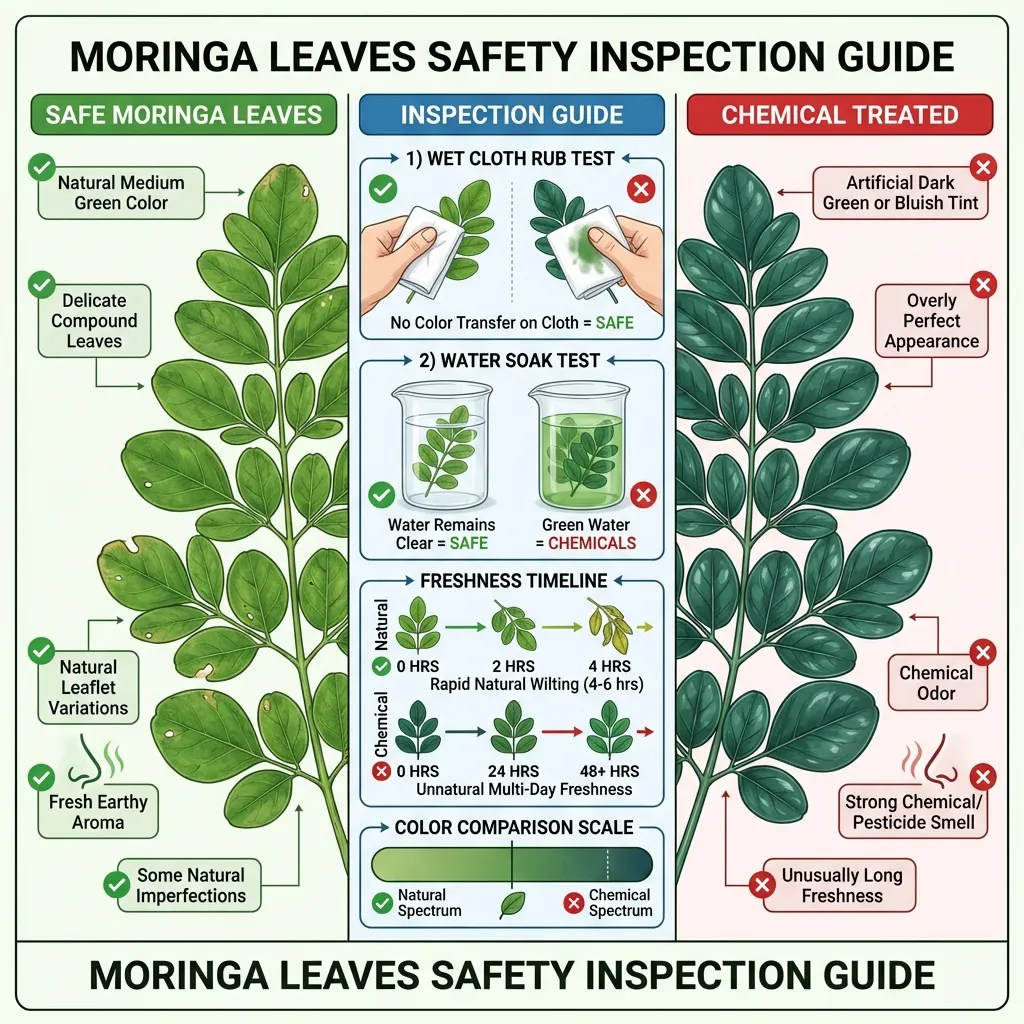
Rub a cotton ball soaked in liquid paraffin or baby oil over both sides of the small leaflets. Green color transfer onto the cotton confirms synthetic dye (Malachite Green); natural moringa leaves leave the swab white.
Steep a sprig in lukewarm water for 10 minutes. The water must remain pale yellowish-green or clear. An artificial turquoise or vivid emerald dye cloud leaching into the water proves chemical adulteration.
Examine the leaf structure. Genuine moringa features tripinnate compound leaves with tiny oval, smooth-edged leaflets that emit a distinct horseradish-mustard peppery aroma when crushed.
To learn more about food safety tests and home adulteration detection, read our guides on Bitter Gourd (Karela) and Garlic.
Drop Moringa Leaves photo here to test purity
or click to browse • Supports JPG, PNG, WEBP • Paste with Ctrl+V
Inspection Guide
Click to enlarge
Moringa Leaves Purity & Dye Audit
Moringa leaves (Sahjan Patte) are highly valuable for their nutritional content, but they are often treated with Malachite Green to look vibrant and fresh or may contain high pesticide residues.
1. The Cotton Rub Test:
Rub a wet cotton ball on the surface of the green leaves. If the cotton picks up a green or bluish-green color, artificial dye like Malachite Green has been applied. Natural moringa leaves do not rub off.
2. The Water Wash:
Soak the leaves in a bowl of warm water for 15 minutes. If the water turns green or bluish-green, artificial coloring is confirmed. Natural chlorophyll does not leach easily into warm water.
3. The Texture and Wilt Profile:
Naturally fresh moringa leaves wilt and start yellowing within 4-5 hours of picking if not kept cool. If they look "neon" green and perfectly fresh without any root hydration or cooling, suspect chemical refreshing agents.
4. The Smell Test:
Fresh moringa leaves have a mild, grassy, and slightly peppery aroma. If they have a chemical or sharp, medicinal smell, suspect pesticide or preservative residues.
Quick Safety Tips
- Perform the cotton rub test for Malachite Green
- Avoid leaves that look "neon" green or unnaturally vibrant
- Wash at least 3 times and soak in salt water to reduce pesticide load
- Select leaves that are firm and have a natural grassy aroma
Primary Chemical Concerns
Health Risks & Impacts
Multilingual Local Names
Common Storage Pests
Leaf Webbers
low riskSmall caterpillars that web the leaves together and feed on them.
Detection
- Leaves webbed together with fine silk
- Small green larvae inside the webbing
Prevention
- Wash thoroughly before use
- Store in a cool, ventilated place
Corrective Action: What to do?
Discard webbed portions; the rest of the leaves are safe if washed well.
Regulatory Corner: FSSAI (Food Safety and Standards Authority of India) / Ayurvedic Pharmacopoeia of India (API Part I, Vol II)
Regulation: Food Safety and Standards (Contaminants, Toxins and Residues) Regulations 2011 & API Standards
Legal Limit:Malachite green / Copper sulfate: Prohibited (0.0 ppm - Zero tolerance); Lead MRL: Max 2.5 ppm (herbal greens) / 0.3 ppm (fresh veg); Cadmium: Max 0.3 ppm; Total ash: Max 12.0%
Report Adulteration to FSSAI (Food Safety and Standards Authority of India) / Ayurvedic Pharmacopoeia of India (API Part I, Vol II)