
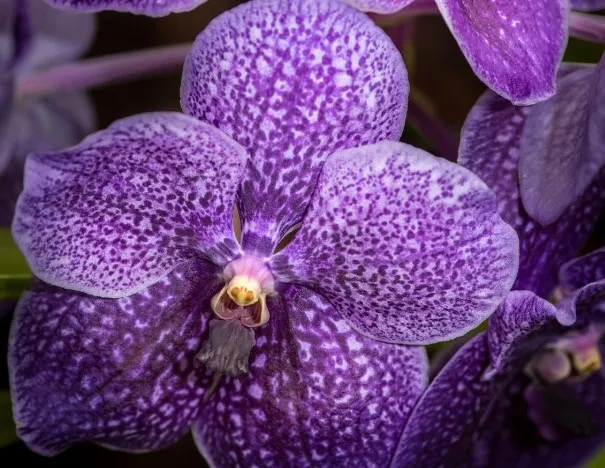
Vanda Orchid
Vanda
How to Identify Vanda Orchid
Care & Growing Guide
Seasonal Blooming & Hardiness
Seasonal Blooming Calendar:
- Peak Bloom: Spring to early summer (typically April through June).
- Planting Time: Sow seeds directly outdoors in early spring after the last frost, or transplant nursery starts in late spring.
Bloom Timeline
About Vanda Orchid
The Vanda Orchid, botanically designated under the genus Vanda, is an exceptionally spectacular, highly premium epiphytic perennial. Belonging to the family Orchidaceae (the orchid family, tribe Vandeae), this magnificent tropical orchid is native to the warm, highly humid rainforests, mist-shrouded mountain canopies, and coastal jungles of East and Southeast Asia—spanning from India and southern China through Thailand and the Philippines down to northern Australia.
Exhibiting a distinct monopodial growth habit, Vanda Orchids grow vertically from a single central stem, producing opposite, strap-like, and leathery green leaves in a flat, fan-shaped arrangement. They are famous for their massive, thick, and spongy aerial roots covered in a specialized silver-white layer of velamen that absorbs moisture, rain, and nutrients directly from the air. In spring through autumn, tall, sturdy flower spikes arise from the leaf axils, carrying clusters of large, flat, and long-lasting flowers measuring 2 to 4 inches across.
Blossoms display spectacular, highly complex shapes with 3 outer sepals and 3 inner petals (including a highly modified lower lip or labellum), showcasing an array of brilliant colors—including magenta, violet, yellow, orange, and the world-famous natural blue of the Blue Vanda (Vanda coerulea). The bilaterally symmetrical reproductive morphology is represented by the family-specific floral formula % ⚥ [K3 C3 A1] G̅(3). This states that the flowers are zygomorphic and bisexual. Sepals and petals are free, and the single stamen is fused with the style into a single column (gynostemium). The 3 fused carpels form an inferior ovary.
Cultivating Vandas requires unique, soil-free conditions. They are strictly epiphytic and must be grown with bare roots exposed to the air, typically suspended in slatted wooden baskets or hung from wires. They require very bright, indirect sunlight to light filtered morning sun, exceptionally high humidity (70% to 80%), warm temperatures (above 60°F/15°C), and constant air circulation. Watering must be done daily in warm weather by thoroughly soaking or misting the bare aerial roots until they turn a vibrant green. USDA zones 10 through 12 (as indoor specimens in colder climates).
The genus name Vanda is derived directly from the Sanskrit name Vandāka (वन्दाक), referring to parasitic or epiphytic plants. Famed in Hindi as Banda (बांदा) or Vanda Orchid (वांडा ऑर्किड), they represent majestic beauty, luxury, refined elegance, and spiritual strength.
For pet owners and veterinarians, the Vanda Orchid represents an exceptionally safe, low-risk, and non-toxic choice. All members of the Vanda genus are classified as completely non-toxic to dogs, cats, and horses by major global animal safety databases, including the ASPCA. If a pet brushes past its dangling aerial roots or nibbles on its leathery fan leaves, there is absolutely no danger of toxic chemical poisoning. For detailed pet safety guidelines, visit our specific Pet Guard Orchid catalog. It is easily distinguished from Phalaenopsis by its upright monopodial fan growth. It pairs beautifully in humid patios beside Anthurium or Water Lily. To discover more exotic epiphytes, browse our Flower Identifier or check our guide for miniature Oncidium Orchids.
Floral Formula & Features
Bilaterally symmetrical, bisexual, 6 tepals in 2 whorls of 3 (3 sepals + 3 petals with one modified into lip), 1 stamen fused with style forming column, 3 fused carpels with inferior ovary typical of Orchidaceae
- Name 'Vanda' comes from Sanskrit word for the species Vanda tessellata. Vanda Miss Joaquim, a natural hybrid, is Singapore's national flower. Genus includes about 80 species native to tropical Asia
- Large, showy flowers with five spreading petals and sepals arranged in a flat, rounded form. Many species feature tessellated (checkered) patterns in contrasting colors. Flowers measure 2-5 inches across and appear in sprays of 6-15 blooms
- Monopodial epiphytic perennial that grows continuously upward from a single stem, producing thick, silvery-green aerial roots. Blooms 2-3 times yearly in ideal conditions. Three leaf types: strap-leaved (flat), terete (cylindrical), and semi-terete (intermediate). Can be displayed beside mounted Oncidium Orchid
- Height ranges from 1-4 feet (30-120 cm) depending on age and species. Flower sprays extend 6-18 inches. Lifespan of 10-20 years or more with proper care. Propagated by stem cuttings or keikis (offshoots)
- Native to tropical Asia including India, Thailand, Philippines, Indonesia, and northern Australia. Found growing on trees in warm, humid forests from sea level to 1,500 meters elevation
- Requires very bright light (50-70% full sun) and warm temperatures (65-95°F/18-35°C). Needs high humidity (60-80%) and excellent air circulation. Best grown in slatted baskets with exposed roots, watered daily in warm weather
- Excellent cut flowers lasting 2-4 weeks in water. Widely used in tropical leis, corsages, and floral arrangements. Many species are fragrant. Important commercial crop in Thailand, Singapore, and Hawaii
Names in Different Languages
Botanical Classification: Vanda Orchid belongs to the Orchidaceae family. Learn how to identify its floral symmetry, stamen arrangement, and structural formulas in our Botanical Family Classification Guide.
Toxicity & Safety
Frequently Asked Questions
Vanda coerulea is one of the very few plant species in the world that can produce a true, natural blue flower color, making it highly prized by orchid breeders and collectors.
What is Floral Formula?
A floral formula is a symbolic representation of a flower's structure using letters, numbers, and special symbols. It provides a concise way to describe the arrangement and number of floral parts.
This formula describes the flower's symmetry, sepals, petals, stamens, and carpels in a standardized format.
Formula Sequence
- Bract: Br or Ebr
- Bracteole: Brl or Ebrl
- Symmetry: % (Radial) or ⊕ (Bilateral)
- Sex: ♀ (Female), ♂ (Male), or ⚥ (Bisexual)
- Calyx/Sepal: K<number> (Free or Fused)
- Corolla/Petal: C<number> (Free or Fused)
- Androecium: A<number> (Free or Fused)
- Gynaecium: G<number> (Superior or Inferior Ovary)
Symbol Meanings
- Numbers: Indicate quantity of parts
- Parentheses (): Parts are fused together
- Plus (+): Parts in different whorls
- Underline: Superior ovary position
- Overline: Inferior ovary position
- ∞: Numerous parts (too many to count)
Understanding floral formulas helps botanists quickly identify and classify flowers based on their structural characteristics.
Similar Flowers
Discover flowers that share botanical characteristics
Same Family
4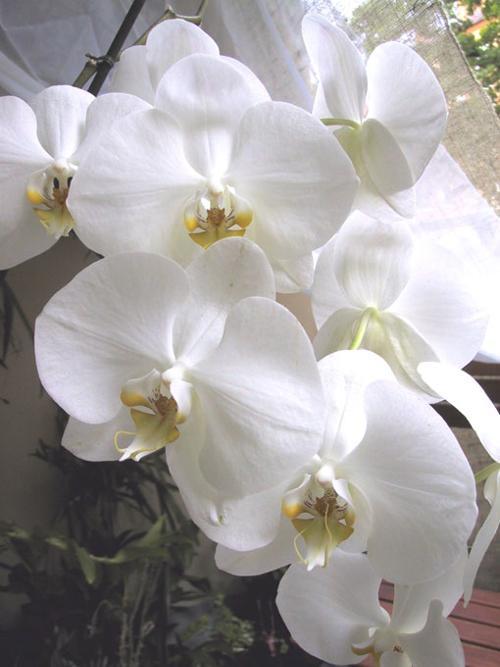
Moon Orchid (Phalaenopsis)
Phalaenopsis amabilis
The Moon Orchid (Phalaenopsis amabilis) is an elegant, highly coveted epiphytic orchid belonging to the massive Orchidaceae family. Native to the lush, humid rainforests of Southeast Asia, Indonesia, the Philippines, and northern Australia, it grows high in the tree canopy, clinging securely to b...
Tolumnia Orchid
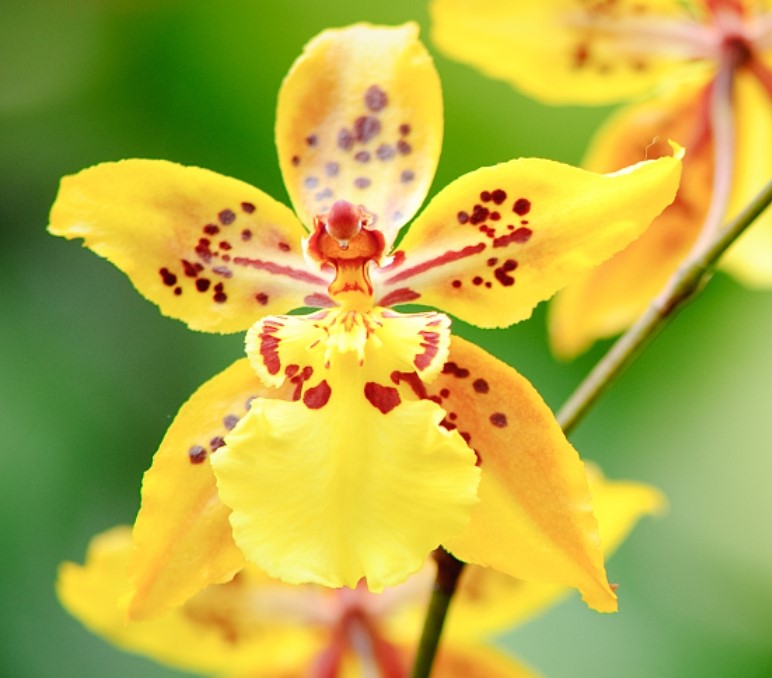
Tolumnia
The Tolumnia Orchid, botanically classified under the genus Tolumnia and traditionally known in horticulture as the Equitant Oncidium or Dancing Lady Orchid, is an exceptionally charming, miniature epiphytic plant. Belonging to the family Orchidaceae (the orchid family, tribe Oncidiinae), this sp...
Silver Slipper Orchid
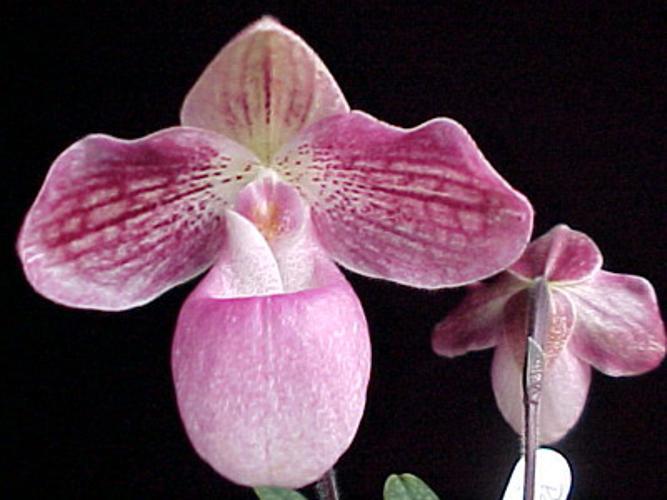
Paphiopedilum micranthum
The Silver Slipper Orchid, botanically designated as Paphiopedilum micranthum and popularly known as the Pocket Orchid, is a critically endangered, terrestrial slipper orchid belonging to the Orchidaceae family. Native to the steep, mist-shrouded limestone cliffs and rocky moss-covered ravines of...
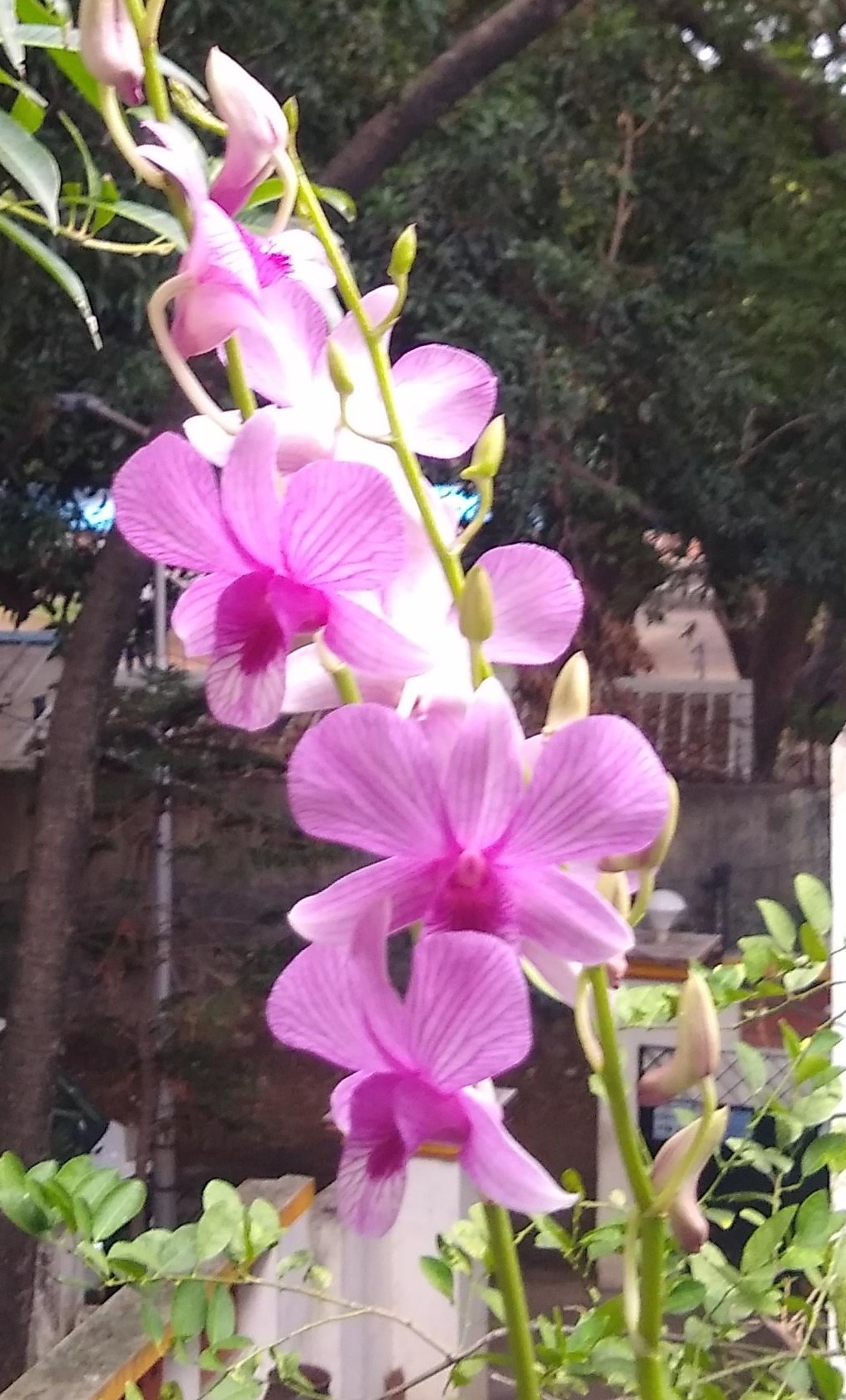
Dendrobium Orchid
Dendrobium
The Dendrobium Orchid, a diverse and captivating genus within the Orchidaceae family, stands as one of the most prolific and popular orchids in the world. With over 1,800 species and countless hybrids, these "tree-living" plants (the name *Dendrobium* literally means "life on a tree" in Greek) ar...
Similar Characteristics
4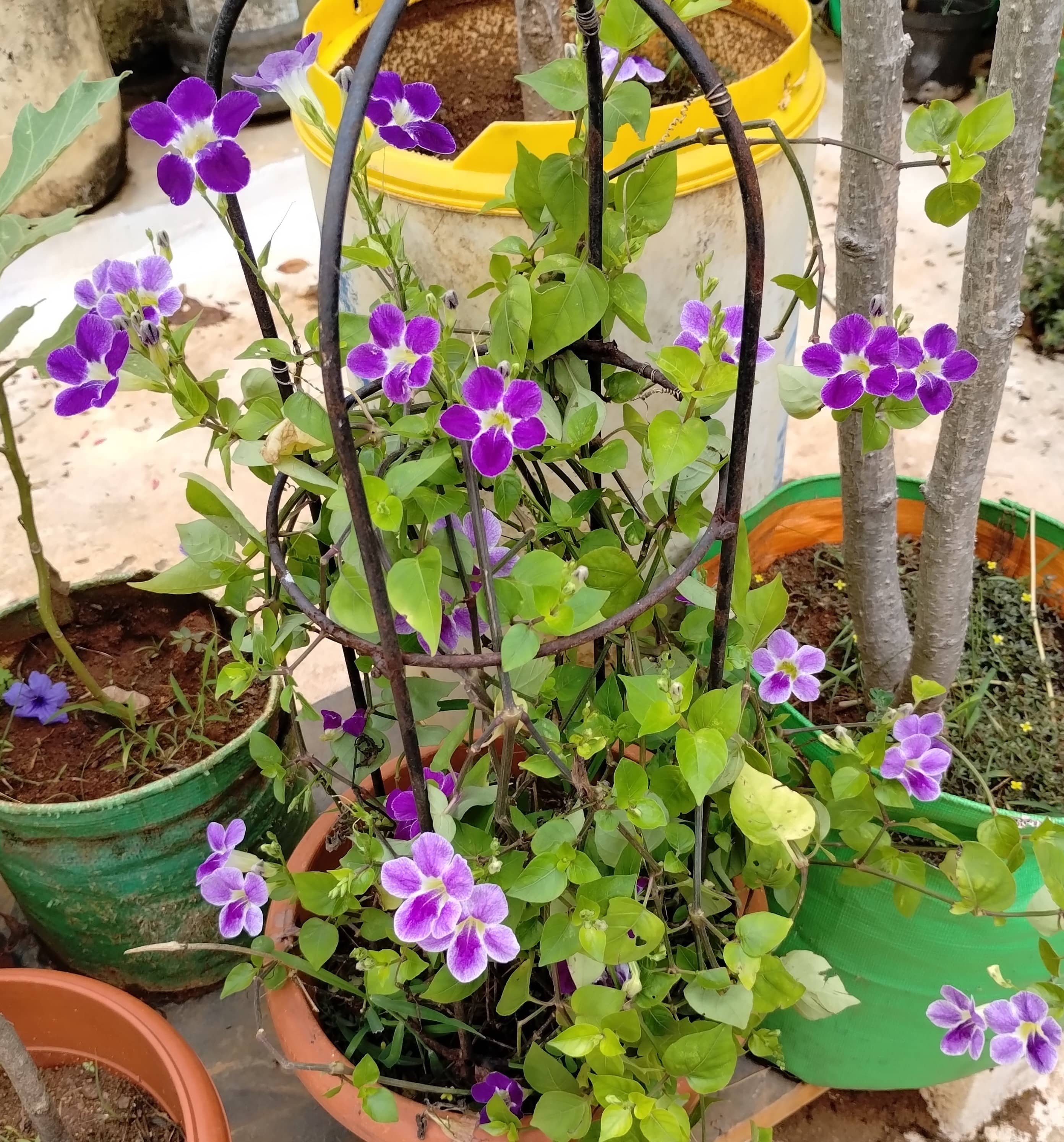
Thunbergia (King's Mantle)
Thunbergia erecta
Thunbergia erecta, popularly known as the "King's Mantle" or "Bush Clock Vine," is a sophisticated and regal tropical shrub that brings a touch of aristocratic elegance to any garden. A member of the Acanthaceae family, this evergreen species is native to the coastal regions of western Africa, fr...
Boat Orchid
Cymbidium
The Boat Orchid, scientifically known as Cymbidium and belonging to the family Orchidaceae, is a highly popular, exceptionally elegant sympodial perennial orchid. Native to the tropical and subtropical regions of Asia—ranging from the high-altitude forests of the Himalayas through China, Japan, a...
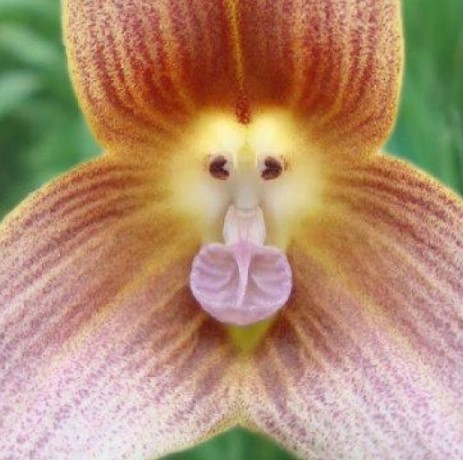
Monkey Orchid
Dracula simia
The Monkey Orchid, botanically designated as Dracula simia and belonging to the family Orchidaceae (the orchid family), is an extraordinary, globally famous epiphytic perennial. Native to the cool, misty, and high-elevation cloud forests of the Andes across Ecuador, Colombia, and Peru at altitude...
Dendrobium Orchid
Dendrobium
The Dendrobium Orchid, a diverse and captivating genus within the Orchidaceae family, stands as one of the most prolific and popular orchids in the world. With over 1,800 species and countless hybrids, these "tree-living" plants (the name *Dendrobium* literally means "life on a tree" in Greek) ar...