
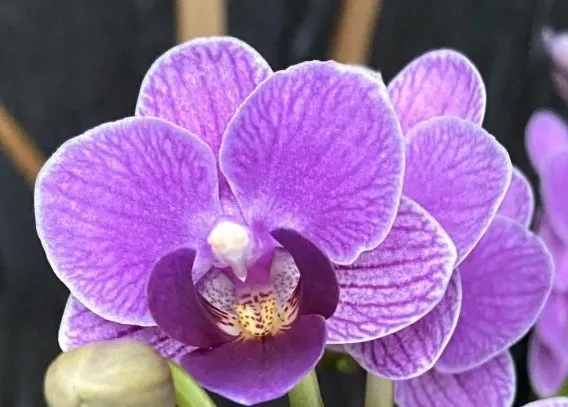
Moth Orchid (Phalaenopsis)
Phalaenopsis hybrids
How to Identify Moth Orchid (Phalaenopsis)
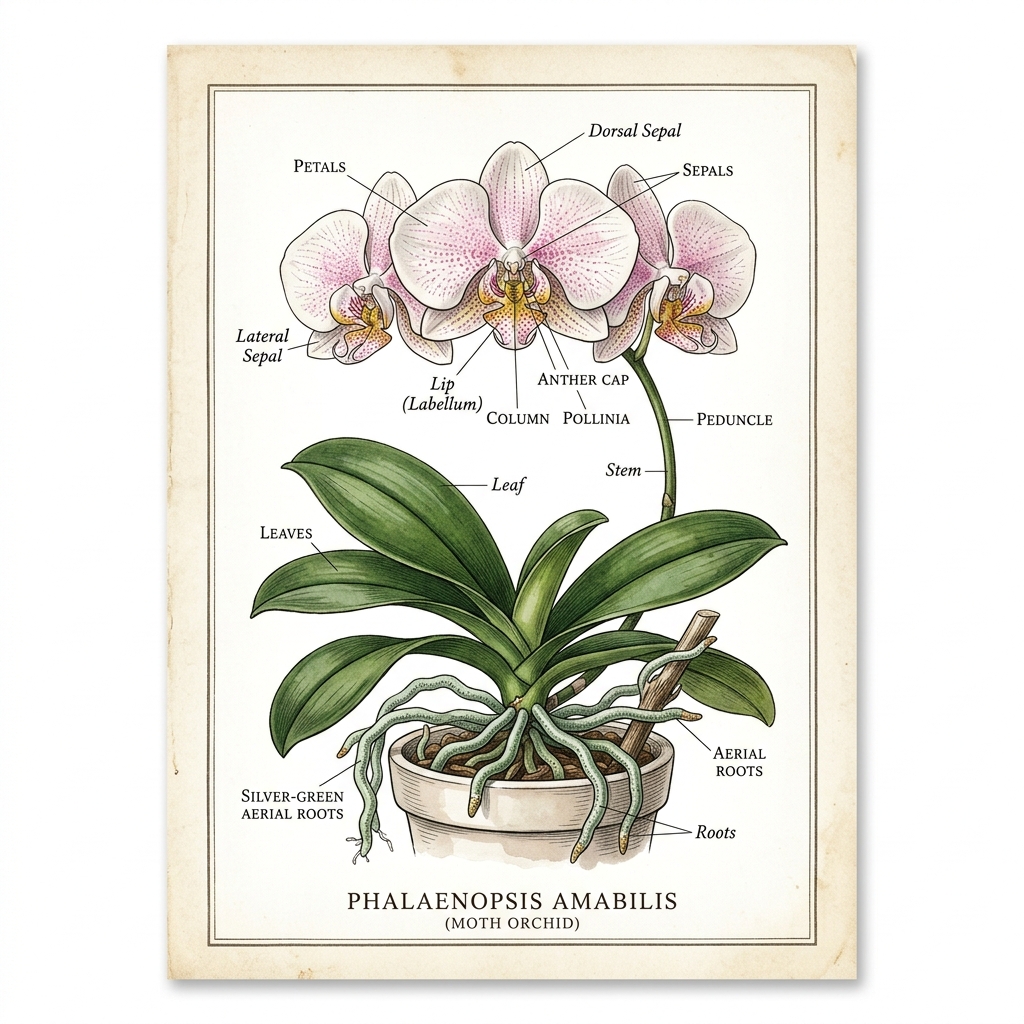
A detailed guide to identifying Moth Orchids (Phalaenopsis) by its key features:
- Bilateral Flat Blooms: Exquisitely shaped flowers resembling moths in flight, showing distinct bilateral symmetry (two matching halves) with three outer sepals and three inner petals.
- Modified Central Lip (Labellum): A specialized lower petal forming a prominent cup or landing platform ('lip') designed to attract pollinators.
- Leathery, Alternate Foliage: Broad, flat, thick leathery green leaves that grow in opposite pairs (alternate) from a single short central stem.
- Silvery-Green Epiphytic Roots: Thick, fleshy, worm-like aerial roots covered in a spongy water-absorbing layer (velamen) that look silver-grey when dry and bright green when watered.
Types & Sub-types of Moth Orchids
Moth orchids are classified and distinguished based on bloom size, leaf variegation, and hybrid flower patterns:
- By Growth Scale & Bloom Size:
- Standard Phalaenopsis: Large arching flower spikes (18-36 inches tall) with giant blooms measuring 3 to 5 inches across.
- Miniature Phalaenopsis: Compact plants (6-12 inches tall) producing dense clusters of small, delicate blooms (1-2 inches wide).
- By Floral Coloration & Patterns:
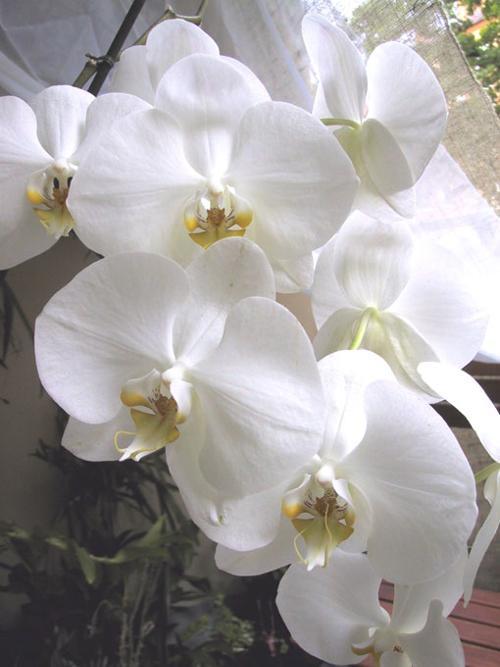
- Solid Selfs: Pure, single-colored petals (classic clean white or pastel pink).
- Harlequins: Flowers displaying dramatic, irregular dark purple or maroon blotches, spots, and splashes on a yellow or white background.
- Striped/Veined Orchids: Displaying fine, parallel veins running radially along the petals (e.g., pink stripes on white).
- By Foliage Appearance:
- Green-Leafed Orchids: Standard dark solid green leaves.
- Variegated-Leafed Orchids: Rare, highly decorative leaves displaying creamy-white or yellow borders or marbled patterns.
Care & Growing Guide
Seasonal Blooming & Hardiness
Seasonal Blooming Calendar:
- Peak Bloom: Summer (typically June through September).
- Planting Time: Sow seeds directly outdoors in early spring after the last frost, or transplant nursery starts in late spring.
Bloom Timeline
About Moth Orchid (Phalaenopsis)
The Moth Orchid, representing the broader genus Phalaenopsis, is undeniably the most popular and commercially successful orchid in the world. Belonging to the massive Orchidaceae family and native to the tropical canopies of Southeast Asia and Australia, these epiphytic marvels have been heavily hybridized over decades. Today, they are celebrated globally as the ultimate beginner-friendly houseplant, offering spectacular, long-lasting floral displays with minimal maintenance.
Identification is defined by their monopodial growth habit—meaning they grow upward from a single stem. They produce a base rosette of thick, fleshy, dark green, oval leaves. During the blooming season, one or more tall, arching spikes emerge, bearing a cascade of large, flat, wide-petaled flowers. While the pure species 'Moon Orchid' (P. amabilis) is strictly white, modern Phalaenopsis hybrids bloom in a dazzling array of colors including magenta, soft pink, vibrant yellow, deep purple, and complex patterns of stripes and dramatic spotting. Thick, silvery aerial roots commonly spill over the edges of their pots.
The floral formula is % ⚥ P3+3 A1 G(3). It features a bilaterally symmetrical, bisexual flower. The perianth is composed of 6 tepals (3 outer sepals and 3 inner petals). One of the inner petals is highly modified into a complex, specialized lip (labellum) designed as a landing pad for pollinators. The reproductive organs are fused into a single central column (1 stamen) sitting above an inferior ovary made of 3 fused carpels.
Moth Orchids are strictly epiphytic, meaning they naturally grow clinging to tree bark, absorbing moisture from the humid air. Therefore, they must never be planted in standard potting soil, which will rot their roots; they require a coarse, airy medium like fir bark or sphagnum moss. They thrive in bright, indirect light (like an east-facing window) and require their roots to dry out slightly between waterings. Blooms are incredibly long-lasting, often remaining pristine for 2 to 4 months.
Culturally, they have demystified orchid growing. Once considered rare, expensive status symbols available only to wealthy greenhouse owners, Phalaenopsis hybrids have made orchid cultivation accessible to everyone, commonly gifted as symbols of refined beauty, love, and luxury.
A major benefit for indoor gardeners is that the Moth Orchid is completely NON-TOXIC. It is entirely safe to keep in homes with curious dogs, cats, and children.
It is sometimes confused with the Dendrobium orchid. However, Dendrobiums grow from tall, bamboo-like canes (pseudobulbs) and produce flowers along the upper stem, whereas Phalaenopsis grow from a flat base of leaves. Compare it with the intensely fragrant Juhi Jasmine or explore more orchids in our Flower Identifier.
Floral Formula & Features
Bilaterally symmetrical, bisexual. 6 tepals (3 sepals + 3 petals, with the lower petal highly modified into a labellum), 1 stamen fused with style into a column, 3 fused carpels with inferior ovary.
- Scientific Name & Classification: Phalaenopsis hybrids (Orchidaceae). The most commonly grown indoor orchid globally.
- Identification Markers: Thick, flat, oval leaves growing from a central base. Arching spikes produce wide, flat flowers in virtually every color except true blue.
- Floral Formula (% ⚥ P3+3 A1 G(3)): Bilaterally symmetrical. 6 tepals (including a highly modified lower lip), 1 fused central column, 3 fused carpels.
- Growing Requirements: Bright, indirect light. Must be planted in a loose, airy medium like bark or moss. Let dry slightly between waterings.
- Cultural Significance: Symbolizes refined beauty and luxury. Its easy hybridization has made it the gateway plant for millions of indoor gardeners.
- Safety & Toxicity: NON-TOXIC. Completely safe for households with dogs, cats, and young children.
- Common Look-alikes: Often confused with Dendrobium orchids, but Dendrobiums possess tall, bamboo-like stems rather than the flat leaf rosettes of the Phalaenopsis.
- Internal Links: Compare with the specific pure-white Moon Orchid or check the Flower Identifier.
- Internal Links: Compare key differences in our Orchid vs Lily comparison, or try our instant Flower Identifier.
Names in Different Languages
Botanical Classification: Moth Orchid (Phalaenopsis) belongs to the Orchidaceae family. Learn how to identify its floral symmetry, stamen arrangement, and structural formulas in our Botanical Family Classification Guide.
Toxicity & Safety
Pet Safety Guide: For detailed toxicity symptoms, first-aid measures, and safe garden alternatives, see our full Pet Guard Profile for Moth Orchid (Phalaenopsis).
Frequently Asked Questions
What is Floral Formula?
A floral formula is a symbolic representation of a flower's structure using letters, numbers, and special symbols. It provides a concise way to describe the arrangement and number of floral parts.
This formula describes the flower's symmetry, sepals, petals, stamens, and carpels in a standardized format.
Formula Sequence
- Bract: Br or Ebr
- Bracteole: Brl or Ebrl
- Symmetry: % (Radial) or ⊕ (Bilateral)
- Sex: ♀ (Female), ♂ (Male), or ⚥ (Bisexual)
- Calyx/Sepal: K<number> (Free or Fused)
- Corolla/Petal: C<number> (Free or Fused)
- Androecium: A<number> (Free or Fused)
- Gynaecium: G<number> (Superior or Inferior Ovary)
Symbol Meanings
- Numbers: Indicate quantity of parts
- Parentheses (): Parts are fused together
- Plus (+): Parts in different whorls
- Underline: Superior ovary position
- Overline: Inferior ovary position
- ∞: Numerous parts (too many to count)
Understanding floral formulas helps botanists quickly identify and classify flowers based on their structural characteristics.
Similar Flowers
Discover flowers that share botanical characteristics
Same Family
4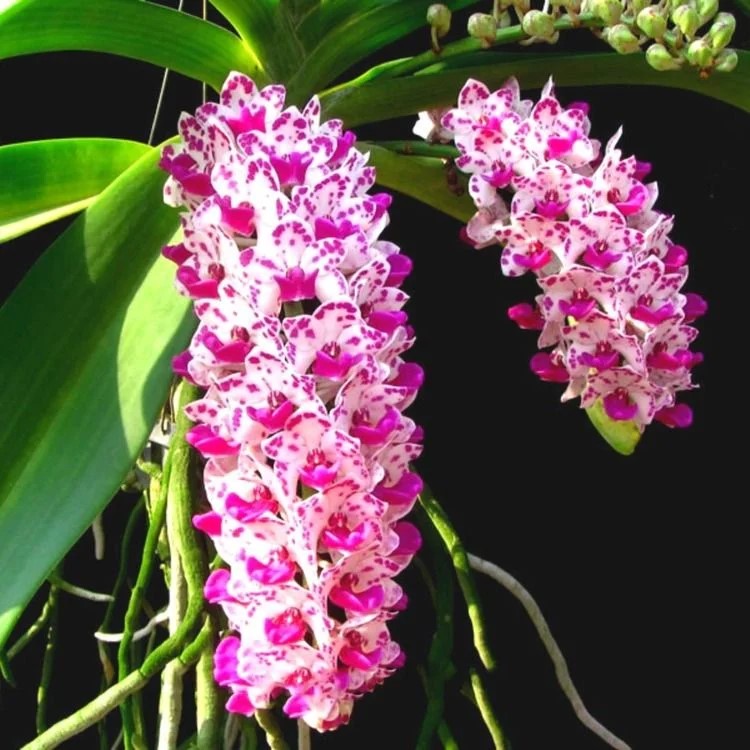
Fox Tail Orchid (Rhynchostylis)
Rhynchostylis retusa
The Fox Tail Orchid (Rhynchostylis retusa) is an extraordinary, highly fragrant epiphytic orchid belonging to the Orchidaceae family. Native to the warm, humid tropical forests of the Indian subcontinent, Southeast Asia, and Indonesia, it is globally celebrated for its incredibly unique and drama...
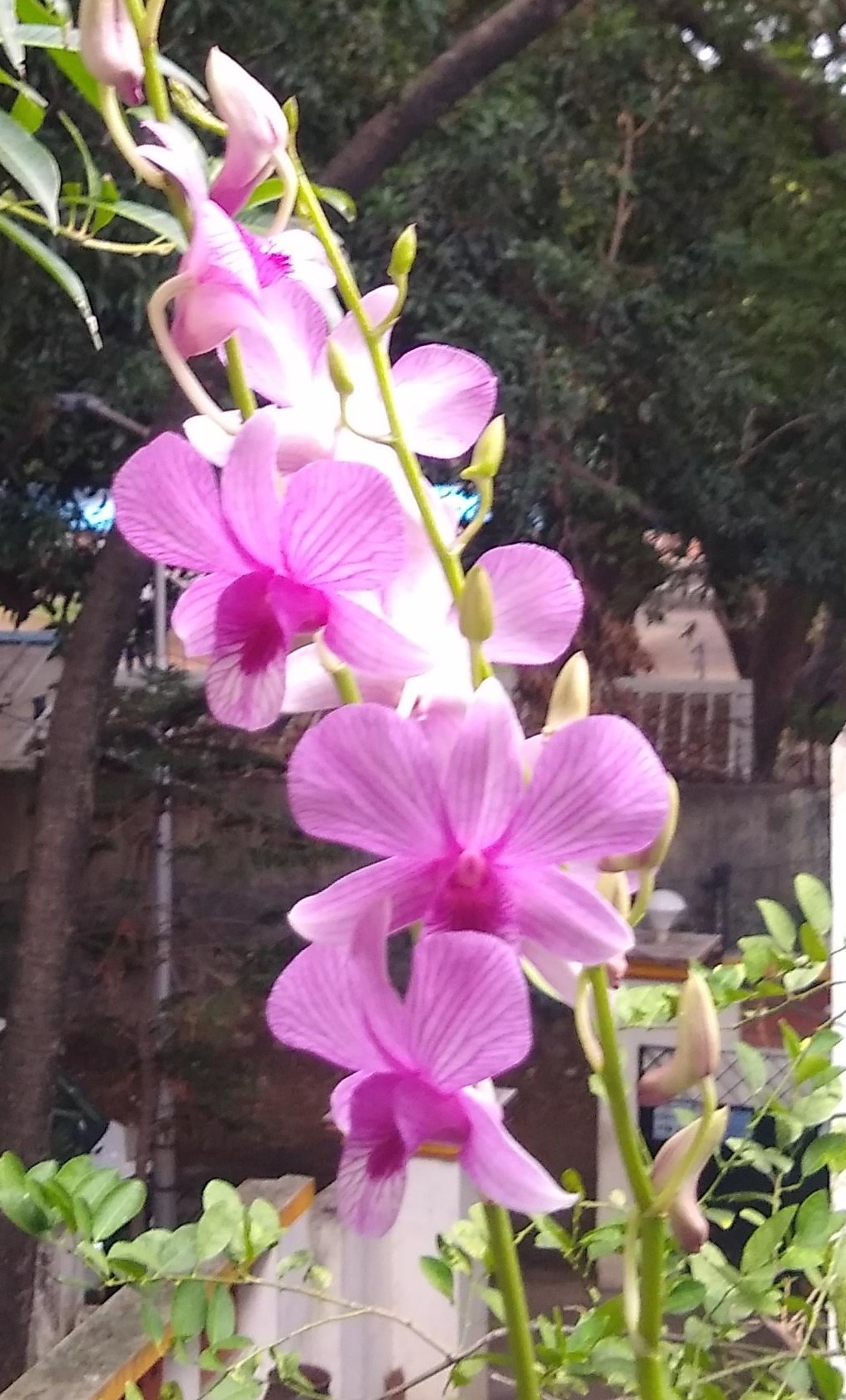
Dendrobium Orchid
Dendrobium
The Dendrobium Orchid, a diverse and captivating genus within the Orchidaceae family, stands as one of the most prolific and popular orchids in the world. With over 1,800 species and countless hybrids, these "tree-living" plants (the name *Dendrobium* literally means "life on a tree" in Greek) ar...
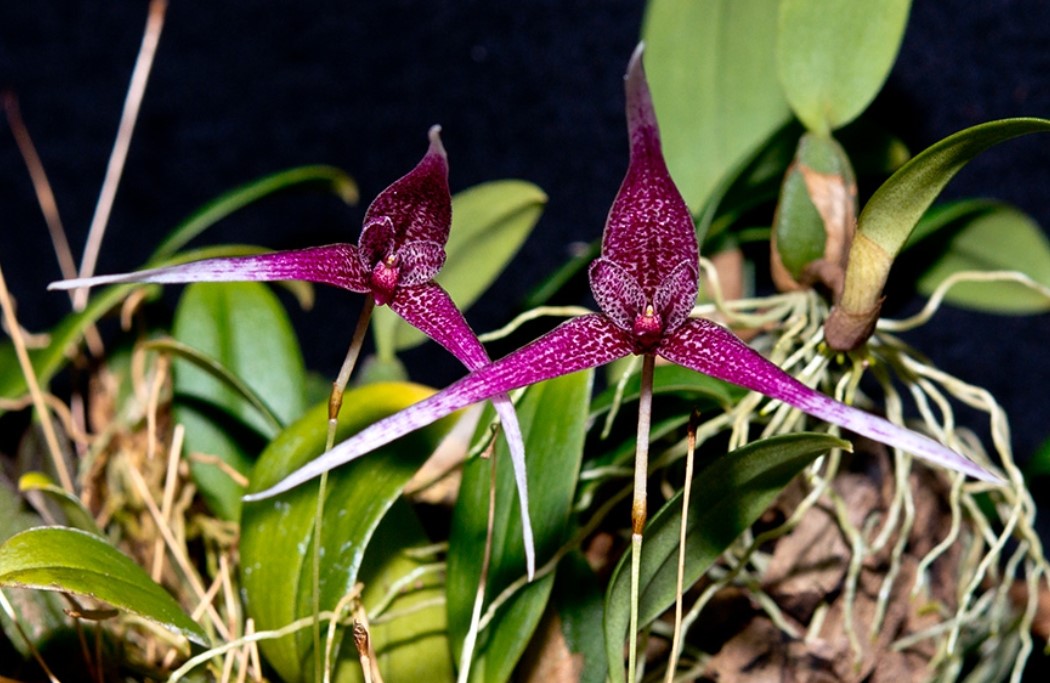
Bulbophyllum Orchid
Bulbophyllum
The Bulbophyllum orchid, representing the largest genus in the Orchidaceae family, is a true botanical marvel boasting over 2,000 highly diverse species. Native to tropical and subtropical rainforests across Asia, Africa, and the Americas, these epiphytic wonders grow primarily on tree bark in hu...
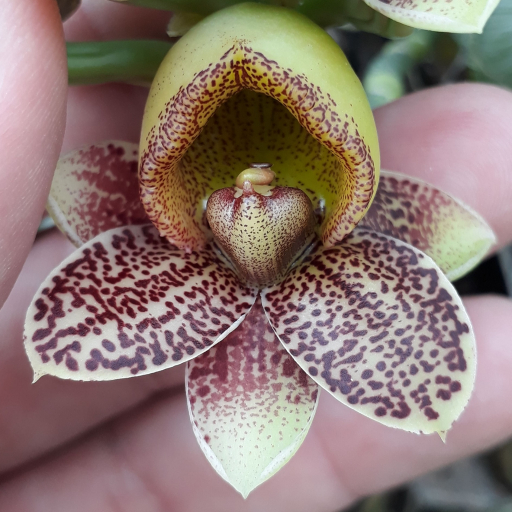
Catasetum Orchid
Catasetum
The Catasetum Orchid, belonging to the botanical genus Catasetum within the prominent Orchidaceae family, is a highly unique and fascinating group of epiphytic perennial orchids. Native to the warm, tropical lowlands and seasonally dry forest canopies of Central and South America—with particular...
Similar Characteristics
4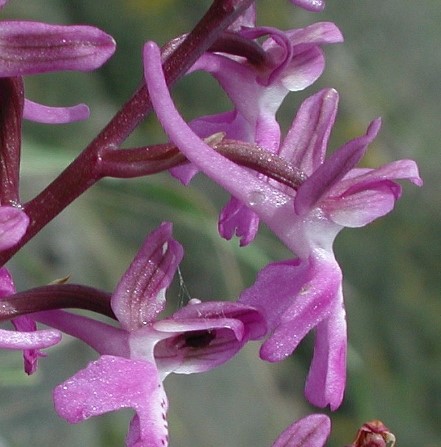
Orchis Orchid
Orchis
The Orchis Orchid, representing the eponymous genus Orchis within the family Orchidaceae, is a group of historically significant terrestrial orchids native to the meadows, grasslands, and light woodlands of Europe, North Africa, and the Mediterranean basin. Unlike common tropical epiphytic orchid...
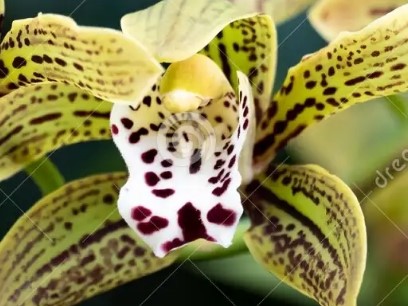
Boat Orchid
Cymbidium
The Boat Orchid, scientifically known as Cymbidium and belonging to the family Orchidaceae, is a highly popular, exceptionally elegant sympodial perennial orchid. Native to the tropical and subtropical regions of Asia—ranging from the high-altitude forests of the Himalayas through China, Japan, a...
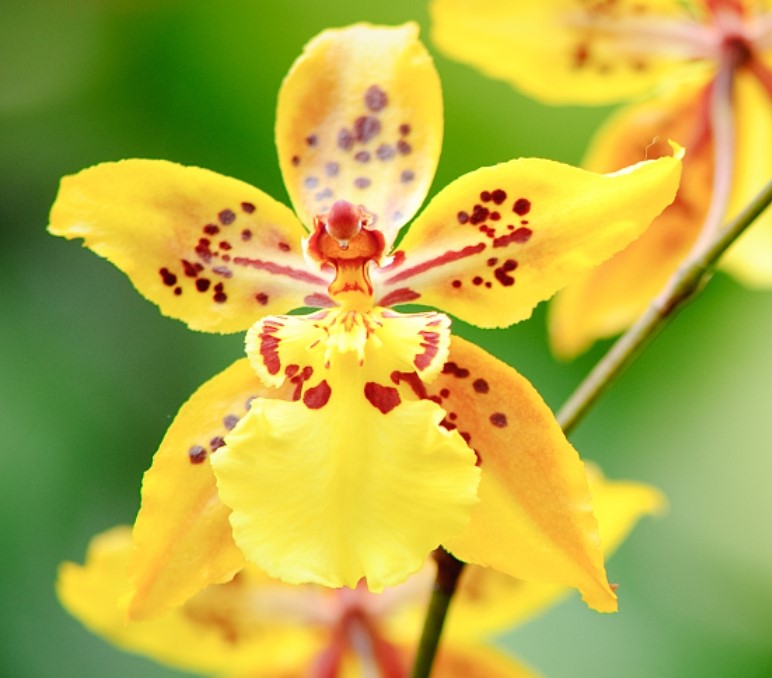
Tolumnia Orchid
Tolumnia
The Tolumnia Orchid, botanically classified under the genus Tolumnia and traditionally known in horticulture as the Equitant Oncidium or Dancing Lady Orchid, is an exceptionally charming, miniature epiphytic plant. Belonging to the family Orchidaceae (the orchid family, tribe Oncidiinae), this sp...
Dendrobium Orchid
Dendrobium
The Dendrobium Orchid, a diverse and captivating genus within the Orchidaceae family, stands as one of the most prolific and popular orchids in the world. With over 1,800 species and countless hybrids, these "tree-living" plants (the name *Dendrobium* literally means "life on a tree" in Greek) ar...