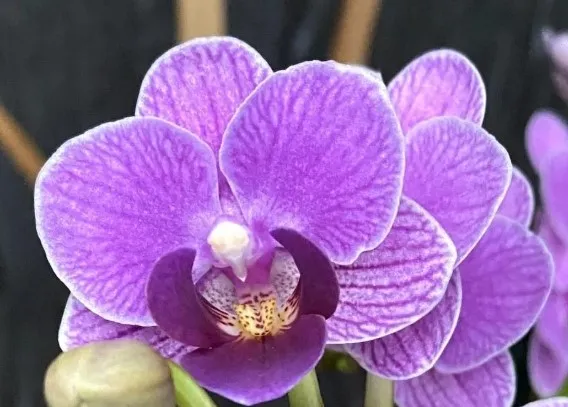
 Actual Plant Specimen
Are Orchids Safe for Cats & Dogs? Moth Orchid (Phalaenopsis) & Bark Safety Guide
Orchidaceae • Also called: Phalaenopsis Orchid, Moth Orchid
All botanical parts of Orchid (Orchidaceae) are verified non-toxic and safe around both cats and dogs.
- Long arching flower spike bearing symmetrical butterfly-like blooms with a central 3-lobed lip (labellum).
- Thick, leathery, oblong dark-green basal leaves arranged in two opposite ranks.
- Thick silvery-green aerial roots (velamen) gripping coarse bark chips.
Orchid Plant-Part Identification & Toxicity Map
Every part of Orchid (Orchidaceae) marked out as Toxic, Mild Irritant, or Non-Toxic for cats and dogs.
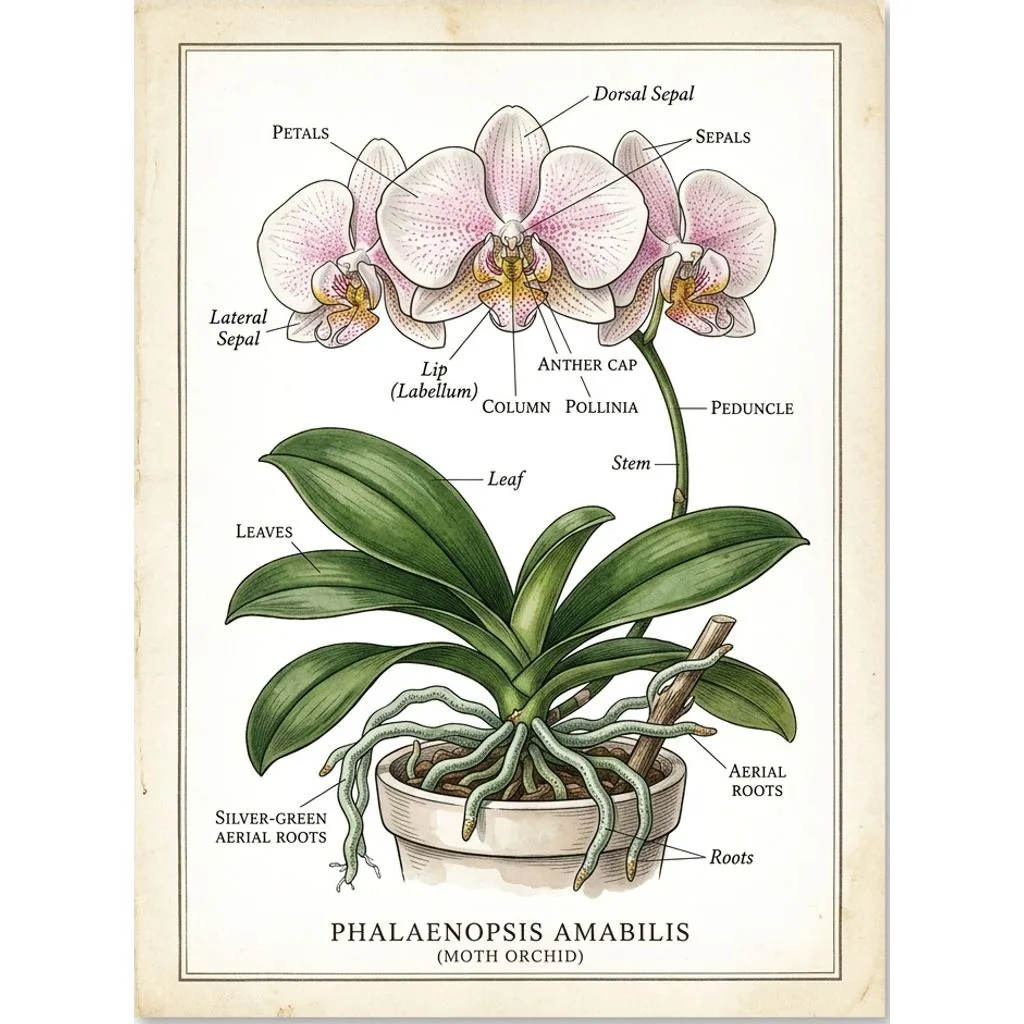
Butterfly-Like Petals, Sepals & Lip (Labellum)
Dropped or chewed orchid blossoms are 100% non-toxic to cats and dogs (unless artificially dyed blue/purple with floral ink).
Thick Leathery Basal Leaves & Flower Spike
Chemically non-toxic; swallowing large leathery leaf pieces may cause a single mechanical regurgitation.
Silvery-Green Aerial Roots
Exposed silvery roots are non-toxic if cats bat at or nibble them.
Coarse Fir Bark Potting Media & Stakes
Orchid pots are filled with chunky fir bark, perlite, or sphagnum moss—keep dogs and cats from swallowing bark chips which can cause GI obstruction.
Which Orchid Species Do You Have? (Separate Visual Guide)
Different plants called or confused with Orchid have vastly different toxicity levels. Compare the separate species images and anatomical markers below:
EnlargeMoth Orchid (Phalaenopsis) & Dendrobium Orchid
Phalaenopsis spp. / Dendrobium spp.
- Flat, rounded butterfly-like petals on a slender arching stem above thick oval leaves
- Accounts for 90%+ of grocery store and florist potted orchids
- Verified 100% non-toxic by the ASPCA
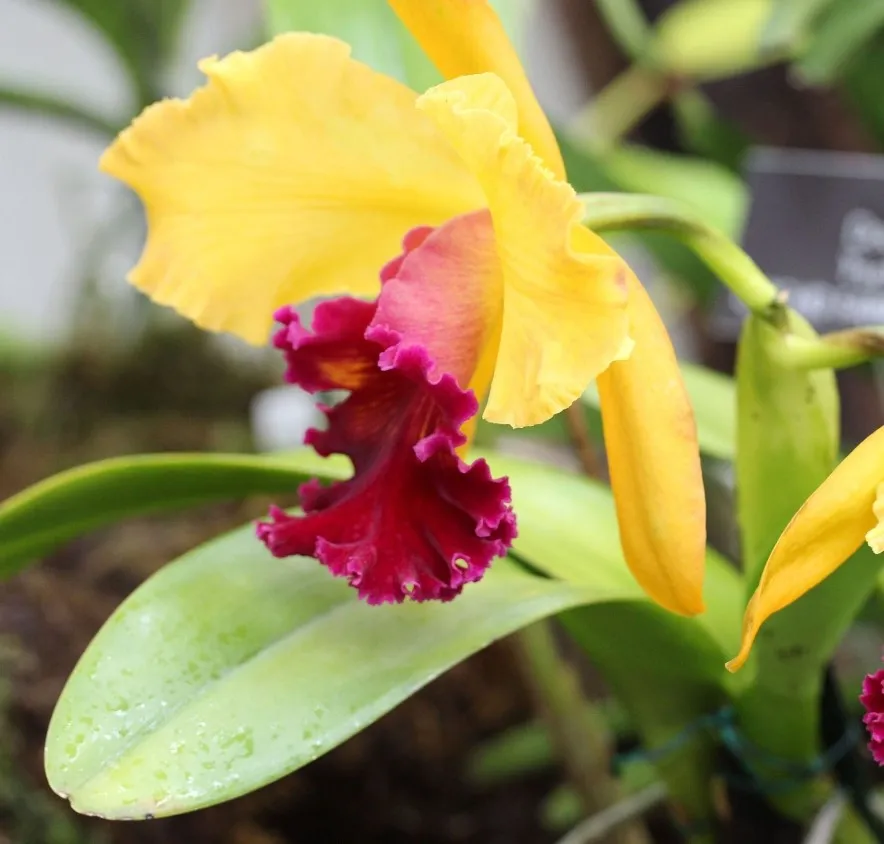 Enlarge
Corsage Orchid (Cattleya) & Boat Orchid (Cymbidium)
Cattleya labiata / Cymbidium spp.
- Ruffled trumpet-lip corsage blooms or strappy-leafed Cymbidium sprays
- Non-toxic across the Orchidaceae family
Non-Toxic Plant Owner’s Practical Guide (Orchid)
Why Did My Cat Still Vomit After Eating Orchid?
Even though Orchid contains zero chemical toxins, cats and dogs lack the cellulase enzyme needed to digest raw plant fibers. Swallowing whole leaves or fibrous stems often triggers a harmless, one-time mechanical regurgitation (just like eating lawn grass).
Hidden Nursery Hazards: Pesticides, Fertilizers & Potting Soil
Newly purchased store pots often contain slow-release fertilizer beads (Osmocote), perlite, or systemic neonicotinoid insecticides. Never let pets chew potting soil or drink water from drainage saucers.
Post-Ingestion Timeline
Veterinary Contraindication Warning — What NOT To Do
🚫 NEVER give hydrogen peroxide, salt, or home emetics to induce vomiting in a cat—3% hydrogen peroxide causes severe, potentially fatal stomach and esophageal ulceration in felines. Only a veterinarian can safely administer feline emetics.
Home Care & First Aid Protocol
Non-toxic to cats.
When to still call a vet: If your pet swallowed a large woody stem/root ball (choking or foreign body risk), ingested potting soil fertilizer, or if you suspect the plant matches one of the toxic look-alike species shown above.
In-Depth Botanical & Veterinary Safety Analysis
Scientific evaluation and toxicological breakdown of Orchid (Orchidaceae)
Global Names & Multilingual Search
Specific Pet Safety FAQs for Orchid
Is Orchid safe for cats?
Yes, Orchids are entirely non-toxic to cats. Cats can touch and chew the flowers without any chemical risk.
Is Orchid safe for dogs?
Yes, Orchids are 100% safe for dogs. They pose no threat of poisoning.
What is the most common pet-safe Orchid?
The Phalaenopsis (Moth Orchid) is the most common variety sold and is completely safe for both dogs and cats.
Why does my cat chew on Orchid leaves?
Cats are often attracted to the movement of the arching leaves. Place the plant out of reach to protect it from damage.
Are there toxic orchid look-alikes?
True Orchids are safe, but they are sometimes confused with toxic lilies. Always verify the botanical name before purchase.
20 Dangerous Garden Plants: Cat Toxicity & Safety Guide
Felines are highly sensitive to houseplants and flowers. Learn which 20 common species cause severe or fatal reactions in cats, including lilies, and discover safe, cat-friendly garden alternatives.
🛡️ Discover Related Plant Safety Guides
Explore visually similar or related plants and their pet safety profiles: