
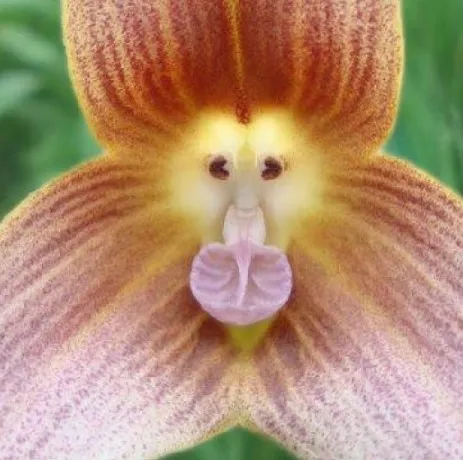
Monkey Orchid
Dracula simia
How to Identify Monkey Orchid
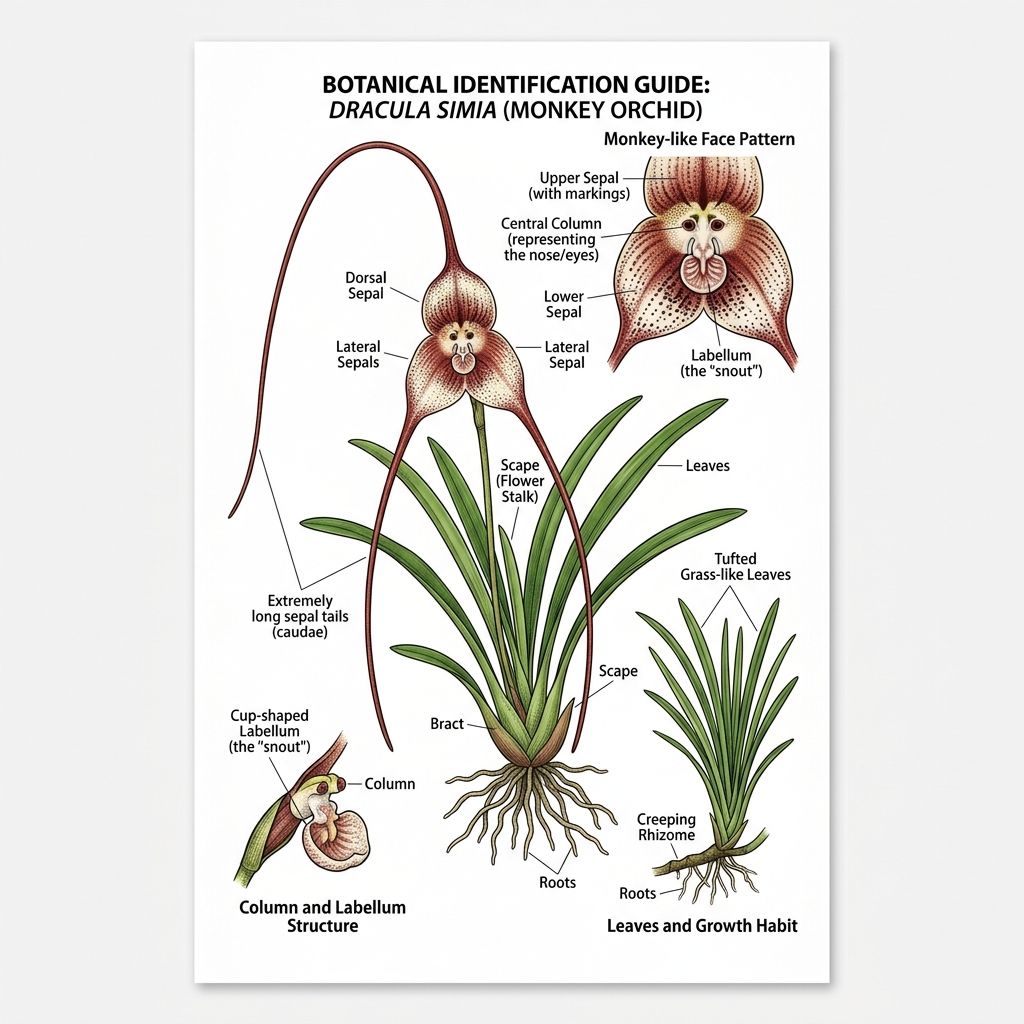
How to identify the Monkey Orchid (Dracula simia):
- Monkey Face Pattern: The columns, petals, and lip are arranged to resemble the face of a small monkey.
- Long Sepal Tails: The 3 large sepals end in long, slender, dark tail-like appendages (caudae) measuring up to 2 inches.
- Cup-Shaped Lip: The lip (labellum) is small, pinkish, and cup-shaped, mimicking a monkey's nose/mouth.
- Tufted Grass-like Leaves: Rigid, slender, light green leaves that grow in a fan-like clump. Lacks water-storing pseudobulbs.
Genus Dracula Characteristics
Care & Growing Guide
Monkey Orchid Care & Growing Guide (Requires specialized climate control):
- Light: Low to moderate indirect light (dappled shade). Never expose to direct sun.
- Soil/Media: Sphagnum moss or fine bark mix in slatted baskets, as the flower spikes often grow downwards through the bottom of the pot.
- Watering: Keep the media constantly damp. It lacks pseudobulbs, so it cannot tolerate drying out.
- Climate Control: Requires a cool greenhouse. Maintain day temperatures below 68°F (20°C) and night temperatures around 50-55°F (10-13°C) with constant, gentle air movement.
Seasonal Blooming & Hardiness
Seasonal Blooming Calendar (Controlled Greenhouses / Indoor across all US Zones 1-11):
- Native Region: Native to the misty, high-altitude cloud forests of southeastern Ecuador and Peru (at elevations of 3,000 to 6,500 feet), where it blooms year-round in cool, humid, shaded environments.
- US Cultivation: Can be grown indoors or in specialized cool-greenhouses. Blooms can appear at any time of the year under stable, cool, humid conditions.
Bloom Timeline
About Monkey Orchid
The Monkey Orchid, botanically designated as Dracula simia and belonging to the family Orchidaceae (the orchid family), is an extraordinary, globally famous epiphytic perennial. Native to the cool, misty, and high-elevation cloud forests of the Andes across Ecuador, Colombia, and Peru at altitudes ranging between 1,000 and 2,500 meters, this rare orchid grows on moss-covered trees in deep shade. It is celebrated worldwide for its highly unusual flowers that bear an uncanny, unmistakable resemblance to a monkey's face.
This compact orchid grows 6 to 12 inches tall, producing narrow, grass-like green leaves from short, creeping rhizomes without developing typical pseudobulbs. It blooms sequentially throughout the year, sending out pendulous flower stems from the base of the plant. Individual blossoms measure 2 to 6 inches across. The sepals are decorated with intricate maroon-red spots, covered in fine white hairs, and taper into long, elegant, fang-like spur tails. At the center, two small petals form 'eyes,' while a pinkish, curved lip forms a realistic 'nose' and 'mouth.'
The reproductive morphology of Dracula simia is defined by the zygomorphic orchid floral formula % ⚥ P3+3 A1 G(3). This formula denotes that the flowers are bilaterally symmetrical (zygomorphic) and bisexual. The perianth comprises 6 tepals arranged in two whorls of three: the outer whorl consists of 3 large, fused petaloid sepals with long tail spurs, and the inner whorl contains 3 petals, with the lowermost petal modified into a complex, movable lip (labellum). The single stamen is fused with the style to form a column, atop an inferior, 3-carpellate ovary.
Horticulturally, the Monkey Orchid is a highly specialized species that is challenging to grow outside of humid greenhouses, terrariums, or dedicated orchid cases. It requires cool temperatures (50°F to 70°F), constant high humidity levels of 70% to 90%, and light-to-deep shade, resenting any direct sunlight. The growing medium must be kept consistently moist with pure distilled or rainwater. It is best grown mounted on cork bark slabs or in hanging wire baskets with live sphagnum moss to accommodate its pendulous, downward-growing flower spikes.
The genus name Dracula was established by orchid expert Carlyle Luer in 1978 and translates from Latin to 'little dragon,' directly referencing the long, fang-like sepals that give the bloom a slightly vampire-like appearance. The species epithet simia means 'monkey-face,' describing its striking face-like structure. Famed in Sanskrit as Vanaramukhapushpam (वानरमुखपुष्पम्) and in Hindi as Bandar Orchid (बंदर ऑर्किड), it represents the wondrous and bizarre diversity of natural evolution, remaining a highly protected collector's holy grail.
For pet owners and veterinarians, the Monkey Orchid is an exceptionally safe, non-toxic, and pet-friendly choice. Dracula simia is classified as completely NON-TOXIC to cats, dogs, and horses by major global animal databases. If a curious pet sniffs, plays with, or chews on the grass-like leaves or face-like blossoms, there is absolutely no danger of toxic chemical poisoning. To explore more safe orchid species and find care guidelines, browse our specific Pet Guard Orchid page. (Note: The flowers naturally release a rich, pleasant mushroom-like fragrance.)
Monkey Orchid is occasionally confused with other face-like orchids (such as Orchis simia). It is easily distinguished because the genus Dracula has three massive sepals with long, elegant tails and lacks pseudobulbs, whereas Orchis is a terrestrial European orchid with a helmet-like calyx. It makes a stunning specimen for humid indoor environments; we recommend pairing it alongside other safe, moisture-loving orchids like the Boat Orchid or Catasetum Orchid. To explore more rare epiphytic orchids and mounting guides, check our Flower Identifier.
For more botanical profiles and flower identification features, see our guides on Orchis Orchid and Touch Me Not.
Floral Formula & Features
Bilaterally symmetrical, bisexual, 6 tepals in 2 whorls of 3 (3 sepals + 3 petals with one modified into lip), 1 stamen fused with style forming column, 3 fused carpels with inferior ovary typical of Orchidaceae
- Scientific Name & Classification: Dracula simia (Orchidaceae). Globally famed as Monkey Orchid, Dracula Orchid, and Monkey Face Orchid.
- Identification Markers: Grass-like leaves, pendulous flower stalks, and maroon-spotted hairy sepals with long tails forming an anthropomorphic monkey face.
- Floral Formula (% ⚥ P3+3 A1 G(3)): Bilaterally symmetrical, bisexual flowers with 3 tailed sepals, 3 petals (1 modified as a lip), 1 column stamen, and inferior ovary.
- Growing Requirements: Demands cool conditions (50-70°F), high humidity (70-90%), and deep shade. Grow in hanging wire baskets with live sphagnum (Zones 10-11).
- Cultural Significance: Genus name Dracula means 'little dragon' due to fang-like tails. Highly valued by global botanical collectors and protected in its native Andes.
- Safety & Toxicity: NON-TOXIC. 100% safe for cats and dogs, carrying the same high-security profile as other premium members of the Orchidaceae family.
- Common Look-alikes: Confused with the European Monkey Orchid (Orchis simia), but easily distinguished by its long-tailed sepals, lack of pseudobulbs, and epiphytic habit.
- Internal Links: Pairs beautifully in custom humid vivariums alongside other magnificent, pet-safe orchids like Boat Orchid or Catasetum Orchid; find more in our Flower Identifier.
Names in Different Languages
Botanical Classification: Monkey Orchid belongs to the Orchidaceae family. Learn how to identify its floral symmetry, stamen arrangement, and structural formulas in our Botanical Family Classification Guide.
Toxicity & Safety
Pet Safety Guide: For detailed toxicity symptoms, first-aid measures, and safe garden alternatives, see our full Pet Guard Profile for Monkey Orchid.
Frequently Asked Questions
What is Floral Formula?
A floral formula is a symbolic representation of a flower's structure using letters, numbers, and special symbols. It provides a concise way to describe the arrangement and number of floral parts.
This formula describes the flower's symmetry, sepals, petals, stamens, and carpels in a standardized format.
Formula Sequence
- Bract: Br or Ebr
- Bracteole: Brl or Ebrl
- Symmetry: % (Radial) or ⊕ (Bilateral)
- Sex: ♀ (Female), ♂ (Male), or ⚥ (Bisexual)
- Calyx/Sepal: K<number> (Free or Fused)
- Corolla/Petal: C<number> (Free or Fused)
- Androecium: A<number> (Free or Fused)
- Gynaecium: G<number> (Superior or Inferior Ovary)
Symbol Meanings
- Numbers: Indicate quantity of parts
- Parentheses (): Parts are fused together
- Plus (+): Parts in different whorls
- Underline: Superior ovary position
- Overline: Inferior ovary position
- ∞: Numerous parts (too many to count)
Understanding floral formulas helps botanists quickly identify and classify flowers based on their structural characteristics.
Similar Flowers
Discover flowers that share botanical characteristics
Same Family
4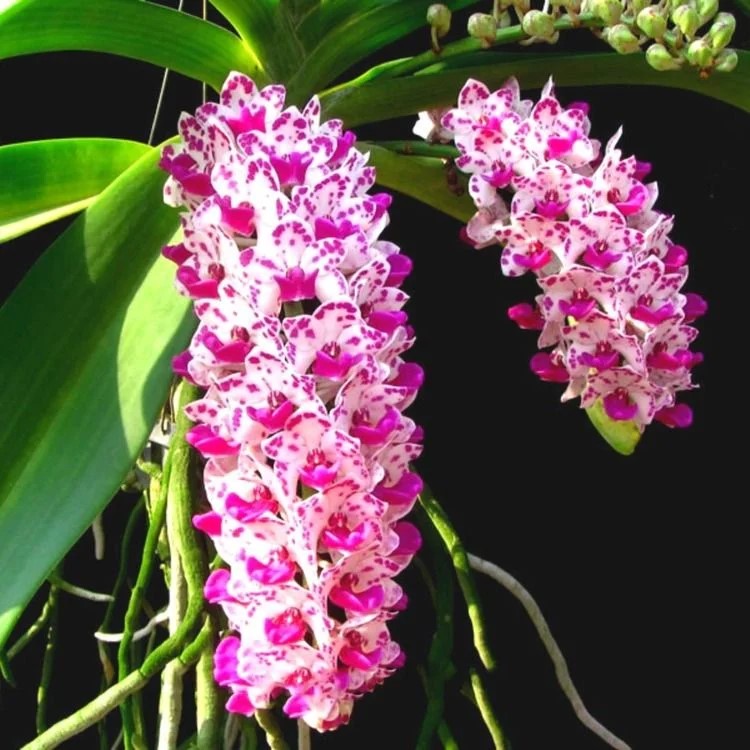
Fox Tail Orchid (Rhynchostylis)
Rhynchostylis retusa
The Fox Tail Orchid (Rhynchostylis retusa) is an extraordinary, highly fragrant epiphytic orchid belonging to the Orchidaceae family. Native to the warm, humid tropical forests of the Indian subcontinent, Southeast Asia, and Indonesia, it is globally celebrated for its incredibly unique and drama...
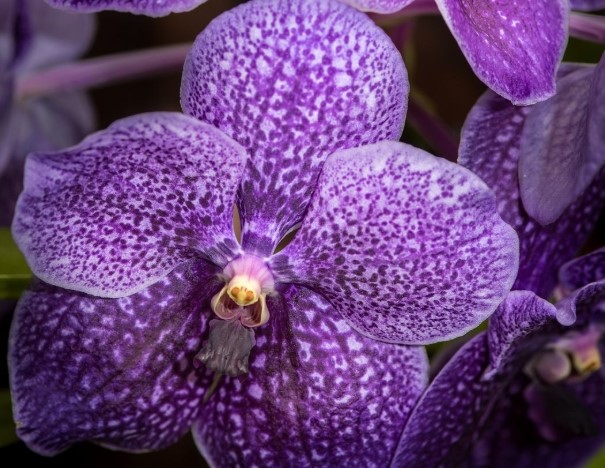
Vanda Orchid
Vanda
The Vanda Orchid, botanically designated under the genus *Vanda*, is an exceptionally spectacular, highly premium epiphytic perennial. Belonging to the family Orchidaceae (the orchid family, tribe Vandeae), this magnificent tropical orchid is native to the warm, highly humid rainforests, mist-shr...
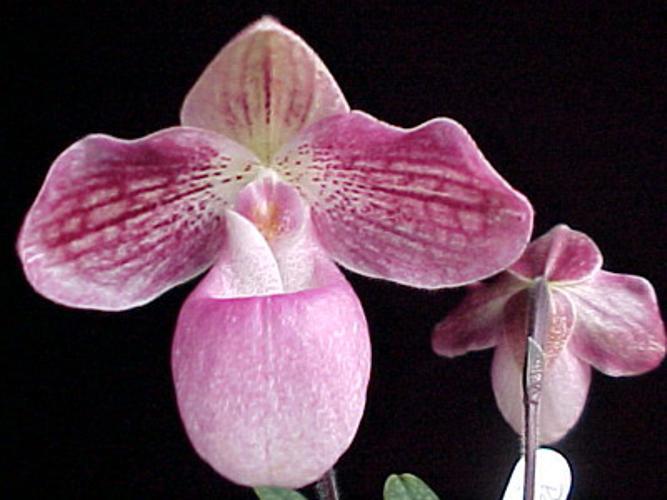
Silver Slipper Orchid
Paphiopedilum micranthum
The Silver Slipper Orchid, botanically designated as Paphiopedilum micranthum and popularly known as the Pocket Orchid, is a critically endangered, terrestrial slipper orchid belonging to the Orchidaceae family. Native to the steep, mist-shrouded limestone cliffs and rocky moss-covered ravines of...
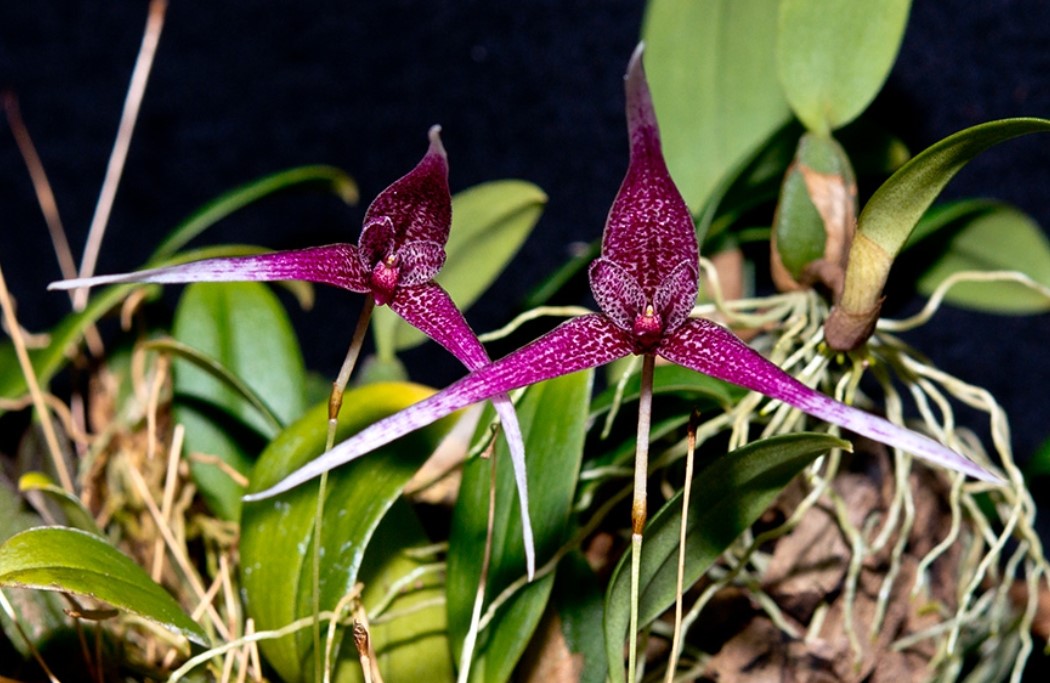
Bulbophyllum Orchid
Bulbophyllum
The Bulbophyllum orchid, representing the largest genus in the Orchidaceae family, is a true botanical marvel boasting over 2,000 highly diverse species. Native to tropical and subtropical rainforests across Asia, Africa, and the Americas, these epiphytic wonders grow primarily on tree bark in hu...
Similar Characteristics
4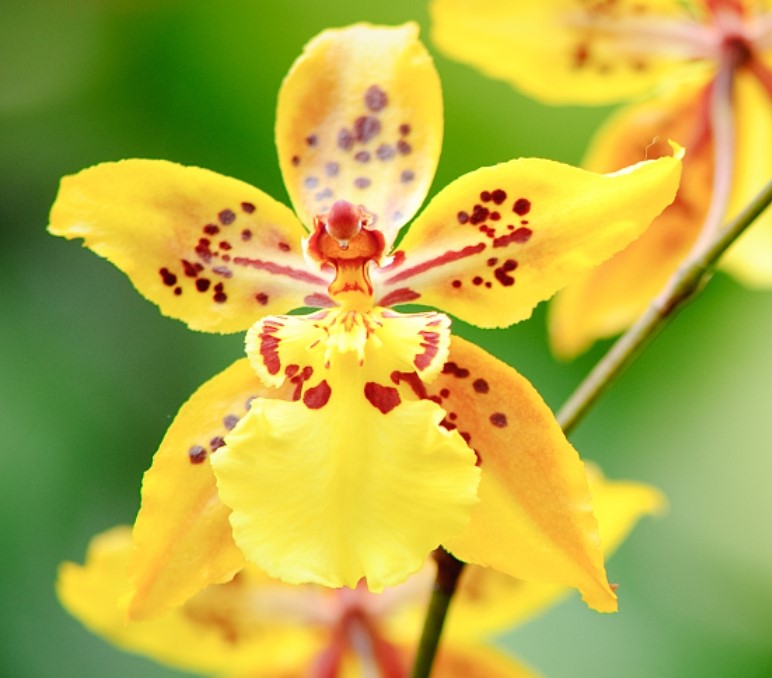
Tolumnia Orchid
Tolumnia
The Tolumnia Orchid, botanically classified under the genus Tolumnia and traditionally known in horticulture as the Equitant Oncidium or Dancing Lady Orchid, is an exceptionally charming, miniature epiphytic plant. Belonging to the family Orchidaceae (the orchid family, tribe Oncidiinae), this sp...
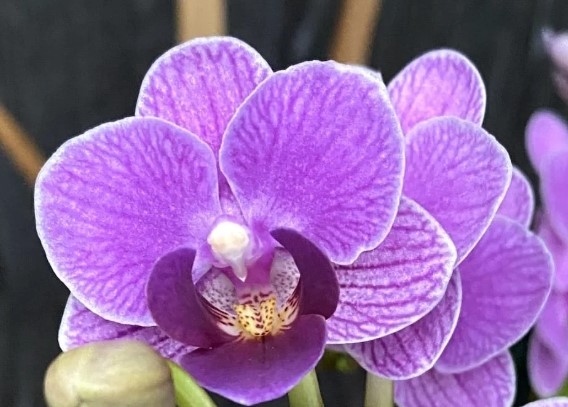
Moth Orchid (Phalaenopsis)
Phalaenopsis hybrids
The Moth Orchid, representing the broader genus Phalaenopsis, is undeniably the most popular and commercially successful orchid in the world. Belonging to the massive Orchidaceae family and native to the tropical canopies of Southeast Asia and Australia, these epiphytic marvels have been heavily...
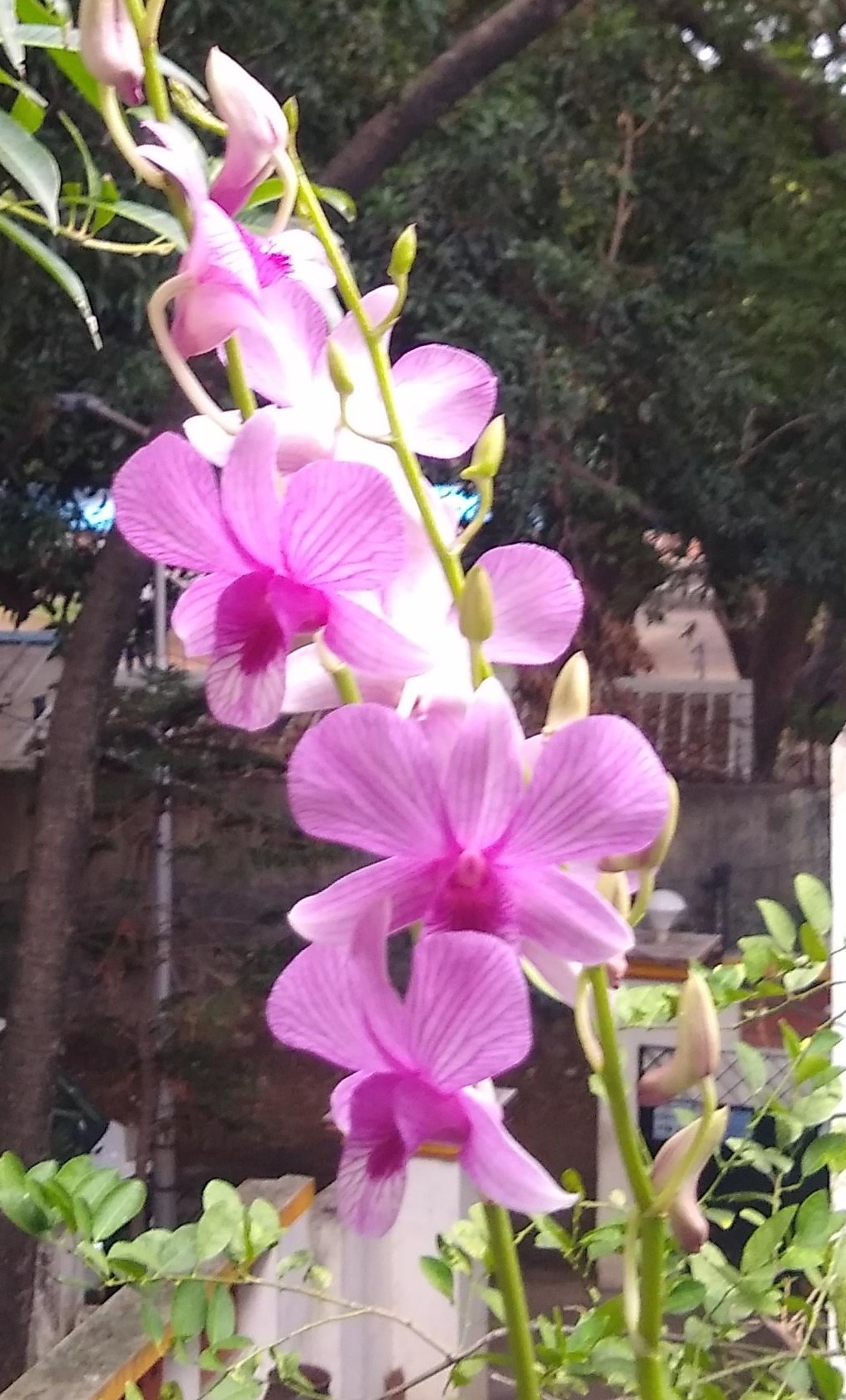
Dendrobium Orchid
Dendrobium
The Dendrobium Orchid, a diverse and captivating genus within the Orchidaceae family, stands as one of the most prolific and popular orchids in the world. With over 1,800 species and countless hybrids, these "tree-living" plants (the name *Dendrobium* literally means "life on a tree" in Greek) ar...
Silver Slipper Orchid
Paphiopedilum micranthum
The Silver Slipper Orchid, botanically designated as Paphiopedilum micranthum and popularly known as the Pocket Orchid, is a critically endangered, terrestrial slipper orchid belonging to the Orchidaceae family. Native to the steep, mist-shrouded limestone cliffs and rocky moss-covered ravines of...