
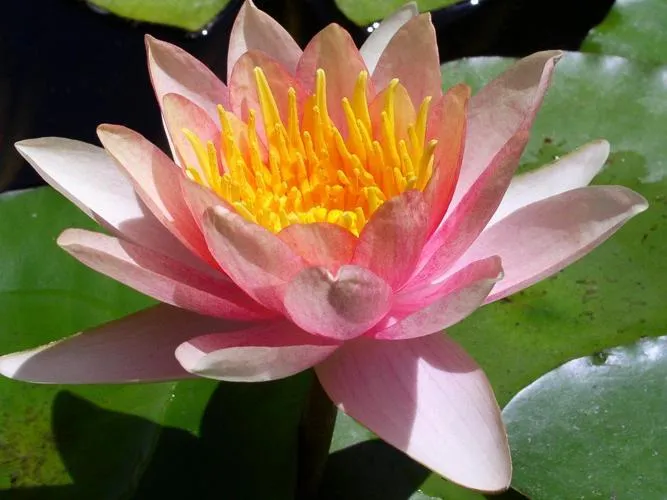
Water Lily
Nymphaea
How to Identify Water Lily
TOXIC TO PETS. Contains toxic alkaloids like nupharin, triggering severe drooling, vomiting, diarrhea, abdominal distress, and coordination issues.
A detailed guide to identifying Water Lilies (Nymphaea) by its key features:
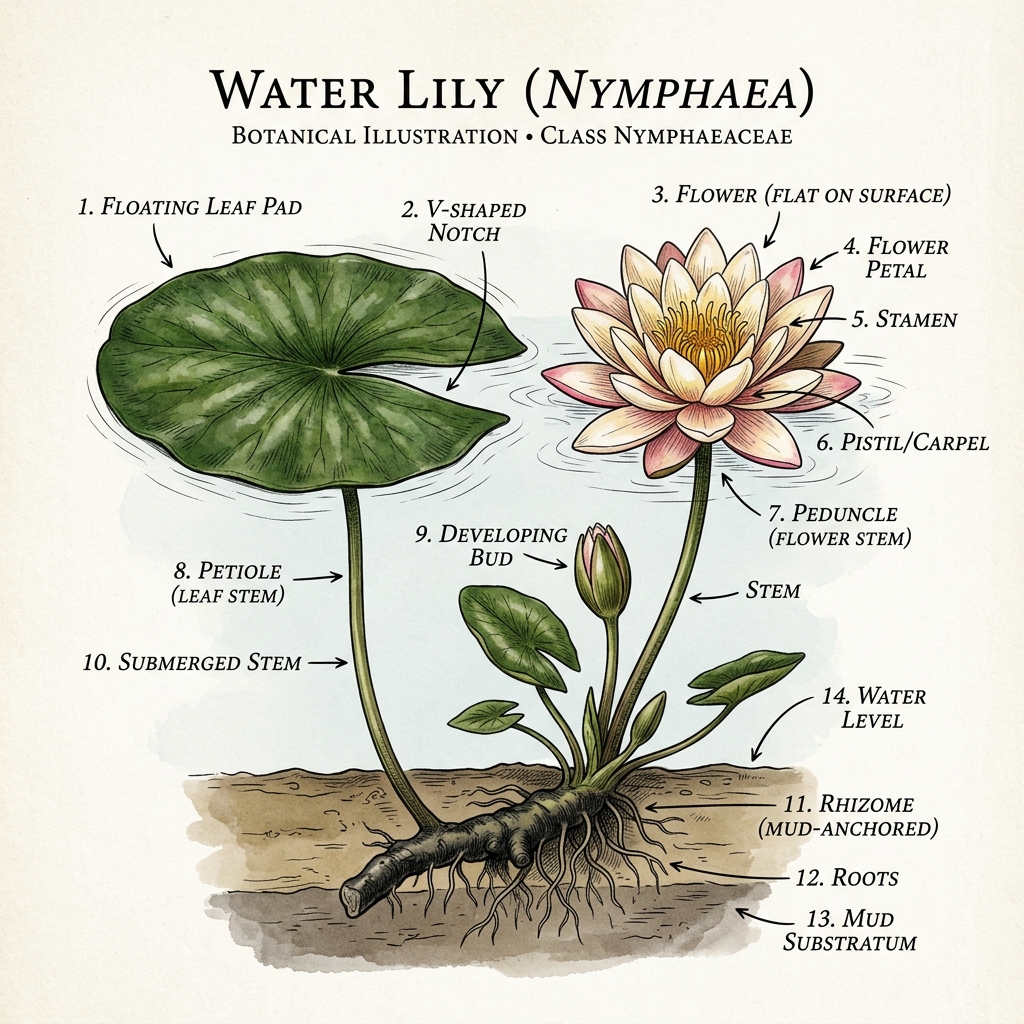
- Floating Flower Bowls: Large, symmetrical cup- or star-shaped blossoms that float directly on the water surface or rise slightly above it on flexible stems.
- V-Notched Leaf Pads: Circular or heart-shaped waxy leaves (lily pads) that lie flat on the water, featuring a distinct radial V-shaped slit from edge to center.
- Layered Petals & Stamens: Multi-petaled rings wrapped around a central cluster of prominent, showy yellow stamens.
- Submerged Rhizomes: Thick, fleshy rootstocks anchored firmly in the bottom mud, sending up long, hollow leaf and flower stalks.
Types & Sub-types of Water Lilies
Water lilies are classified and distinguished into two main groups based on climate tolerance and blooming times, along with variation in petal structure:
- By Climate & Temperature Tolerance:
- Hardy Water Lilies: Winter-resilient plants that bloom only during the day (April to September). Flowers float flat on the water surface, and rhizomes survive freezing temperatures in unfrozen deep pond waters.
- Tropical Water Lilies: Heat-loving plants that grow larger and bloom with more vibrant colors (including blue and purple). Flowers rise 6-12 inches above the water on thick stems, and they are highly sensitive to frost.
- By Blooming Habit (Day vs. Night):
- Diurnal (Day-Blooming) Water Lilies: Open their blossoms in the mid-morning under bright sunlight and close tightly in the late afternoon.
- Nocturnal (Night-Blooming) Water Lilies: Open their blossoms at dusk and remain open until mid-morning of the following day, often possessing intense, heavy fragrances.
- By Leaf Edge Structure & Texture:
- Smooth-Edged Pads: Typical of hardy water lilies, displaying smooth, flat circular leaves.
- Tooth-Edged Pads: Common in tropical water lilies, displaying leaves with serrated, jagged, or wavy margins.
Care & Growing Guide
Seasonal Blooming & Hardiness
Seasonal Blooming Calendar:
- Peak Bloom: Spring to early summer (typically April through June).
- Planting Time: Sow seeds directly outdoors in early spring after the last frost, or transplant nursery starts in late spring.
Bloom Timeline
About Water Lily
The Water Lily, botanically designated as Nymphaea and belonging to the family Nymphaeaceae (the water lily family), is an exceptionally iconic and pristine aquatic perennial. Native to temperate and tropical freshwater ecosystems worldwide, this magnificent plant inhabits tranquil ponds, slow-moving rivers, shallow lakes, and freshwater marshes across Europe, Asia, Africa, Australia, and the Americas. It is celebrated globally as a master of aquatic adaptation and a symbol of serene beauty.
This rhizomatous perennial grows anchored in the rich, muddy bottoms of bodies of water, sending up long, flexible leaf stalks (petioles) to support large, waxy, and perfectly round floating leaves, commonly known as lily pads. These pads measure 4 to 12 inches in diameter and feature a deep, distinctive radial V-shaped notch at the base. The leaves are packed with specialized spongy, air-filled tissues (lacunae) that provide buoyancy, allowing them to float flat on the water surface.
From late spring through autumn (May through October), the plants produce spectacular, waxy, cup-like flowers measuring 3 to 12 inches across. Individual blossoms rise slightly above the water or float directly on the surface, showcasing 6 to 50 layered petals surrounding a crown of numerous yellow stamens. Flowers bloom in brilliant shades of white, pink, red, yellow, and peach, as well as exotic blues and purples found exclusively in tropical species. Each flower opens during the day and closes at night over a 3-to-4-day lifespan.
The reproductive morphology of Nymphaea is represented by the classical aquatic floral formula EBr ⊕ ⚿ P∞ A∞ G̅(∞). This formula states that the flowers are ebracteate, radially symmetrical (actinomorphic), and bisexual. The perianth comprises an indefinite number of free, spirally arranged tepals (P∞) showing a smooth structural transition from outer protective sepals to inner showy petals. The androecium contains numerous (∞) free stamens, and the gynoecium contains numerous (∞) fused carpels forming a semi-inferior ovary.
The genus name Nymphaea is derived from the ancient Greek word 'nymphe,' directly referencing the water nymphs of classical mythology who inhabited tranquil freshwater springs and rivers. Famed in Sanskrit as Utpala (उत्पल) or Kumuda (कुमुद) and in Hindi as Neelkamal (नीलकमल) or Jal Kumudini (जल कुमुदिनी), it carries immense spiritual value. Across Egyptian, Hindu, and Buddhist traditions, the water lily represents purity, enlightenment, and rebirth, emerging immaculate from muddy depths.
For pet owners and veterinarians, the Water Lily represents a significant chemical hazard. The plant is classified as TOXIC TO PETS, including dogs, cats, and horses. All parts of the plant contain toxic alkaloid compounds, primarily nupharin and nymphaeine. Ingestion of the leaves, roots, or flowers triggers severe gastrointestinal irritation, excessive salivation (drooling), vomiting, abdominal pain, diarrhea, and potential neurological symptoms like mild tremors. (Note: While Nymphaea is not a true Lilium lily—which causes acute kidney failure in cats—it remains a dangerous toxin and must be kept out of reach.)
Water Lily is occasionally confused with the Sacred Lotus (Nelumbo nucifera). It is easily distinguished because true Water Lily pads float flat on the water surface and have a V-shaped slit, whereas Lotus leaves rise high above the water on stiff stalks and are completely circular. It is an essential component of water gardens and koi ponds, providing shade to suppress algae growth; we recommend pairing it alongside Lotus or Water Hyacinth. To discover more aquatic perennials, browse our Flower Identifier.
Floral Formula & Features
Ebracteate (no bracts), Actinomorphic (radially symmetrical), bisexual, numerous free tepals in spiral arrangement (perianth - no clear distinction between sepals and petals), numerous free stamens in spiral, numerous free carpels embedded in receptacle with inferior ovary
- Scientific Name & Classification: Nymphaea (Nymphaeaceae). Globally known as Water Lily, Pond Lily, and Alligator Bonnet.
- Identification Markers: Thick mud-anchored rhizomes, waxy circular floating lily pads with a V-shaped notch, and large layered flowers floating on the surface.
- Floral Formula (EBr ⊕ ⚿ P∞ A∞ G̅(∞)): Radially symmetrical, bisexual flowers with numerous spiral tepals, numerous free stamens, and an inferior ovary.
- Growing Requirements: Full direct sun (6+ hours); still or slow-moving freshwater 6 to 36 inches deep. Hardy types survive winter freezes in unfrozen pond depths.
- Cultural Significance: Named after mythical water nymphs of Greece. Sacred symbol of purity, resurrection, and enlightenment in ancient Egypt and India.
- Safety & Toxicity: TOXIC TO PETS. Contains toxic alkaloids like nupharin, triggering severe drooling, vomiting, diarrhea, abdominal distress, and coordination issues.
- Common Look-alikes: Confused with the Sacred Lotus, but easily distinguished by its leaf pads floating flat on the surface with a distinct V-shaped radial slit.
- Internal Links: Serves as an ecological anchor in decorative ponds alongside other premium aquatic plants like Lotus or Water Hyacinth; find more in our Flower Identifier.
- Internal Links: Compare key differences in our Lily vs Lotus comparison, or try our instant Flower Identifier.
Names in Different Languages
Tip: Need to buy or identify flowers in regional markets? Check our complete South Indian Flower Names Guide mapping 30+ flowers across Tamil, Telugu, Hindi, Kannada, and Malayalam.
Toxicity & Safety
Always keep toxic plants out of reach of children and pets. Consult a veterinarian or medical professional immediately if ingestion is suspected.
Frequently Asked Questions
What is Floral Formula?
A floral formula is a symbolic representation of a flower's structure using letters, numbers, and special symbols. It provides a concise way to describe the arrangement and number of floral parts.
This formula describes the flower's symmetry, sepals, petals, stamens, and carpels in a standardized format.
Formula Sequence
- Bract: Br or Ebr
- Bracteole: Brl or Ebrl
- Symmetry: % (Radial) or ⊕ (Bilateral)
- Sex: ♀ (Female), ♂ (Male), or ⚥ (Bisexual)
- Calyx/Sepal: K<number> (Free or Fused)
- Corolla/Petal: C<number> (Free or Fused)
- Androecium: A<number> (Free or Fused)
- Gynaecium: G<number> (Superior or Inferior Ovary)
Symbol Meanings
- Numbers: Indicate quantity of parts
- Parentheses (): Parts are fused together
- Plus (+): Parts in different whorls
- Underline: Superior ovary position
- Overline: Inferior ovary position
- ∞: Numerous parts (too many to count)
Understanding floral formulas helps botanists quickly identify and classify flowers based on their structural characteristics.
Similar Flowers
Discover flowers that share botanical characteristics
Similar Characteristics
4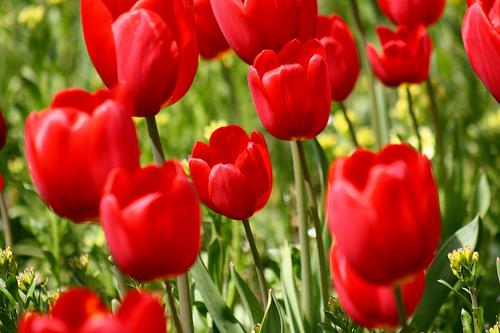
Tulip
Tulipa
The Tulip, botanically designated under the genus Tulipa and belonging to the family Liliaceae (the lily family, tribe Lilieae), is an exceptionally iconic, globally celebrated spring-blooming bulbous herbaceous perennial. Native to the dry, mountainous heights, rocky slopes, and sweeping grassla...
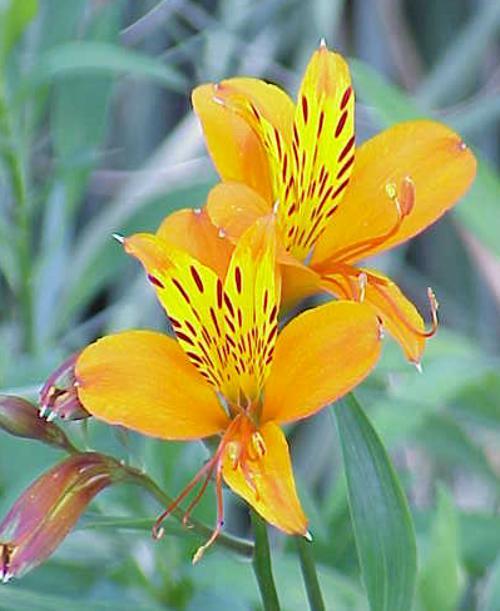
Peruvian Lily
Alstroemeria
The Peruvian Lily, botanically classified under the genus Alstroemeria and belonging to the family Alstroemeriaceae (the peruvian lily family), is an exceptionally showy, long-blooming, and popular herbaceous perennial. Native to the cool mountain valleys, forest edges, and coastal scrublands of...
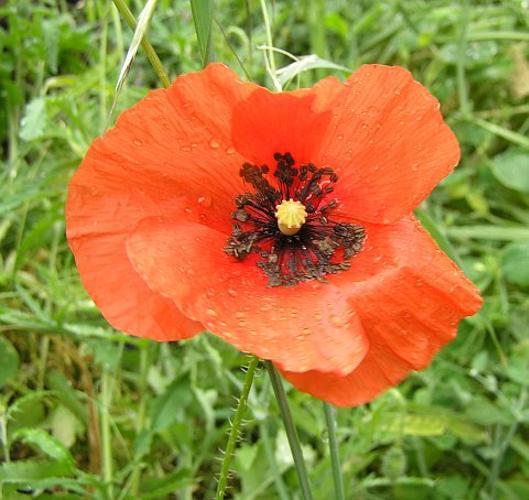
Corn Poppy
Papaver rhoeas
The Corn Poppy, botanically designated as Papaver rhoeas and commonly known as the Field Poppy, Flanders Poppy, or Red Poppy, is an exceptionally iconic, breezy, and resilient annual wildflower. Belonging to the family Papaveraceae (the poppy family, tribe Papavereae), this historically rich plan...
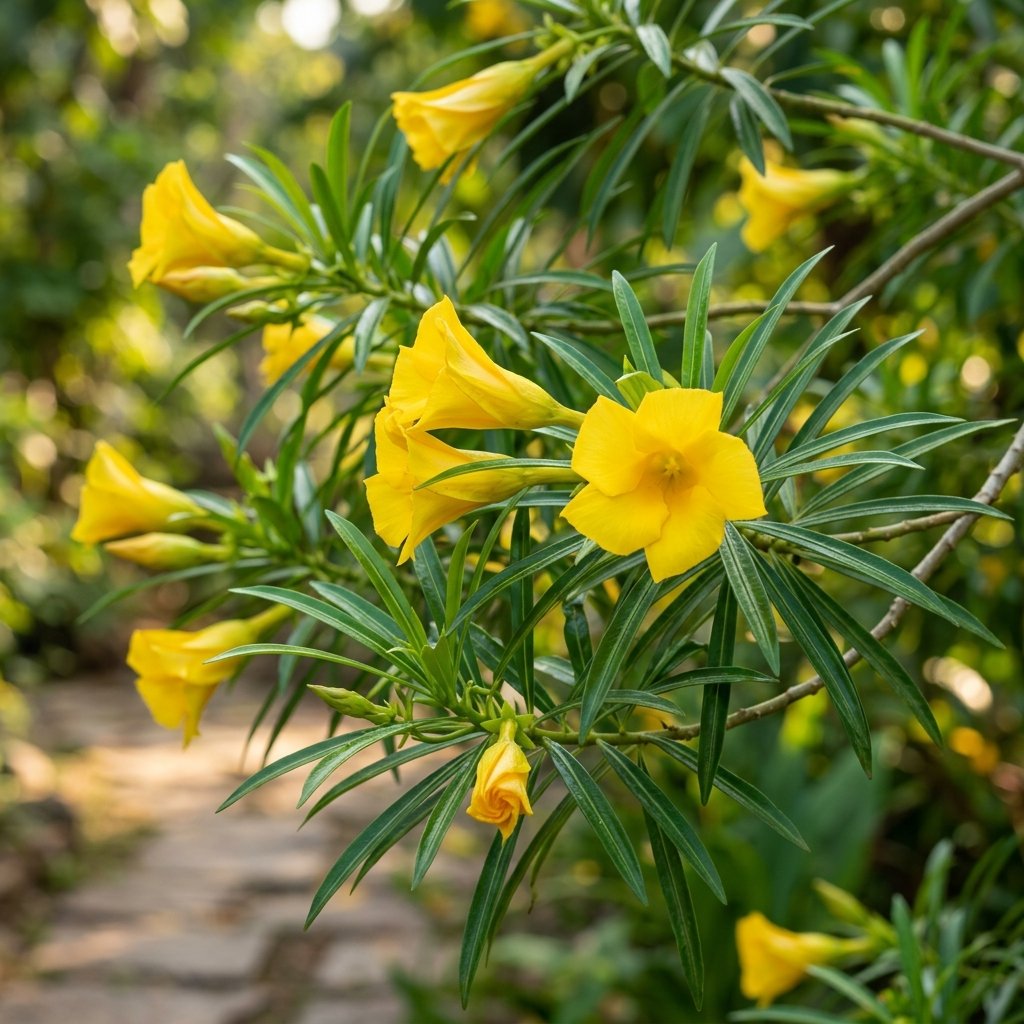
Yellow Oleander (Thevetia)
Cascabela thevetia
Yellow Oleander, botanically classified as *Cascabela thevetia* (formerly *Thevetia peruviana*) and famously celebrated in Indian culture as Pila Kaner, Lucky Nut, or the Be-still Tree, is a highly ornamental, heat-loving evergreen large shrub or small tree. Belonging to the dogbane family Apocyn...