
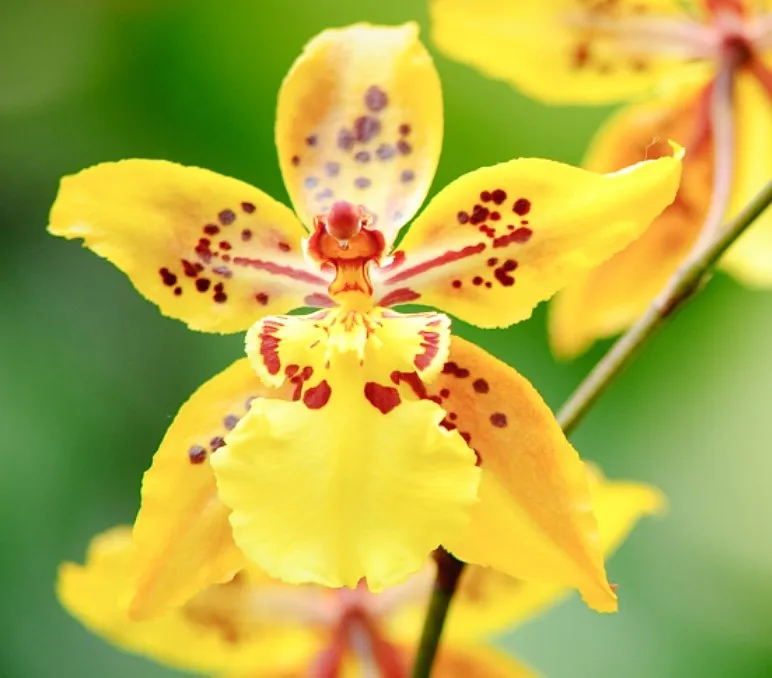
Tolumnia Orchid
Tolumnia
How to Identify Tolumnia Orchid
NON-TOXIC. 100% safe for cats, dogs, and horses. Provides an extremely compact, safe, and visually striking flowering addition to terrariums and indoor shelves.
Care & Growing Guide
Seasonal Blooming & Hardiness
Seasonal Blooming Calendar:
- Peak Bloom: Spring to early summer (typically April through June).
- Planting Time: Sow seeds directly outdoors in early spring after the last frost, or transplant nursery starts in late spring.
Bloom Timeline
About Tolumnia Orchid
The Tolumnia Orchid, botanically classified under the genus Tolumnia and traditionally known in horticulture as the Equitant Oncidium or Dancing Lady Orchid, is an exceptionally charming, miniature epiphytic plant. Belonging to the family Orchidaceae (the orchid family, tribe Oncidiinae), this spectacular compact species is native to the warm, humid coastal woodlands, limestone cliffs, and dry tropical scrublands of the Caribbean islands, including Jamaica, Cuba, Hispaniola, Puerto Rico, and the Bahamas.
This miniature epiphyte exhibits a highly unique, compact growth habit, rarely exceeding 3 to 6 inches in height. Unlike most tropical orchids, it does not possess fleshy, water-storing pseudobulbs; instead, it features a highly distinctive, fan-shaped arrangement of thick, overlapping, triangular leaves (equitant foliage) measuring 2 to 4 inches long. These succulent-like leaves are highly adapted to capturing morning dew and heavy tropical rain showers, channeling water directly to the roots.
From late spring through mid-summer (and occasionally multiple times throughout the year), the plant sends up slender, arching, and often branching flower spikes measuring 6 to 12 inches long. Each spike carries 5 to 20 disproportionately large, highly vibrant, and intricately patterned blossoms measuring 0.5 to 2 inches across. The flowers resemble miniature dancing ladies wearing large, frilly, and layered colorful skirts in brilliant shades of yellow, pink, scarlet-red, pure white, and deep purple, decorated with contrasting spots, bands, and splashes.
The highly specialized reproductive morphology of Tolumnia is represented by the orchid floral formula % ⚥ P3+3 A1 G(3). This formula indicates that the flowers are bilaterally symmetrical (zygomorphic) and bisexual. The perianth is composed of 6 tepals in two whorls of three: 3 small sepals and 3 petals, with one petal heavily modified into a massive, three-lobed, frilly lip (labellum) forming the 'skirt.' The single stamen is fused with the style and stigma into a central reproductive column (column or gynostemium), and the gynoecium contains 3 fused carpels forming an inferior ovary.
The genus name Tolumnia was designated in honor of Tolumnius, a legendary Etruscan king in Roman mythology celebrated in Virgil's Aeneid. Famed in Sanskrit as Nrityapushpam (नृत्यपुष्पम्, literally translating to 'dancing flower') and in Hindi as Tolumniya Orchid (टोलुम्निया ऑर्किड), it holds high value in modern orchid culture as the ultimate windowsill orchid, prized by collectors for its space-saving size and exceptionally long-lasting, heavy floral displays.
For pet owners and veterinarians, Tolumnia Orchids represent an exceptionally safe, low-risk, and pet-safe indoor plant choice. Tolumnia species and hybrids are classified as completely NON-TOXIC to cats, dogs, and horses by major global animal safety databases, including the ASPCA. If a curious cat bats at the arching flower sprays or nibbles on the fleshy, fan-shaped green leaves, there is absolutely no risk of toxic chemical poisoning. To discover more safe, indoor companion plants, visit our general Pet Guard page.
Tolumnia is occasionally confused with larger Oncidium orchids. It is easily distinguished because true Tolumnia possesses a miniature growth habit, fan-shaped equitant foliage, and a complete lack of water-storing pseudobulbs, whereas larger Oncidiums have massive pseudobulbs and long flat leaves. It is ideal for mounting on bark plaques; we recommend displaying it beside other compact indoor specimens like Catasetum Orchid, Boat Orchid-cymbidium, Dendrobium Orchid, or Vanda Orchid. To explore more miniature orchids, browse our Flower Identifier.
Floral Formula & Features
Bilaterally symmetrical, bisexual, 6 tepals in 2 whorls of 3 (3 sepals + 3 petals with one modified into lip), 1 stamen fused with style forming column, 3 fused carpels with inferior ovary typical of Orchidaceae
- Scientific Name & Classification: Tolumnia (Orchidaceae). Globally famed as Equitant Oncidium, Dancing Lady Orchid, and Caribbean Oncidium.
- Identification Markers: Miniature size (3-6 inches), fan-shaped equitant foliage lacking pseudobulbs, and arching flower spikes carrying 0.5-2 inch colorful blooms resembling dancing ladies with large, frilly skirts.
- Floral Formula (% ⚥ P3+3 A1 G(3)): Bilaterally symmetrical, bisexual flowers with 6 tepals in two whorls, featuring a massive, frilly modified lip (labellum), a single central reproductive column, and inferior ovary.
- Growing Requirements: Bright filtered morning light; warm temperatures (65-85°F) with high humidity (50-70%). Best grown mounted on bark plaques with daily misting and quick-drying roots (Zones 10-11).
- Cultural Significance: Genus named after Etruscan king Tolumnius. Known in Sanskrit as 'Nrityapushpam' due to dancing flower form. Highly celebrated as a windowsill and apartment orchid.
- Safety & Toxicity: NON-TOXIC. 100% safe for cats, dogs, and horses. Provides an extremely compact, safe, and visually striking flowering addition to terrariums and indoor shelves.
- Common Look-alikes: Confused with standard large Oncidium orchids, but easily distinguished by its miniature proportions, fleshy fan leaves, and complete lack of pseudobulbs.
- Internal Links: Pairs beautifully when displayed on cork bark logs beside other spectacular compact epiphytes like Catasetum Orchid, Boat Orchid-cymbidium, Dendrobium Orchid, or Vanda Orchid; find more in our Flower Identifier.
Names in Different Languages
Botanical Classification: Tolumnia Orchid belongs to the Orchidaceae family. Learn how to identify its floral symmetry, stamen arrangement, and structural formulas in our Botanical Family Classification Guide.
Toxicity & Safety
Frequently Asked Questions
What is Floral Formula?
A floral formula is a symbolic representation of a flower's structure using letters, numbers, and special symbols. It provides a concise way to describe the arrangement and number of floral parts.
This formula describes the flower's symmetry, sepals, petals, stamens, and carpels in a standardized format.
Formula Sequence
- Bract: Br or Ebr
- Bracteole: Brl or Ebrl
- Symmetry: % (Radial) or ⊕ (Bilateral)
- Sex: ♀ (Female), ♂ (Male), or ⚥ (Bisexual)
- Calyx/Sepal: K<number> (Free or Fused)
- Corolla/Petal: C<number> (Free or Fused)
- Androecium: A<number> (Free or Fused)
- Gynaecium: G<number> (Superior or Inferior Ovary)
Symbol Meanings
- Numbers: Indicate quantity of parts
- Parentheses (): Parts are fused together
- Plus (+): Parts in different whorls
- Underline: Superior ovary position
- Overline: Inferior ovary position
- ∞: Numerous parts (too many to count)
Understanding floral formulas helps botanists quickly identify and classify flowers based on their structural characteristics.
Similar Flowers
Discover flowers that share botanical characteristics
Same Family
4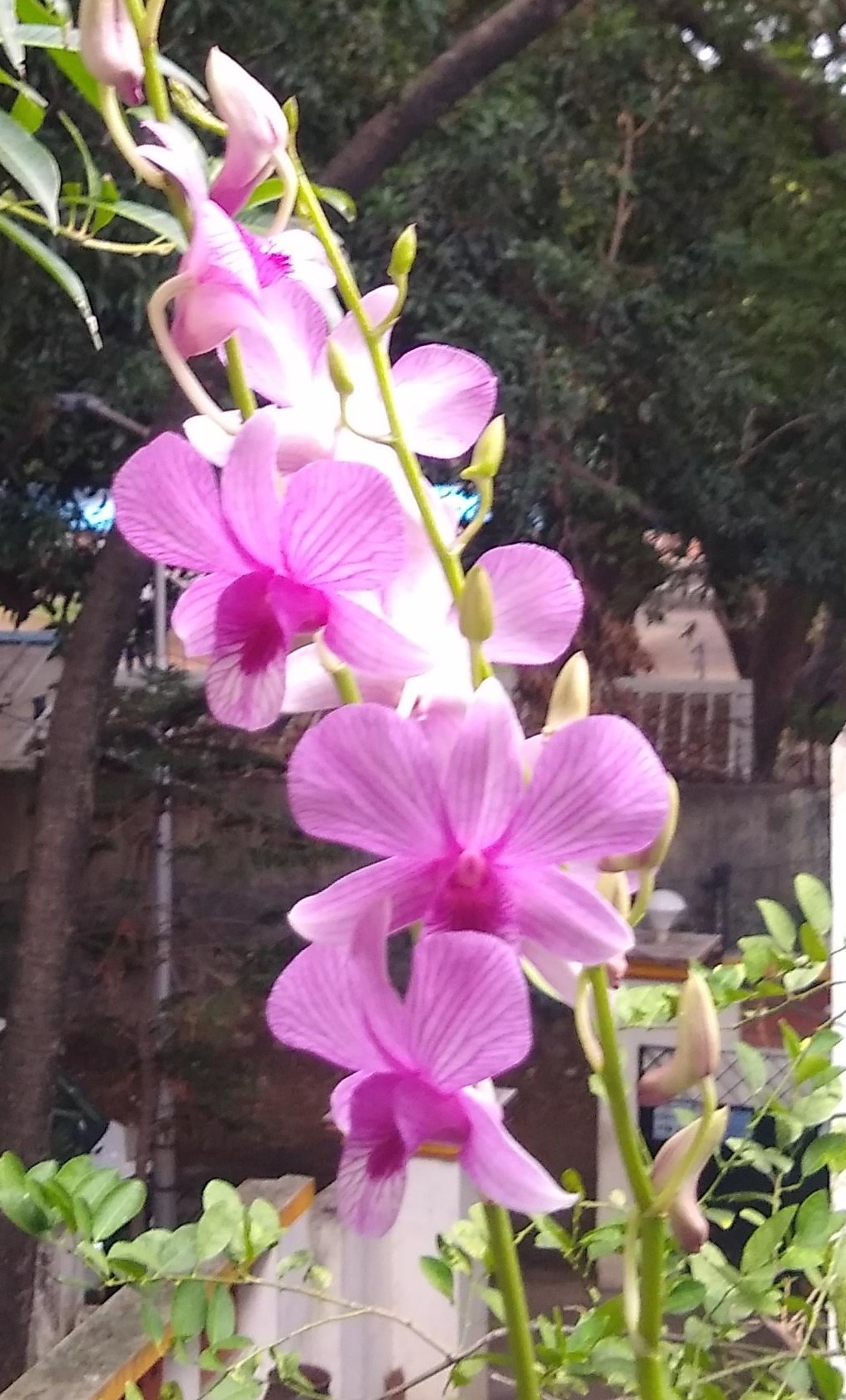
Dendrobium Orchid
Dendrobium
The Dendrobium Orchid, a diverse and captivating genus within the Orchidaceae family, stands as one of the most prolific and popular orchids in the world. With over 1,800 species and countless hybrids, these "tree-living" plants (the name *Dendrobium* literally means "life on a tree" in Greek) ar...
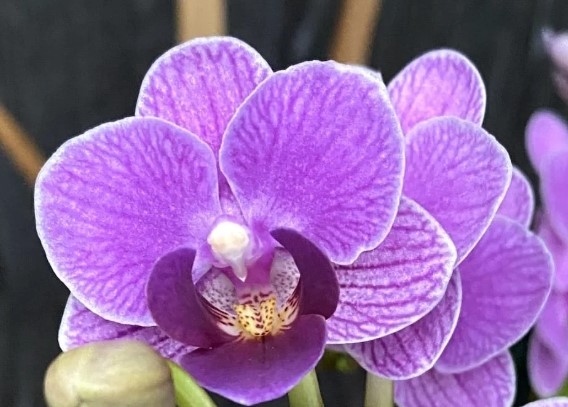
Moth Orchid (Phalaenopsis)
Phalaenopsis hybrids
The Moth Orchid, representing the broader genus Phalaenopsis, is undeniably the most popular and commercially successful orchid in the world. Belonging to the massive Orchidaceae family and native to the tropical canopies of Southeast Asia and Australia, these epiphytic marvels have been heavily...
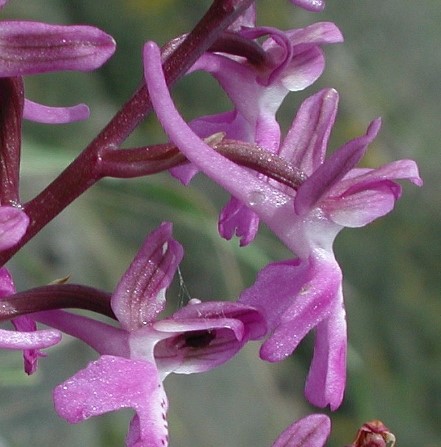
Orchis Orchid
Orchis
The Orchis Orchid, representing the eponymous genus Orchis within the family Orchidaceae, is a group of historically significant terrestrial orchids native to the meadows, grasslands, and light woodlands of Europe, North Africa, and the Mediterranean basin. Unlike common tropical epiphytic orchid...
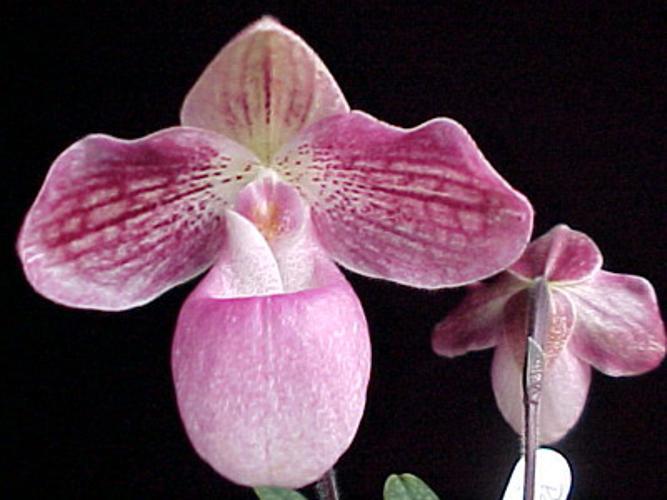
Silver Slipper Orchid
Paphiopedilum micranthum
The Silver Slipper Orchid, botanically designated as Paphiopedilum micranthum and popularly known as the Pocket Orchid, is a critically endangered, terrestrial slipper orchid belonging to the Orchidaceae family. Native to the steep, mist-shrouded limestone cliffs and rocky moss-covered ravines of...
Similar Characteristics
4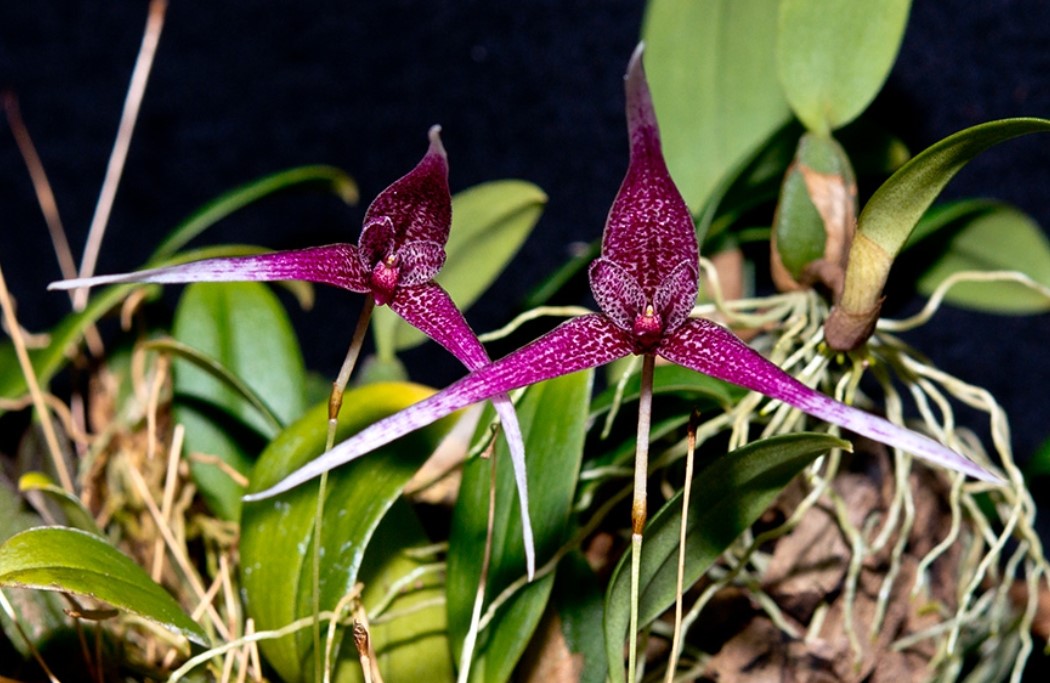
Bulbophyllum Orchid
Bulbophyllum
The Bulbophyllum orchid, representing the largest genus in the Orchidaceae family, is a true botanical marvel boasting over 2,000 highly diverse species. Native to tropical and subtropical rainforests across Asia, Africa, and the Americas, these epiphytic wonders grow primarily on tree bark in hu...
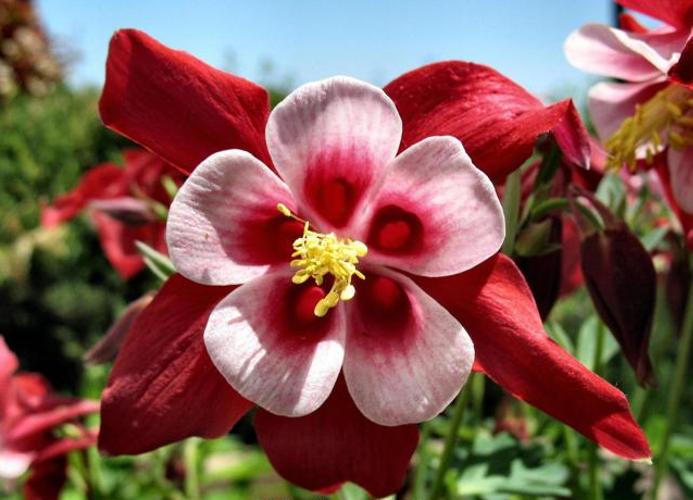
Cattleya orchids
Cattleya
The Cattleya Orchid, botanically classified as Cattleya and celebrated globally as the 'Queen of Orchids' or 'Corsage Orchid,' is a spectacular genus of epiphytic perennial plants in the Orchidaceae family. Native to the tropical rain forests and elevated cloud forests of Central and South Americ...
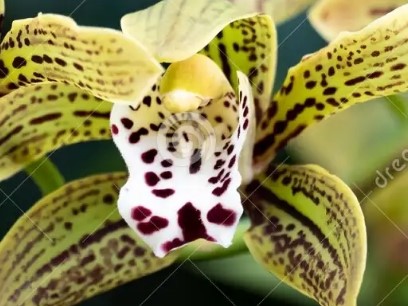
Boat Orchid
Cymbidium
The Boat Orchid, scientifically known as Cymbidium and belonging to the family Orchidaceae, is a highly popular, exceptionally elegant sympodial perennial orchid. Native to the tropical and subtropical regions of Asia—ranging from the high-altitude forests of the Himalayas through China, Japan, a...
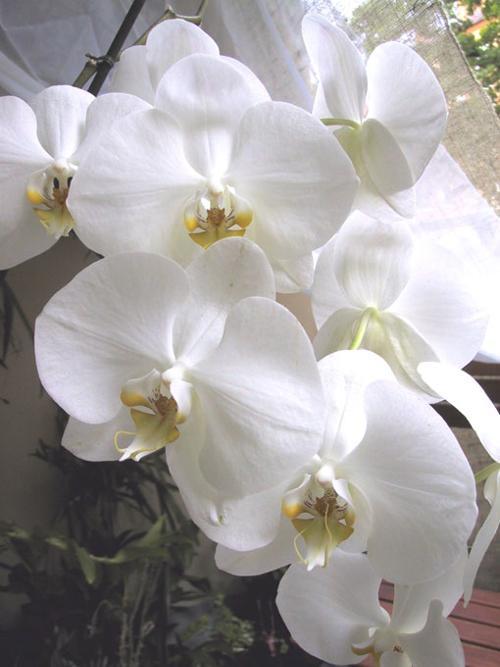
Moon Orchid (Phalaenopsis)
Phalaenopsis amabilis
The Moon Orchid (Phalaenopsis amabilis) is an elegant, highly coveted epiphytic orchid belonging to the massive Orchidaceae family. Native to the lush, humid rainforests of Southeast Asia, Indonesia, the Philippines, and northern Australia, it grows high in the tree canopy, clinging securely to b...