
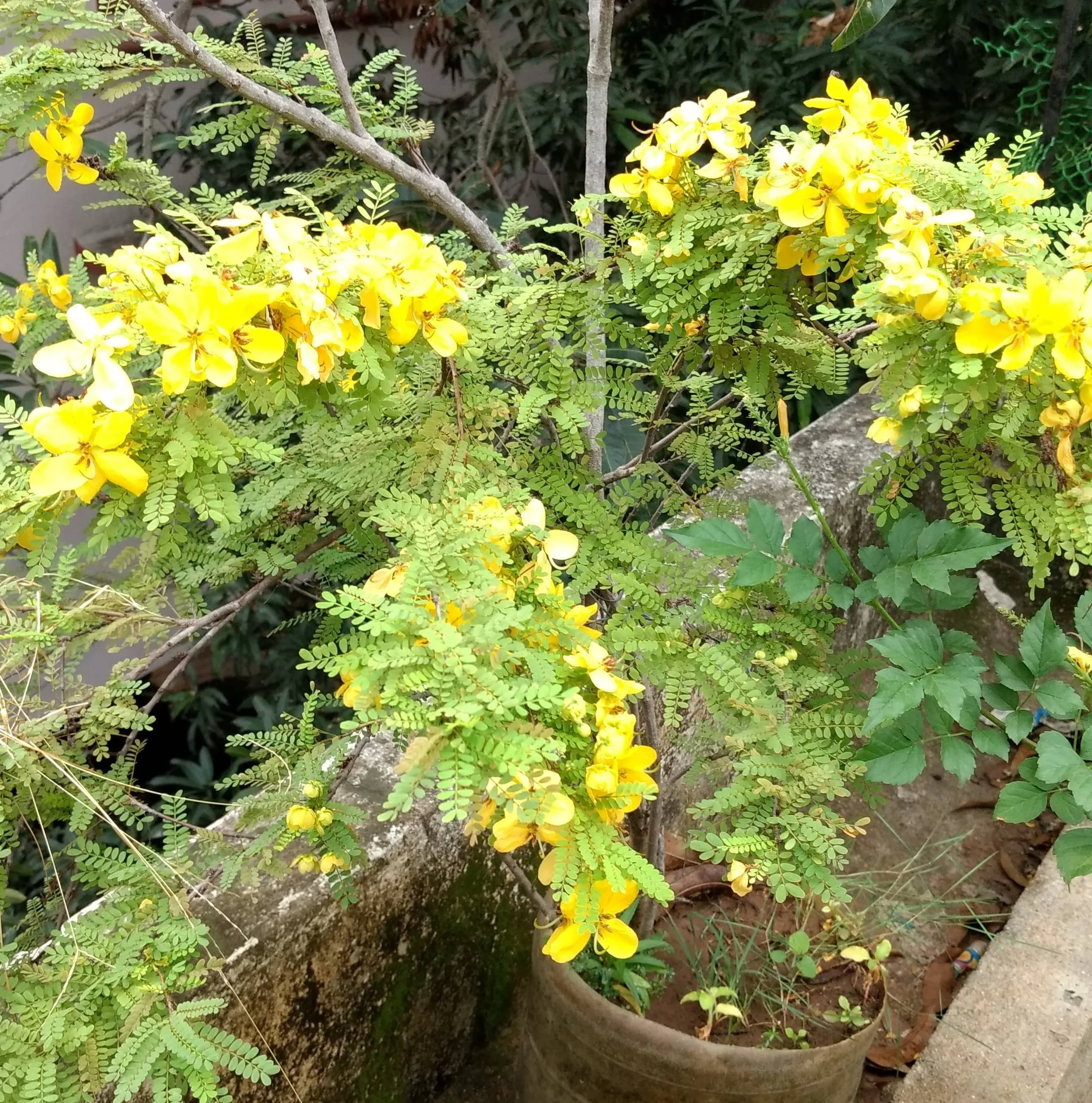
Tanner's Cassia
Senna Auriculata
How to Identify Tanner's Cassia
NON-TOXIC. 100% safe for cats, dogs, and horses. Provides a resilient, evergreen, and pet-safe structural shrub for warm-climate landscaping.
Care & Growing Guide
Seasonal Blooming & Hardiness
Seasonal Blooming Calendar:
- Peak Bloom: Late winter to early spring.
- Planting Time: Sow seeds directly outdoors in early spring after the last frost, or transplant nursery starts in late spring.
Bloom Timeline
About Tanner's Cassia
Tanner's Cassia, botanically designated as Senna auriculata (formerly Cassia auriculata) and celebrated across southern India as Avarampoo, is an exceptionally hardy, drought-tolerant, and multi-purpose evergreen Indian shrub. Belonging to the family Fabaceae (the pea or legume family, subfamily Caesalpinioideae), this ecologically and culturally significant shrub is native to the hot, sun-baked arid plains, coastal dunes, and dry scrub forests of India and Sri Lanka.
This robust, branching shrub typically grows to a height of 3 to 10 feet (1 to 3 meters) with a sprawling, dense branch canopy. It features smooth, reddish-brown bark and attractive, alternate, pinnately compound leaves containing 8 to 12 pairs of small, oval leaflets. Highly unique, large, leaf-like and ear-shaped (auriculate) stipules are located at the base of each leaf petiole, which is a key identifying marker of this species.
Tanner's Cassia is legendary for its continuous, heavy blooming cycle, producing massive terminal clusters (corymbose racemes) of bright golden-yellow flowers at the branch tips. Individual flowers measure 1 to 1.5 inches across, featuring 5 broad, overlapping, paper-thin, and slightly wrinkled petals. These magnificent golden blooms completely cover the plant during the peak seasons, making it a highly visible and radiant element of dry landscape zones.
The reproductive morphology of individual flowers is represented by the leguminous floral formula ⊕ ⚥ K(5) C5 A10 G(1). This formula indicates that the flowers are bisexual and radially symmetrical (actinomorphic). The calyx is composed of 5 fused, overlapping sepals forming a green base, and the corolla has 5 free, clawed golden petals. The androecium contains 10 free stamens (with 3 often modified into sterile staminodes), and the gynoecium contains a single carpel with a superior ovary.
The common name 'Tanner's Cassia' is derived from the historical use of its rich, reddish bark, which contains extremely high concentrations of natural tannins, in the commercial tanning of leather. Famed in Sanskrit as Avartaki (अवर्तकी) and in Tamil as Avarampoo (ஆவாரம்பூ), it is deeply woven into southern Indian cultural heritage, notably during the floral Bathukamma festival. In Ayurvedic and Siddha traditional medicine, its flowers and leaves are revered for treating diabetes, skin ailments, and cooling the body.
For pet owners and veterinarians, Tanner's Cassia represents a highly safe, low-risk, and pet-safe landscape choice. Senna auriculata is classified as completely NON-TOXIC to cats, dogs, and horses by major global animal safety databases. If a curious pet runs through the shrubbery or nibbles on the compound leaflets or yellow petals, there is absolutely no risk of toxic poisoning. To discover more safe, heat-tolerant landscape shrubs for active yards, visit our general Pet Guard page.
Tanner's Cassia is occasionally confused with other yellow sennas or cassias (such as Senna bicapsularis). It is easily distinguished because true Tanner's Cassia possesses highly prominent, ear-shaped (auriculate) stipules at its leaf bases and wrinkled petals, whereas other sennas lack these ear-shaped leaflets. It is a premier choice for warm-climate gardens; we recommend pairing it alongside December-barleria or Arabian Jasmine-mogra. To explore more golden shrubs, browse our Flower Identifier.
For more botanical profiles and flower identification features, see our guides on Sword Lily and Thorn Apple.
Floral Formula & Features
Radially Symmetrical, Bisexual, 5 fused petals, 5 free sepals, 10 free stamens, 1 carpel with superior ovary
- Scientific Name & Classification: Senna auriculata (Fabaceae). Globally famed as Tanner's Cassia, Tanner's Senna, Avaram, and Ranawara.
- Identification Markers: Pinnate compound leaves, prominent ear-shaped (auriculate) stipules at petiole bases, and dense terminal clusters of 1.5-inch golden-yellow flowers with wrinkled petals.
- Floral Formula (⊕ ⚥ K(5) C5 A10 G(1)): Radially symmetrical, bisexual flowers with 5 fused sepals, 5 free golden petals, 10 free stamens, and a single carpel with superior ovary.
- Growing Requirements: Full intense direct sun (6-8 hours daily); poor, sandy, gravelly, highly well-draining soils. Highly drought, heat, and salt-tolerant (Zones 9-11).
- Cultural Significance: Name derived from tannin-rich bark used in leather processing. Sacred South Indian flower 'Avarampoo' featured in Bathukamma festivals and Ayurvedic diabetic remedies.
- Safety & Toxicity: NON-TOXIC. 100% safe for cats, dogs, and horses. Provides a resilient, evergreen, and pet-safe structural shrub for warm-climate landscaping.
- Common Look-alikes: Confused with other yellow-flowering Sennas, but easily distinguished by its highly distinct, ear-shaped leaf stipules and paper-thin wrinkled petals.
- Internal Links: Creates a beautiful, drought-tolerant background screen when planted in sweeps beside other heat-loving favorites like December-barleria or Arabian Jasmine-mogra; find more in our Flower Identifier.
Names in Different Languages
Botanical Classification: Tanner's Cassia belongs to the Fabaceae family. Learn how to identify its floral symmetry, stamen arrangement, and structural formulas in our Botanical Family Classification Guide.
Toxicity & Safety
Frequently Asked Questions
What is Floral Formula?
A floral formula is a symbolic representation of a flower's structure using letters, numbers, and special symbols. It provides a concise way to describe the arrangement and number of floral parts.
This formula describes the flower's symmetry, sepals, petals, stamens, and carpels in a standardized format.
Formula Sequence
- Bract: Br or Ebr
- Bracteole: Brl or Ebrl
- Symmetry: % (Radial) or ⊕ (Bilateral)
- Sex: ♀ (Female), ♂ (Male), or ⚥ (Bisexual)
- Calyx/Sepal: K<number> (Free or Fused)
- Corolla/Petal: C<number> (Free or Fused)
- Androecium: A<number> (Free or Fused)
- Gynaecium: G<number> (Superior or Inferior Ovary)
Symbol Meanings
- Numbers: Indicate quantity of parts
- Parentheses (): Parts are fused together
- Plus (+): Parts in different whorls
- Underline: Superior ovary position
- Overline: Inferior ovary position
- ∞: Numerous parts (too many to count)
Understanding floral formulas helps botanists quickly identify and classify flowers based on their structural characteristics.
Similar Flowers
Discover flowers that share botanical characteristics
Same Family
4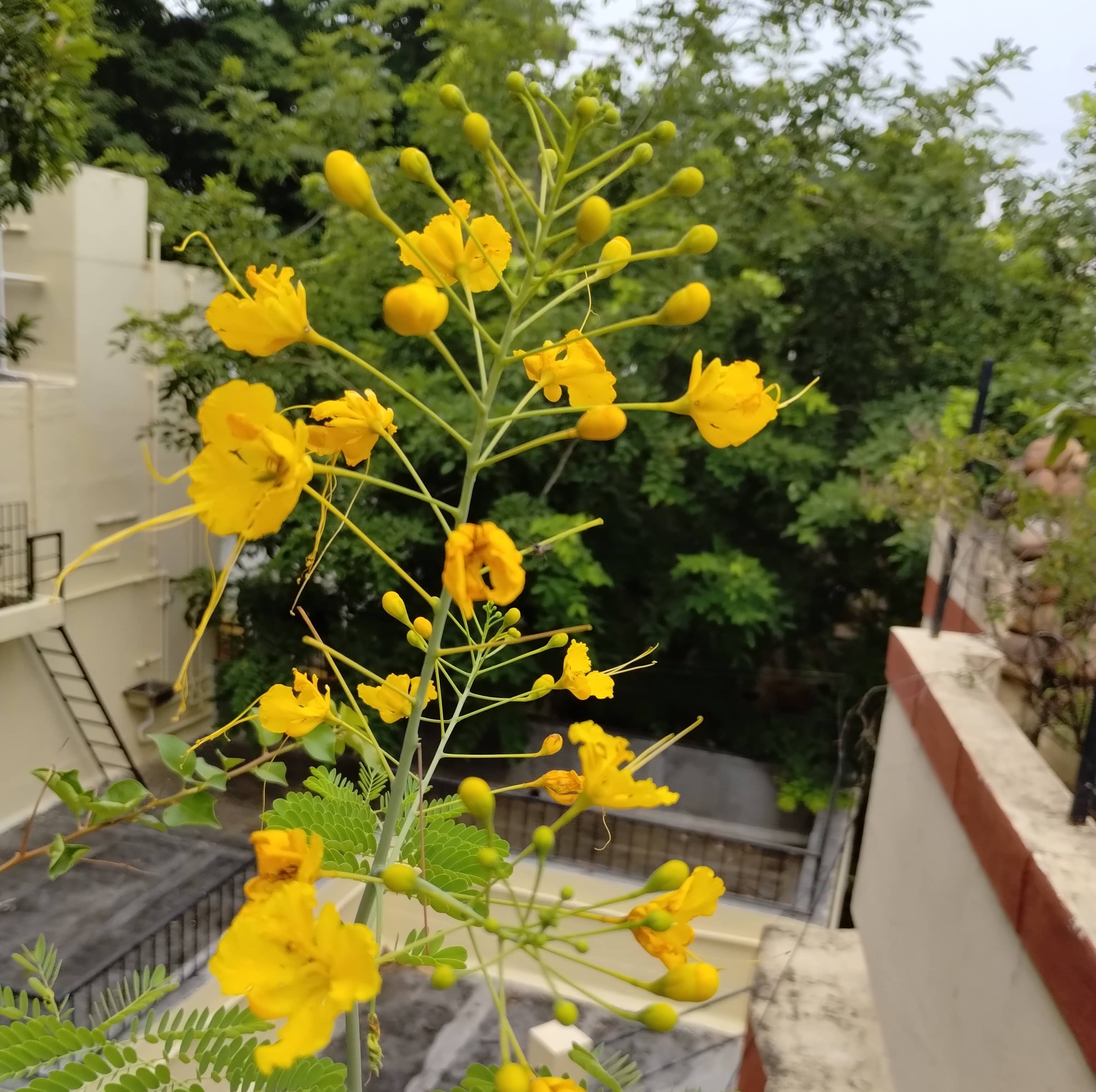
Peacock Flower (Caesalpinia)
Caesalpinia pulcherrima
Caesalpinia pulcherrima, famously known as the "Peacock Flower," "Pride of Barbados," or "Red Bird of Paradise," is a breathtakingly vibrant tropical shrub that embodies the fiery spirit of the Caribbean. A member of the Fabaceae (Legume) family, this species is celebrated for its flamboyant, ter...
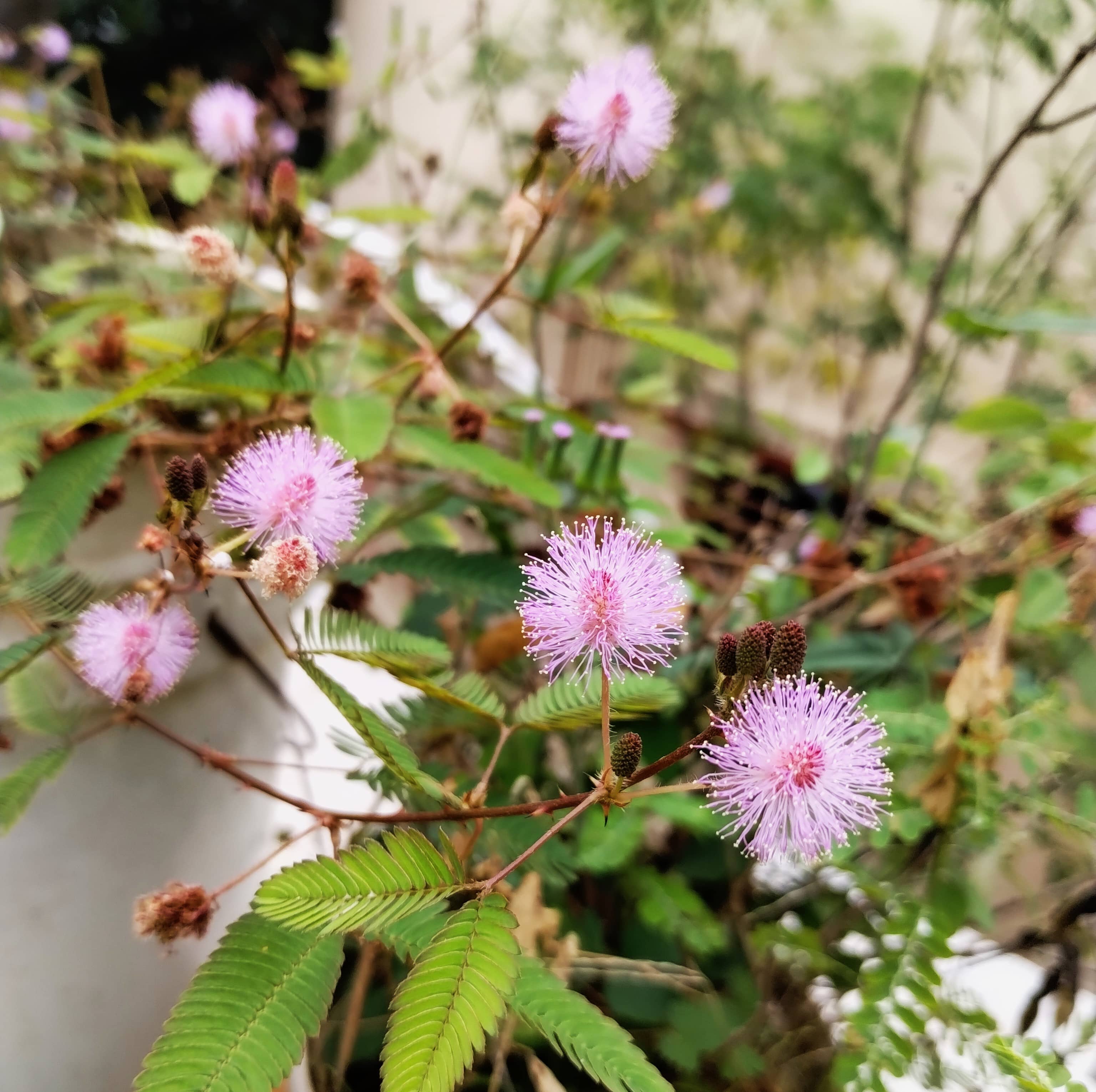
Touch Me Not
Mimosa pudica
Mimosa pudica, widely known as the "Touch-Me-Not" or "Sensitive Plant," is one of the most intriguing species in the botanical kingdom due to its rapid, touch-sensitive leaf movements. A member of the Fabaceae (Legume) family, this creeping perennial or subshrub is native to the tropical regions...
Butterfly Pea
Clitoria ternatea
The Butterfly Pea (Clitoria ternatea), belonging to the Fabaceae (legume) family, is a captivating tropical climbing vine renowned for its vivid, jewel-toned blossoms. Originating in equatorial Asia, including India and Southeast Asia, it has successfully spread to tropical and subtropical zones...
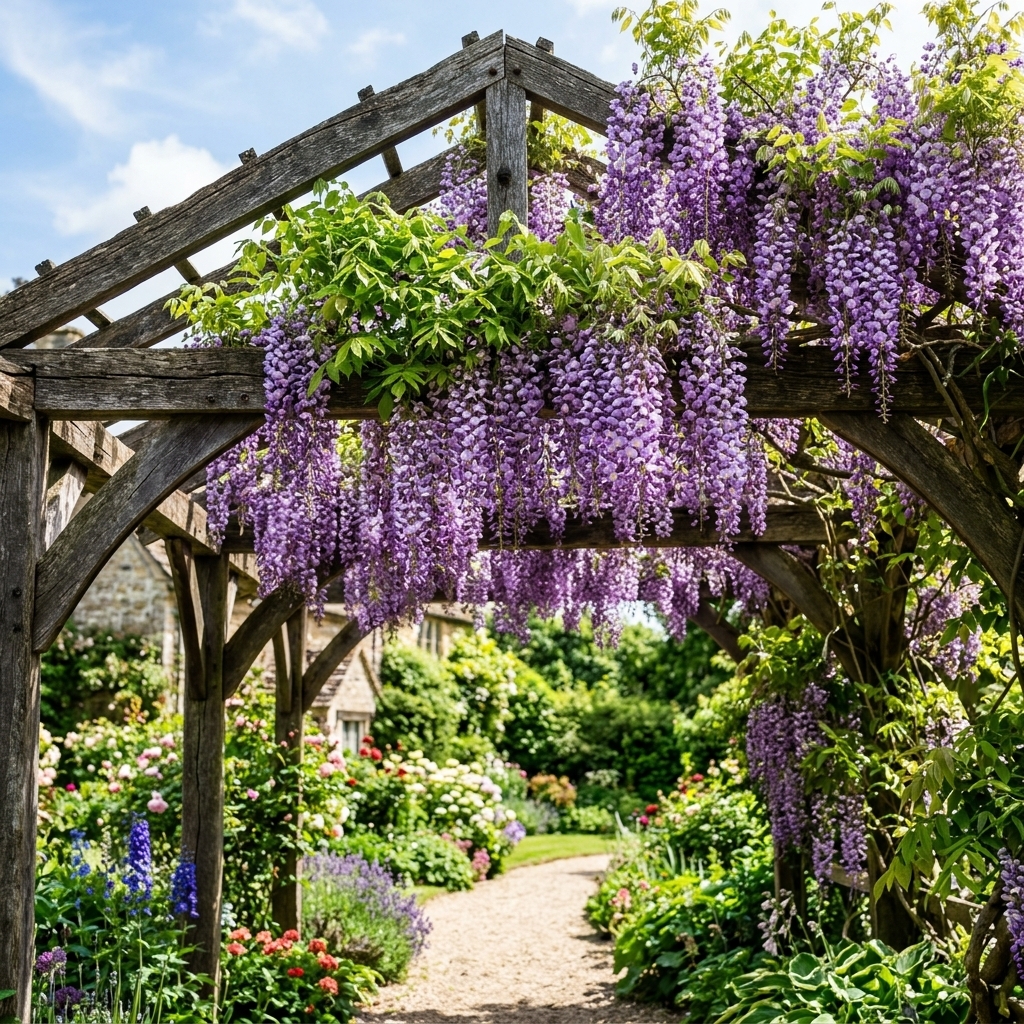
Wisteria
Wisteria
Wisteria, botanically classified within the genus Wisteria and most famously represented by Wisteria sinensis (Chinese Wisteria) and Wisteria floribunda (Japanese Wisteria), is a spectacular genus of woody, climbing deciduous vines in the Fabaceae (pea or legume) family. Native to the damp woodla...
Similar Characteristics
4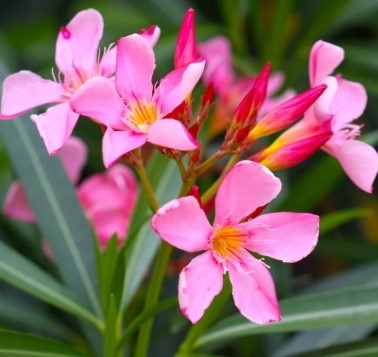
Oleander (Rosebay)
Nerium oleander
The Oleander, botanically designated as Nerium oleander and belonging to the family Apocynaceae (the dogbane family), is a fast-growing, highly resilient, and multi-stemmed evergreen shrub or small tree. Native to the rocky streambeds, coastal valleys, and warm river banks of the Mediterranean ba...
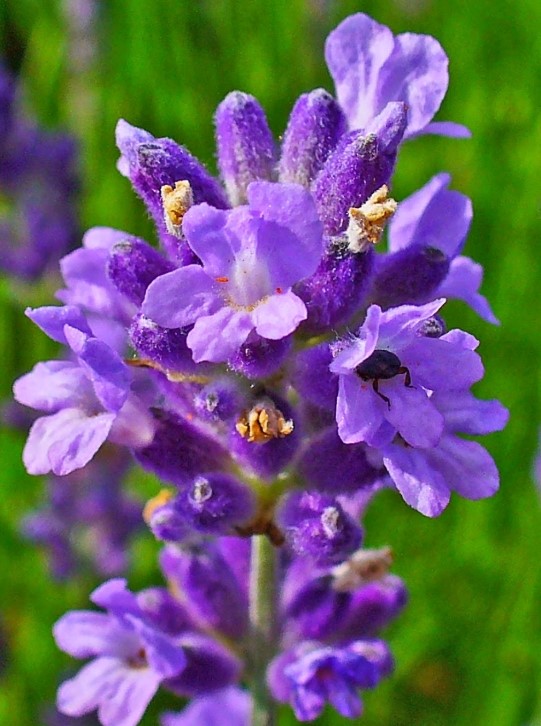
Lavender
Lavandula angustifolia
Lavender, botanically designated under the genus Lavandula and most widely represented by Lavandula angustifolia (English Lavender), is an exceptionally famous, highly aromatic evergreen perennial shrub belonging to the Lamiaceae (mint) family. Native to the sun-baked, rocky limestone hillsides a...
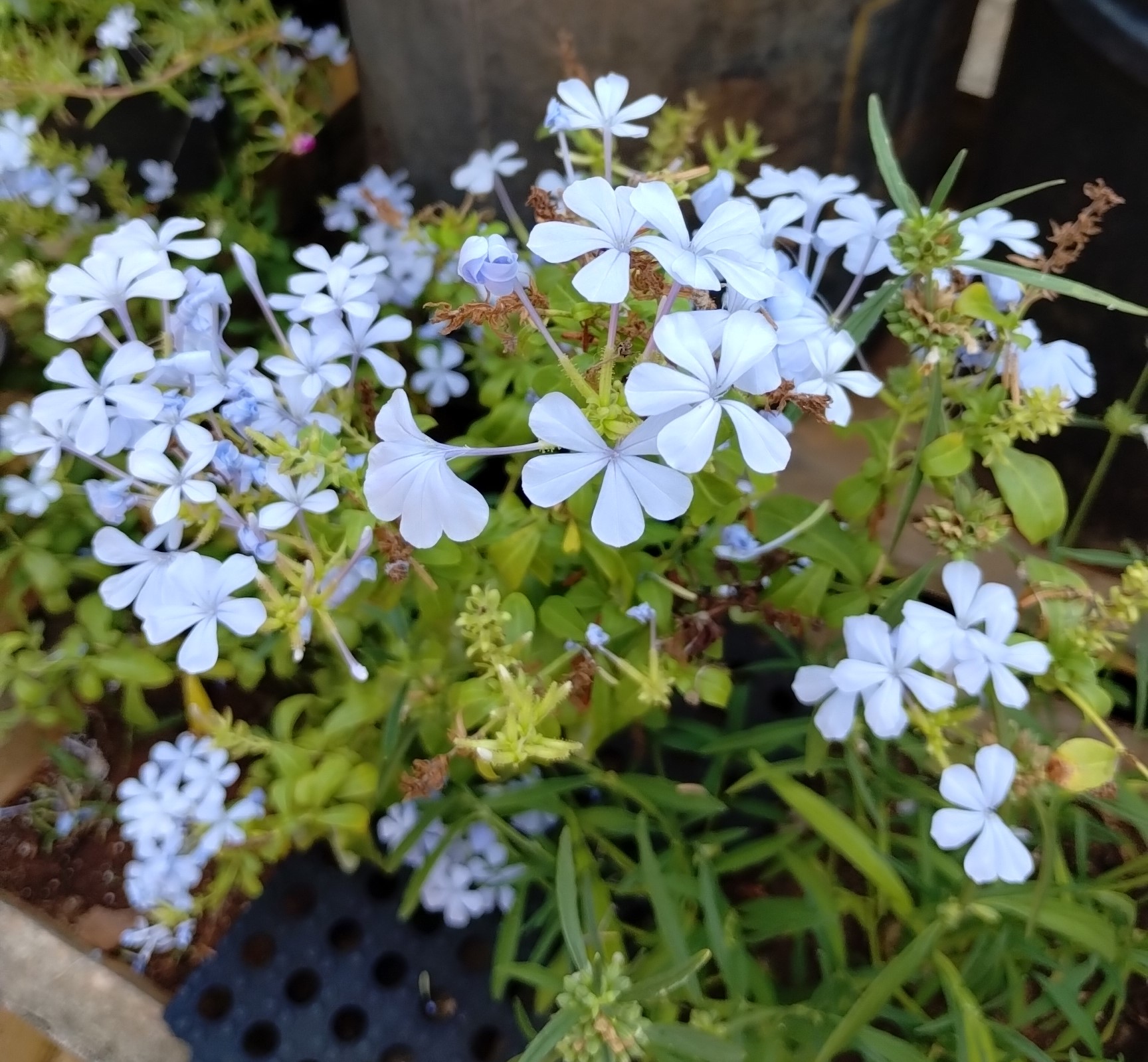
Leadwort
Plumbago auriculata
The Leadwort, botanically designated as Plumbago auriculata and commonly known as the Cape Leadwort, Blue Plumbago, or Sky Flower, is an exceptionally vigorous, sprawling evergreen shrub. Belonging to the family Plumbaginaceae (the leadwort family), this resilient and floriferous plant is native...
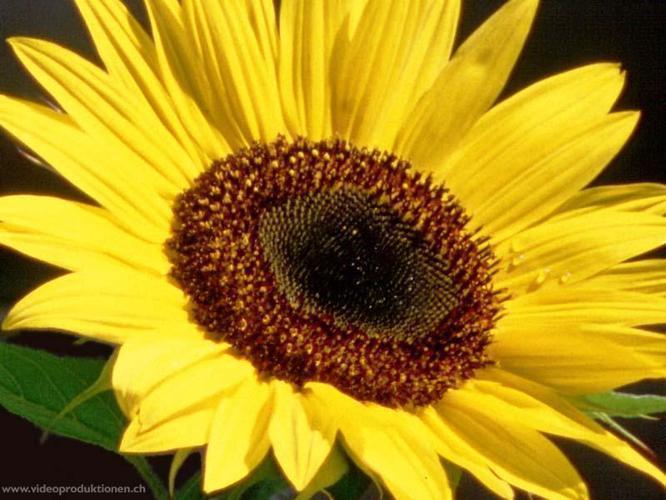
Sunflower
Helianthus annuus
The Sunflower, botanically classified as Helianthus annuus and commonly known as the Common Sunflower, is an exceptionally iconic, robust, and fast-growing annual plant. Belonging to the family Asteraceae (the daisy, aster, or composite family), this famous wildflower is native to the fertile pra...