
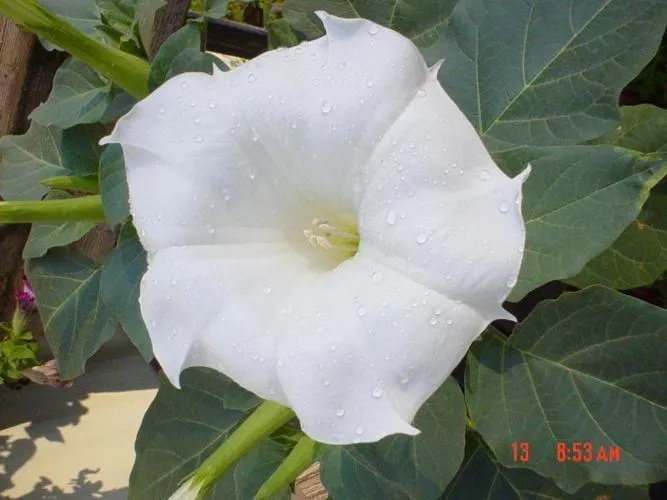
Thorn Apple
Datura stramonium
How to Identify Thorn Apple
EXTREMELY TOXIC & LETHAL. Contains high concentrations of tropane alkaloids causing delirium, blindness, rapid heart rates, and respiratory arrest.
Care & Growing Guide
Seasonal Blooming & Hardiness
Seasonal Blooming Calendar:
- Peak Bloom: Summer (typically June through September).
- Planting Time: Sow seeds directly outdoors in early spring after the last frost, or transplant nursery starts in late spring.
Bloom Timeline
About Thorn Apple
The Thorn Apple, botanically classified as Datura stramonium and widely known by folk names like Jimsonweed, Devil's Trumpet, or Hell's Bells, is an aggressive, fast-growing annual herb belonging to the Solanaceae (nightshade) family. Native to Mexico and Central America, this highly resilient species has naturalized worldwide across temperate and tropical zones, thriving on roadsides, agricultural lands, and disturbed ground. It is globally recognized for its striking, erect flowers that open under the cover of night, releasing an intensely sweet fragrance to attract nocturnal pollinators, and its distinctive, spike-covered green seed capsules that give the plant its common name.
Growing as an erect, branching herb that reaches heights of 2 to 5 feet with an equal leafy spread, the Thorn Apple features stout, hollow, purplish-green stems. The foliage consists of large, ovate, irregularly lobed leaves with sharply pointed teeth, emitting a bitter, unpleasant odor when bruised. In late summer, the plant produces magnificent, erect, trumpet-shaped flowers measuring 3 to 8 inches in length. These blossoms are typically pure white or pale violet-purple, ending in five distinct pointed lobes. They open at twilight and close by mid-morning, adapted perfectly for hawkmoths.
The reproductive morphology of this genus is represented by the floral formula EBr ⊕ ⚿ K(5) C(5) A5 G(2). This formula indicates that the flower is ebracteate, radially symmetrical (actinomorphic), and bisexual. It features a calyx of 5 fused sepals forming a long, pentagonal tubular calyx that splits at maturity, and a corolla of 5 fused petals forming a classic trumpet. The androecium contains 5 free stamens attached to the base of the corolla tube, surrounding a syncarpous gynoecium of 2 fused carpels with a superior ovary that develops into a spiny, four-valved seed capsule.
In terms of growth and adaptability, Datura stramonium is an extremely hardy and opportunistic plant. It thrives in full, direct sunlight, requiring at least 6 to 8 hours of direct daily exposure to produce its massive flush of seed capsules. It can grow in almost any soil type—preferring sandy, nitrogen-rich, well-draining loams but easily adapting to clay and barren soils. It is exceptionally drought-tolerant once established and reproduces exclusively from seeds, which can remain dormant and viable in the soil for decades, making it a highly persistent weed.
Steeped in dark folklore and shamanic history, the Thorn Apple has a rich and dangerous cultural background. The name Datura is derived from the ancient Sanskrit dhattūra, meaning 'divine white trumpet.' In North American history, it became known as 'Jamestown Weed' (later contracted to Jimsonweed) after British soldiers in 1676 ingested it as a salad green in Virginia and spent eleven days in a state of severe delirium. Historically used in traditional medicine to relieve asthma, its unpredictable chemical concentrations make any modern herbal use extremely dangerous and ill-advised.
From a veterinary and medical standpoint, the Thorn Apple is classified as EXTREMELY TOXIC and potentially LETHAL to dogs, cats, horses, livestock, and humans. All parts of the plant—especially the black seeds and leaves—contain highly dangerous tropane alkaloids, including scopolamine, hyoscyamine, and atropine. If ingested, these chemicals block the central nervous system, triggering rapid heart rates, severe dry mouth, dilated pupils, blindness, extreme delirium, violent hallucinations, coma, and fatal respiratory failure. Because of these lethal properties, we do not link this toxic species to any pet safety pages.
Thorn Apple is frequently confused with its close relatives, the Angel's Trumpets (Brugmansia). However, they are easily distinguished because Datura flowers are erect and point upward, and the plant grows as a small annual herb, whereas Brugmansia flowers are pendulous, hanging straight down, and grow as large, woody perennial trees. It can be found in wild landscapes alongside other Solanaceae members; we recommend comparing it with Belladonna or Balsam. To learn more about identifying poisonous nightshade species, browse our Flower Identifier.
For more botanical profiles and flower identification features, see our guides on Pink-Yellow Dahlia and Purple Coneflower (Echinacea).
For more botanical profiles and flower identification features, see our guides on Tanner's Cassia and Windflower.
Floral Formula & Features
Ebracteate (no bracts), Actinomorphic (radially symmetrical), bisexual, 5 fused sepals forming tubular calyx, 5 fused petals forming trumpet-shaped corolla, 5 free stamens attached to corolla tube, 2 fused carpels with superior ovary
- Scientific Name & Classification: Datura stramonium (Solanaceae). Commonly known as Jimsonweed, Devil's Trumpet, and Hell's Bells.
- Identification Markers: Upright branching herb with coarsely toothed leaves. Large erect white or violet trumpet-shaped flowers and spiny, egg-shaped green seed pods.
- Floral Formula (EBr ⊕ ⚿ K(5) C(5) A5 G(2)): Radially symmetrical, bisexual flowers with 5 fused sepals, 5 fused petals, 5 stamens, and a 2-carpellate superior ovary.
- Growing Requirements: Full sun; thrives in disturbed, sandy, nitrogen-rich soils. Extremely drought-tolerant and resilient (Zones 3-11).
- Cultural Significance: Known as 'Dhattūra' in Sanskrit; historical 'Jamestown Weed' of 1676 Virginia. Used in early shamanic and medicinal rituals.
- Safety & Toxicity: EXTREMELY TOXIC & LETHAL. Contains high concentrations of tropane alkaloids causing delirium, blindness, rapid heart rates, and respiratory arrest.
- Common Look-alikes: Confused with Brugmansia (Angel's Trumpet), but distinguished by erect flowers and herb growth habit rather than massive hanging tree blooms.
- Internal Links: Dangerous wild cousin compared alongside Belladonna or Balsam; discover other wild Solanaceae in our Flower Identifier.
Names in Different Languages
Botanical Classification: Thorn Apple belongs to the Solanaceae family. Learn how to identify its floral symmetry, stamen arrangement, and structural formulas in our Botanical Family Classification Guide.
Toxicity & Safety
Always keep toxic plants out of reach of children and pets. Consult a veterinarian or medical professional immediately if ingestion is suspected.
Frequently Asked Questions
What is Floral Formula?
A floral formula is a symbolic representation of a flower's structure using letters, numbers, and special symbols. It provides a concise way to describe the arrangement and number of floral parts.
This formula describes the flower's symmetry, sepals, petals, stamens, and carpels in a standardized format.
Formula Sequence
- Bract: Br or Ebr
- Bracteole: Brl or Ebrl
- Symmetry: % (Radial) or ⊕ (Bilateral)
- Sex: ♀ (Female), ♂ (Male), or ⚥ (Bisexual)
- Calyx/Sepal: K<number> (Free or Fused)
- Corolla/Petal: C<number> (Free or Fused)
- Androecium: A<number> (Free or Fused)
- Gynaecium: G<number> (Superior or Inferior Ovary)
Symbol Meanings
- Numbers: Indicate quantity of parts
- Parentheses (): Parts are fused together
- Plus (+): Parts in different whorls
- Underline: Superior ovary position
- Overline: Inferior ovary position
- ∞: Numerous parts (too many to count)
Understanding floral formulas helps botanists quickly identify and classify flowers based on their structural characteristics.
Similar Flowers
Discover flowers that share botanical characteristics
Similar Characteristics
4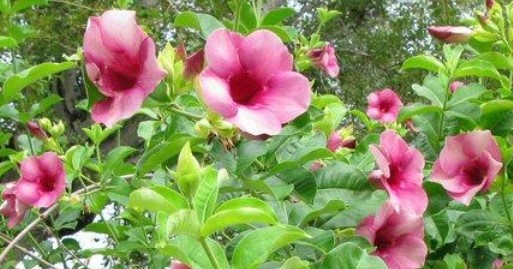
Mandevilla
Mandevilla
Mandevilla, often referred to as the Rock Trumpet, is the undisputed queen of the tropical vertical garden. Belonging to the Apocynaceae family—the same family that hosts the famous Frangipani and Oleander—this genus comprises over 100 species of vigorous, woody climbing vines and mounding shrubs...
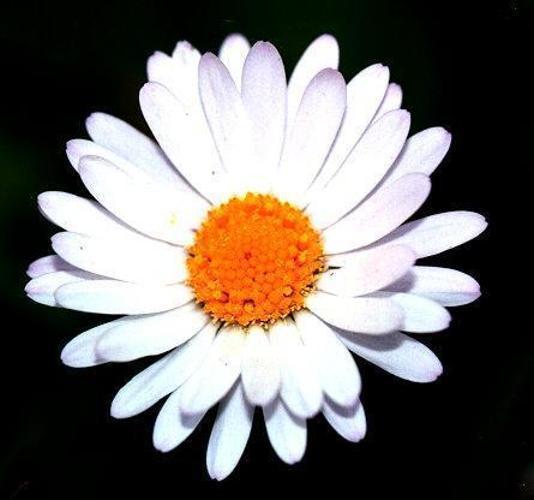
Oxeye Daisy
Leucanthemum vulgare
The Oxeye Daisy, botanically classified as Leucanthemum vulgare and historically celebrated as the Moon Daisy or Dog Daisy, is an exceptionally cheerful, rhizomatous herbaceous perennial belonging to the Asteraceae (daisy or composite) family. Native to the sweeping fields, dry pastures, and sunn...
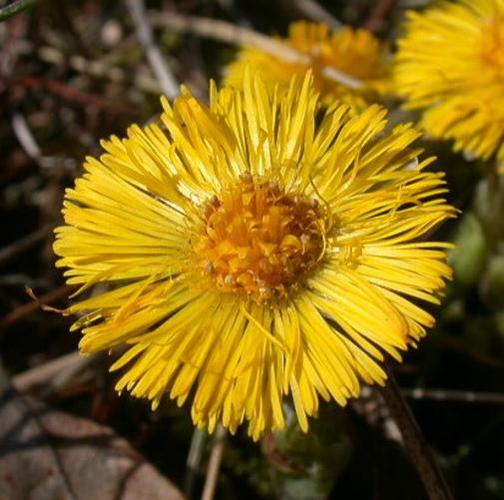
Coltsfoot
Tussilago farfara
Coltsfoot, botanically classified as Tussilago farfara, is an intriguing and highly specialized perennial wildflower belonging to the Asteraceae (sunflower) family. Native to the damp clay-rich soils, disturbed riverbanks, and limestone cliffs of Europe, western and central Asia, and parts of Nor...
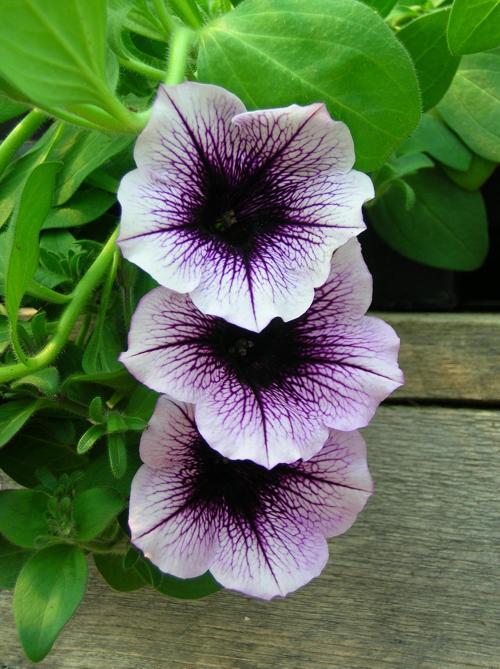
Petunia
Petunia
The Petunia, botanically designated under the genus *Petunia* (particularly the widely grown garden hybrid *Petunia × atkinsiana*), is an exceptionally popular, highly prolific annual or tender perennial. Belonging to the family Solanaceae (the nightshade family, tribe Petunioideae), this South A...