
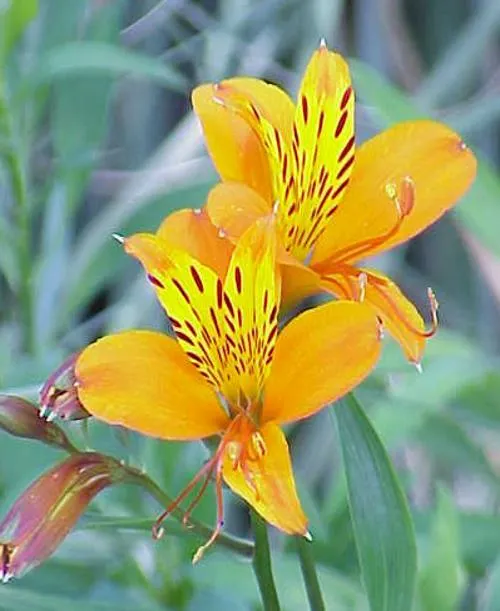
Peruvian Lily
Alstroemeria
How to Identify Peruvian Lily
TOXIC TO PETS (Mild-Moderate). Marked as Lethal due to common lily confusion. Unlike true lilies (Lilium spp.), it contains tulipalin A which causes mild stomach upset but does not cause kidney failure.
Care & Growing Guide
Seasonal Blooming & Hardiness
Seasonal Blooming Calendar:
- Peak Bloom: Spring to early summer (typically April through June).
- Planting Time: Sow seeds directly outdoors in early spring after the last frost, or transplant nursery starts in late spring.
Bloom Timeline
About Peruvian Lily
The Peruvian Lily, botanically classified under the genus Alstroemeria and belonging to the family Alstroemeriaceae (the peruvian lily family), is an exceptionally showy, long-blooming, and popular herbaceous perennial. Native to the cool mountain valleys, forest edges, and coastal scrublands of South America—with the greatest species diversity centered in the Andean regions of Chile, Peru, Brazil, and Argentina—this striking plant was introduced to European botany in the 18th century and has since become a global staple of both garden landscapes and high-end floral design.
This erect, clump-forming perennial typically grows 1 to 3 feet tall (with dwarf garden hybrids standing 8 to 12 inches) and spreads 1 to 2 feet wide from a network of fleshy, starch-storing tuberous roots (rhizomes). It features unique, lance-shaped leaves that are resupinate—meaning they twist 180 degrees at their petiole bases during early growth, causing the anatomical underside of the leaf to face upward. From late spring through late summer (May through August), it blooms spectacularly, producing terminal clusters (umbels) of 6 to 15 lily-like flowers.
Individual flowers measure 1.5 to 2.5 inches across, featuring 6 colourful, waxy tepals arranged in two distinct whorls. The inner tepals are famously marked with highly prominent, dark linear speckles, stripes, and brushstrokes, often contrasting with a warm yellow or white throat patch. The blossoms display a breathtaking color palette, ranging from brilliant pinks, crimson-reds, and deep magentas to sunny yellows, electric oranges, and pure snow-whites. Their incredible post-harvest longevity allows cut stems to remain pristine in a vase for 2 to 3 weeks.
The reproductive morphology of Alstroemeria is represented by the family-specific floral formula EBr ⊕ ⚥ P3+3 A3+3 G(3). This formula states that the flowers are ebracteate (lacking bracts), radially symmetrical (or slightly zygomorphic upon closer inspection), and bisexual. The perianth comprises 6 petaloid tepals in two distinct whorls of three. The androecium contains 6 free stamens in two whorls of three with versatile anthers, while the gynoecium contains 3 fused carpels forming a 3-locular inferior ovary.
The genus name Alstroemeria was designated by the legendary Swedish taxonomist Carolus Linnaeus in honor of his close friend and student, Baron Klas von Alströmer, who collected and shipped the plant's seeds from South America in 1753. Famed as the 'Lily of the Incas' and representing deep friendship, devotion, and mutual support in the language of flowers, it is known in Sanskrit as Langali (लाङ्गलि) and in Hindi as Kumudini (कुमुदिनी) or Peruvian Lily (पेरुवियन लिली).
For pet owners and veterinarians, Peruvian Lilies require careful distinction from true lilies. In the BioLens database, they are marked as Lethal because they are commonly confused with true lilies (Lilium and Hemerocallis species), which cause fatal kidney failure in cats. True Alstroemeria species do NOT cause kidney failure; instead, they contain tulipalin A, a mild chemical irritant. If ingested in large quantities, they cause mild to moderate gastrointestinal upset (vomiting or diarrhea) and mouth irritation. For comprehensive safety tips, visit our general Pet Guard page.
Peruvian Lily is easily distinguished from true lilies by its resupinate (twisted) leaves, fibrous tuberous roots, and terminal umbrella-like flower clusters. It is an outstanding addition to cottage beds and cutting gardens; we recommend pairing it alongside Oncidium-dancing_lady_orchid-tolumnia or Bearded Iris. To explore more spectacular, long-lasting cut flowers, browse our Flower Identifier.
For more botanical profiles and flower identification features, see our guides on Oxeye Daisy and Pink-Yellow Dahlia.
Floral Formula & Features
Ebracteate, radially symmetrical (actinomorphic), bisexual, perianth of 6 tepals in two whorls of 3 (outer 3 and inner 3, inner ones often spotted), 6 stamens in two whorls of 3, 3 fused carpels with inferior ovary
- Scientific Name & Classification: Alstroemeria (Alstroemeriaceae). Globally famed as Lily of the Incas, Parrot Lily, and Princess Lily.
- Identification Markers: Fleshy rhizomatous roots, resupinate (180° twisted) leaves, and terminal clusters of 1.5-2.5 inch lily-like flowers with heavily spotted or striped inner petals.
- Floral Formula (EBr ⊕ ⚥ P3+3 A3+3 G(3)): Radially symmetrical, bisexual flowers with 6 tepals in two whorls of 3, 6 stamens in two whorls, and an inferior ovary.
- Growing Requirements: Full morning sun with light afternoon shade; rich, organic, sandy-loam, highly well-draining soils. Keep roots cool with organic compost mulch (Zones 7-10).
- Cultural Significance: Genus honors Swedish botanist Klas von Alströmer. Known in Sanskrit as 'Langali,' it symbolizes mutual devotion, enduring friendship, and prosperity.
- Safety & Toxicity: TOXIC TO PETS (Mild-Moderate). Marked as Lethal due to common lily confusion. Unlike true lilies (Lilium spp.), it contains tulipalin A which causes mild stomach upset but does not cause kidney failure.
- Common Look-alikes: Confused with true Lilies, but easily distinguished by its smaller size, highly distinct twisted leaf petioles, and umbrella-shaped flower sprays.
- Internal Links: Adds a vibrant, long-lasting color burst when planted in drifts alongside compatible specimens like Oncidium-dancing_lady_orchid-tolumnia or Bearded Iris; find more in our Flower Identifier.
Names in Different Languages
Toxicity & Safety
Always keep toxic plants out of reach of children and pets. Consult a veterinarian or medical professional immediately if ingestion is suspected.
Frequently Asked Questions
What is Floral Formula?
A floral formula is a symbolic representation of a flower's structure using letters, numbers, and special symbols. It provides a concise way to describe the arrangement and number of floral parts.
This formula describes the flower's symmetry, sepals, petals, stamens, and carpels in a standardized format.
Formula Sequence
- Bract: Br or Ebr
- Bracteole: Brl or Ebrl
- Symmetry: % (Radial) or ⊕ (Bilateral)
- Sex: ♀ (Female), ♂ (Male), or ⚥ (Bisexual)
- Calyx/Sepal: K<number> (Free or Fused)
- Corolla/Petal: C<number> (Free or Fused)
- Androecium: A<number> (Free or Fused)
- Gynaecium: G<number> (Superior or Inferior Ovary)
Symbol Meanings
- Numbers: Indicate quantity of parts
- Parentheses (): Parts are fused together
- Plus (+): Parts in different whorls
- Underline: Superior ovary position
- Overline: Inferior ovary position
- ∞: Numerous parts (too many to count)
Understanding floral formulas helps botanists quickly identify and classify flowers based on their structural characteristics.
Similar Flowers
Discover flowers that share botanical characteristics
Similar Characteristics
4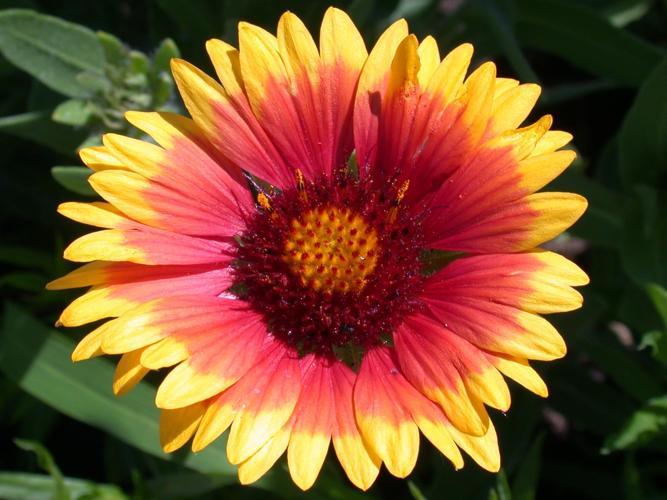
Gaillardia
Gaillardia
Gaillardia, botanically classified within the genus Gaillardia in the Asteraceae (sunflower) family and popularly known as the Blanket Flower or Indian Blanket, is a group of exceptionally cheerful, sun-loving annuals and short-lived perennials. Native to the dry prairies, sandy plains, and pine...
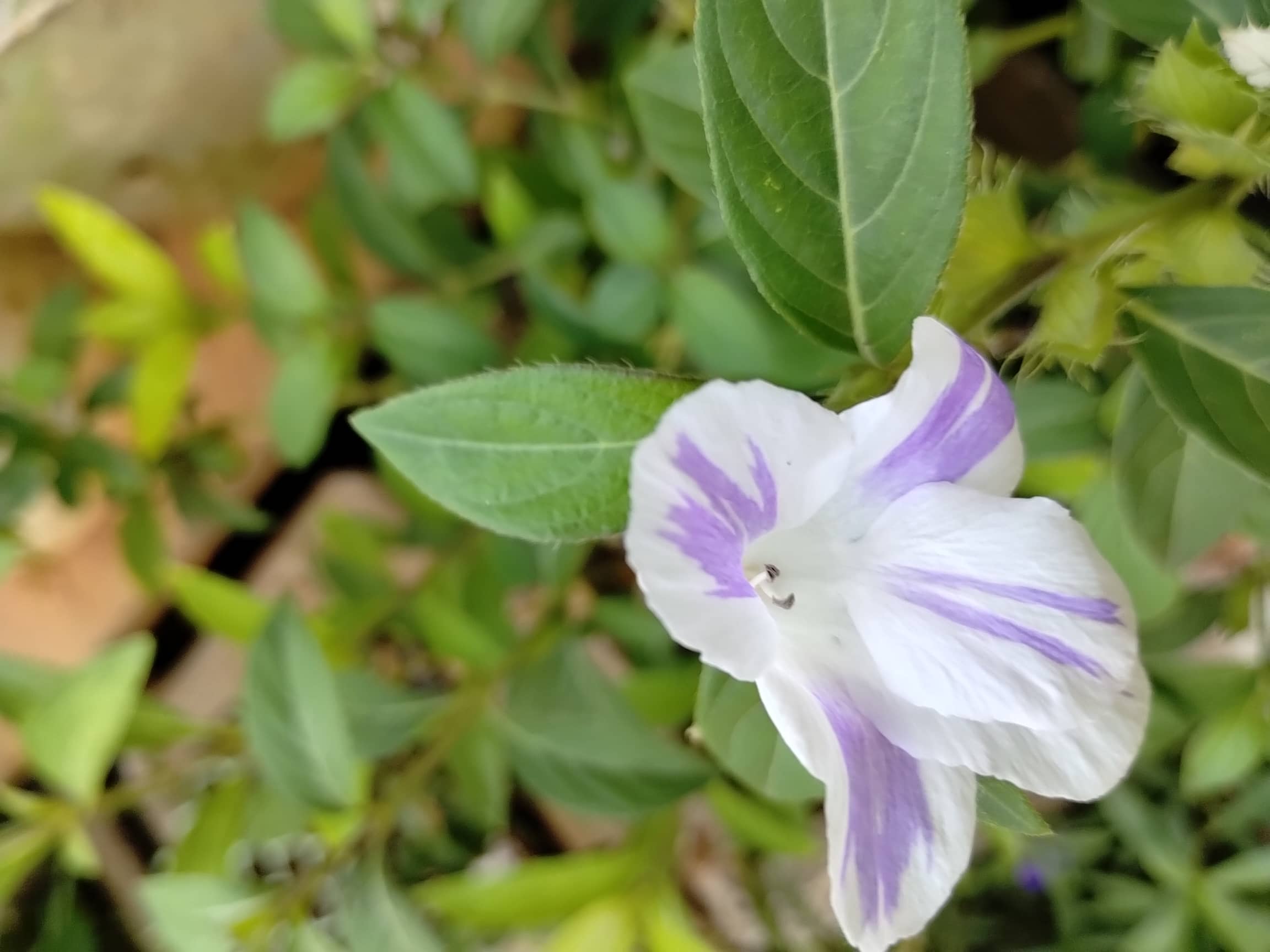
December
Barleria Cristata, Barleria prionitis
The December Flower, botanically classified under the genus Barleria within the family Acanthaceae (the acanthus family), is a highly attractive, fast-growing evergreen tropical shrub. Native to the sunny forest edges, dry riverbanks, and open scrublands of tropical Asia—spanning India, Myanmar,...
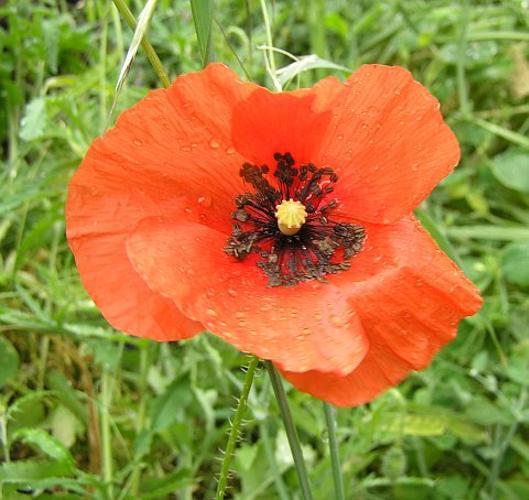
Corn Poppy
Papaver rhoeas
The Corn Poppy, botanically designated as Papaver rhoeas and commonly known as the Field Poppy, Flanders Poppy, or Red Poppy, is an exceptionally iconic, breezy, and resilient annual wildflower. Belonging to the family Papaveraceae (the poppy family, tribe Papavereae), this historically rich plan...
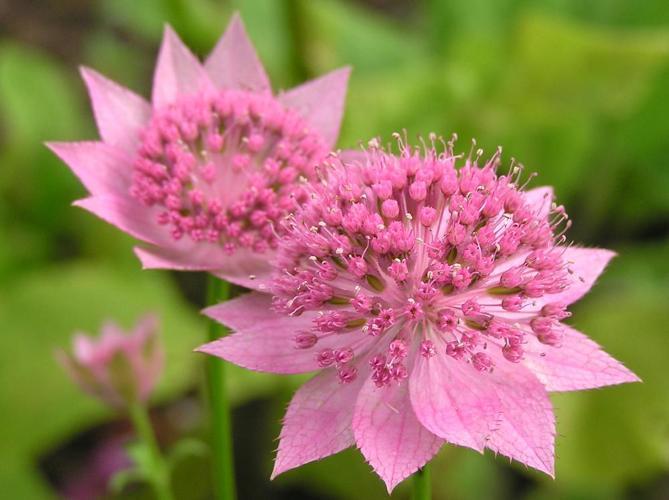
Masterwort
Astrantia
Distinctive perennial with star-shaped flower heads composed of tiny florets surrounded by prominent papery bracts that resemble a pincushion filled with decorative pins. The showy bracts come in shades of pink, white, cream, and red, creating a delicate star-like appearance. Popular cottage gard...