
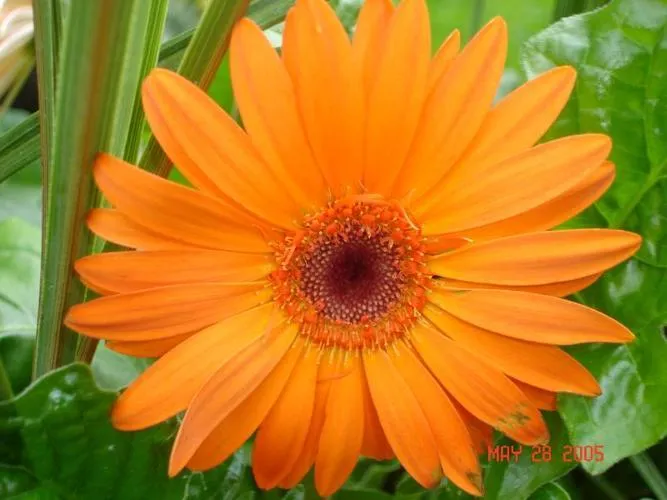
Barberton Daisy
Gerbera jamesonii
How to Identify Barberton Daisy
NON-TOXIC. 100% safe for cats, dogs, and horses, making them a premier, worry-free choice for household vases and low borders.
Care & Growing Guide
Seasonal Blooming & Hardiness
Seasonal Blooming Calendar:
- Peak Bloom: Summer (typically June through September).
- Planting Time: Sow seeds directly outdoors in early spring after the last frost, or transplant nursery starts in late spring.
Bloom Timeline
About Barberton Daisy
The Barberton Daisy, botanically known as Gerbera jamesonii and widely cherished as the Gerbera Daisy or Transvaal Daisy, is an exceptionally cheerful and colorful herbaceous perennial in the Asteraceae (sunflower) family. Native to the rich, subtropical valleys and grassy slopes of South Africa's Mpumalanga province—particularly surrounding the historic gold-mining town of Barberton—this iconic species has captured global admiration. Famed for its bold, graphic flower heads and endless color palette, it stands today as one of the most commercially significant cut flowers and potted ornamentals in the international floral industry.
Growing in compact basal rosettes, the Barberton Daisy features large, deeply lobed, wavy-margined leaves that are dark green above and coated in soft, woolly white hairs on their undersides. Rising directly from the center of this foliage are tall, leafless, hollow green stems measuring 6 to 18 inches. Each stem is crowned with a single, massive composite flower head (capitulum) that measures 3 to 5 inches across. The blooms come in a dazzling array of solid and bicolor combinations—including neon pinks, fiery reds, sun-kissed oranges, glowing yellows, and crystalline whites.
The reproductive architecture of the Barberton Daisy is complex, composed of two distinct types of tiny flowers and represented by the formula % ♀ KP C(5) A0 G(2) (for outer ray florets) and ⊕ ⚥ KP C(5) A(5) G(2) (for central disc florets). The outer ray florets are female, featuring 5 fused petals that extend outward to create the colorful 'daisy' petals, while the sepals are modified into a fine pappus. The central disc florets are bisexual and radially symmetrical, containing 5 fused stamens and 2 fused carpels with an inferior ovary that matures into a small, dry, seed-like achene.
In garden settings, Gerbera jamesonii is a warm-climate perennial hardy in USDA zones 8 through 11, and is grown as an annual or indoor container plant in colder northern regions. It requires bright, abundant sunlight, needing 6 to 8 hours of direct daily exposure to produce its massive flush of blooms. It is highly sensitive to soil drainage; it must be planted in porous, nutrient-rich, sandy loam soil, and watered only when the soil is dry to the touch. Planting it too deeply or overwatering will quickly invite Crown Rot, which is fatal.
The genus name Gerbera honors the German medical doctor and botanist Traugott Gerber, a close friend of Carolus Linnaeus, while the species name jamesonii honors Robert Jameson, who collected the first wild specimens in South Africa in 1884. In regional languages, it is known as जरबेरा in Hindi and Gelsomino del Barberton or Margherita del Barberton in Italian. Culturally, these radiant daisies are universal symbols of pure cheerfulness, innocence, and loyal love, making them a premium gift choice to brighten someone's day.
For families with pets, the Barberton Daisy is an absolute triumph. Gerbera jamesonii is classified as completely NON-TOXIC to cats, dogs, and horses by leading veterinary safety associations, including the ASPCA. It is one of the most highly recommended colorful border plants for a pet-safe garden, meaning pets can safely sniff, play, or explore around these robust daisies without any threat of chemical poisoning. To learn how to integrate these beautiful daisies into a highly optimized, pet-safe landscape design, browse our Pet Guard catalog.
Barberton Daisy is occasionally confused with other daisies, such as the African Daisy (Osteospermum) or Calendula. It is easily distinguished because Gerbera daisies feature a single large bloom on a leafless, hollow stem arising directly from a basal rosette, whereas Osteospermum has branching, leafy stems with smaller flower heads. It pairs beautifully in cottage gardens alongside other non-toxic favorites; we suggest planting it with Phlox or Gazania. To discover more colorful Asteraceae species, visit our Flower Identifier.
For more botanical profiles and flower identification features, see our guides on Artichoke and Black eyed Susan.
Floral Formula & Features
Ray Florets - Bilaterally symmetrical, Female, sepals modified to pappus, 5 fused petals, no stamens, 2 fused carpels with inferior ovary. Disc Florets - Radially symmetrical, bisexual, Sepals modified as pappus/bristles, 5 fused petals, 5 fused stamens, 2 fused carpels with inferior ovary
- Scientific Name & Classification: Gerbera jamesonii (Asteraceae). Famed worldwide as Barberton Daisy, Gerbera, and Transvaal Daisy.
- Identification Markers: Basal rosette of deeply lobed, wavy-margined leaves with silvery woolly undersides. Single large composite flower heads on tall, hollow, leafless stems.
- Floral Formula (% ♀ KP C(5) A0 G(2) / ⊕ ⚥ KP C(5) A(5) G(2)): Complex composite structure of female ray florets and bisexual central disc florets with inferior ovaries.
- Growing Requirements: Bright full sun (6-8 hours); requires highly porous, sandy loam soil with sharp drainage. Water moderately to prevent fatal crown rot (Zones 8-11).
- Cultural Significance: Species honors botanist Robert Jameson. Ranks among the top 10 most popular cut flowers globally. Symbol of pure cheerfulness and loyal love.
- Safety & Toxicity: NON-TOXIC. 100% safe for cats, dogs, and horses, making them a premier, worry-free choice for household vases and low borders.
- Common Look-alikes: Confused with Osteospermum (Cape Daisy), but distinguished by single large blooms on leafless hollow stalks rather than branched leafy foliage.
- Internal Links: Plant in highly visual container pots beside sunny Gazania or vibrant Phlox; explore more daisy-like varieties in our Flower Identifier.
Names in Different Languages
Botanical Classification: Barberton Daisy belongs to the Asteraceae family. Learn how to identify its floral symmetry, stamen arrangement, and structural formulas in our Botanical Family Classification Guide.
Toxicity & Safety
Frequently Asked Questions
What is Floral Formula?
A floral formula is a symbolic representation of a flower's structure using letters, numbers, and special symbols. It provides a concise way to describe the arrangement and number of floral parts.
This formula describes the flower's symmetry, sepals, petals, stamens, and carpels in a standardized format.
Formula Sequence
- Bract: Br or Ebr
- Bracteole: Brl or Ebrl
- Symmetry: % (Radial) or ⊕ (Bilateral)
- Sex: ♀ (Female), ♂ (Male), or ⚥ (Bisexual)
- Calyx/Sepal: K<number> (Free or Fused)
- Corolla/Petal: C<number> (Free or Fused)
- Androecium: A<number> (Free or Fused)
- Gynaecium: G<number> (Superior or Inferior Ovary)
Symbol Meanings
- Numbers: Indicate quantity of parts
- Parentheses (): Parts are fused together
- Plus (+): Parts in different whorls
- Underline: Superior ovary position
- Overline: Inferior ovary position
- ∞: Numerous parts (too many to count)
Understanding floral formulas helps botanists quickly identify and classify flowers based on their structural characteristics.
Similar Flowers
Discover flowers that share botanical characteristics
Same Family
4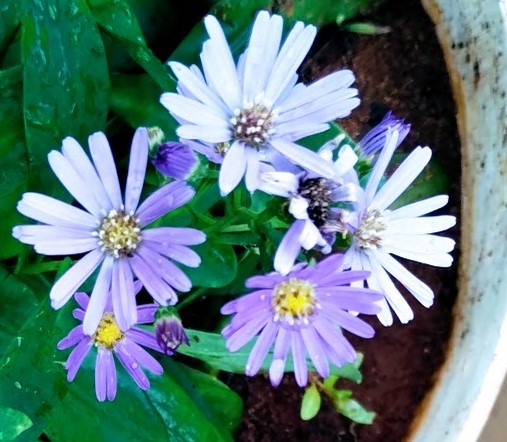
Aster (Michaelmas Daisy)
Symphyotrichum (formerly Aster)
The Aster, commonly known as the Michaelmas Daisy, is a quintessential late-summer and autumn bloomer belonging to the vast Asteraceae family. Native primarily to North America and Eurasia, these resilient perennials are absolute magnets for pollinators. Earning their name from the ancient Greek...
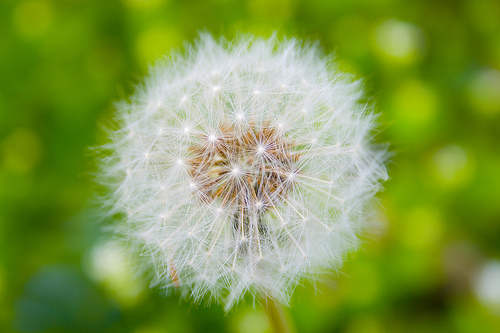
Dandelion
Taraxacum officinale
The common Dandelion, scientifically classified as Taraxacum officinale, is an incredibly resilient and highly nutritious herbaceous perennial belonging to the Asteraceae (sunflower) family. Native to the vast temperate regions of Europe and Asia, this ubiquitous species has naturalized on nearly...
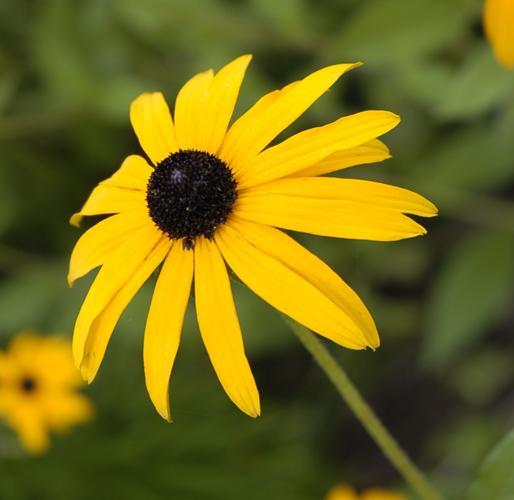
Black eyed Susan
Rudbeckia hirta
Rudbeckia hirta, famously known as the "Black-Eyed Susan" or "Yellow Ox-Eye Daisy," is a quintessentially American wildflower that brings a burst of radiant sunshine to North American landscapes. A member of the Asteraceae (Daisy) family, this resilient species is native to much of the central an...
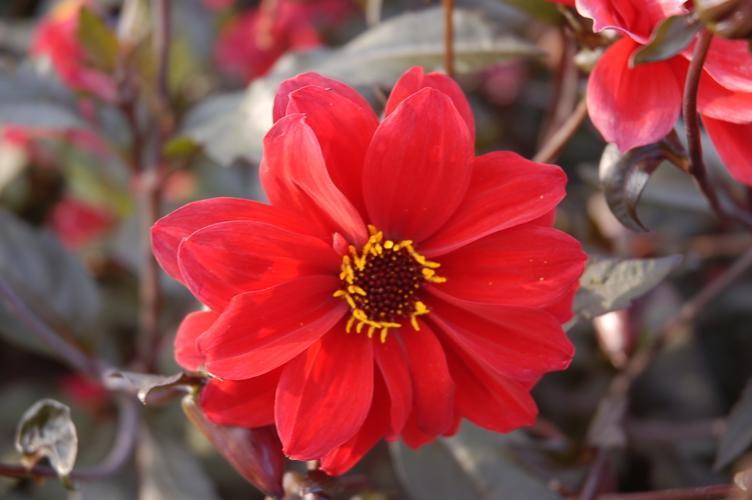
Dahlia 'Bishop of Llandaff'
Dahlia 'Bishop of Llandaff'
The Dahlia 'Bishop of Llandaff', a stunning member of the Asteraceae family, is a highly prized tuberous perennial native to the mountainous regions of Mexico. First introduced in the 1920s, it remains one of the most famous and beloved Dahlia cultivars in the world. It is renowned not just for i...
Similar Characteristics
4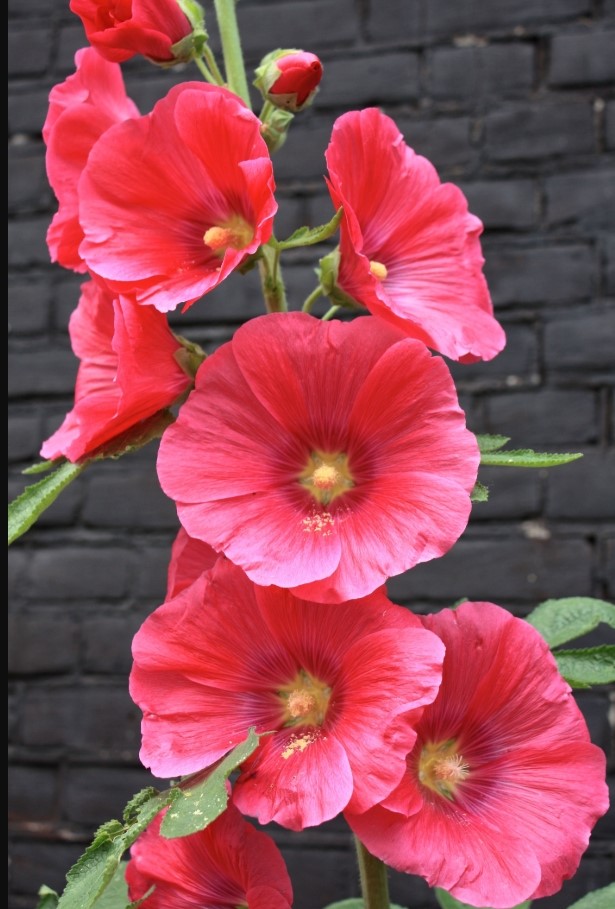
Hollyhock
Alcea rosea
The Hollyhock, botanically designated as Alcea rosea and belonging to the family Malvaceae (the mallow or hibiscus family), is a majestic, towering, and deeply romantic cottage garden classic. Native to the warm, temperate meadows, rocky slopes, and open woodlands of Turkey and southwestern Asia,...
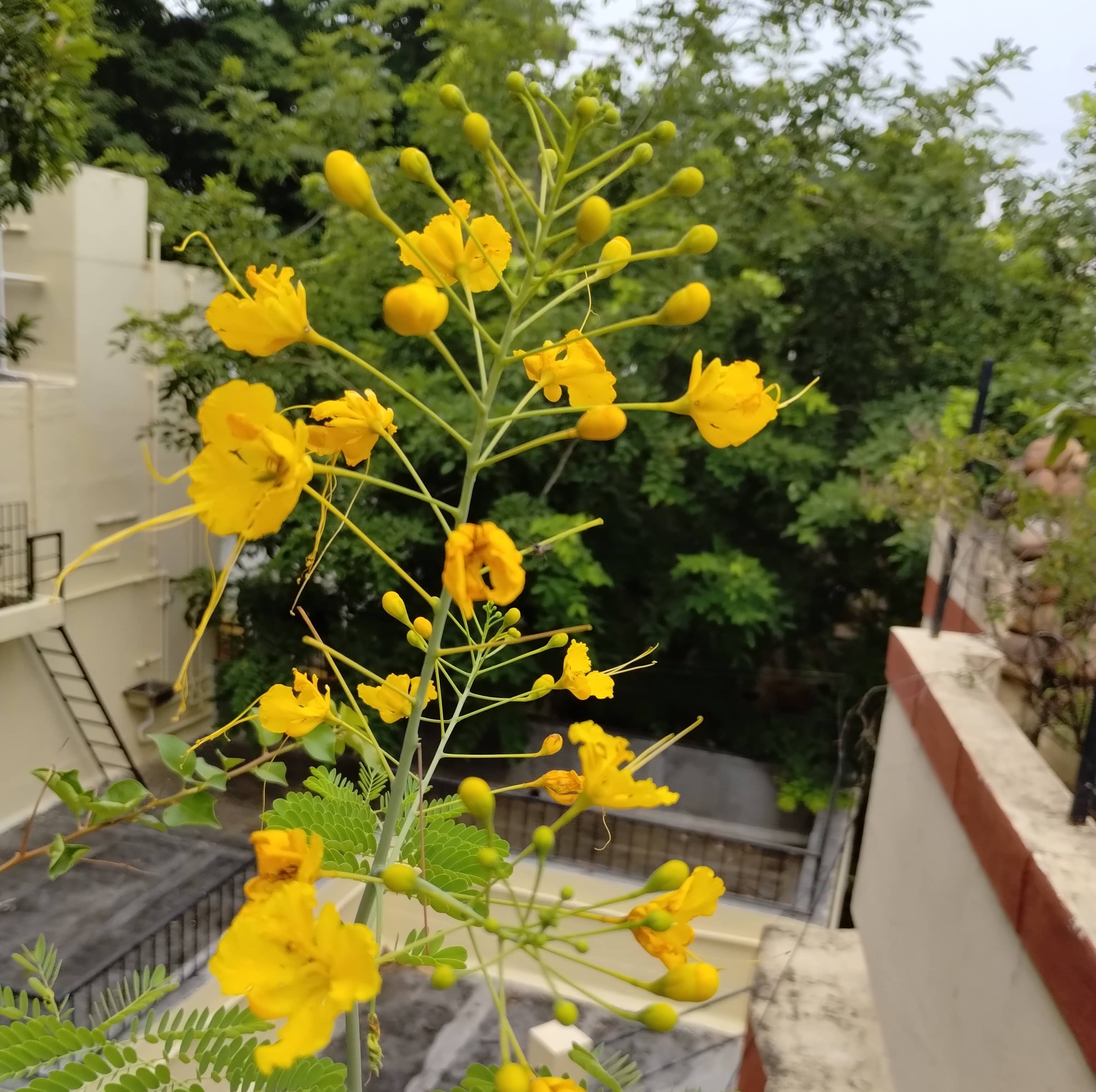
Peacock Flower (Caesalpinia)
Caesalpinia pulcherrima
Caesalpinia pulcherrima, famously known as the "Peacock Flower," "Pride of Barbados," or "Red Bird of Paradise," is a breathtakingly vibrant tropical shrub that embodies the fiery spirit of the Caribbean. A member of the Fabaceae (Legume) family, this species is celebrated for its flamboyant, ter...
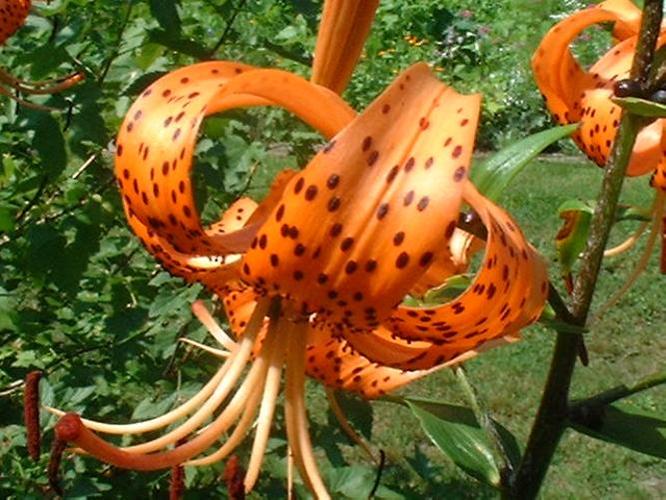
Tiger Lily
Lilium lancifolium
The Tiger Lily (Lilium lancifolium), a standout member of the Liliaceae family, is one of the most recognizable and striking lilies in the world. Native to the temperate regions of Eastern Asia, including China, Japan, and Korea, this herbaceous perennial has captivated gardeners for centuries wi...
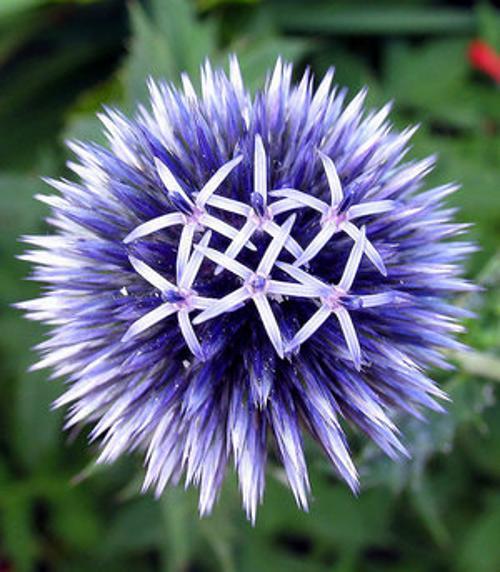
Globe Thistle
Echinops
The Globe Thistle, botanically classified as Echinops ritro or simply Echinops, is a striking, deeply architectural herbaceous perennial plant belonging to the Asteraceae (sunflower or composite) family. Native to the dry, sun-drenched grasslands, stony hillsides, and rocky mountain slopes of cen...