
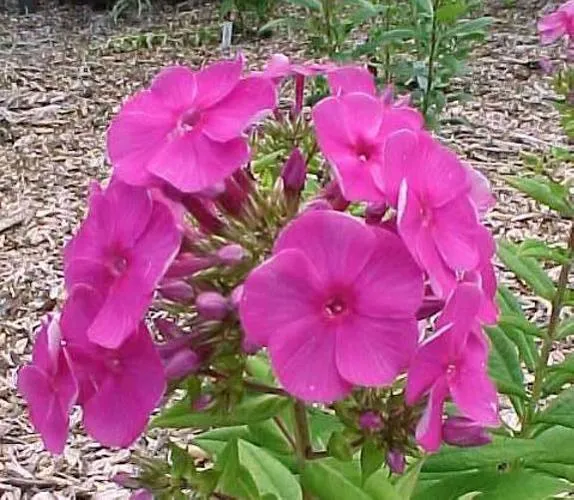
Phlox
Phlox paniculata
How to Identify Phlox
NON-TOXIC. 100% safe for cats, dogs, and horses, making them a premium choice for children's spaces and pet-friendly lawns.
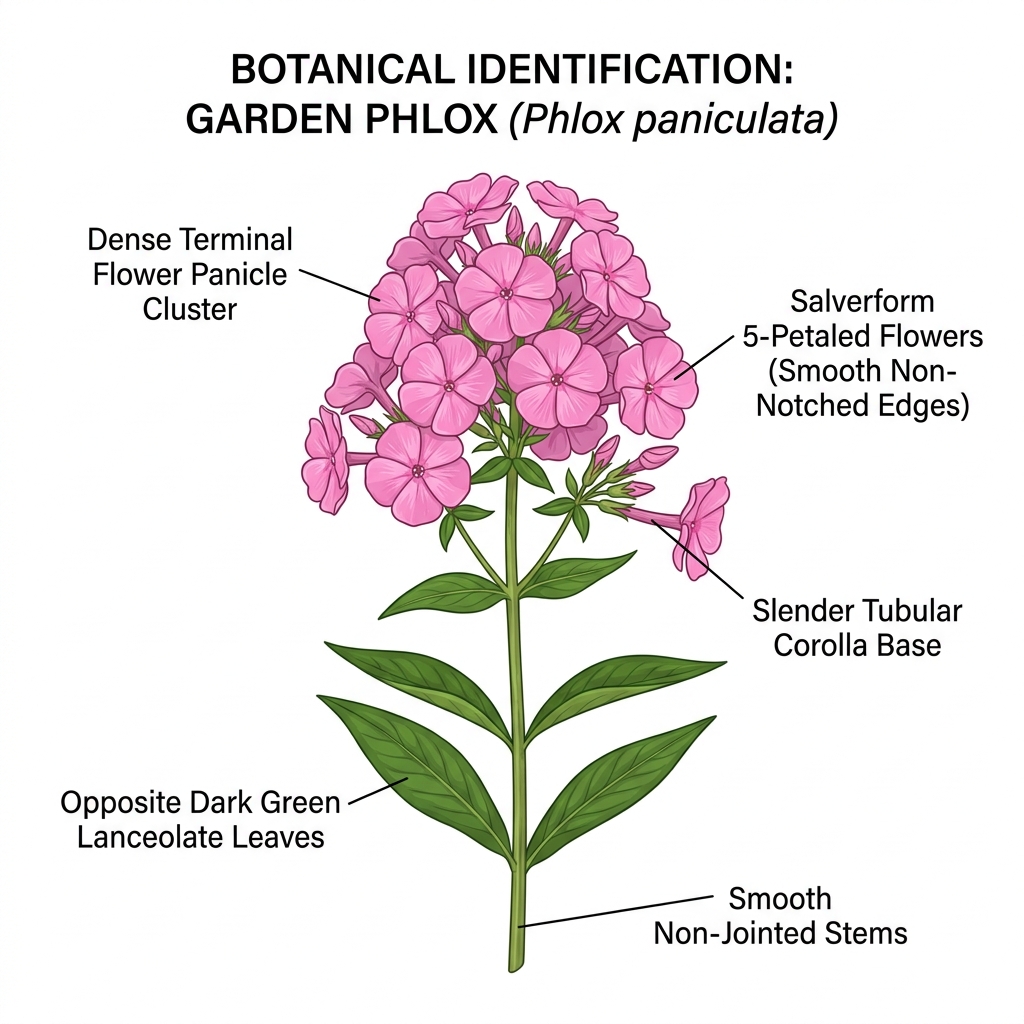
A detailed guide to identifying Phlox (Phlox paniculata / subulata / divaricata) by key botanical features:
- Salverform 5-Petaled Flowers: 5 smooth-edged, un-notched flat petal lobes forming a broad, circular face sitting atop a narrow, tube-like corolla.
- Dense Flower Panicles or Cymes: Large, dome-shaped or flat terminal clusters (panicles or cymes) packed with sweet-smelling blossoms.
- Smooth Non-Jointed Stems: Smooth green upright or trailing stems without swollen nodes or jointed segments.
- Opposite Leaves: Narrow lance-shaped foliage (Garden Phlox) or needle-like evergreen mats (Creeping Phlox) arranged in opposing pairs along the stem.
Types & Sub-types of Phlox
Phlox species are broadly categorized into three primary botanical groups based on growth habit, landscape use, and habitat preference:
- By Growth Habit & Height:
- Tall Garden Phlox (Phlox paniculata): Stately upright perennials reaching 2–4 feet tall with large, fragrant, dome-shaped flower clusters blooming in mid-to-late summer.
- Creeping / Moss Phlox (Phlox subulata): Low-growing, evergreen ground cover (3–6 inches tall) that forms dense carpeting mats smothered in early spring blooms.
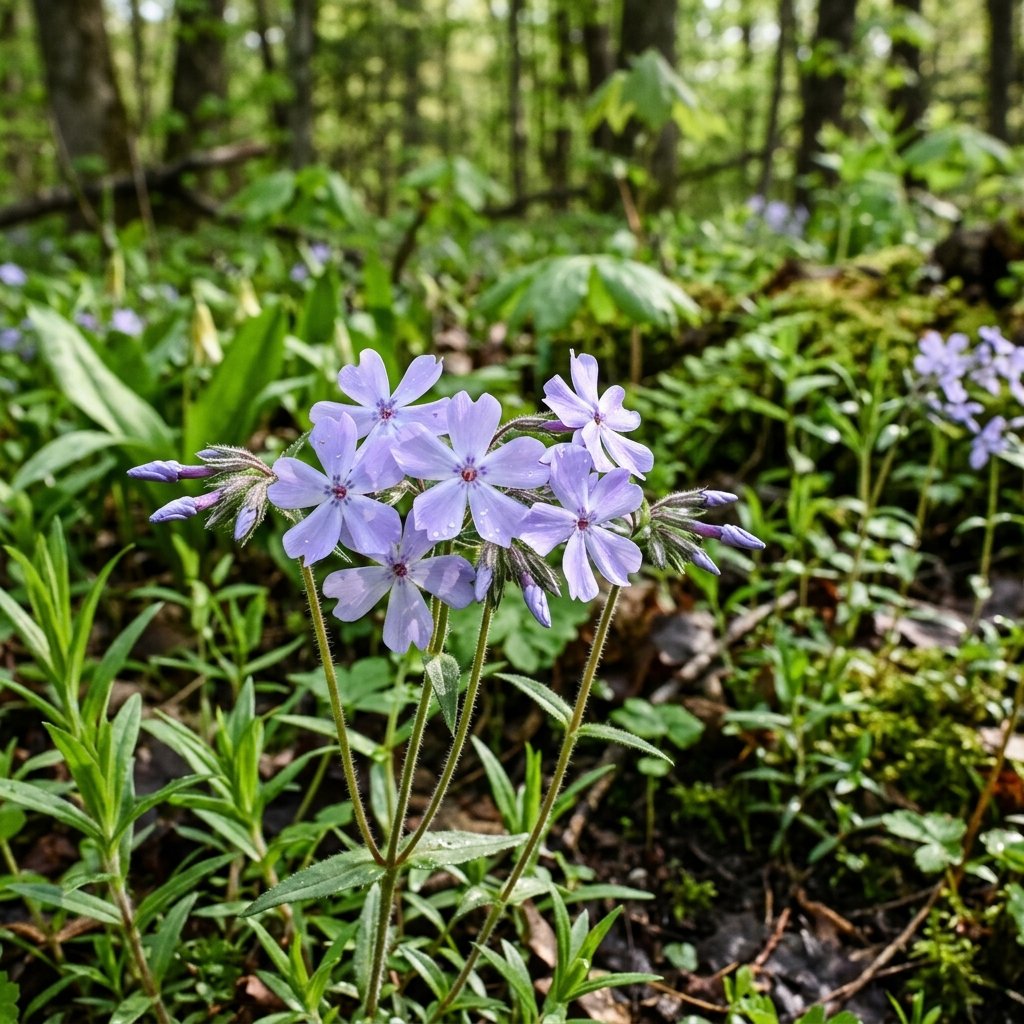
- Woodland / Wild Blue Phlox (Phlox divaricata): Semi-evergreen, shade-tolerant native perennials (10–15 inches tall) producing loose, fragrant blue-violet blossoms in spring.
- By Petal Shape & Flower Morphology:
- Flat Salverform Varieties: Standard circular blooms with broad, overlapping petal lobes.
- Notched / Star-Shaped Varieties: Species like Phlox subulata featuring distinct notches at the tip of each of the 5 petals, giving blooms a star-like outline.
- By Environmental & Shade Preference:
- Full Sun Perennials: Garden and Creeping Phlox require full direct sun (6+ hours daily) for maximum bloom density.
- Partial Shade Natives: Woodland Phlox (P. divaricata) and Smooth Phlox (P. glaberrima) thrive in moist, dappled shade under forest canopies.
Care & Growing Guide
Phlox Care & Growing Guide:
- Light: Full direct sun (at least 6 hours daily) for rich color and robust stems.
- Soil: Fertile, moist, well-draining soil rich in organic matter (pH 6.0–7.0).
- Watering: Water at the base regularly; keep soil evenly moist but never waterlogged.
- Air Circulation: Space plants 18–24 inches apart and thin inner stems in spring to prevent powdery mildew.
Seasonal Blooming & Hardiness
Seasonal Blooming Calendar:
- Peak Bloom: Spring (Creeping Phlox) to mid/late summer (Garden Phlox).
- Planting Time: Plant bare-root or nursery starts in early spring or early fall.
Bloom Timeline
About Phlox
The genus Phlox, a cornerstone of the North American garden, encompasses a diverse array of species ranging from low-growing ground covers to towering, stately perennials. Derived from the Greek word for 'flame,' the name perfectly captures the vibrant, fiery intensity of their clustered blossoms. Most members of the Polemoniaceae family are native to the diverse habitats of North America—from the rocky slopes of the Appalachian Mountains to the fertile prairies of the Midwest. Their popularity is rooted in their versatility, ease of care, and the sheer volume of color they provide throughout the spring and summer months.
Among the most beloved species is Phlox paniculata, or Garden Phlox, which is prized for its large, dome-shaped clusters of sweet-smelling flowers that sit atop sturdy, upright stems. Each individual flower is salverform, meaning it features a narrow tube that opens into a flat, five-petaled face. These clusters, or panicles, can be so dense that they nearly obscure the plant's dark green, lance-shaped foliage. Available in a spectrum of colors—from pure crystalline whites and soft pastels to electric magentas and deep purples—Garden Phlox is a magnet for pollinators, particularly butterflies and hummingbirds, who are drawn to its nectar and intoxicating fragrance.
In contrast to the upright garden varieties, Phlox subulata, commonly known as Creeping Phlox or Moss Pink, creates a spectacular living carpet of color in early spring. This low-growing, evergreen perennial is a favorite for rock gardens and slopes, where its needle-like leaves form a dense mat that is completely smothered in small, star-shaped blooms. It is one of the first reliable signs of spring, often blooming alongside tulips and daffodils. Its ability to thrive in poor, rocky soils and its role as an effective ground cover make it an indispensable tool for landscape designers looking for both beauty and utility.
Cultivating Phlox successfully requires an understanding of their environmental preferences. While they are generally hardy and resilient, Garden Phlox is famously susceptible to powdery mildew if air circulation is poor. Gardeners are encouraged to thin out stems in the spring and avoid overhead watering to keep the foliage dry. They thrive in full sun and rich, moist, well-draining soil. Creeping varieties, on the other hand, are remarkably drought-tolerant once established and prefer leaner, well-drained conditions. Both types benefit from occasional division every few years to maintain vigor and prevent the centers of the clumps from becoming bare.
Beyond their ornamental value, Phlox have long been symbols of harmony, partnership, and the 'agreement of souls' in the traditional language of flowers. This cultural significance, combined with their non-toxic nature, makes them a safe and welcoming addition to any home garden. They are generally considered safe for cats, dogs, and children, providing peace of mind alongside their visual splendor. Whether you are seeking a fragrant backdrop for a perennial border or a vibrant ground cover to cascade over a stone wall, the enduring charm and reliability of Phlox ensure its place as a timeless favorite in the botanical world.
From a safety standpoint, Phlox is one of the most highly recommended flowers for a pet-friendly landscape. It is classified as completely NON-TOXIC to cats, dogs, and horses by major veterinary safety groups, making it an excellent alternative to toxic summer bloomers. Pets can safely run through creeping phlox mats or sniff at garden phlox borders without any concern of chemical toxicity. To learn more about creating an entirely pet-safe cottage garden layout, please explore our Pet Guard catalog.
Phlox is occasionally confused with Dame's Rocket (Hesperis matronalis) or Sweet William (Dianthus barbatus). It is easily distinguished from Dame's Rocket by having 5 petals instead of 4, and from Sweet William by its smooth-edged, non-fringed petals and rounder flower clusters. Explore detailed differences in our Dianthus vs Phlox comparison guide. It integrates beautifully as a summer companion alongside other cottage favorites; we suggest pairing it with Canterbury Bells or Sweet Pea. To see more members of the Polemoniaceae family, visit our Flower Identifier.
Floral Formula & Features
Ebracteate, radially symmetrical (actinomorphic), bisexual, 5 fused sepals forming tube, 5 fused petals forming salverform corolla (tube with flat spreading lobes), 5 stamens attached to corolla tube, 3 fused carpels with superior ovary
- Scientific Name & Classification: Phlox spp. (Polemoniaceae). A diverse genus of approximately 67 species, primarily native to North America.
- Identification Markers: Characterized by salverform, five-petaled flowers arranged in dense clusters (panicles or cymes). Leaves are typically opposite and lance-shaped or needle-like.
- Floral Formula (⊕ ⚥ K(5) [C(5) A5] G(3)): Radially symmetrical, bisexual flowers with 5 fused sepals, 5 fused petals, 5 stamens (epipetalous), and a 3-carpellate superior ovary.
- Growing Requirements: Prefers full sun (at least 6 hours) for optimal blooming. Requires fertile, well-draining soil and excellent air circulation to prevent fungal diseases like powdery mildew.
- Cultural Significance: Symbolizes sweet dreams, harmony, and the union of souls. Widely used in traditional cottage gardens and as a staple of American prairie restoration.
- Safety & Toxicity: NON-TOXIC. 100% safe for cats, dogs, and horses, making them a premium choice for children's spaces and pet-friendly lawns.
- Common Look-alikes: Often confused with Dame's Rocket (which has 4 petals) or Sweet William (which has fringed, toothed petals and jointed stems). See side-by-side analysis in our Dianthus vs Phlox guide.
- Internal Links: Pairs beautifully beside vertical classics like Canterbury Bells or fragrant Sweet Pea; compare with Sweet William in our Dianthus vs Phlox comparison or find more perennial choices in our Flower Identifier.
Names in Different Languages
Toxicity & Safety
Frequently Asked Questions
What is Floral Formula?
A floral formula is a symbolic representation of a flower's structure using letters, numbers, and special symbols. It provides a concise way to describe the arrangement and number of floral parts.
This formula describes the flower's symmetry, sepals, petals, stamens, and carpels in a standardized format.
Formula Sequence
- Bract: Br or Ebr
- Bracteole: Brl or Ebrl
- Symmetry: % (Radial) or ⊕ (Bilateral)
- Sex: ♀ (Female), ♂ (Male), or ⚥ (Bisexual)
- Calyx/Sepal: K<number> (Free or Fused)
- Corolla/Petal: C<number> (Free or Fused)
- Androecium: A<number> (Free or Fused)
- Gynaecium: G<number> (Superior or Inferior Ovary)
Symbol Meanings
- Numbers: Indicate quantity of parts
- Parentheses (): Parts are fused together
- Plus (+): Parts in different whorls
- Underline: Superior ovary position
- Overline: Inferior ovary position
- ∞: Numerous parts (too many to count)
Understanding floral formulas helps botanists quickly identify and classify flowers based on their structural characteristics.
Similar Flowers
Discover flowers that share botanical characteristics
Similar Characteristics
4
Daisy
Bellis perennis
The Common Daisy, botanically designated as *Bellis perennis* (and including related garden favorites like the English Daisy or Lawn Daisy), is an exceptionally cheerful, highly resilient herbaceous perennial. Belonging to the family Asteraceae (the daisy or sunflower family, tribe Astereae), thi...
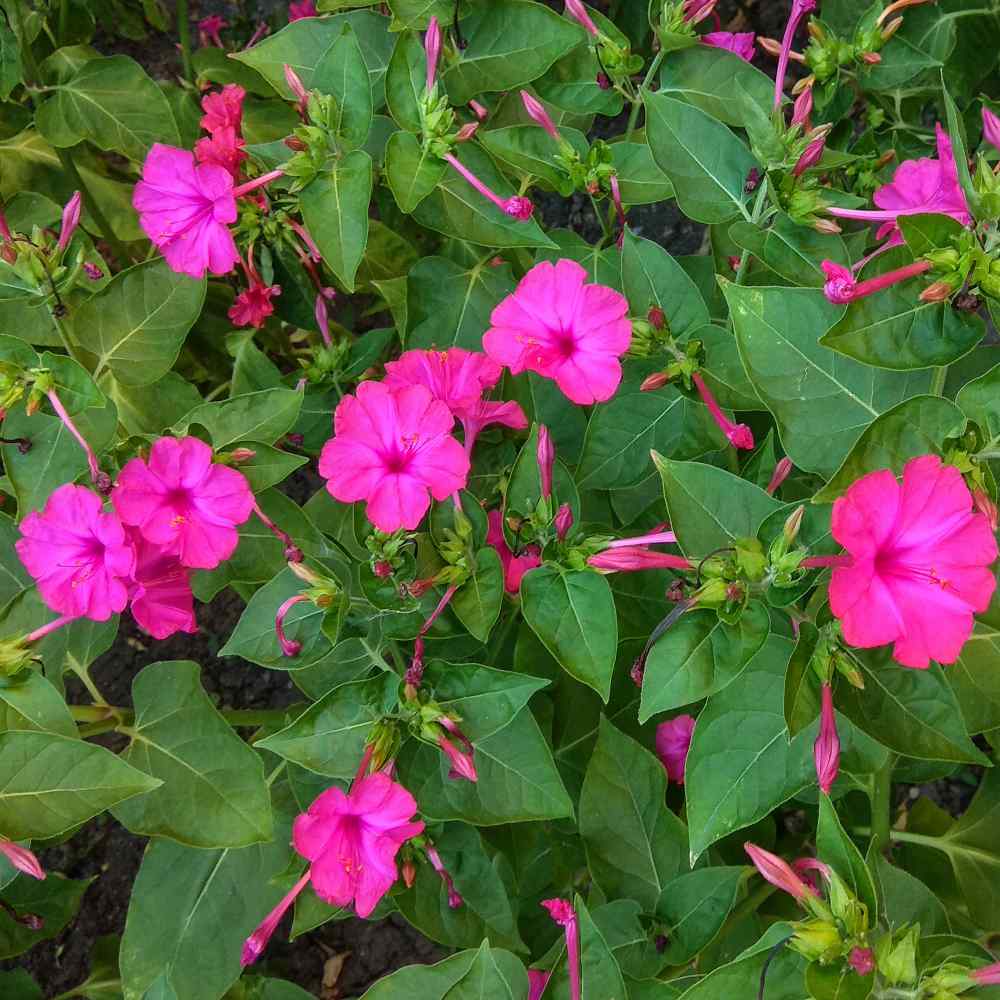
Four o'clock
Mirabilis jalapa
The Four o'clock, scientifically named Mirabilis jalapa and known as the Marvel of Peru or Beauty of the Night, is a highly popular, bushy perennial belonging to the Nyctaginaceae (four o'clock) family. Native to the tropical regions of South America, particularly the Andes of Peru, it was introd...
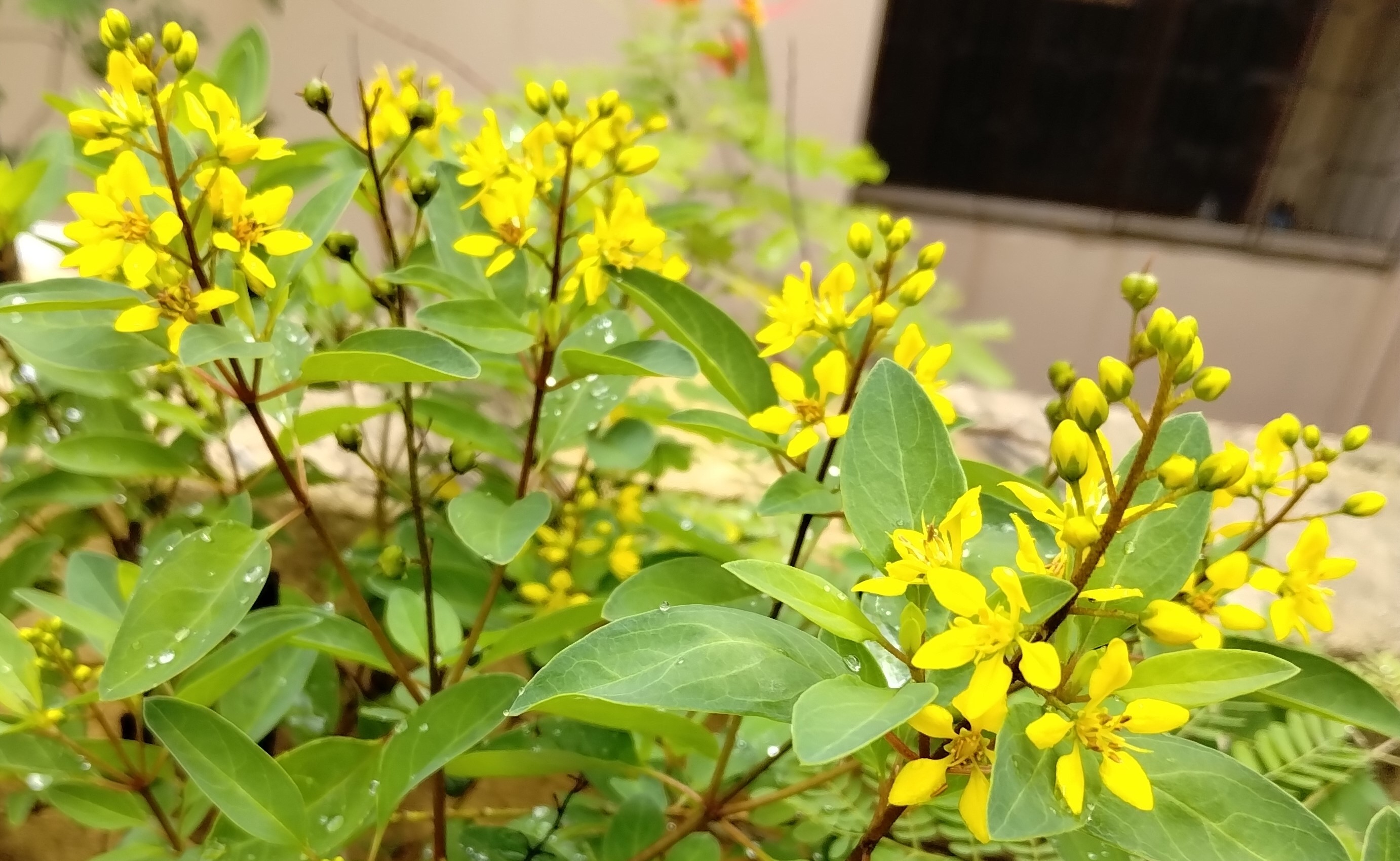
Golden Thryallis
Galphimia gracilis
The Golden Thryallis, botanically designated as *Galphimia gracilis* (previously confused with *Thryallis glauca*, commonly known as Gold Shower, Rain-of-Gold, or Slender Goldshower), is an exceptionally cheerful, fast-growing tropical evergreen shrub. Belonging to the family Malpighiaceae (the a...
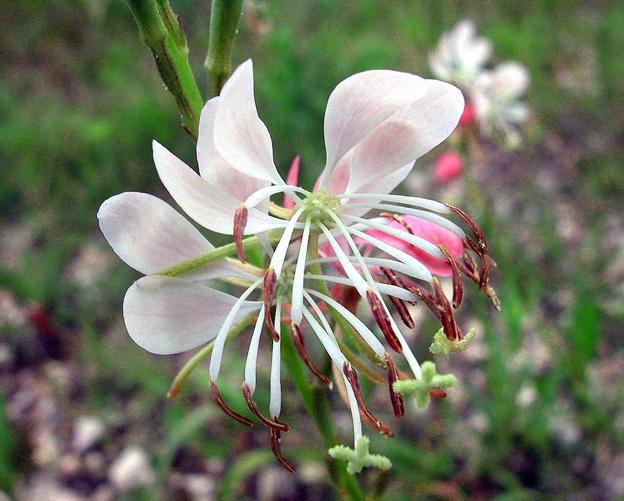
Gaura
Oenothera lindheimeri
The Gaura, botanically classified as Oenothera lindheimeri (formerly Gaura lindheimeri) and commonly known as the Bee Blossom, Lindheimer's Beeblossom, or Whirling Butterflies, is an exceptionally elegant, airy, and long-blooming herbaceous perennial. Belonging to the family Onagraceae (the eveni...