
Gazania
Gazania rigens
How to Identify Gazania
NON-TOXIC. Completely safe for cats, dogs, and horses, making them a safe addition to sunny groundcovers.
A detailed guide to identifying Gazanias / Treasure Flowers (Gazania rigens) by key botanical features:
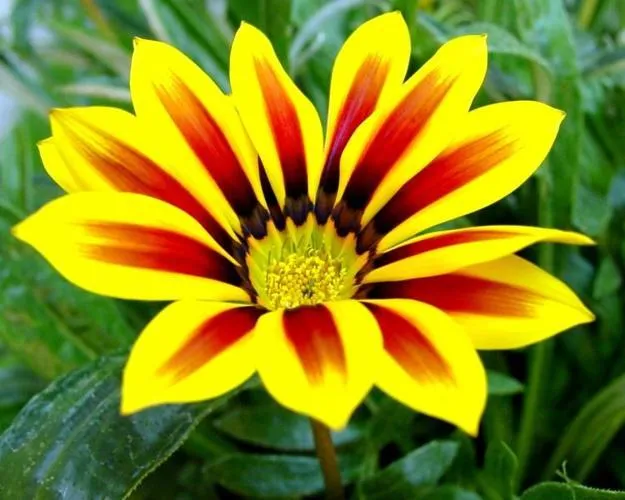
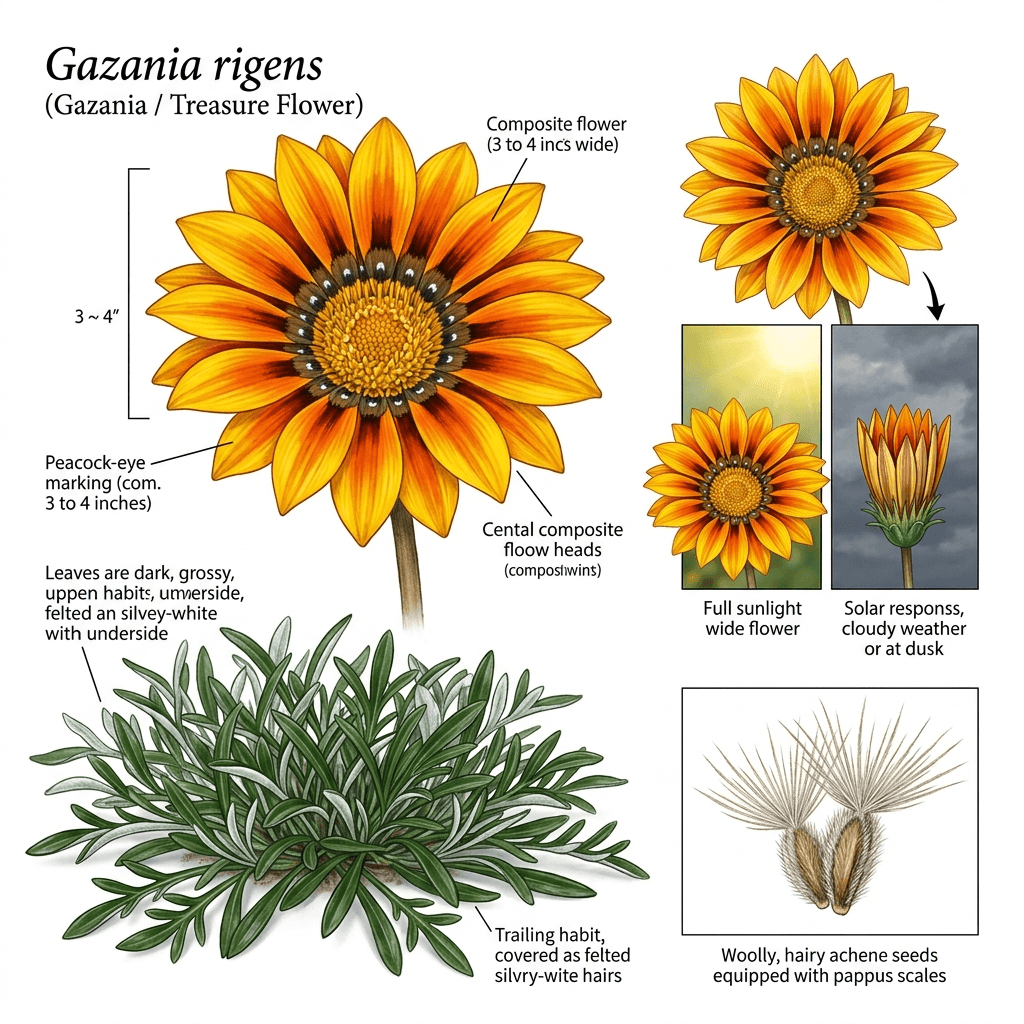
- Large Daisy Blooms with Peacock-Eye Bands: Brilliant, solar-responsive flower heads (3 to 4 inches wide) with fiery yellow, orange, bronze, or terracotta petals bearing dark brown or black basal eye-spots dotted with white.
- Narrow Leaves with Felted Silver Undersides: Sprawling tufts of narrow, lance-shaped, or lobed leaves that are deep glossy green on top and coated in a distinctive dense, silvery-white felt underneath to reflect intense sunlight.
- Solar-Responsive Blooming Habit: Flowers open wide under brilliant direct sunshine and tightly close at night, on heavily overcast days, or in full shade.
- Low Sprawling Groundcover Habit: Prostrate, clumping, or trailing stems (6 to 12 inches tall) with fibrous drought-tolerant roots forming resilient, dense weed-suppressing groundcover mats.
Types & Sub-types of Gazanias
Gazania belongs to the Asteraceae family and is native to the coastal sand dunes and rocky hillsides of South Africa:
- By Growth Habit:
- Clumping Gazanias (Gazania linearis / Gazania rigens var. rigens): Forms neat, compact, upright rosettes ideal for garden borders, rockeries, and patio containers.
- Trailing Gazanias (Gazania rigens var. leucolaena): Vigorous creeping runners that root along the soil, widely used to stabilize sunny coastal banks, dry slopes, and highway medians.
- By Color & Pattern Series:
- Banded & Striped Series ('Kiss', 'Tiger Stripes'): Features prominent contrast stripes running down each petal or bold dark rings around the central disc.
- Clear-Flowered Series ('Sunbathers', 'Daybreak'): Solid, saturated, luminous lemon-yellow, bronze-red, or golden-orange blooms with glowing centers.
Care & Growing Guide
Seasonal Blooming & Hardiness
Seasonal Blooming Calendar:
- Peak Bloom: Spring to early summer (typically April through June).
- Planting Time: Sow seeds directly outdoors in early spring after the last frost, or transplant nursery starts in late spring.
Bloom Timeline
About Gazania
The Gazania, scientifically known as Gazania rigens and affectionately called the Treasure Flower or African Daisy, is a dazzling low-growing perennial belonging to the Asteraceae family. Native to the sandy dunes and sunny grassy banks of South Africa, Mozambique, and Namibia, this hardy plant has become a global favorite for dry, sun-drenched landscapes. It grows as a compact, sprawling groundcover that forms a dense, evergreen mat of foliage, which erupts into a spectacular carpet of brilliant composite blossoms from early spring until the first autumn frosts.
Gazanias are characterized by their striking, daisy-like flower heads that measure 2 to 4 inches across, sitting on short, sturdy stems just above the foliage canopy. Each bloom features a central disc of tiny, dense tubular florets surrounded by a radiating ring of broad, petal-like ray florets. These 'petals' display a stunning range of colors—including neon yellow, fiery orange, bronze, pink, and rich mahogany—often decorated with a darker, contrasting band or ring of black, bronze, or purple at the base, creating a dramatic 'halo' effect. The foliage consists of narrow, lanceolate leaves that are a glossy, dark green on the upper surface with a contrasting, woolly, silvery-white underside.
As a member of the sunflower family, the Gazania's floral structure is represented by the formula ⊕ ⚥ (Disc) / % ♀ (Ray) K(pappus) C(5) A(5) G(2). This composite structure consists of two distinct floret types. The central disc florets are actinomorphic (radially symmetrical) and bisexual (⚥), featuring 5 fused petals, 5 fused anthers forming a tube, and a 2-carpellate inferior ovary. The outer ray florets are zygomorphic (bilaterally symmetrical) and typically female (♀) or sterile, serving primarily to attract pollinators to the flower head.
These treasure flowers are the ultimate low-maintenance plants, thriving in USDA zones 8 through 11 as perennials, and frequently cultivated as warm-season annuals in colder climates. They require full sun to perform, as their blooms exhibit a fascinating behavior called nyctinasty—closing tight at night and on cloudy days, only opening to show their true colors under clear, direct sunlight. They prefer light, sandy, or gravelly, exceptionally well-draining soil and are highly drought-tolerant, requiring minimal water once established, though they can suffer from crown rot if overwatered.
The genus name honors Theodore of Gaza, a 15th-century Greek scholar who translated influential botanical works from Greek to Latin, while the common name 'Treasure Flower' refers to the plant's bright, coin-like golden colors. In Indian regional languages, it is known as गज़ानिया (Gajania) in Hindi and Nidhi Puvvu in Telugu, which literally translates to 'treasure flower.' Culturally, they have come to represent wealth, radiant beauty, and the warm, joyful energy of the midday sun.
From a safety standpoint, Gazania is a wonderful choice for pet-owning gardeners. It is completely NON-TOXIC to cats, dogs, and horses, making it an excellent, worry-free choice for rock gardens, borders, and seaside container displays. Curious pets can sniff and explore around these low-growing mats without any risk of poisoning. For a comprehensive, search-optimized list of pet-safe flowers, you can cross-reference our Pet Guard safety hub.
Gazanias are often confused with other South African daisies, particularly Cape Daisies (Osteospermum) or common marigolds (Tagetes). They are easily distinguished by their low-growing, trailing habit, their uniquely banded petals, and the distinctive woolly, silvery-white undersides of their narrow leaves, which are absent in Osteospermum. They serve as an exceptional groundcover alongside taller ornamentals; we suggest pairing them with Poinsettia or English Marigold. Check our Flower Identifier to discover more Asteraceae varieties.
Floral Formula & Features
Composite head with central radially symmetrical bisexual disc florets, and outer bilaterally symmetrical female/sterile ray florets with inferior ovary typical of Asteraceae
- Scientific Name & Classification: Gazania rigens (Asteraceae). Commonly known as the Treasure Flower or African Daisy.
- Identification Markers: Sprawling mats of narrow leaves, dark green on top, silver-white underneath. Large daisy-like blooms with darkly banded petal bases.
- Floral Formula (⊕ ⚥ / % ♀ K(pappus) C(5) A(5) G(2)): Composite flower head composed of radially symmetrical central disc florets and asymmetrical female ray florets.
- Growing Requirements: Full sun mandatory (blooms close in shade/night); extremely drought-tolerant; thrives in fast-draining, sandy soils (Zones 8-11).
- Cultural Significance: Named after Theodore of Gaza; 'Nidhi Puvvu' in Telugu. Symbolizes wealth, dazzling beauty, and midday warmth.
- Safety & Toxicity: NON-TOXIC. Completely safe for cats, dogs, and horses, making them a safe addition to sunny groundcovers.
- Common Look-alikes: Often confused with Osteospermum, but distinguished by trailing, low habit, banded petals, and bright silver leaf undersides.
- Internal Links: Pairs beautifully as groundcover around Poinsettia or English Marigold; explore more Asteraceae in our Flower Identifier.
- Internal Links: Compare key differences in our African Daisy vs Gazania comparison, or try our instant Flower Identifier.
Names in Different Languages
Botanical Classification: Gazania belongs to the Asteraceae family. Learn how to identify its floral symmetry, stamen arrangement, and structural formulas in our Botanical Family Classification Guide.
Toxicity & Safety
Frequently Asked Questions
What is Floral Formula?
A floral formula is a symbolic representation of a flower's structure using letters, numbers, and special symbols. It provides a concise way to describe the arrangement and number of floral parts.
This formula describes the flower's symmetry, sepals, petals, stamens, and carpels in a standardized format.
Formula Sequence
- Bract: Br or Ebr
- Bracteole: Brl or Ebrl
- Symmetry: % (Radial) or ⊕ (Bilateral)
- Sex: ♀ (Female), ♂ (Male), or ⚥ (Bisexual)
- Calyx/Sepal: K<number> (Free or Fused)
- Corolla/Petal: C<number> (Free or Fused)
- Androecium: A<number> (Free or Fused)
- Gynaecium: G<number> (Superior or Inferior Ovary)
Symbol Meanings
- Numbers: Indicate quantity of parts
- Parentheses (): Parts are fused together
- Plus (+): Parts in different whorls
- Underline: Superior ovary position
- Overline: Inferior ovary position
- ∞: Numerous parts (too many to count)
Understanding floral formulas helps botanists quickly identify and classify flowers based on their structural characteristics.
Similar Flowers
Discover flowers that share botanical characteristics
Same Family
4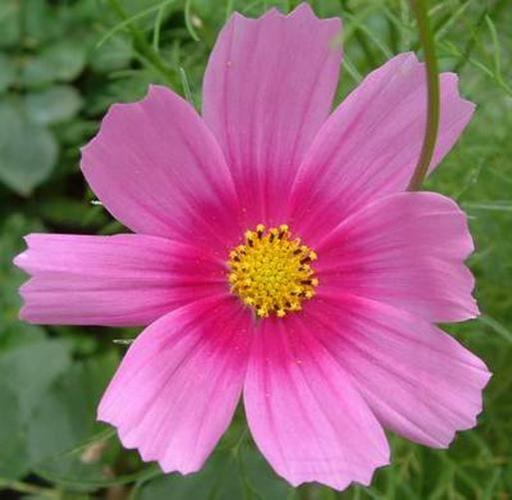
Mexican Aster
Cosmos bipinnatus
The Mexican Aster, botanically designated as Cosmos bipinnatus and commonly referred to as Garden Cosmos or simply Cosmos, is an exceptionally graceful, fast-growing, and heavy-blooming annual. Belonging to the family Asteraceae (the daisy or composite family), this beautiful plant is native to t...
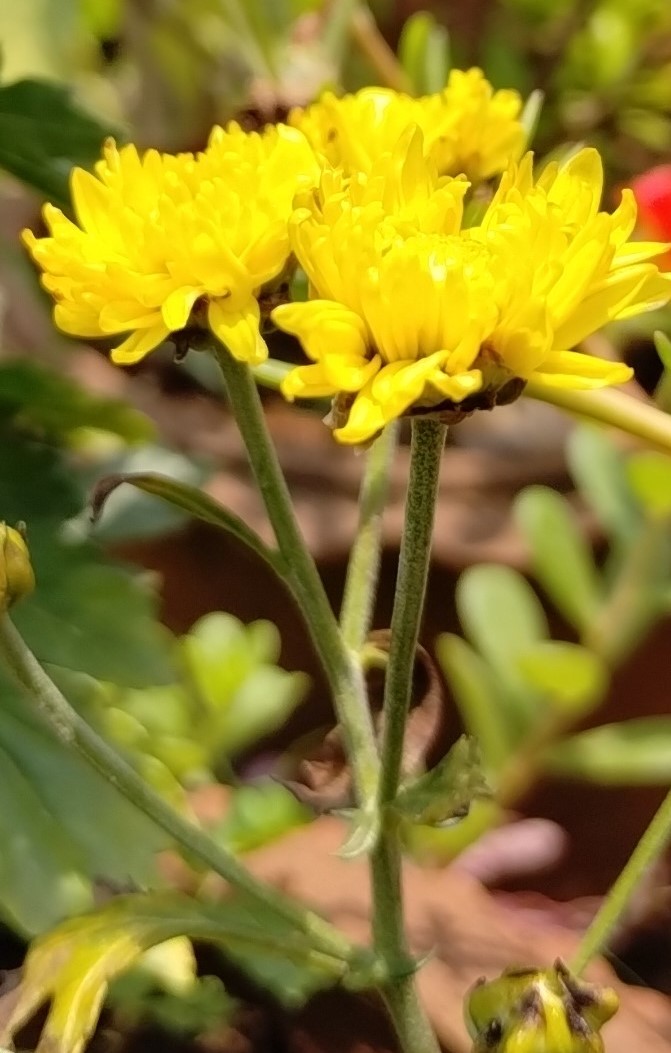
Chrysanthemum
Chrysanthemum morifolium
The Chrysanthemum, botanically classified as Chrysanthemum morifolium and affectionately known as the 'Mum,' is a magnificent, late-season flowering perennial belonging to the Asteraceae (sunflower) family. Native to East Asia, primarily China, where it has been cultivated and revered for over 3,...
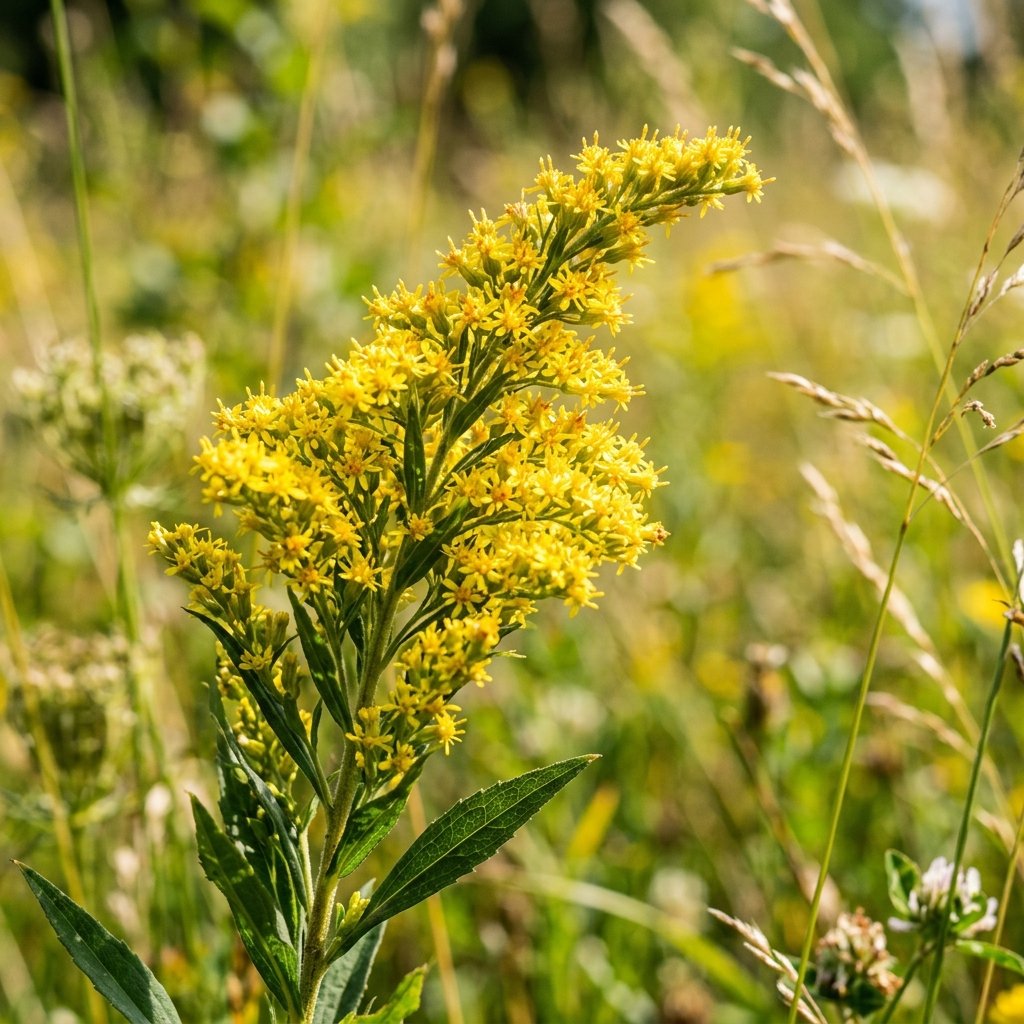
Goldenrod
Solidago canadensis
Goldenrod (*Solidago* spp.) is one of the most ecologically important and visually spectacular native wildflowers of North America, producing brilliant cascading plumes of tiny golden-yellow flowers from late summer through autumn. With over 100 species native to the Americas (most concentrated i...
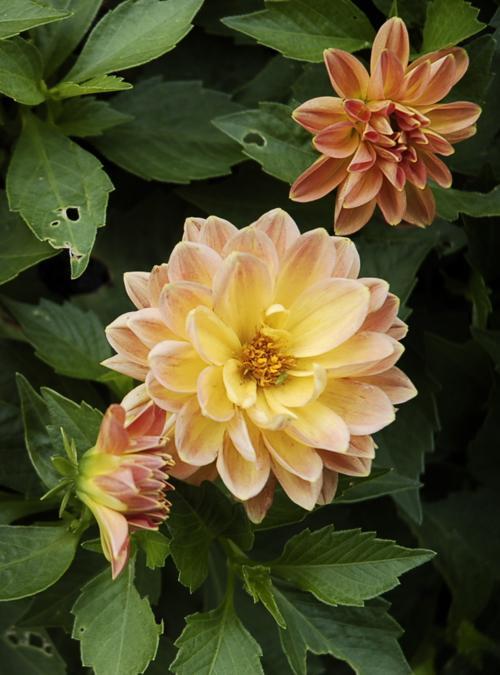
Pink-Yellow Dahlia
Dahlia pinnata (Hybrid)
The Pink-Yellow Dahlia is a spectacular, tuberous herbaceous perennial belonging to the vast Asteraceae family. Native to the mountainous highlands of Mexico and Central America, Dahlias have been heavily hybridized by botanists to produce an astonishing variety of geometric forms and vivid color...
Similar Characteristics
2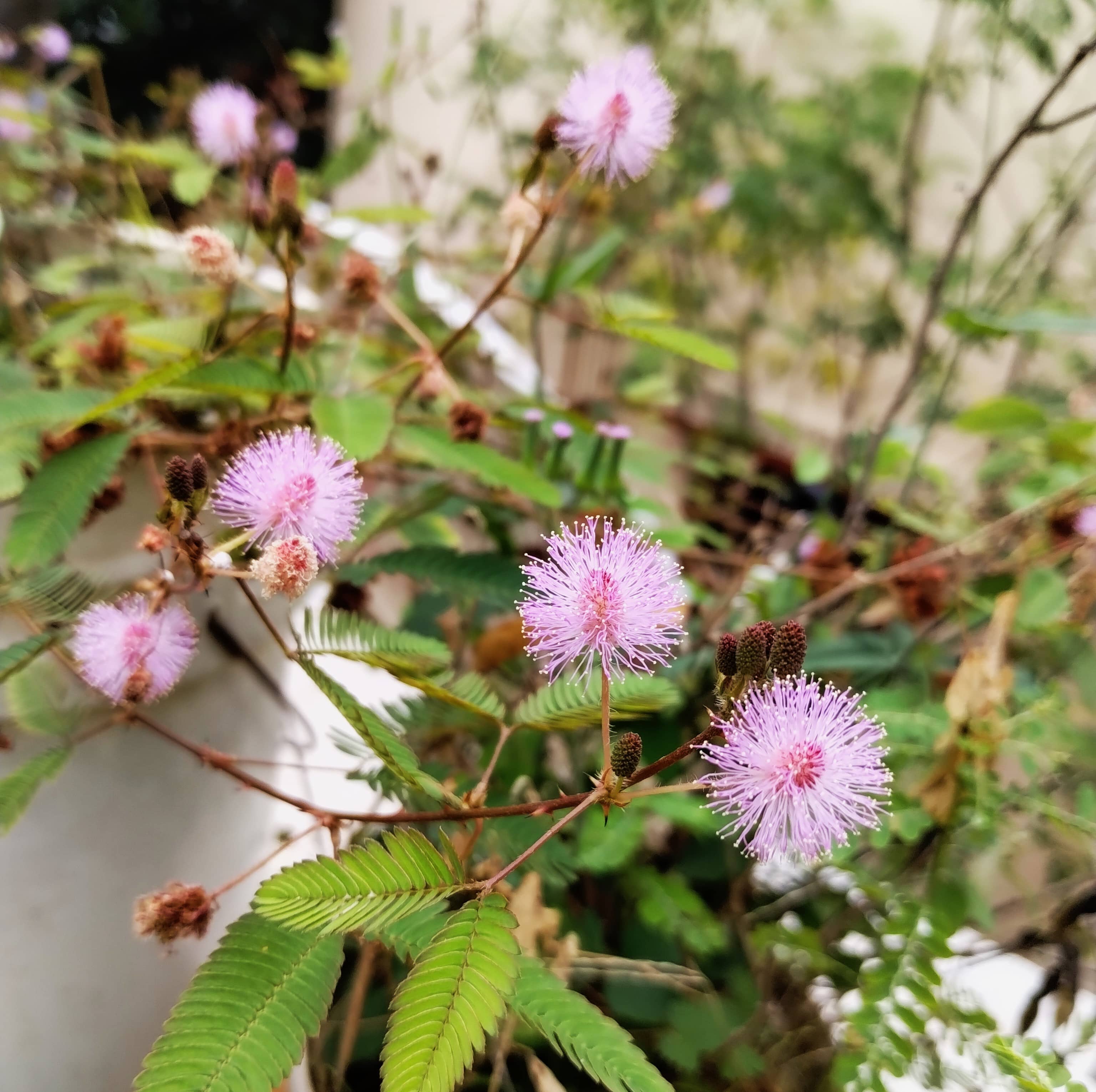
Touch Me Not
Mimosa pudica
Mimosa pudica, widely known as the "Touch-Me-Not" or "Sensitive Plant," is one of the most intriguing species in the botanical kingdom due to its rapid, touch-sensitive leaf movements. A member of the Fabaceae (Legume) family, this creeping perennial or subshrub is native to the tropical regions...
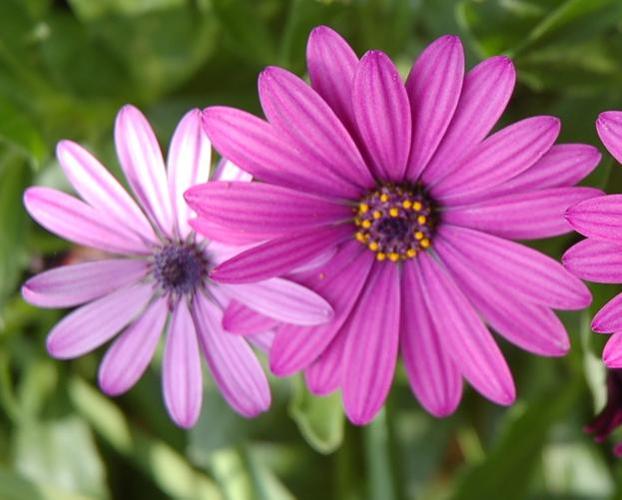
African Daisy (Osteospermum)
Dimorphotheca ecklonis
Osteospermum, commonly known as the African Daisy or Cape Daisy, is a genus of flowering plants that represents the sheer brilliance of the South African floral kingdom. Belonging to the Calenduleae tribe within the massive Asteraceae family, these daisies are celebrated for their sophisticated,...