
📚 Regional Mango Names Guide
Did you know that Alphonso is called Badami in Karnataka and Hapus in Maharashtra? Explore our complete state-by-state guide mapping 30+ regional names across India.
Also known as: Sindoora, Lalbaug of South India, Vermilion Mango
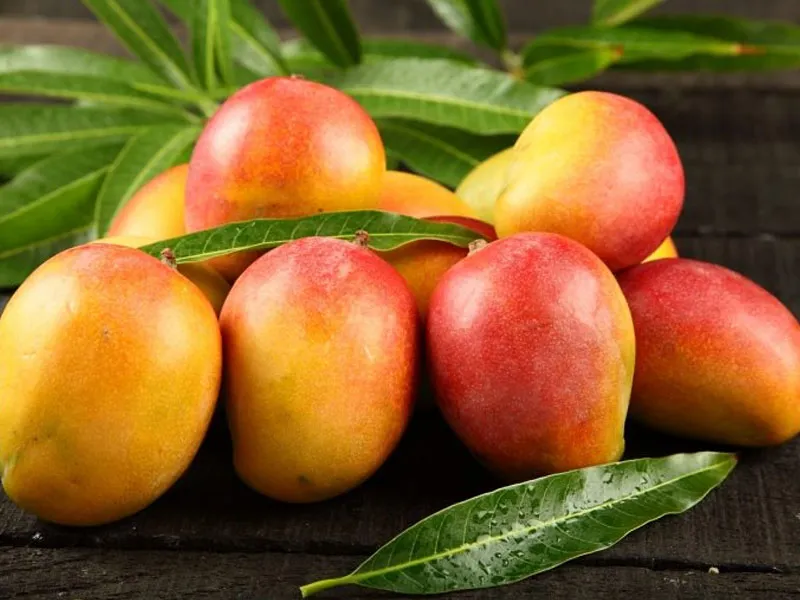
Typical diseases and disorders affecting this variety:
Detect these early using our Plant Guard AI.
Read our detailed Mango Diseases & Safety Guide.
Senthoora (also spelled Sindoora, and often referred to as the Lalbaug of South India or the Vermilion Mango) is a highly popular, early-season commercial heirloom mango variety native to Tamil Nadu and grown extensively in Kerala and Karnataka. The name 'Senthoora' is derived from 'Sindoor' (vermilion), a direct reference to the brilliant red-to-orange blush that develops over its shoulders as it matures. It is highly celebrated as one of the first premium mangoes to arrive in markets, signaling the official start of the summer mango season.
Physically, Senthoora is a medium-sized mango weighing between 220 and 320 grams. It has an attractive roundish-oval shape with thin, smooth skin that turns a vibrant yellow highlighted by its signature red blush. The pulp is a deep golden-yellow, incredibly soft, and extremely juicy, containing absolutely no stringy fiber. It is highly favored by consumers who love to squeeze and drink the sweet juice directly from the whole fruit.
The flavor of Senthoora is intensely sweet with distinct floral notes resembling jasmine, balanced by a mild, refreshing tartness. Sugar levels measure a solid 17° to 19° Brix. Cultivated extensively in the Salem, Dharmapuri, and Krishnagiri districts of Tamil Nadu, Senthoora is a highly prolific regular bearing variety, providing Southern farmers with consistent, early-season income when prices are at their highest.
The harvesting season for Senthoora begins early in mid-April and extends through late May, with peak sweetness in early May. Because it is highly juicy and has a thin skin, it has a moderate post-harvest shelf life of 5 to 7 days and must be transported quickly to local retail centers. To discover more unique early-season varieties, explore the Mango Identifier Hub, or view profiles on Alphonso, Badami, and Pairi.
Honey-sweet with a rich floral bouquet and a refreshing mild tart finish
Very intense, sweet, highly floral tropical aroma
Very soft, highly juicy, melting pulp with zero stringy fiber
None
How to tell if it's a genuine Senthoora:
Did you know that Alphonso is called Badami in Karnataka and Hapus in Maharashtra? Explore our complete state-by-state guide mapping 30+ regional names across India.
| Variety | Similarity | Key Differences |
|---|---|---|
| Lalbaug | 85% | Lalbaug is slightly larger and elongated with a softer orange blush; Senthoora is rounded with a brilliant vermilion-red shoulder. |
| Raspuri | 75% | Raspuri is yellow-green, highly acidic, and lacks a red blush; Senthoora is intensely honey-sweet and highly blushed. |
| Alphonso | 60% | Alphonso is larger, saffron-colored, and has a distinct pine-like aroma; Senthoora is smaller, rounder, and has a soft floral scent. |
Senthoora is deeply embedded in the rural culture of northern Tamil Nadu. Salem district, historically famous for its mango orchards, lists Senthoora as one of its oldest cultivated heirlooms, cherished for its resilience to early-season dry winds.
In Kerala, Senthoora is known as Sindooram and is widely planted in home gardens. Its vibrant red blush makes it a highly attractive visual addition to traditional summer fruit stalls.
Its prolific, regular bearing nature and early market arrival ensure that Senthoora remains a highly profitable choice for small-holder farmers across the Deccan Plateau.
Quick reference for identifying common healthy vs. problematic conditions:
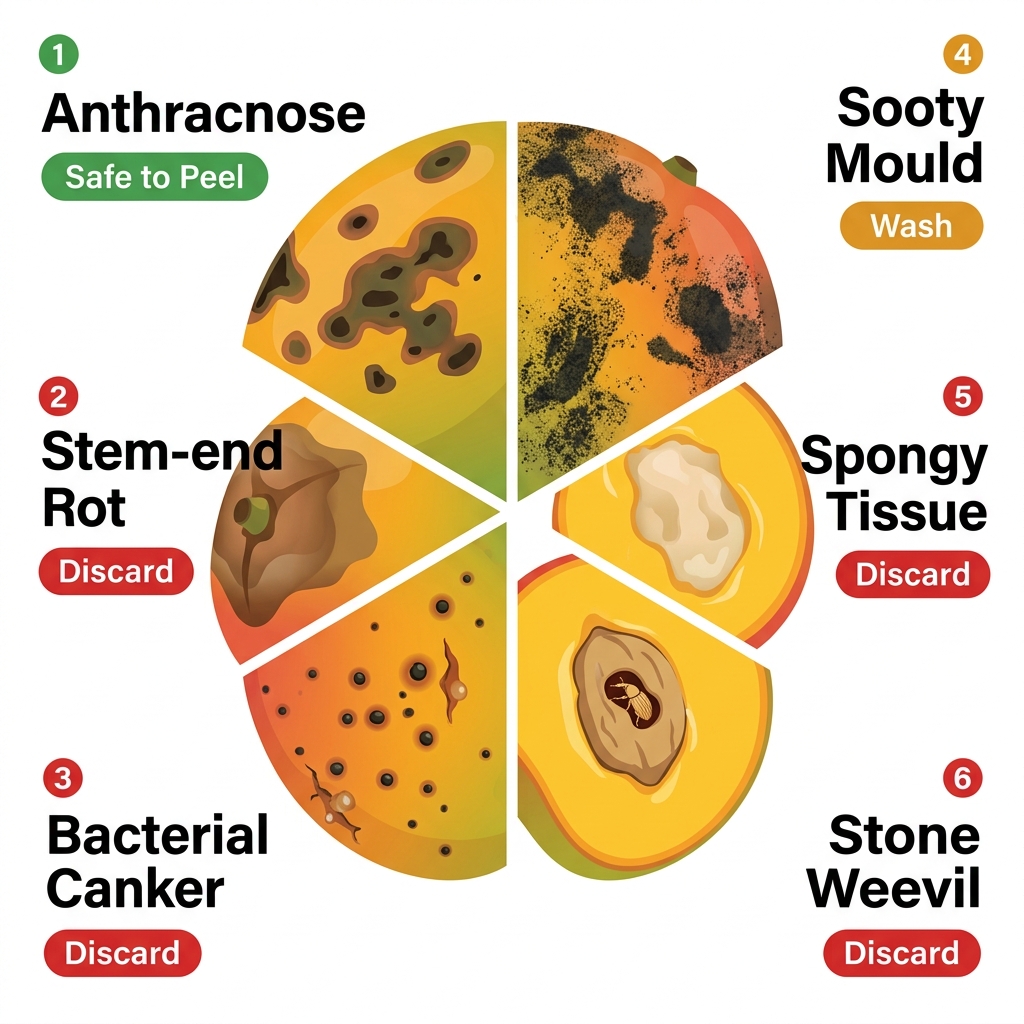
Pro Tip: Surface spots like Anthracnose are often harmless to the fruit inside, while Bacterial Canker or Stem-end Rot usually require discarding the fruit.
Ensure your Senthoora mango is naturally ripened. Use Food Guard to detect Calcium Carbide and other chemical ripeners.