
Spinach Quality & Safety Tests: Detect Pesticides & E. Coli
⚡ Quick 60-Second Spinach Dye & Pesticide Verdict
Malachite Green Dye & Pesticide Residues: Spinach is ranked on the EWG Dirty Dozen #2 list. Wilted batches are sprayed with carcinogenic Malachite Green dye to simulate fresh green luster.
Moisten a white cotton ball or blotting paper in liquid paraffin or water and rub firmly on spinach leaves. If the cotton stains emerald green, Malachite dye is confirmed.
Submerge in 1 tsp baking soda per 2 cups cold water. Alkaline soak degrades up to 90% of surface organophosphate pesticides; water-only rinses remove under 20%.
Bend a stem. Fresh unadulterated spinach snaps crisply with clear juice. Chemically preserved leaves have limp, rubbery, or fibrous stems.
To learn more about leafy green safety, read our guides on Cabbage and Coriander (Dhania).
Drop Spinach photo here to test purity
or click to browse • Supports JPG, PNG, WEBP • Paste with Ctrl+V
Inspection Guide
Click to enlarge
Spinach Pesticide & Hygiene Audit
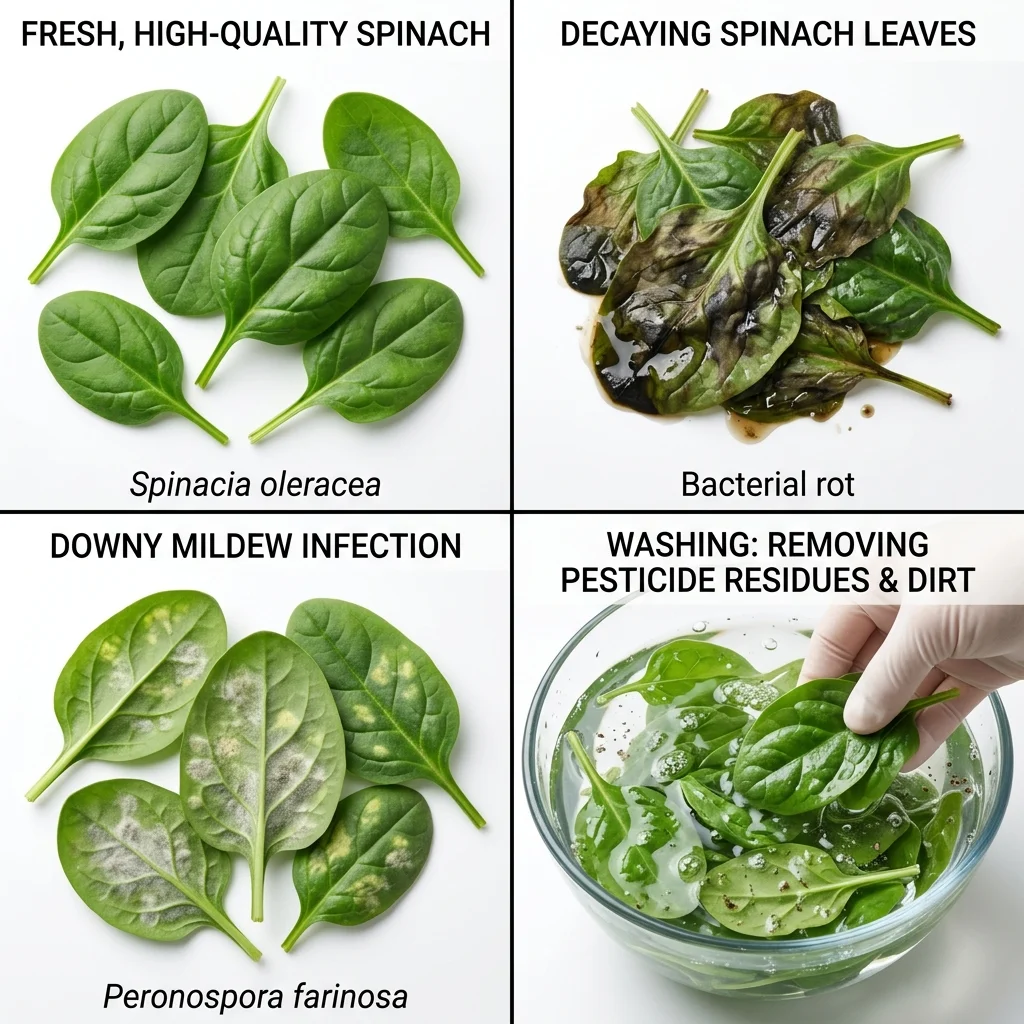
Spinach (Spinacia oleracea) ranks #2 on the EWG Dirty Dozen due to high levels of pesticide residues, particularly permethrin, a neurotoxic insecticide banned in Europe. Furthermore, spinach is prone to bacterial contamination (like E. coli) from agricultural runoff, which cannot be washed off if absorbed into the leaf cells.
1. The Cold Water Soak (Decontamination):
To wash spinach thoroughly, submerge leaves in a large bowl of cold water mixed with a teaspoon of baking soda or vinegar for 10 minutes. Swirl them around to loosen dirt and surface pesticides, then rinse under running water. Note that systemic pesticides absorbed by leaf cells cannot be fully removed, so buying certified organic is highly recommended.
2. The Visual Decay Check:
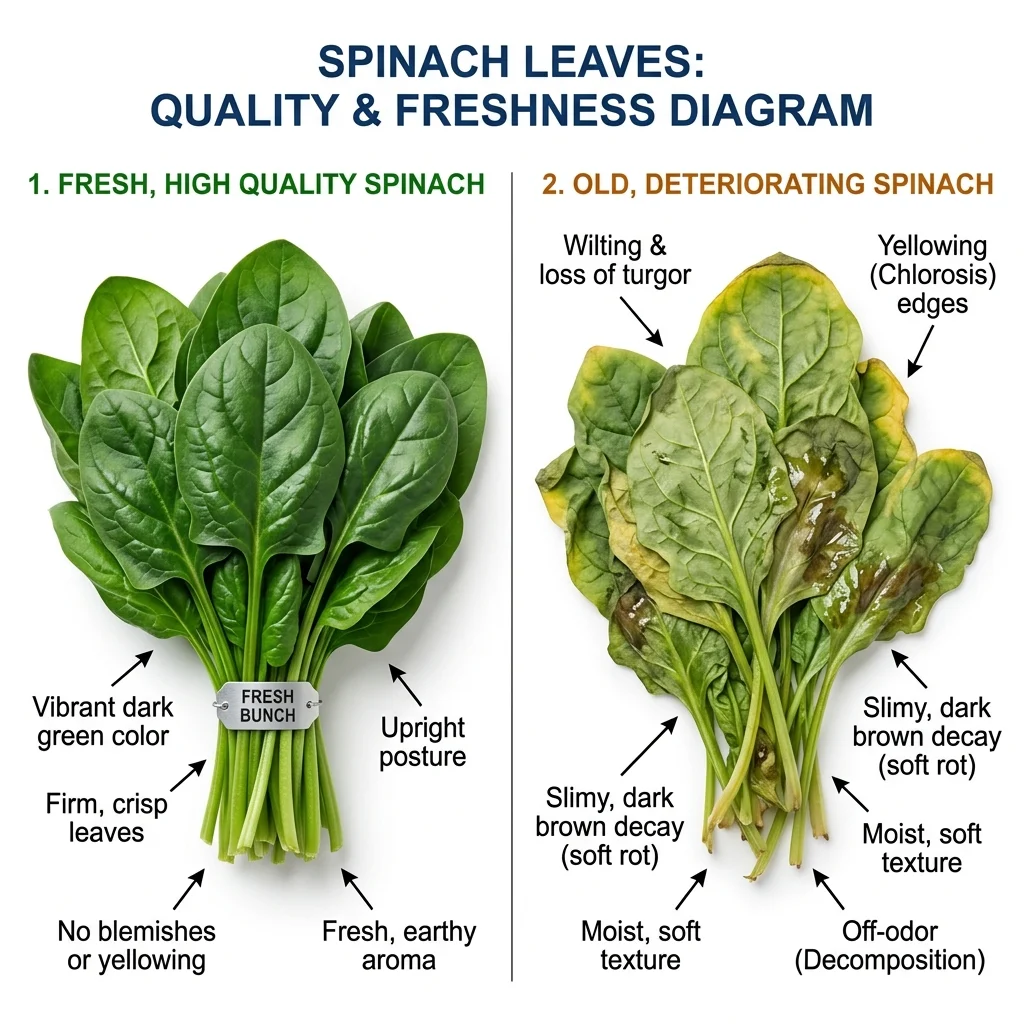
Inspect the leaves. Fresh spinach has crisp, dark green leaves with firm stems. Avoid leaves that are yellowing, wilted, slimy, or have dark, translucent spots (indicating bacterial rot or bruising), which are hotbeds for bacterial propagation.
3. Fungal Downy Mildew Search:
Look at the undersides of the leaves. If you see a fuzzy grey, white, or light purple mold coating (Downy Mildew), discard the affected leaves. This fungus propagates in humid storage and can trigger respiratory issues.
4. Texture and Aroma Check:
Healthy spinach leaves should feel dry to the touch and smell fresh and earthy. If the bag or bunch smells sour, musty, or slightly sweet-fermented, and the leaves feel slimy, bacterial decay has begun.
Click to enlarge
Spinach Freshness & Hydration Guide
Freshness ensures crisp, nutrient-dense leaves that are free from bacterial rot.
1. Leaf Crispness:
Fresh spinach leaves are firm, springy, and snap when bent. Wilted, limp, or leathery leaves indicate age.
2. Stem Flexibility:
The stems should be green and snap cleanly. Dry, yellowing, or fibrous stems indicate tough, bitter leaves.
3. Leaf Color:
Bunches should be a uniform, deep forest green. Yellowing leaves have lost chlorophyll and are stale.
4. Dryness Level:
Leaves should be dry and free from excess water. Wet leaves in sealed bags decay rapidly and promote bacterial growth.
Quick Safety Tips
- Soak leaves in cold water and baking soda to remove surface chemicals
- Discard any yellowing, slimy, or bruised leaves immediately
- Look for fuzzy grey downy mildew on the undersides of leaves
- Avoid spinach bunches with a sour, fermented, or chemical smell
Primary Chemical Concerns
Health Risks & Impacts
Multilingual Local Names
Common Storage Pests
Leafminers
low riskLarvae of tiny flies that feed inside the leaf layers, leaving white winding trails.
Detection
- Winding white or yellow serpentine trails on the leaf surface
- Small black specks (frass) visible inside the transparent trails
Prevention
- Inspect spinach leaves and discard any showing white trails
- Wash leaf-by-leaf under cold running water
Corrective Action: What to do?
Pinch off and discard the affected leaves; the undamaged leaves are completely safe to eat.
Regulatory Corner: FSSAI (Food Safety and Standards Authority of India) / Codex Alimentarius / EU Commission Regulation (EU) 2023/915
Regulation: Food Safety and Standards (Contaminants, Toxins and Residues) Regulations 2011, Schedule 2: Leafy Vegetables
Legal Limit:Nitrates (NO3): Max 3500 mg/kg (fresh harvest); Malachite Green / brilliant green dye: 0.0% (Strict zero tolerance); Dimethoate: Max 0.01 ppm; Lead: Max 0.3 ppm; Cadmium: Max 0.2 ppm
Report Adulteration to FSSAI (Food Safety and Standards Authority of India) / Codex Alimentarius / EU Commission Regulation (EU) 2023/915