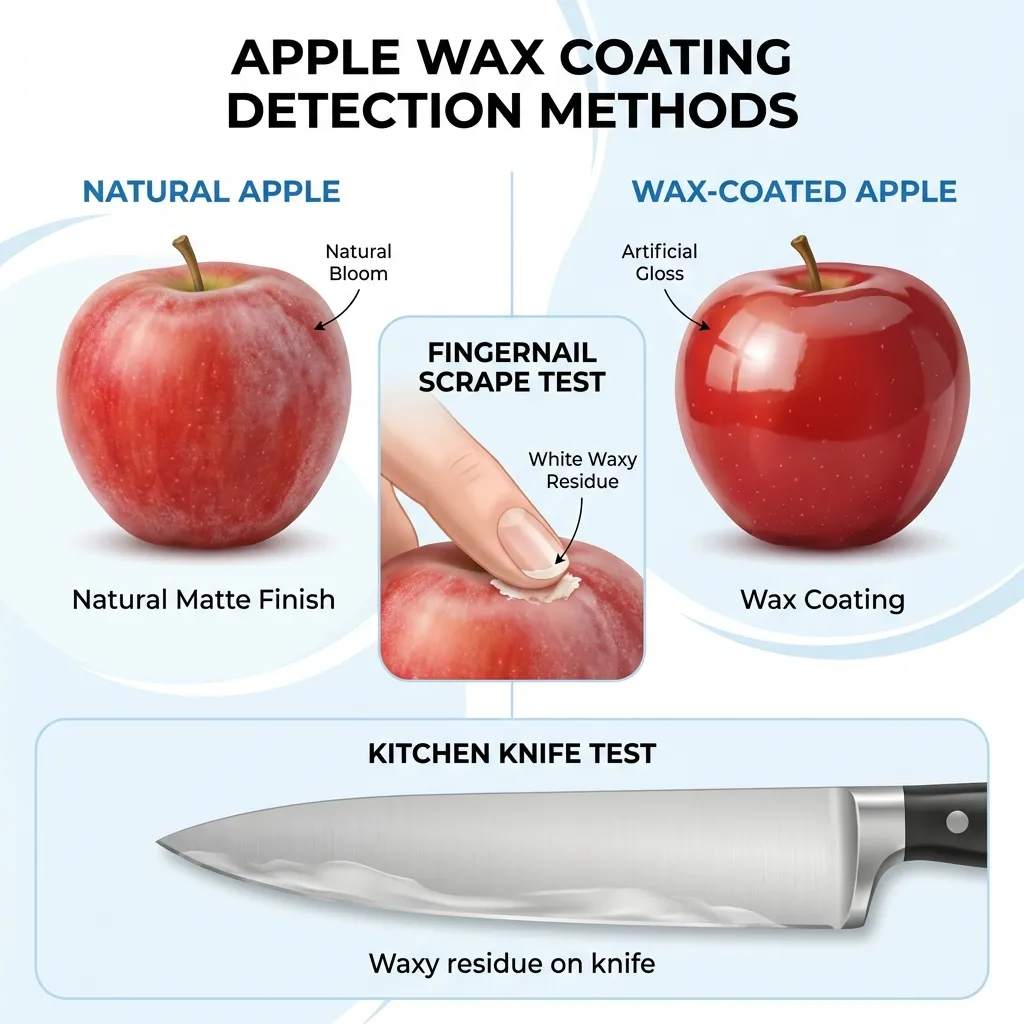
How to Test Lemon for Adulteration (Paraffin Wax, Biphenyl, Thiabendazole)
⚡ Quick 60-Second Lemon Wax & Acid-Wash Verdict
Synthetic Gloss Wax & Acid Washing: Supermarket lemons are coated with synthetic carnauba/petroleum waxes containing fungicides (Imazalil, Thiabendazole) that cannot be rinsed off with water alone.
Gently scrape the yellow zest with your thumbnail. If a white, flaky, waxy substance collects under your nail, commercial protective wax has been applied. Always zest only certified organic, unwaxed lemons.
Dip a commercially waxed lemon into boiling water for 10 seconds. Synthetic wax will melt and form a cloudy oily film on the water surface.
Prick the peel with a fork. Pure natural lemons spray fragrant, stinging citrus oils. Lemons washed in industrial acid or heavily waxed have dull, rubbery peels with muted scent.
To learn more about food safety tests and home adulteration detection, read our guides on Sweet Lime / Mosambi, Custard Apple (Sitaphal), and Shrimp & Prawns.
Drop Lemon photo here to test purity
or click to browse • Supports JPG, PNG, WEBP • Paste with Ctrl+V
Inspection Guide
Click to enlarge
Lemon Purity & Wax Audit
Lemons are frequently coated with industrial-grade wax to prevent moisture loss and treated with Biphenyl to prevent mold during transport.
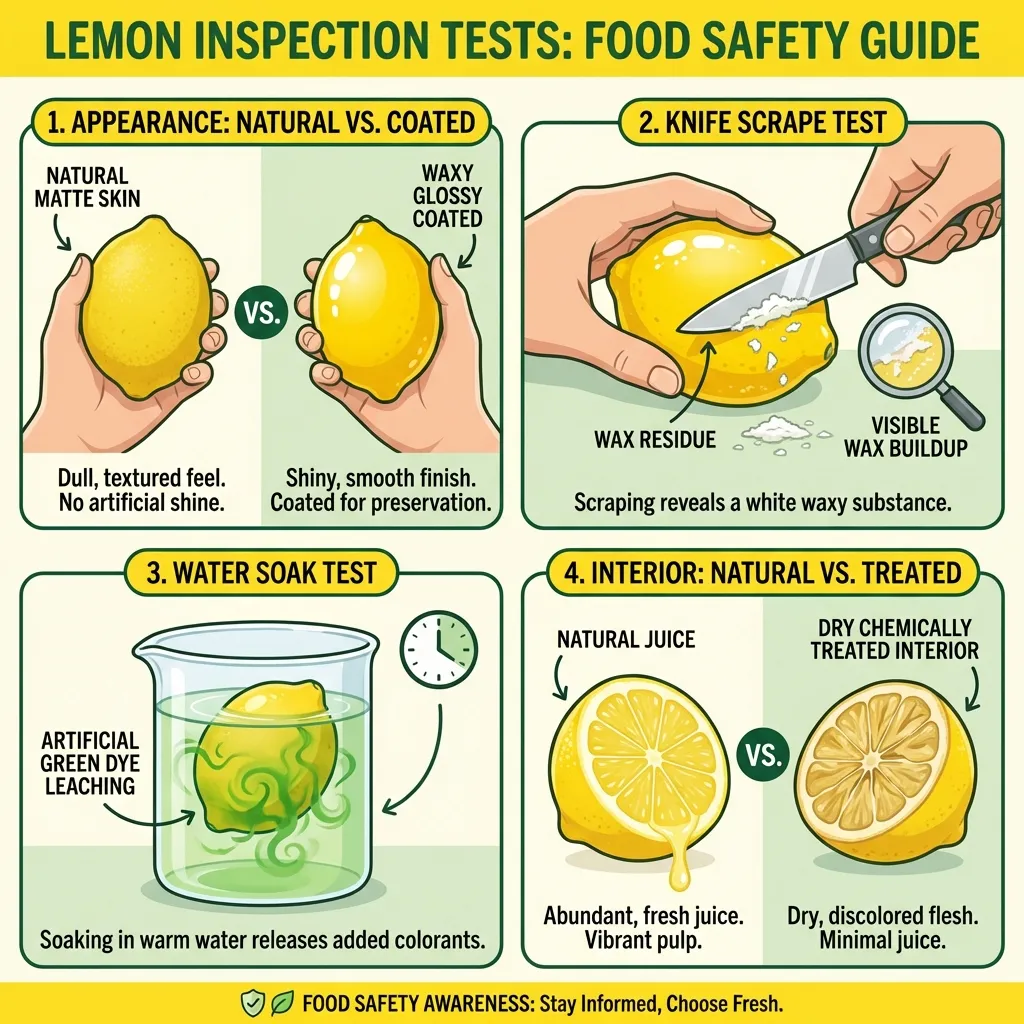
1. The Scrape Test:
Gently scrape the surface of the lemon skin with a fingernail or a dull knife. If a white, flaky substance comes off, it is coated with paraffin or industrial wax.
2. The Hot Water Rinse:
Place the lemon in a bowl of hot water (not boiling) for 1 minute. If a waxy film appears on the water surface or the lemon feels "slimy," it is heavily waxed.
3. The Smell Check:
Natural lemons have a sharp, fresh citrus scent. If the lemon has a chemical, medicinal, or "petroleum-like" smell, it indicates heavy fungicide treatment.
4. The Gloss Audit:
Naturally fresh lemons are bright but have a slightly textured, matte finish. Unnaturally shiny, mirror-like surfaces are a sign of heavy artificial polishing.
Quick Safety Tips
- Perform the scrape test - white flakes indicate wax
- Wash with warm water and baking soda to remove residue
- Avoid lemons that smell like chemicals or medicine
- Select lemons with a natural, slightly matte texture
Primary Chemical Concerns
Health Risks & Impacts
Multilingual Local Names
Common Storage Pests
Fruit Flies (Drosophila)
low riskSmall flies attracted to the acidity and sugars of decaying citrus.
Detection
- Small hovering insects
- Soft, fermented spots on the skin
Prevention
- Keep lemons dry
- Store in a mesh bag in the refrigerator
Corrective Action: What to do?
Discard fermented fruit; wipe storage area with vinegar to remove eggs.
Regulatory Corner: US FDA / EPA / FSSAI (Citrus Standards)
Regulation: FDA 21 CFR 172.210 (Coatings on Fresh Citrus) & EPA 40 CFR 180 Tolerances
Legal Limit:Non-declared synthetic petroleum waxes: 0.0%; Imazalil post-harvest fungicide: Max 5.0 ppm; Thiabendazole: Max 5.0 ppm; Artificial yellow dyes: 0.0%
Report Adulteration to US FDA / EPA / FSSAI (Citrus Standards)