Nopales Safety & Quality Tests: Remove Spines & Prep Cactus Safely
⚡ Quick 60-Second Nopales (Cactus Pads) Purity & Dye Verdict
Copper Sulfate Greening & Heavy Metal Uptake: Diced nopales (nopalitos) are washed in copper sulfate solutions to fix bright green color, and cactus pads readily accumulate cadmium and lead from arid soils.
Place diced nopales in a small bowl of water with a squeeze of fresh lemon juice for 5 minutes. If the liquid takes on a turquoise or bluish-green tint, toxic copper sulfate has leached out.
Examine the natural sap (baba). Untreated nopales release a viscous, clear mucilage and possess a refreshing tart, green-bean-like flavor. Watery sap with a metallic or astringent chemical taste signals chemical washing.
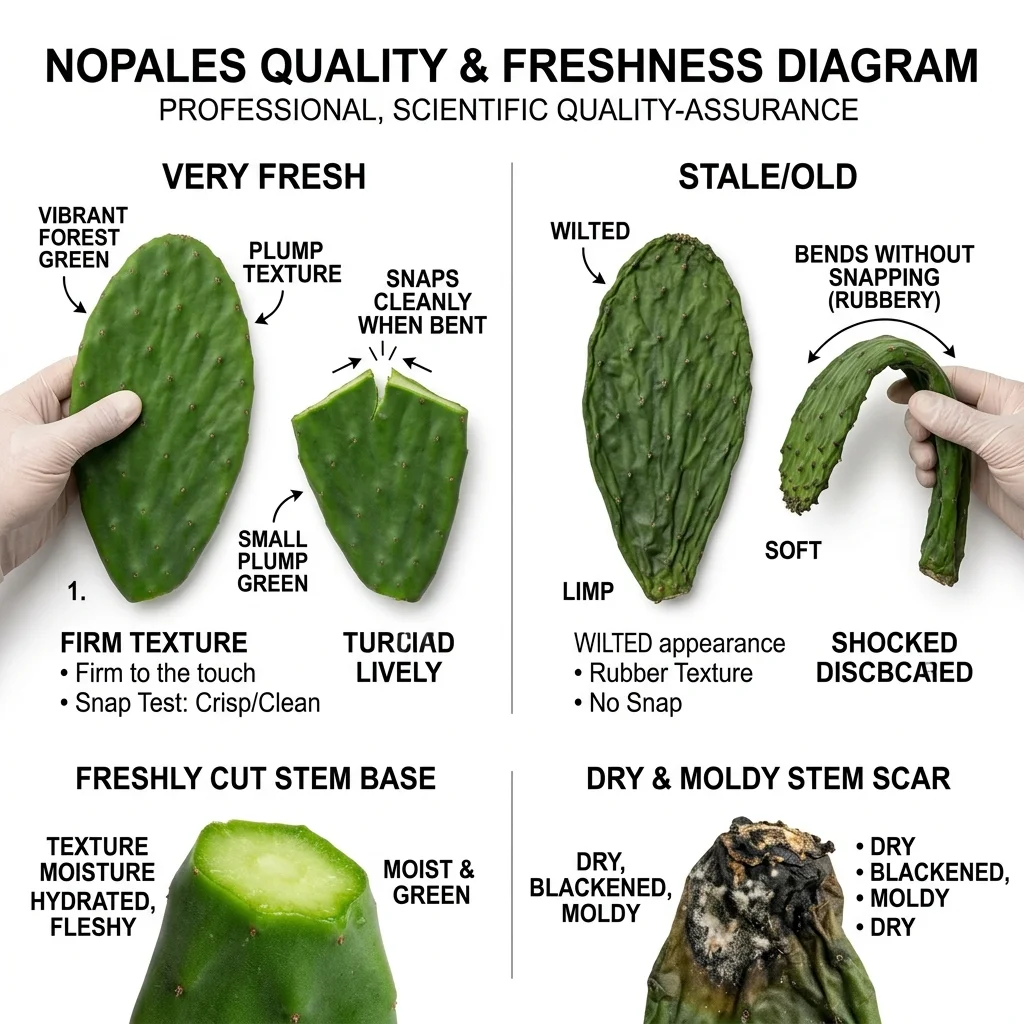
Snap the edge of a whole pad. Fresh culinary nopales are medium-thin (1/3 inch), crisp, and snap cleanly. Thick, leathery, woody pads with yellowed edges are overgrown and unpalatable.
To explore more about vegetable safety, browse our profiles on Cabbage and Cucumber.
Drop Nopales photo here to test purity
or click to browse • Supports JPG, PNG, WEBP • Paste with Ctrl+V
Inspection Guide
Click to enlarge
Nopales Spine & Glochid Safety Audit
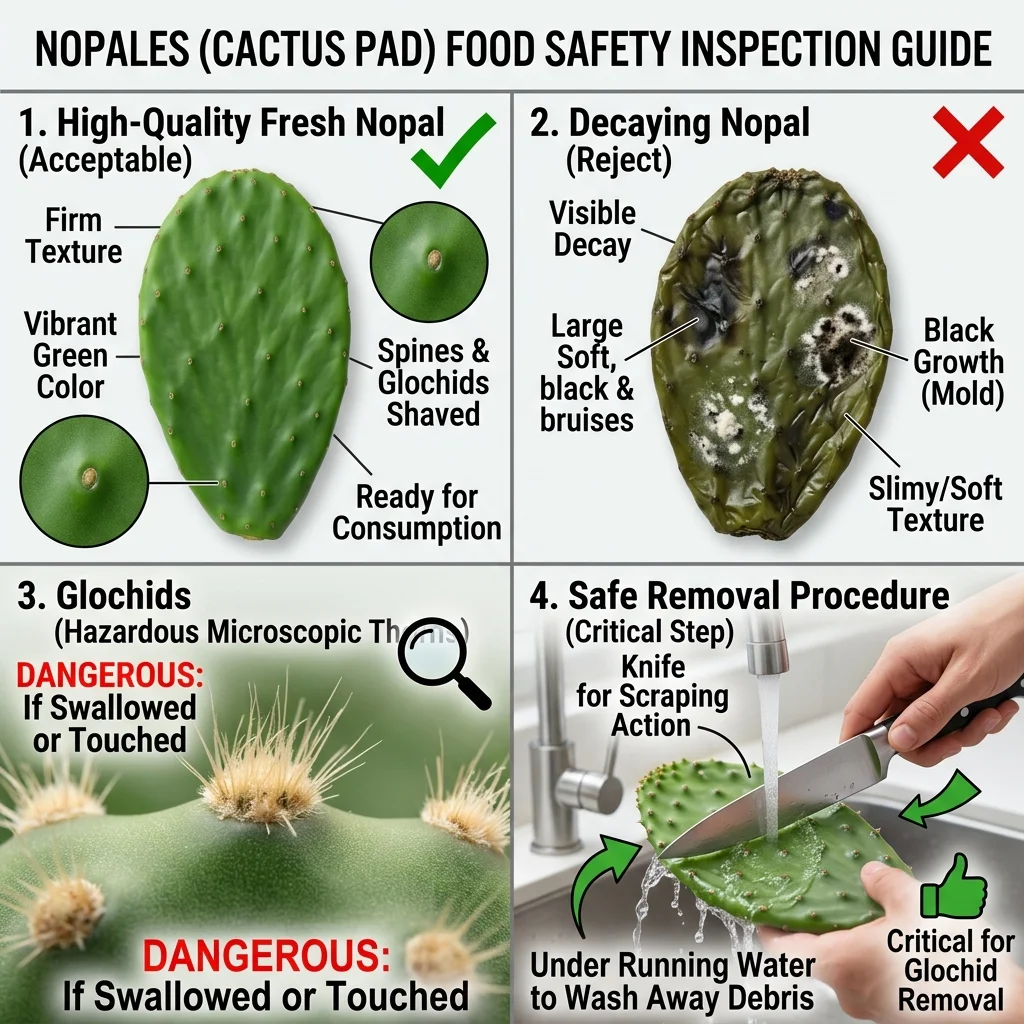
Nopales are the edible pads of the prickly pear cactus (Opuntia ficus-indica), a staple of Mexican cuisine. While highly nutritious, they require careful preparation to avoid swallowing spines or glochids—near-invisible, hair-like microscopic thorns that cause severe mechanical injury and throat irritation.
1. The Glochid node Check:
Inspect the nodes (the raised bumps where spines grow). Even if the large spines have been removed, the nodes contain hundreds of tiny, translucent glochids. You must shave these nodes off completely using a sharp knife at a 30-degree angle.
2. The Texture and Flex Test:
Gently bend the pad. Fresh nopales are firm, plump, and crisp, snapping cleanly when bent. If they feel rubbery, limp, or show wrinkled skin, they are dehydrated, stale, and will be tough and stringy.
3. The Surface Mucilage (Sliminess) Check:
While nopales naturally exude a thick, slimy mucilage when cut or cooked (similar to okra), the raw pad's skin should be dry and clean. A slimy, sticky, or wet surface on uncut pads indicates bacterial rot and decay.
4. The Species and Look-alike Audit:
Only consume nopales sourced from cultivated Opuntia varieties. Never harvest wild cacti, as several inedible and toxic look-alike species contain high levels of bitter, toxic alkaloids that cause vomiting, diarrhea, or hallucinations.
Click to enlarge
Nopales Freshness & Hydration Check
Freshness determines the tenderness and flavor of the cactus pad.
1. Skin Vibrancy:
Fresh nopales are uniform bright green. Yellowing, pale color, or brown sunburn spots indicate older, tough pads.
2. Cut Stem Scar:
Check the base of the pad where it was cut from the plant. It should be clean, moist, and green. A dry, blackened, shriveled, or moldy cut indicates old stock.
3. Pad Thickness:
Fresh pads are thick and filled with moisture. Thin, flat, hollow-feeling pads have dried out and lost their crispness.
Quick Safety Tips
- Always scrape or shave the pad nodes under running water to remove near-invisible glochids
- Ensure pads are firm and snap cleanly rather than bending like rubber
- Wash off the sticky mucilage thoroughly after slicing or boiling
- Only purchase from trusted retailers to avoid toxic wild cactus species
Primary Chemical Concerns
Health Risks & Impacts
Multilingual Local Names
Regulatory Corner: US FDA (Compliance Policy Guide Sec. 570.450) / Codex Alimentarius (Codex Stan 185-1993)
Regulation: Codex Standard for Nopales (Codex Stan 185-1993) & FDA Food Safety Modernization Act Guidelines
Legal Limit:Copper sulfate / synthetic dyes: Prohibited (0.0 ppm - Zero tolerance); Lead MRL: Max 0.1 ppm; Cadmium MRL: Max 0.05 ppm; Pesticide residues: Compliant with 40 CFR 180
Report Adulteration to US FDA (Compliance Policy Guide Sec. 570.450) / Codex Alimentarius (Codex Stan 185-1993)