Guia de Qualidade e Segurança da Jicama: Identificar Partes Tóxicas e Raiz Pura
Aprenda a preparar a Jicama com segurança, removendo sua casca, sementes e folhas tóxicas. Descubra como selecionar raízes crocantes e sem fibras.
Para saber mais sobre a segurança de raízes vegetais, leia nossos guias sobre Batata-Doce (Shakarkand), Batata e Cenouras.
Drop Jicama photo here to test purity
or click to browse • Supports JPG, PNG, WEBP • Paste with Ctrl+V
Inspection Guide
Click to enlarge
Auditoria de pureza e peças tóxicas de Jicama
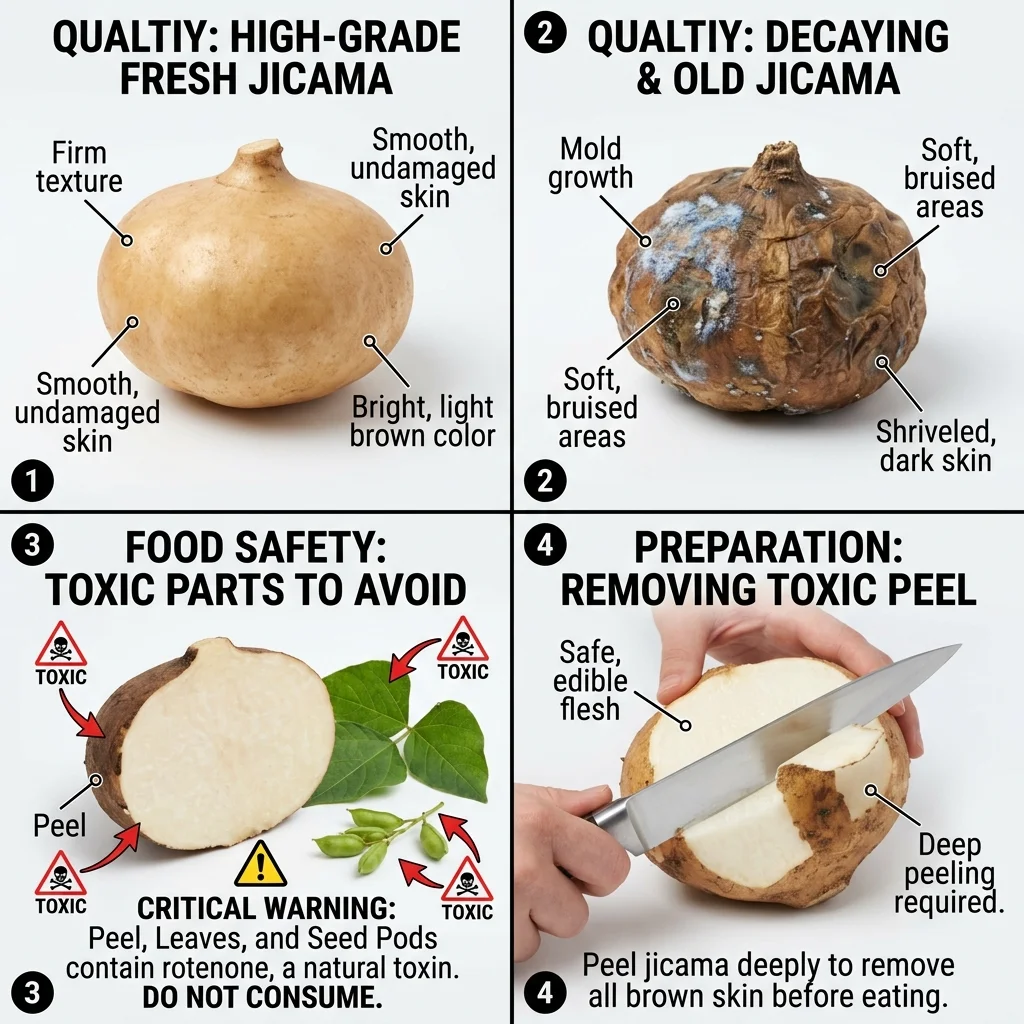
Jicama (Pachyrhizus erosus), um popular nabo mexicano, é apreciado por sua polpa crocante, doce e aquosa. Embora a raiz carnuda seja completamente segura e altamente nutritiva, o resto da planta – incluindo a casca, sementes, folhas e vagens – contém rotenona, um potente pesticida natural e neurotoxina usada comercialmente como veneno para peixes. Consumir partes não-raiz é altamente perigoso.
1. O teste de peeling profundo:
Como a rotenona está concentrada logo abaixo da casca dura, semelhante a papel marrom, da raiz da jicama, a casca nunca deve ser comida. Sempre descasque profundamente a jicama, removendo a camada externa bronzeada e a camada inferior fibrosa até que reste apenas a polpa branca translúcida.
2. Casca Visual e Integridade da Pele:
Inspecione a raiz. Uma jicama saudável é firme, seca e tem pele lisa e de cor bronzeada. Evite raízes com manchas moles, manchas úmidas ou mofo preto, pois a decomposição pode atrair toxinas ou bactérias para a polpa comestível.
3. Identificação de sementes e folhas:
Nunca compre ou consuma raízes de jicama vendidas com vagens ou folhas verdes. Os frutos são semelhantes aos feijões verdes, mas são altamente tóxicos. Se você cultiva jicama em casa, mantenha animais de estimação e crianças longe da folhagem acima do solo.
4. Verificação do núcleo amadeirado:
Corte a raiz ao meio. A polpa deve ser uniformemente branca e crocante como uma maçã. Se você vir fibras lenhosas grossas, marrom-escuras ou avermelhadas irradiando do centro, a raiz é velha, lenhosa e será dura e sem sabor, embora não seja tóxica.
Click to enlarge
Frescura da Jicama e verificação da pele
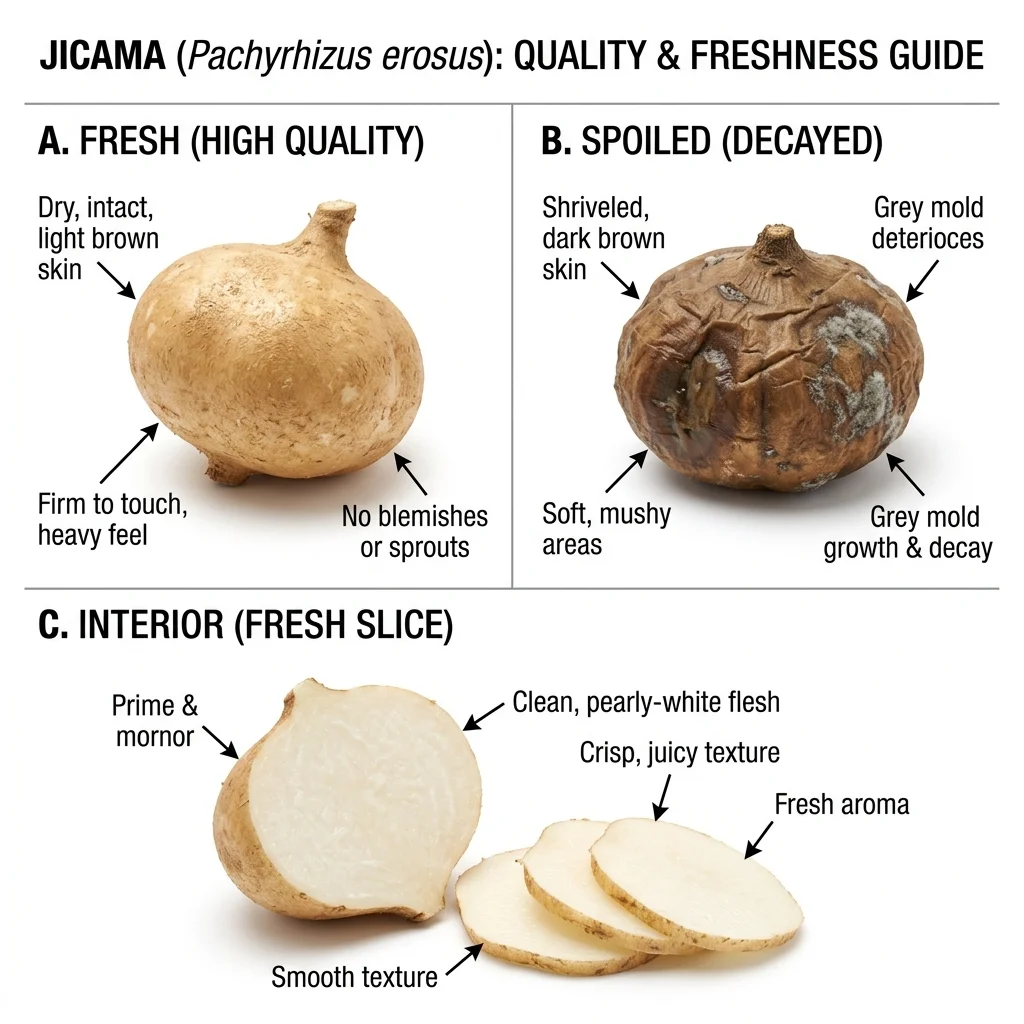
O frescor garante uma textura crocante e doce, em vez de uma sensação amadeirada e seca na boca.
1. Secura e textura da pele:
A jicama fresca tem pele seca, limpa e marrom-clara. A pele molhada, pegajosa ou viscosa indica mau armazenamento e deterioração bacteriana.
2. Aperte a firmeza:
Pressione suavemente a raiz. Deve parecer duro como uma rocha. A jicama esponjosa, macia ou enrugada perdeu a umidade e está estragada.
3. Cor de corte e aroma:
Ao fatiar, a polpa deve estar crocante, branca como a neve e produzir um aroma suave, doce e amiláceo. Manchas opacas, amareladas ou translúcidas indicam danos internos.
4. Verificação de peso:
A jicama de qualidade parece pesada para seu tamanho, indicando que está cheia de suco crocante. As raízes leves são secas e fibrosas.
Quick Safety Tips
- Sempre descasque profundamente a pele marrom antes de comer crua ou cozida
- Nunca coma ou manuseie folhas, sementes ou vagens tóxicas da planta jicama
- Mantenha a pele crua da jicama e restos de plantas longe de cães, gatos e gado
- Lave bem a raiz descascada com água fria antes de fatiar
Primary Chemical Concerns
Health Risks & Impacts
Multilingual Local Names
Common Storage Pests
Wireworms
low riskLarvae of click beetles that tunnel into root crops, introducing fungal decay.
Detection
- Small, round entry holes on the tan skin of the root
- Dark, narrow tunnels visible in the white flesh upon cutting
Prevention
- Select roots with smooth, unbroken skin and no puncture holes
- Store in a cool, dry, well-ventilated space
Corrective Action: What to do?
Cut away and discard any tunneled sections; the surrounding white flesh remains safe to eat.
Regulatory Corner: US FDA (21 CFR 182.3766 - Sodium Metabisulfite) / Codex Alimentarius (Codex Stan 193-1995)
Regulation: FDA 21 CFR 182.3013 (Prohibition of sulfites on fresh produce served raw) & Codex Stan 193
Legal Limit:Sulfites on fresh vegetables served raw: Prohibited (0.0 ppm - FDA banned); Lead MRL: Max 0.1 ppm; Cadmium MRL: Max 0.1 ppm; Mineral wax: Prohibited (0.0%)
Report Adulteration to US FDA (21 CFR 182.3766 - Sodium Metabisulfite) / Codex Alimentarius (Codex Stan 193-1995)