How to Test Plum for Adulteration (Artificial Purple Dye, Paraffin Wax, Fungicides)
⚡ Quick 60-Second Plum Purity & Wax Coating Verdict
Synthetic Purple Coal-Tar Dyes & Heavy Paraffin Wax: Early-harvest unripe plums are treated with synthetic red/purple dyes to simulate ripeness and heavily coated with petroleum waxes to halt dehydration during cold transit.
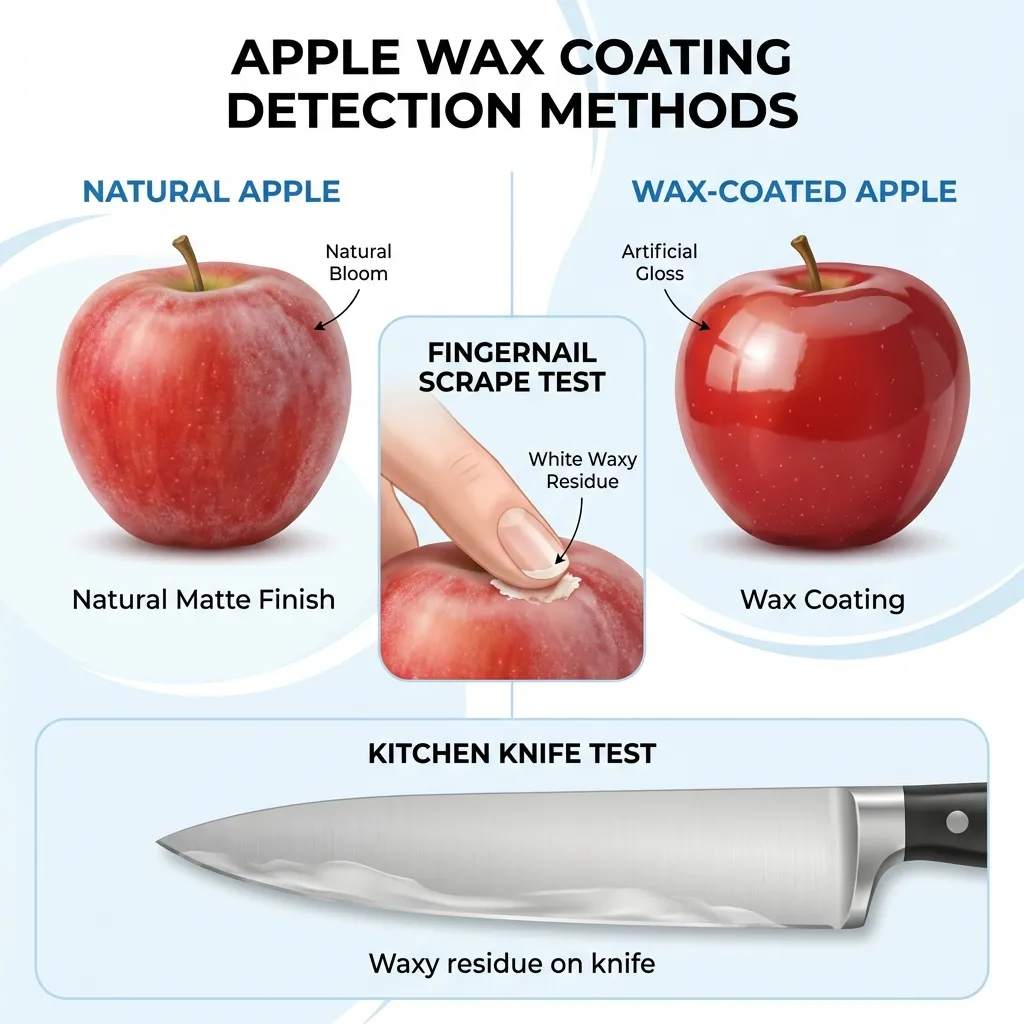
Gently scrape the plum skin with a butter knife. Natural bloom is a delicate powdery yeast layer that wipes away cleanly with fingers. Heavy artificial paraffin peels away as thick white plastic shavings.
Dab a cotton swab in rubbing alcohol and wipe the plum skin. A bright purple or magenta stain on the cotton reveals synthetic coal-tar dye; natural anthocyanin skin pigments are alcohol-insoluble on intact skin.
Float the plum in a bowl of 70°C water for 2 minutes. Heavy petroleum wax will melt and form cloudy, oily droplets on the water surface; natural fruit skin remains clean.
To learn more about food safety tests and home adulteration detection, read our guides on Strawberry,BlueBerry and Grapes.
Drop Plum photo here to test purity
or click to browse • Supports JPG, PNG, WEBP • Paste with Ctrl+V
Inspection Guide
Click to enlarge
Plum Purity & Wax Audit
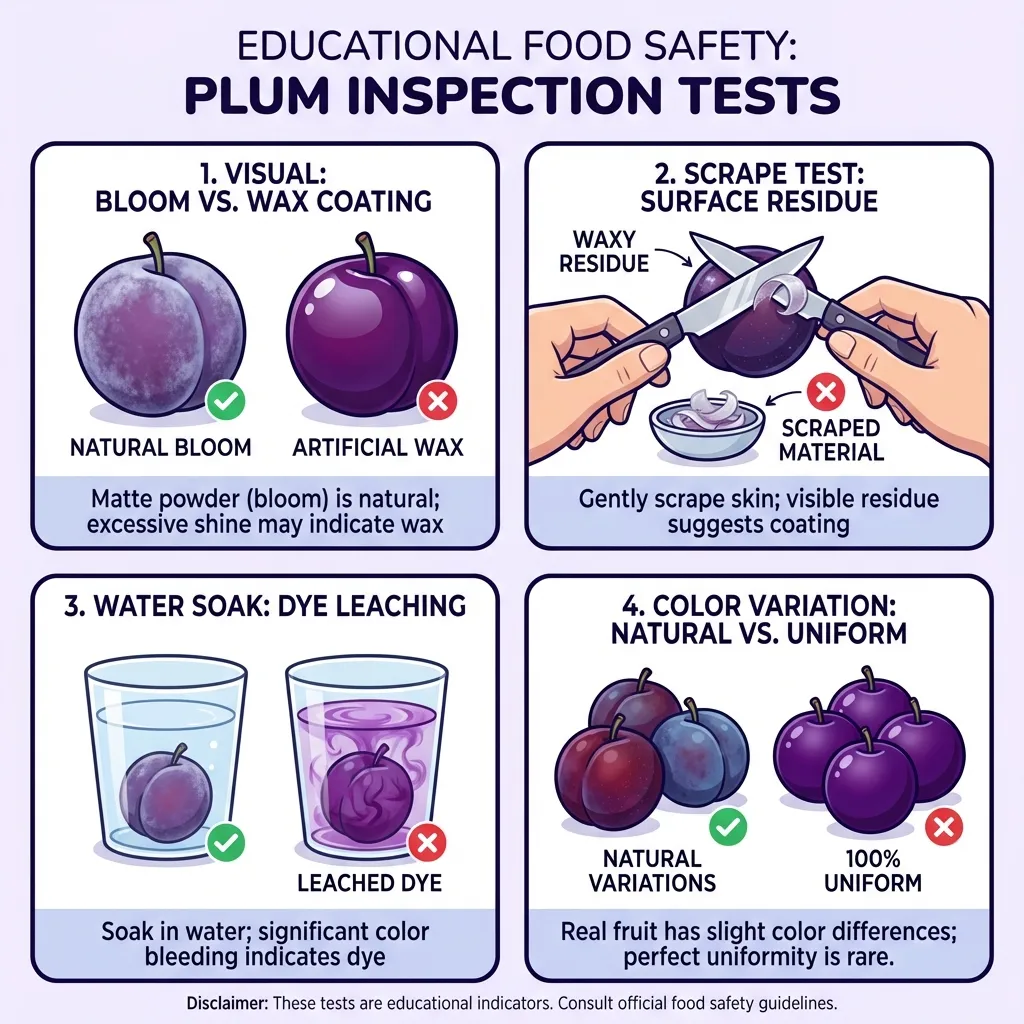
Plums are often treated with purple dyes to look more vibrant and coated with wax to prevent moisture loss and maintain a glossy appearance.
1. The Cotton Rub Test (Dye Detection):
Soak a cotton ball in water or liquid paraffin and rub the purple skin of the plum. If the cotton picks up a purple or pink tint, artificial dye has been applied. Natural plum color remains on the skin.
2. The Scrape Test (Wax Detection):
Gently scrape the skin with a dull knife. If a white, flaky, or powdery substance comes off, it is an industrial wax coating.
3. The Water Soak (Chemical Check):
Soak plums in warm water for 15 minutes. If the water turns purple or develops a chemical, oily film, suspect artificial coloring and heavy fungicide treatment.
4. The Bloom Check:
Fresh, natural plums often have a "bloom" (a thin, white, waxy-looking natural coating that rubs off easily with a finger). If the plum is mirror-glossy and lacks this natural bloom, it has likely been washed and treated with industrial wax.
Quick Safety Tips
- Perform the cotton rub test for purple dyes
- Scrape to check for industrial wax coatings
- Look for the natural "bloom" - a sign of minimal processing
- Soak in a solution of baking soda and water to remove surface residues
Primary Chemical Concerns
Health Risks & Impacts
Multilingual Local Names
Common Storage Pests
Fruit Flies
low riskSmall insects attracted to the sugars of ripe plums.
Detection
- Small hovering insects
- Soft, fermented spots on the skin
Prevention
- Store in the refrigerator
- Keep dry
Corrective Action: What to do?
Discard fruit with soft spots or fermented smell.
Regulatory Corner: FSSAI (Food Safety and Standards Authority of India) / Codex Alimentarius (Codex Stan 242-2003)
Regulation: Food Safety and Standards (Food Products Standards and Food Additives) Regulations 2011, Clause 2.3.1 & Codex Stan 242
Legal Limit:Synthetic colorants: Strictly prohibited (0.0 ppm); Mineral hydrocarbon wax: Prohibited (0.0%); Food-grade carnauba/beeswax: Permitted only with clear label declaration; Ethephon MRL: Max 2.0 ppm
Report Adulteration to FSSAI (Food Safety and Standards Authority of India) / Codex Alimentarius (Codex Stan 242-2003)