Guía de Pureza del Aceite de Maní: Detecta Argemone y Aceite de Palma
⚡ Veredicto Rápido de 60 Segundos: Pureza del Aceite de Cacahuete (Maní)
Mezcla de Aceites y Aflatoxinas: El aceite de cacahuete virgen a menudo se diluye con aceite de semilla de algodón, aceites minerales baratos o aceites tóxicos como el de argemona.
Coloque 50ml de aceite en el refrigerador (4°C) durante 3 horas. El aceite de cacahuete puro se espesa y solidifica de forma cremosa; las mezclas con aceites refinados permanecen líquidas.
Mezcle 5ml de aceite con 5ml de ácido nítrico en un tubo de vidrio. Un anillo carmesí o rojo oscuro indica presencia del tóxico aceite de argemona.
Frote 2 gotas en sus palmas; el aceite puro desprende un aroma cálido y agradable a maní tostado. Los aceites minerales huelen a solvente o químicos.
Drop Aceite de maní (aceite de maní) photo here to test purity
or click to browse • Supports JPG, PNG, WEBP • Paste with Ctrl+V
Inspection Guide
Click to enlarge
Pureza del aceite de maní y auditoría de Argemone
El aceite de maní a menudo se adultera con aceite tóxico de Argemone o aceites más baratos como el de semilla de algodón y el de salvado de arroz para aumentar los márgenes de ganancia.
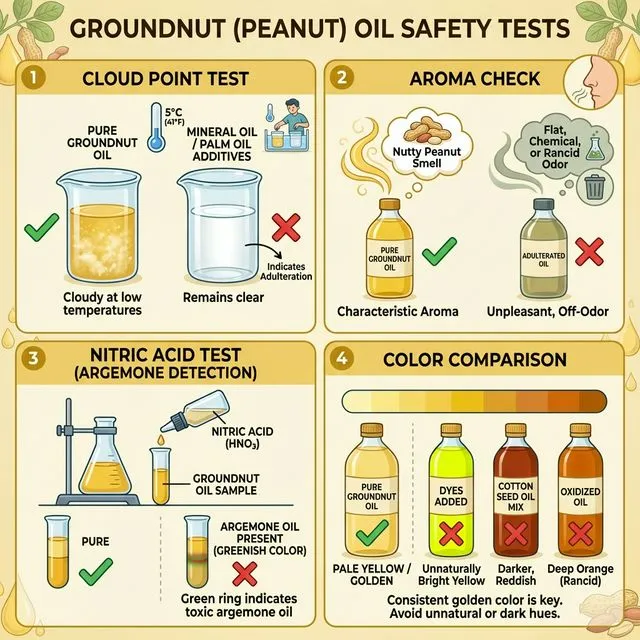
1. La prueba de ácido nítrico (detección de Argemone):
En un tubo de ensayo, tome 5 ml de aceite de maní y agregue unas gotas de ácido nítrico concentrado. Agite suavemente y caliente la mezcla durante 2-3 minutos. Si la capa de aceite se vuelve marrón rojiza o naranja, está contaminada con aceite de Argemone. El aceite de maní puro no cambiará de color.
2. La prueba de refrigeración:
Coloque una botella pequeña de aceite de maní en el refrigerador durante 3 a 4 horas. El aceite de maní puro tiene un punto de congelación muy bajo y permanece líquido. Si ve una solidificación blanca significativa o una "nubosidad" en la parte inferior, indica adulteración con aceite de palma o aceite de semilla de algodón.
3. La prueba de frotar y oler:
Frota unas gotas de aceite en tus palmas durante 30 segundos hasta que se calienten. El aceite de maní puro tiene un aroma distintivo, a nuez y agradable. Si el olor es neutro o se siente "graso" como el ghee vegetal, está adulterado.
4. El control de transparencia:
El aceite de maní puro es de color amarillo dorado claro y cristalino. Si el aceite se ve turbio, "fluorescente" o tiene un olor químico fuerte, sospeche de tintes industriales o tratamientos con aceite mineral.
5. Adulteración en Aceite de Mostaza:
Una adulteración similar con aceite tóxico de Argemone se reporta ampliamente en el aceite de mostaza. Consulta nuestra guía para probar el aceite de mostaza.
Quick Safety Tips
- Realice la prueba de ácido nítrico para detectar aceite de Argemone: el color rojizo es una señal de peligro
- Compruebe si hay solidificación en el frigorífico: indica rellenos de aceite baratos
- Evite los aceites que carezcan del característico y agradable aroma a nuez.
- Seleccione aceites "prensados en frío" (Kacchi Ghani) para máxima pureza y nutrición.
Primary Chemical Concerns
Health Risks & Impacts
Multilingual Local Names
Common Storage Pests
Not Applicable
low riskPure oil does not typically host pests, but moisture can lead to fungal growth.
Detection
- Cloudy white strands
- Rancid smell
Prevention
- Store in a dry, dark, airtight container
- Avoid using wet spoons
Corrective Action: What to do?
Discard rancid or fungus-contaminated oil immediately.
Regulatory Corner: Codex Alimentarius (Norma 210-1999) / FSSAI
Regulation: Normas Internacionales para Aceites Vegetales con Denominación Específica
Legal Limit:Índice de Acidez: Máx. 0.5 (Refinado) / 6.0 (Virgen); Aceite de Argemona: 0.0% (Tolerancia Cero); Aflatoxina B1: Máx. 15 ppb
Report Adulteration to Codex Alimentarius (Norma 210-1999) / FSSAI