Como Saber se os Ovos ainda estão Bons: Segurança da Salmonella e Teste de Flutuação
⚡ Veredito Rápido de 60 Segundos: Frescura do Ovo e Salmonella
Risco de Salmonella e Deterioração: Conforme o ovo envelhece, a umidade evapora pelos poros da casca, expandindo a bolsa de ar interna e aumentando o risco de proliferação bacteriana por Salmonella.
Coloque o ovo em um recipiente com água fria. Afunda na horizontal = muito fresco (1–7 dias). Fica em pé no fundo = maduro, mas próprio para consumo. Flutua na superfície = estragado (descarte!).
Ao quebrar o ovo em um prato plano, o ovo fresco tem gema alta e abaulada envolvida por clara espessa. Ovo velho tem gema achatada e clara líquida como água.
No escuro, encoste a lanterna do celular na extremidade larga do ovo. Ovo fresco mostra câmara de ar minúscula (<3mm). Câmara de ar grande ou manchas escuras indicam decomposição.
Drop Ovo photo here to test purity
or click to browse • Supports JPG, PNG, WEBP • Paste with Ctrl+V
Inspection Guide
Click to enlarge
Auditoria de pureza de ovos e segurança de salmonela nos EUA
Os ovos (huevos) são um alimento básico fundamental na cozinha, mas apresentam desafios específicos de segurança nos Estados Unidos. Ao contrário da Europa, onde as galinhas são amplamente vacinadas contra Salmonella e os ovos são armazenados sem lavar à temperatura ambiente, a segurança dos ovos nos EUA é altamente regulamentada pelo USDA. Os ovos comerciais nos EUA devem passar por uma lavagem obrigatória com água quente e spray desinfetante com cloro para eliminar sujeira e bactérias superficiais. No entanto, este processo remove a camada cerosa protetora natural do ovo (a cutícula ou flor), tornando a casca altamente porosa. Portanto, os ovos dos EUA devem ser continuamente refrigerados a 45°F (7°C) ou menos para evitar que bactérias entrem nos poros e se multipliquem.
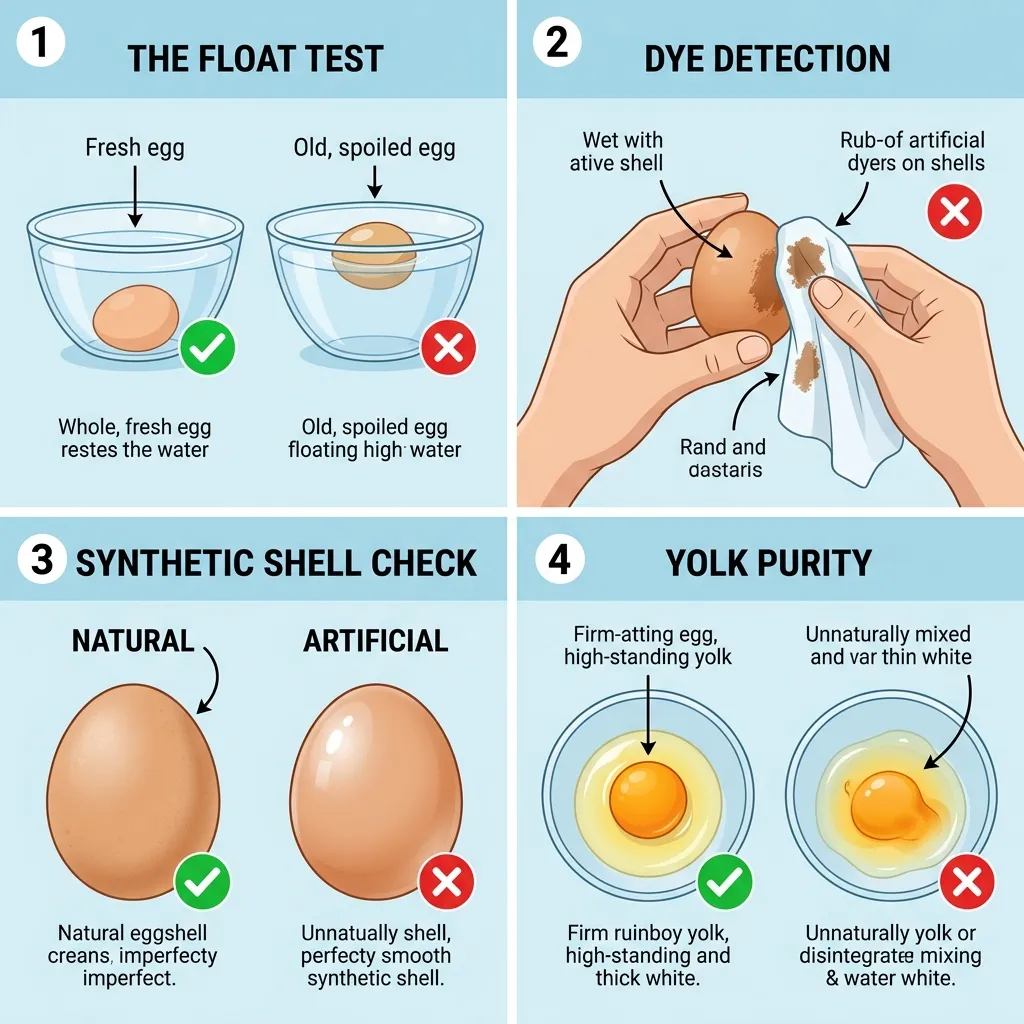
1. O teste de flutuação em água fria (auditoria de idade):
Coloque o ovo em uma tigela funda com água fria. Um ovo recém-posto afundará diretamente no fundo e ficará completamente deitado de lado. Um ovo com 1 a 2 semanas de idade afundará, mas ficará em pé ou ligeiramente inclinado; este ovo ainda é perfeitamente seguro para comer. Um ovo que flutua na superfície é muito velho e deve ser descartado. A flutuação ocorre porque as cascas dos ovos são porosas; com o tempo, a umidade evapora e o ar entra para substituí-la, fazendo com que a célula de ar na extremidade mais larga do ovo se expanda e atue como um dispositivo de flutuação.
2. Pasteurização vs. Ovos Regulares para Pratos Crus:
Ovos crus ou mal cozidos são necessários em receitas tradicionais dos EUA, como molho para salada César, gemada, molho holandês e maionese caseira. No entanto, Salmonella enteritidis pode infectar o ovo internamente (dentro da gema) antes mesmo de a casca ser formada. Para qualquer preparação crua ou mal cozida, você deve usar exclusivamente ovos pasteurizados (ovos que foram suavemente aquecidos em suas cascas a uma temperatura precisa que mata a Salmonella sem cozinhar o ovo). Os ovos normais devem sempre ser cozidos até que a gema e a clara estejam completamente firmes (temperatura interna de 160°F / 71°C).
3. 'Melhor por' vs. Frescor real:
A data de validade impressa nas caixas de ovos dos EUA é uma diretriz de qualidade, não um limite de segurança. Ovos classificados pelo USDA geralmente são perfeitamente seguros para consumo por 3 a 5 semanas após a data de compra, desde que tenham sido mantidos continuamente refrigerados a 45°F (7°C) ou abaixo. Use o teste de flutuação em água fria para verificar seu frescor, em vez de confiar apenas na data da embalagem.
4. Auditoria de Integridade da Shell e Micro-Rachaduras:
Inspecione a casca do ovo de perto sob uma luz forte. Evite ovos com rachaduras, manchas brancas de mofo ou superfície úmida/pegajosa. As rachaduras finas atuam como portas de entrada diretas e abertas para a bactéria Salmonella do meio ambiente.
Click to enlarge
Auditoria de frescor de ovo e integridade de gema
Avaliar as características dos ovos quebrados é a maneira mais confiável de verificar a qualidade crua.
1. Integridade da gema e do albúmen:
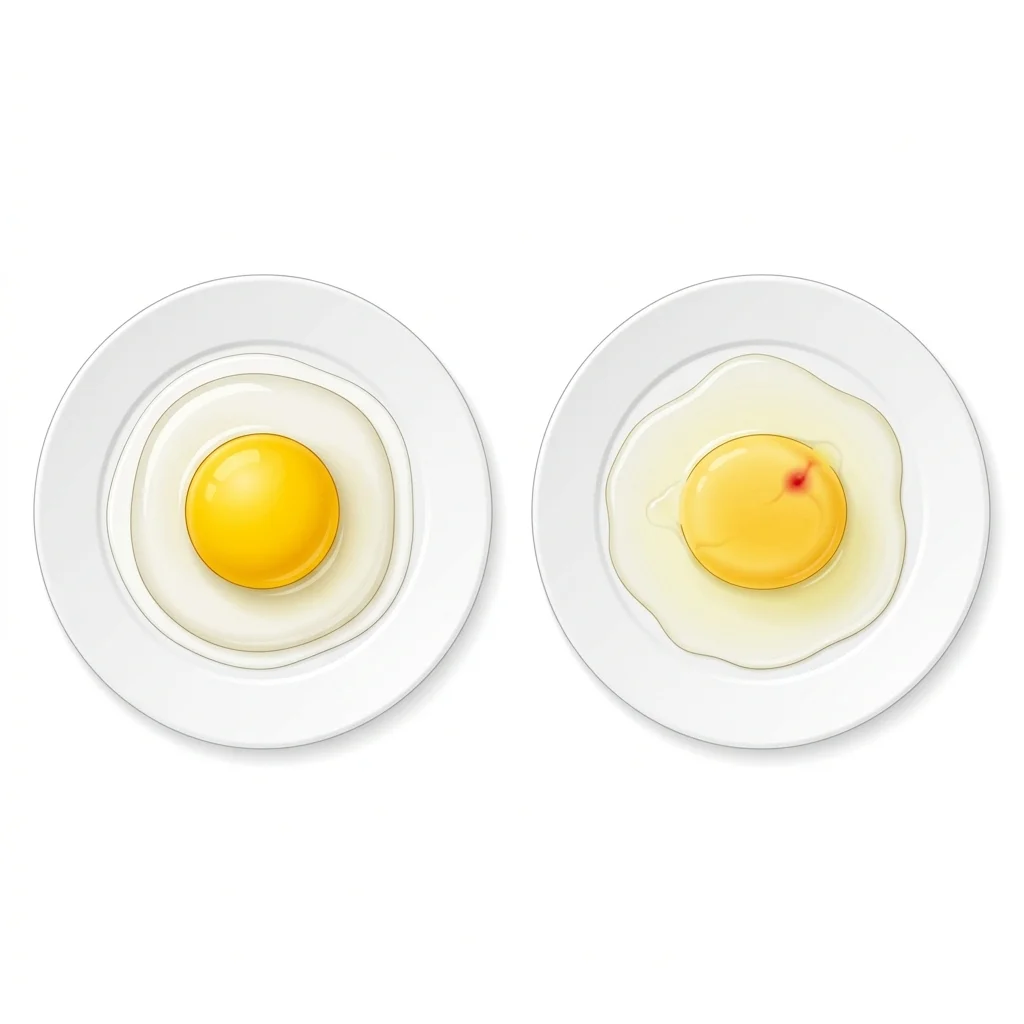
Quebre o ovo em um prato raso. Um ovo fresco tem uma gema alta, bem arredondada e bem arredondada, e a clara (albúmen) é espessa, firme e adere firmemente à gema. Em um ovo velho, a gema é completamente plana, quebra facilmente e a clara é aquosa, fina e se espalha rapidamente pelo prato.
2. Verificação de odor azedo ou de peixe:
Os ovos frescos não têm absolutamente nenhum cheiro. Se você detectar um odor azedo, sulfuroso (“ovo podre”) ou de peixe imediatamente após quebrar, o ovo está estragado e deve ser descartado.
3. Segurança para manchas de sangue:
Ocasionalmente, você poderá ver uma pequena mancha vermelha na gema. Esta é uma mancha de sangue causada por um capilar rompido durante a formação do ovo. Não é um indicador de deterioração ou Salmonella; é totalmente seguro comer, embora você possa retirá-lo com uma colher por motivos cosméticos.
Quick Safety Tips
- Use o teste de flutuação em água fria: descarte os ovos que flutuam na superfície, pois são muito velhos e apresentam alto risco de crescimento bacteriano
- Mantenha os ovos lavados nos EUA continuamente refrigerados a 45°F (7°C); nunca os deixe na bancada da cozinha em temperatura ambiente
- Use exclusivamente ovos pasteurizados para preparações cruas, como gemada, molho César ou molho holandês para evitar Salmonella.
- Rejeite quaisquer ovos com rachaduras visíveis, manchas úmidas ou aqueles que cheiram azedo ou a enxofre quando rachados.
Primary Chemical Concerns
Health Risks & Impacts
Multilingual Local Names
Regulatory Corner: MAPA (Ministério da Agricultura e Pecuária - Brasil) / ANVISA / US FDA
Regulation: Decreto nº 9.013/2017 (RIISPOA) - Normas para Ovos de Consumo
Legal Limit:Salmonella enteritidis: Ausência em 25g de amostra; Resíduos de antibióticos veterinários (Nitrofuranos, Cloranfenicol): 0.0 ppb (Tolerância Zero)
Report Adulteration to MAPA (Ministério da Agricultura e Pecuária - Brasil) / ANVISA / US FDA