How to Test Custard Apple for Adulteration (Ethephon, Saccharin, Pesticide)
⚡ Quick 60-Second Custard Apple (Sitaphal) Ripening & Purity Verdict
Ethylene Gas / Carbide Forced Softening & Saccharin Soaking: Immature custard apples are forced to soften with ripening gases before flesh starches convert to sugars, often soaked in sweetener solutions.
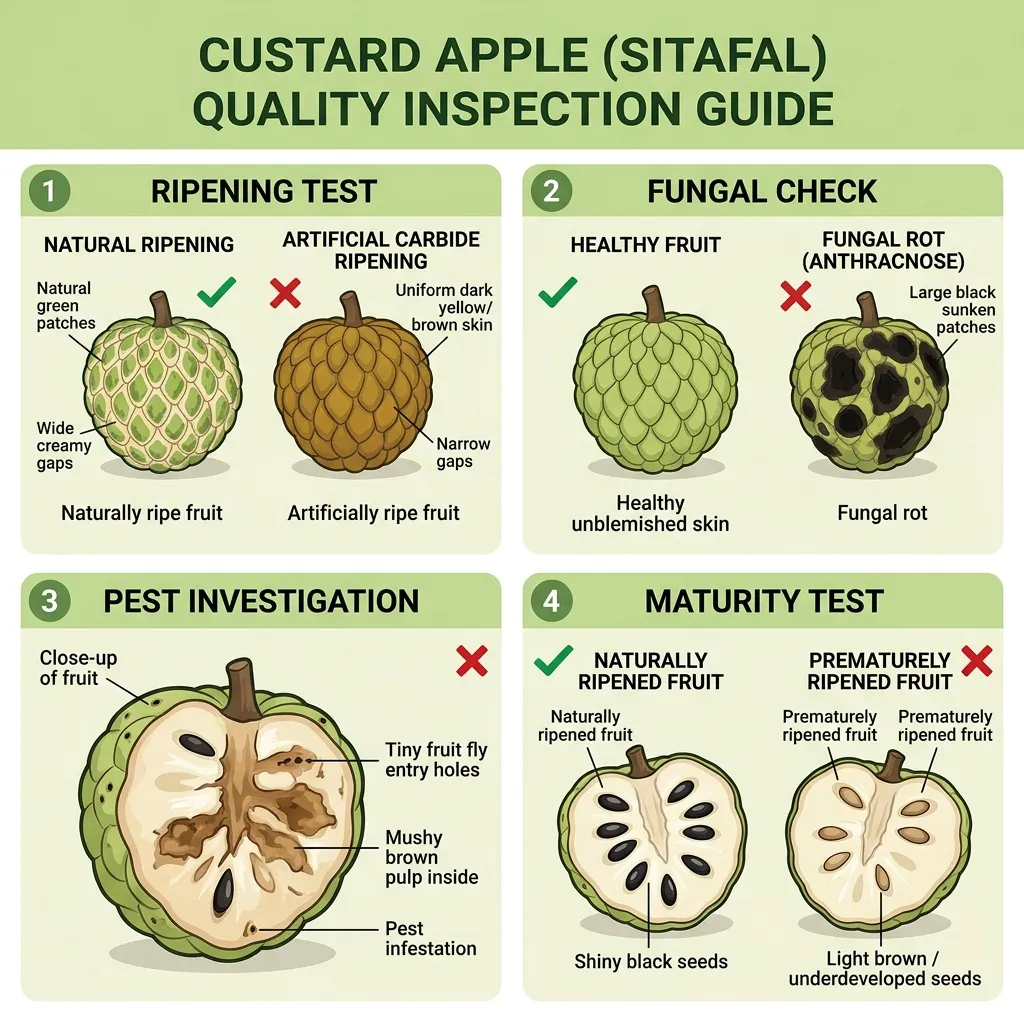
Inspect the fruit surface. Naturally ripe sitaphal scales spread widely apart, revealing wide creamy-white or pale pinkish channels between segments. Artificially forced fruits stay tightly compressed and turn brown.
Smell the stem base and taste the white pulp. Natural custard apple has an intense floral, honey-custard aroma and buttery graininess. Chemically softened fruit smells sour or odorless with rubbery, tasteless pulp.
Eat a pulp segment. In naturally matured sitaphal, the black seeds separate cleanly and effortlessly from the creamy aril. In forced fruit, unripe fibrous pulp clings obstinately to the seeds.
To learn more about food safety tests and home adulteration detection, read our guides on Lemon and Apricot.
Drop Custard Apple (Sitaphal) photo here to test purity
or click to browse • Supports JPG, PNG, WEBP • Paste with Ctrl+V
Inspection Guide
Click to enlarge
Custard Apple (Sitaphal) Purity Audit
Custard apples are highly perishable and often ripened artificially with Ethephon dips to meet seasonal demand.
1. The Skin Texture Check:
A naturally ripened custard apple has skin segments that look "stretched" and slightly open, revealing white flesh underneath. If the fruit is very soft but the skin segments are tight and closed, it indicates artificial ripening.
2. The Stem Color:
Look at the stem-end. A naturally ripened fruit has a brown, dry stem. If the stem looks vibrant green or "too fresh" compared to the soft fruit, Ethephon treatment is likely.
3. The Sweetness Check (Saccharin):
Sometimes, inferior custard apples are injected with saccharin or other sweeteners. Taste a bit of the flesh near the surface. If it has a "metallic" or "artificial" sweetness that lingers, suspect sweetening agents.
4. The Seed Appearance:
In naturally ripened custard apples, the seeds are hard and deep black. In artificially ripened ones, the seeds may still be slightly brownish or soft despite the fruit being soft to the touch.
Quick Safety Tips
- Choose fruits with "stretched" segments that show white flesh
- Avoid custard apples that feel soft but have closed skin segments
- Check for a metallic after-taste indicating artificial sweeteners
- Wash the outer skin thoroughly before opening to avoid chemical transfer
Primary Chemical Concerns
Health Risks & Impacts
Multilingual Local Names
Common Storage Pests
Mealybugs (Pseudococcidae)
low riskSmall white insects that live in the crevices of the custard apple skin.
Detection
- White, cottony clusters on the skin
Prevention
- Wash the fruit thoroughly before opening
- Store in a cool, ventilated area
Corrective Action: What to do?
Scrub off with a soft brush; the internal fruit is usually safe to eat.
Regulatory Corner: FSSAI (Food Safety and Standards Authority of India) / Codex Alimentarius Commission
Regulation: Food Safety and Standards (Food Products Standards and Food Additives) Regulations 2011, Clause 2.3.1
Legal Limit:Calcium carbide: Strictly banned (0.0 ppm); Ethephon MRL: Max 2.0 ppm; Non-nutritive artificial sweeteners: Zero tolerance in fresh fruit (0.0 ppm); Heavy metals (Lead): Max 0.1 ppm
Report Adulteration to FSSAI (Food Safety and Standards Authority of India) / Codex Alimentarius Commission