
Guia de Qualidade das Cerejas: Detectar Corantes e Cera
⚡ Veredito Rápido de 60 Segundos: Cerejas, Pesticidas e Corantes
Alerta Dirty Dozen #8: Mais de 90% das cerejas convencionais testam positivo para resíduos de pesticidas. Cerejas velhas são às vezes tratadas com corantes vermelhos sintéticos.
Mergulhe em água com 1 colher de chá de bicarbonato e 1 de sal por 12 min para degradar pesticidas e expelir larvas microscópicas.
Cerejas frescas têm caules verdes flexíveis e polpa firme. Caules pretos, secos ou ausentes indicam fruta velha tratada com fungicidas.
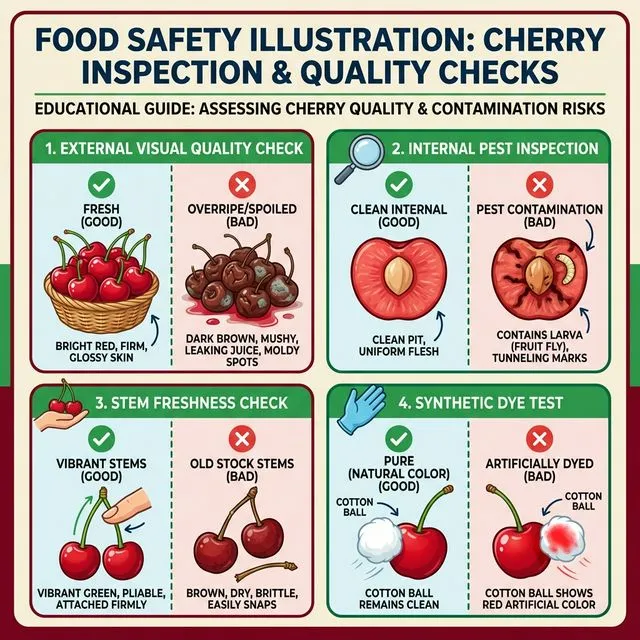
Passe um algodão úmido na casca; o fruto natural não mancha. Se manchar de rosa ou vermelho carmesim, há corante químico adicionado.
Drop Cerejas photo here to test purity
or click to browse • Supports JPG, PNG, WEBP • Paste with Ctrl+V
Inspection Guide
Click to enlarge
Auditoria de Pureza e Corante de Cerejas
As cerejas, especialmente aquelas em potes (Maraschino) ou variedades frescas importadas, são frequentemente tratadas com corantes vermelhos (Eritrosina) para parecerem vibrantes e fumigadas com enxofre para evitar o apodrecimento.
1. O teste de esfregar algodão (tintura para a pele):
Esfregue uma bola de algodão úmida na casca vermelha de uma cereja fresca. Se o algodão adquirir uma cor rosa ou vermelha, foi aplicada tinta artificial. A cor cereja natural não desaparece facilmente.
2. A imersão em água (sangramento de cor):
Coloque algumas cerejas em um copo de água morna por 15 minutos. Se a água ficar rosa brilhante ou vermelha, suspeite de coloração artificial. O suco natural de cereja escoa muito lentamente e deixa a água com uma cor vermelha fraca e pálida.
3. A verificação de cheiro e textura:
Cheire as cerejas. Se apresentarem um cheiro forte de "fósforo aceso" ou de produto químico ácido, foram fortemente tratados com dióxido de enxofre. A pele deve estar firme e brilhante; se parecer "viscoso" e parecer vermelho brilhante, é um estoque antigo quimicamente atualizado.
4. A integridade da haste:
As cerejas naturalmente frescas têm caules verdes vibrantes e flexíveis. Se as cerejas forem vermelhas brilhantes, mas os caules forem marrom-escuros, secos e quebradiços, isso indica que estão velhas e provavelmente foram tingidas ou preservadas quimicamente.

Click to enlarge
Teste de frescor e qualidade de cereja
O frescor é crucial, pois as cerejas em decomposição perdem nutrição e rapidamente abrigam mofo e larvas de mosca-das-frutas.
1. Flexibilidade e cor da haste:
Inspecione as hastes. As cerejas frescas têm caules verdes brilhantes, flexíveis e úmidos. As cerejas velhas têm caules secos, marrom-escuros, quebradiços ou completamente ausentes.
2. Textura e brilho da pele:
Olhe para a superfície. As cerejas frescas são carnudas, lisas, brilhantes e compactas. As cerejas velhas apresentam pele enrugada e opaca, com marcas suaves ou hematomas.
3. Teste de firmeza/aperto:
Aperte delicadamente uma cereja. As cerejas frescas são firmes e elásticas ao toque. As cerejas velhas parecem macias, pastosas ou completamente planas.
4. Teste de flutuação/enxágue com água:
Lave as cerejas em água. Cerejas frescas e densas irão afundar. Cerejas velhas, ocas ou infestadas de pragas flutuarão na superfície.
Quick Safety Tips
- Realize o teste de fricção na pele para corantes vermelhos (eritrosina)
- Evite cerejas com cheiro forte e sulfuroso (fósforo aceso).
- Selecione cerejas com caules verdes vibrantes e flexíveis
- Lave bem em uma mistura de água e bicarbonato de sódio para remover produtos químicos da superfície
Primary Chemical Concerns
Health Risks & Impacts
Multilingual Local Names
Common Storage Pests
Cherry Fruit Fly
medium riskSmall flies whose larvae feed on the internal flesh of the cherry.
Detection
- Small entry holes on the skin
- Internal browning and presence of tiny larvae
Prevention
- Inspect each fruit before buying
- Store in the refrigerator immediately
Corrective Action: What to do?
Discard infested cherries; the rot inside can contain harmful fungi.
Regulatory Corner: ANVISA (Brasil) / US FDA / EFSA
Regulation: Resolução RDC nº 216/2004 e Limites Máximos de Resíduos de Defensivos
Legal Limit:Dimetoato: máx. 2 ppm; Boscalida: máx. 3.5 ppm; Corantes industriais não autorizados: 0.0%
Report Adulteration to ANVISA (Brasil) / US FDA / EFSA