Guia de Pureza do Café em Pó: Detectar Chicória, Milho Torrado e Sementes
⚡ Veredito rápido de 60 segundos sobre a pureza do café em pó
Adulteração com milho torrado, chicória e cascas: O café moído comercial é frequentemente adulterado com grãos de milho torrado, cascas e paus de café, raiz de chicória e borra de café usada reaproveitada com corante caramelo.
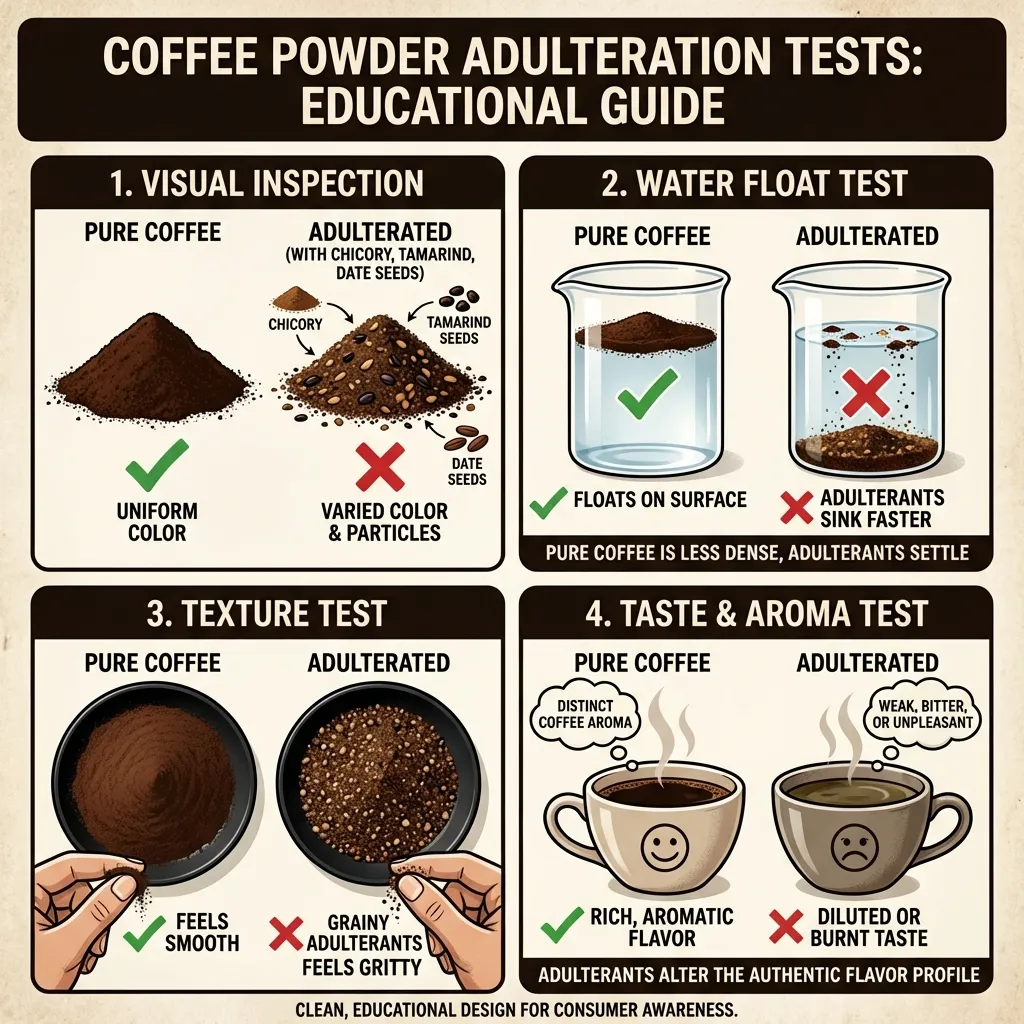
Polvilhe 1/2 colher de chá sobre água fria sem mexer. O café puro flutua por minutos graças aos seus óleos naturais. Chicória, milho torrado e impurezas afundam em menos de 15 segundos.
Observe a água fria. O café puro não solta cor de imediato. A chicória e os cereais açucarados libertam na hora fios verticais castanho-avermelhados que tingem o fundo.
Esfregue o pó entre os dedos molhados. O café puro parece granulado e áspero; aditivos como chicória ou açúcar caramelizado amolecem e ficam grudentos.
Drop Café em pó (Café em Pó / Coffee Powder) photo here to test purity
or click to browse • Supports JPG, PNG, WEBP • Paste with Ctrl+V
Inspection Guide
Click to enlarge
Auditoria de Pureza do Café e Detecção de Chicória e Milho
O café moído e torrado é uma das commodities mais vulneráveis a fraudes no mercado consumidor, onde a torra escura disfarça a adição de matérias vegetais de baixo custo.
1. O teste do copo de água fria (Flutuação e rastro de cor):
Encha um copo transparente com água fria da torneira. Polvilhe suavemente meia colher de café moído na superfície, sem mexer. As partículas de café genuíno contêm óleos e são hidrofóbicas, permanecendo a flutuar na superfície por vários minutos sem tingir a água. Partículas de chicória, milho torrado ou feijão absorvem água quase instantaneamente, afundam em 10 a 15 segundos e libertam um rastro de cor castanho-avermelhada que atinge o fundo do copo.
2. O teste de iodo para amido (Detecção de milho e cevada):
Ferva uma colher de café em 50 ml de água durante 2 a 3 minutos. Deixe arrefecer totalmente e adicione 3 a 4 gotas de tintura de iodo comum. O café puro é isento de amido e mantém a cor castanha inalterada. Se a mistura mudar imediatamente para azul-escuro, roxo ou preto, há adulteração grosseira com farinha de milho, trigo ou cevada torrada.
3. O teste do papel absorvente húmido:
Espalhe uma pequena porção de café sobre um pedaço de papel de filtro ou papel absorvente branco molhado em água fria. O café puro não solta cor facilmente em água fria. Se surgirem manchas castanho-escuras ou avermelhadas espalhando-se rapidamente, o lote contém corante caramelo ou extrato solúvel adicionado artificialmente.
4. Teste de fricção e aroma:
Esfregue uma pitada de café entre os dedos molhados. O café puro tem grãos duros e consistentes que não se desfazem em pasta. Adulterantes como chicória ou açúcar caramelizado dissolvem-se rapidamente deixando os dedos pegajosos. Além disso, o café autêntico tem aroma torrado marcante e agradável, ao passo que lotes adulterados com cascas têm cheiro amadeirado, de palha ou fumo acre.
Click to enlarge
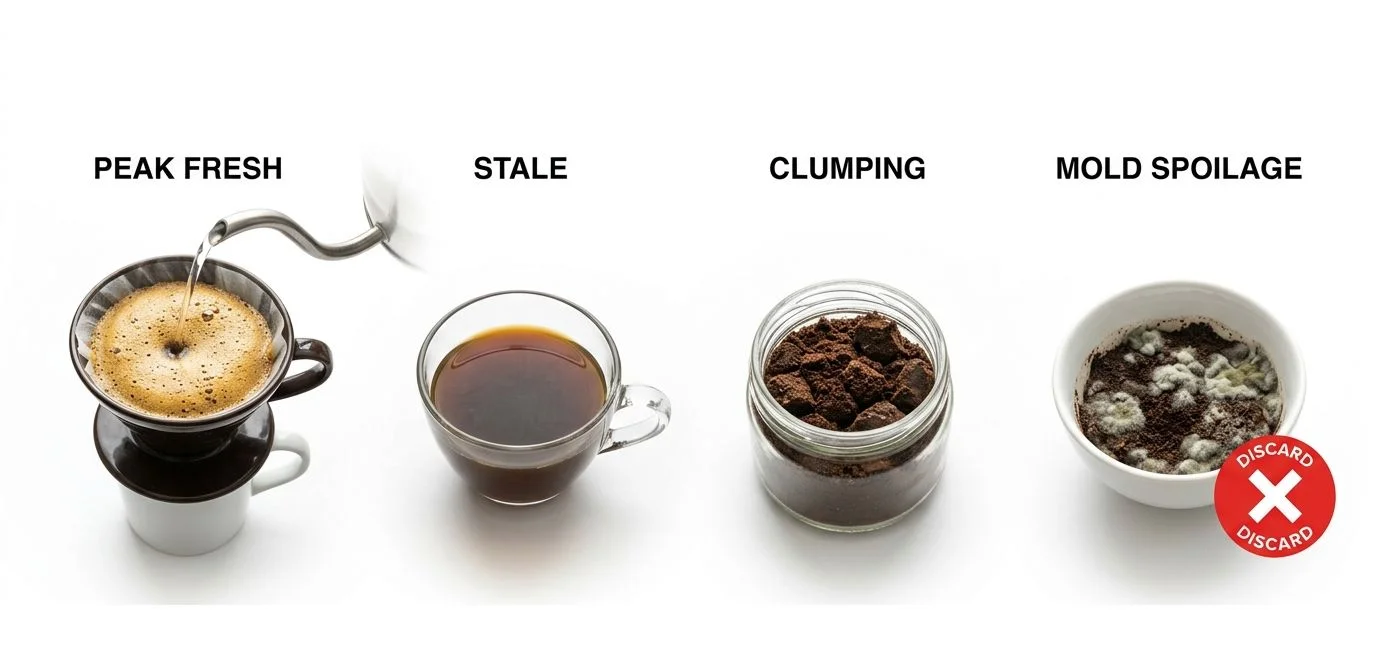
As 4 fases de frescura do café em pó e desgaseificação
O café moído reage intensamente com o ar e a humidade. A sua frescura é essencial para garantir o aroma requintado e evitar a proliferação de fungos perigosos.
As 4 fases de frescura:
✅ Frescura máxima e floração ativa (Bloom): O café recém-torrado e moído liberta gás carbónico (CO₂) natural e óleos essenciais voláteis. Ao verter água quente (92–96 °C), ocorre uma expansão vigorosa com formação de creme dourado espesso e aroma intenso.
⚠️ Café envelhecido e desgaseificado (Stale / Oxidado): Após 3 a 4 semanas em embalagem aberta, os gases dissipam-se e os óleos oxidam. Durante o preparo, o café não forma espuma, tem sabor ralo, amargo rançoso ou gosto de papelão.
⚠️ Empedramento por humidade (Clumping): O café é higroscópico. Se guardado em pote mal vedado, absorve humidade do ar, formando torrões duros e grudentos que prejudicam a extração.
❌ Bolor e risco de micotoxinas (Deteriorado): Sob humidade contínua, proliferam fungos (Aspergillus ochraceus) que libertam odor desagradável de mofo e geram manchas esbranquiçadas ou verde-acinzentadas. Representa risco de Ocratoxina A (OTA). Descarte de imediato.
Dica de conservação: Guarde em pote hermético opaco, em local fresco e seco (evite o frigorífico devido à condensação interna).
Quick Safety Tips
- Faça o teste do copo com água fria: o café genuíno flutua e não solta cor rapidamente
- Desconfie de café com cheiro de madeira queimada, terra ou fumo acre
- Prefira marcas com selo de pureza da ABIC ou compre em grãos para moer na hora
- Manchas em papel húmido em água fria indicam corante caramelo ou chicória solúvel
Primary Chemical Concerns
Health Risks & Impacts
Multilingual Local Names
Common Storage Pests
Broca-do-café (Hypothenemus hampei)
medium riskPrincipal praga dos cafezais brasileiros; perfura a semente ainda no pé, deixando galerias e reduzindo drasticamente a qualidade e o peso do grão.
Detection
- Furos circulares milimétricos nos grãos
- Pó escuro em volta das perfurações
Prevention
- Comprar marcas com triagem mecânica e eletrônica rigorosa
- Armazenar em embalagem fechada
Corrective Action: What to do?
Descartar grãos brocados antes de proceder à moagem doméstica.
Bolor toxigênico (Aspergillus ochraceus / carbonarius)
high riskFungos microscópicos que crescem em grãos ou pó expostos a humidade acima de 12%, produzindo a micotoxina Ocratoxina A.
Detection
- Cheiro característico de humidade ou terra mofada
- Manchas esbranquiçadas ou acinzentadas
Prevention
- Manter em potes herméticos em despensa arejada
- Nunca utilizar colher molhada no pote
Corrective Action: What to do?
Descartar o pó com sinais de bolor; a Ocratoxina A é resistente à fervura.
Regulatory Corner: MAPA (Ministério da Agricultura e Pecuária) / ANVISA (Brasil)
Regulation: Portaria MAPA nº 570/2022 (Padrão Oficial de Café Torrado e Moído) e Resoluções ANVISA
Legal Limit:Café Torrado e Moído: 100% grãos de café (Coffea arabica ou canephora); Teor máximo de cascas e paus: 1.0%; Grãos de cereais (milho, cevada) e sementes: 0.0% (Fraude grave); Ocratoxina A: máx. 5.0 µg/kg
Report Adulteration to MAPA (Ministério da Agricultura e Pecuária) / ANVISA (Brasil)