
Cherry Quality & Purity Tests: Detect Dyes & Preservatives
⚡ Quick 60-Second Cherry Pesticide & Red Dye Verdict
EWG Dirty Dozen #8 Alert: Over 90% of conventional sweet cherries test positive for two or more pesticide residues (Dimethoate, Boscalid). In informal markets, faded or canned cherries are treated with synthetic red dyes (Allura Red / Rhodamine B).
Submerge cherries in 1 tsp baking soda + 1 tsp salt in 3 cups cold water for 12 min. Degrades surface organophosphates and flushes out any micro cherry fruit fly larvae.
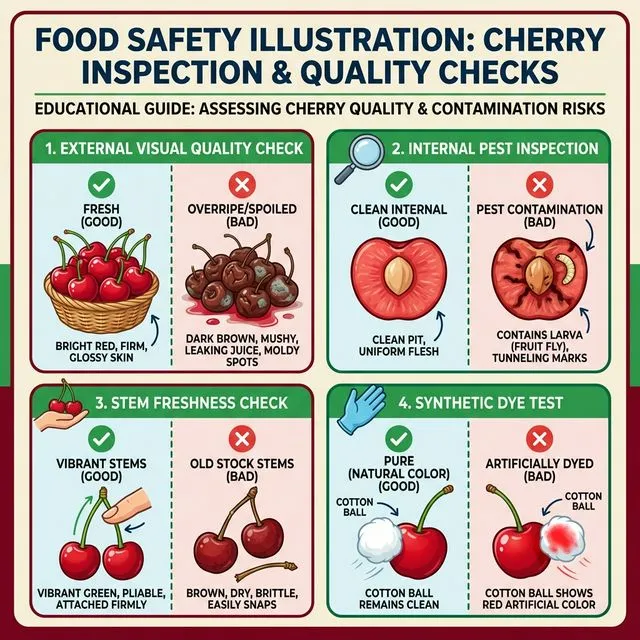
Fresh safe cherries have vibrant green, pliable stems firmly attached to the fruit. Missing, brittle, or black stems indicate old stock treated with post-harvest fungicides.
Rub a damp white cotton ball over the cherry surface. Pure cherries leave no red pigment. Synthetic chemical dye leaves an immediate bright pink/red mark on the cotton.
Drop Cherries photo here to test purity
or click to browse • Supports JPG, PNG, WEBP • Paste with Ctrl+V
Inspection Guide
Click to enlarge
Cherries Purity & Dye Audit
Cherries, especially those in jars (Maraschino) or imported fresh varieties, are often treated with red dyes (Erythrosine) to look vibrant and fumigated with sulfur to prevent rot.
1. The Cotton Rub Test (Skin Dye):
Rub a wet cotton ball on the red skin of a fresh cherry. If the cotton picks up a pink or red color, artificial dye has been applied. Natural cherry color does not rub off easily.
2. The Water Soak (Color Bleed):
Drop a few cherries into a glass of warm water for 15 minutes. If the water turns bright pink or red, suspect artificial coloring. Natural cherry juice leaches very slowly and turns the water a faint, pale red.
3. The Smell and Texture Check:
Sniff the cherries. If they have a sharp, "burning match," or acidic chemical smell, they have been heavily treated with sulfur dioxide. The skin should be firm and shiny; if it feels "slimy" while looking bright red, it is old stock chemically refreshed.
4. The Stem Integrity:
Naturally fresh cherries have vibrant green, flexible stems. If the cherries are bright red but the stems are dark brown, dry, and brittle, it indicates they are old and have likely been dyed or chemically preserved.

Click to enlarge
Cherry Freshness & Quality Test
Freshness is crucial, as decaying cherries lose nutrition and quickly harbor mold and fruit fly larvae.
1. The Stem Flexibility & Color:
Inspect the stems. Fresh cherries have bright green, flexible, moist stems. Stale cherries have dry, dark brown, brittle, or completely missing stems.
2. Skin Texture & Gloss:
Look at the surface. Fresh cherries are plump, smooth, shiny, and tight. Stale cherries display wrinkled, dull skin with soft indentations or bruises.
3. Firmness / Squeeze Test:
Gently pinch a cherry. Fresh cherries are firm and springy to the touch. Stale cherries feel soft, mushy, or completely flat.
4. Float / Water Rinse Test:
Wash the cherries in water. Fresh, dense cherries will sink to the bottom. Old, hollowed, or pest-infested cherries will float on the surface.
Quick Safety Tips
- Perform the skin rub test for red dyes (Erythrosine)
- Avoid cherries with a sharp, sulfurous (burning match) smell
- Select cherries with vibrant green, flexible stems
- Wash thoroughly in a mix of water and baking soda to remove surface chemicals
Primary Chemical Concerns
Health Risks & Impacts
Multilingual Local Names
Common Storage Pests
Cherry Fruit Fly
medium riskSmall flies whose larvae feed on the internal flesh of the cherry.
Detection
- Small entry holes on the skin
- Internal browning and presence of tiny larvae
Prevention
- Inspect each fruit before buying
- Store in the refrigerator immediately
Corrective Action: What to do?
Discard infested cherries; the rot inside can contain harmful fungi.
Regulatory Corner: US FDA / USDA Foreign Agricultural Service / EFSA
Regulation: 21 CFR 180.110 (Pesticide Chemical Tolerances) & EPA MRL Standards
Legal Limit:Dimethoate: Max 2 ppm; Boscalid: Max 3.5 ppm; Synthetic Rhodamine B / Industrial Dyes: 0.0%
Report Adulteration to US FDA / USDA Foreign Agricultural Service / EFSA