How to Test Broccoli for Adulteration (Malachite Green Dye, Wax Coating, Pesticide)
⚡ Quick 60-Second Broccoli Insect & Chemical Verdict
Heavy Insecticide Treatments & Artificial Green Dye: Dense broccoli florets trap systemic organophosphates, while aging yellowish heads are misted with chemical green dyes to simulate fresh harvest.
Invert broccoli head into a bowl of lukewarm water with 2 tsp salt for 10 minutes. Aphids, caterpillars, and thrips trapped inside the tight floret crowns will detach and float to the surface.
Dab a damp white tissue on the top floret buds. Pure broccoli buds have a matte bluish-green tint with natural bloom. Synthetic green dyes will leave faint emerald marks on the tissue.
Inspect the cut base of the main stalk. Fresh broccoli has a crisp, juicy, solid green core. Stale, woody broccoli has a hollow, brown, or dry fibrous central pith.
To learn more about food safety tests and home adulteration detection, read our guides on Cabbage (Patta Gobi) and Sweet Potato (Shakarkand).
Drop Broccoli photo here to test purity
or click to browse • Supports JPG, PNG, WEBP • Paste with Ctrl+V
Inspection Guide
Click to enlarge
Broccoli Purity and Freshness Check
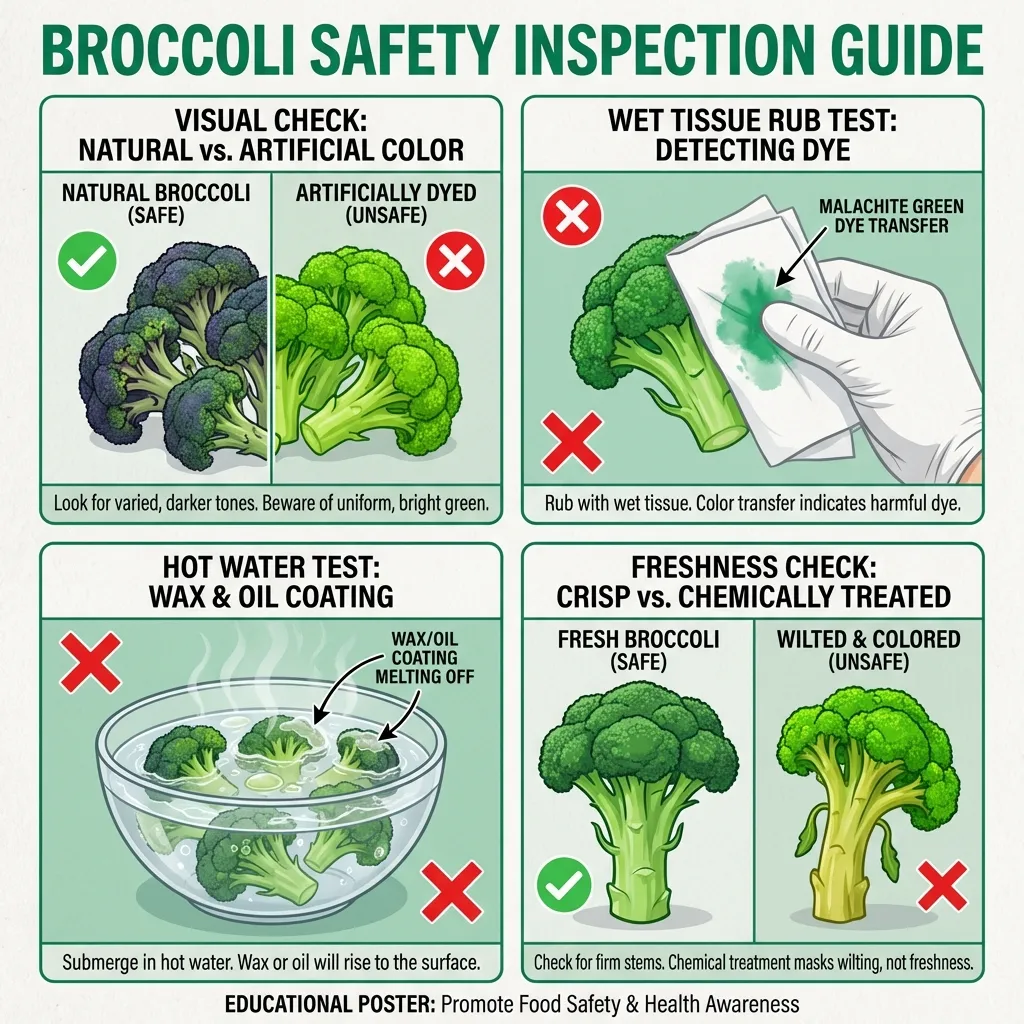
Broccoli florets are often dyed to look emerald green and coated with wax/oil for a glossy, fresh appearance.
1. The Tissue Rub Test:
Rub the green florets with a damp white tissue. If you see green color on the tissue, it indicates Malachite Green or other harmful dyes.
2. The Hot Water Test (Wax Check):
Submerge the broccoli in warm/hot water. If you see oily/waxy streaks appearing on the surface or if the water feels slippery, it has been wax-coated.
3. Visual Color Texture:
Natural broccoli often has slightly varied tones - some florets might even have a purplish tint. If it's a perfectly uniform, fluorescent bright green, it is almost certainly dyed.
4. The Stem Snap:
Fresh broccoli has crisp stems that snap. If the stems are rubbery but the florets look vibrant green, the color has been artificially added to mask age.
Quick Safety Tips
- Perform tissue rub test for color dyes
- Check if stems are crisp vs. rubbery
- Look for natural color variations (purplish tints are okay)
- Soak in warm salted water to remove surface residue
Primary Chemical Concerns
Health Risks & Impacts
Multilingual Local Names
Common Storage Pests
Cabbage Aphid (Brevicoryne brassicae)
medium riskTiny grey-green insects that cluster deep inside the florets.
Detection
- White sticky residue (honeydew)
- Greyish clusters in florets
- Distorted leaves
Prevention
- Inspect core before buying
- Store in a perforated bag in the fridge
Corrective Action: What to do?
Soak in salt water for 30 minutes to kill and float out hidden aphids.
Regulatory Corner: US FDA / EPA / FSSAI (Brassica Standards)
Regulation: 21 CFR Part 112 (Standards for Produce Safety) & EPA 40 CFR 180.110 Pesticide Limits
Legal Limit:Fludioxonil: Max 3.0 ppm; Permethrin: Max 2.0 ppm; Synthetic artificial greening colors: 0.0%; Insect-damaged heads: Max 5.0%
Report Adulteration to US FDA / EPA / FSSAI (Brassica Standards)