Aspargos são Seguros? Detecção de Corantes, Frescor e Qualidade
Os espargos são classificados como um dos vegetais mais limpos da lista EWG Clean 15 porque seus caules acumulam naturalmente resíduos mínimos de pesticidas. No entanto, os espargos comerciais podem ser expostos a banhos de corantes para realçar a cor verde, irrigados com água contaminada ou tratados com conservantes pós-colheita. Este guia detalha como inspecionar os aspargos quanto à qualidade, corantes e aditivos de prazo de validade.
Para saber mais sobre testes de segurança alimentar e produtos limpos, leia nossos guias sobre Repolho e Brócolis.
Drop Espargos photo here to test purity
or click to browse • Supports JPG, PNG, WEBP • Paste with Ctrl+V
Inspection Guide
Click to enlarge
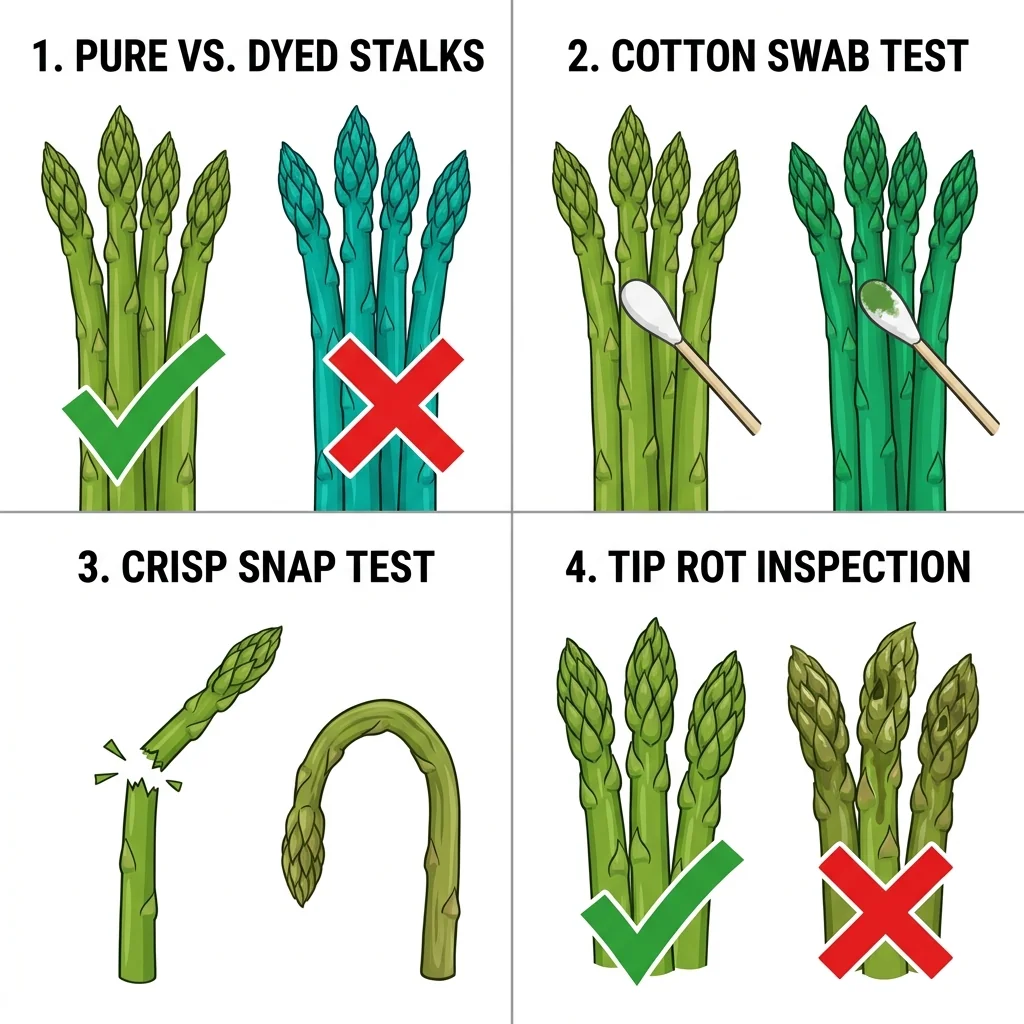
Inspeção de qualidade e corante de espargos - 5 testes caseiros
Os espargos são vegetais altamente nutritivos e com baixo teor de pesticidas. No entanto, pode ser tingido quimicamente ou armazenado em água pobre. Veja como testá-lo.
1. O teste do cotonete (verificação de corante artificial):
Umedeça um cotonete limpo com água morna ou álcool isopropílico. Esfregue firmemente ao longo dos caules e pontas verdes. ✅ O cotonete permanece branco = clorofila natural. ❌ O cotonete fica verde ou azul esverdeado = tingido artificialmente com sulfato de cobre ou agentes químicos de esverdeamento.
2. O teste de cheiro (qualidade da água e verificação de podridão):
Cheire as pontas e a base das lanças. ✅ Aroma limpo, terroso e de grama. ❌ Cheiro azedo, pantanoso ou químico = irrigado com água contaminada ou tratado com conservantes à base de enxofre.
3. O teste instantâneo (auditoria de frescor):
Segure uma lança nas duas pontas e dobre-a até que ela se quebre. ✅ Encaixa de forma limpa com um som nítido próximo ao terço inferior = fresco e cheio de umidade. ❌ Dobra como borracha sem quebrar = velho, desidratado e amadeirado.
4. A inspeção da ponta (verificação de mofo e pragas):
Examine as pequenas escamas em forma de botão nas pontas. ✅ Bem fechado, firme e pontiagudo. ❌ Aberto, mole, viscoso ou coberto de mofo cinza = em decomposição e inseguro.
5. A verificação do corte inferior:
Observe as pontas cortadas das lanças. ✅ Úmido, redondo e ligeiramente pálido. ❌ Seco, oco, fendido ou marrom-preto = colhido há muito tempo, sem valor nutricional.
Click to enlarge
Como armazenar espargos e quando descartar
Os espargos têm uma alta taxa respiratória e se degradam rapidamente. Use estas diretrizes para manter o frescor.
Estágios de frescor:
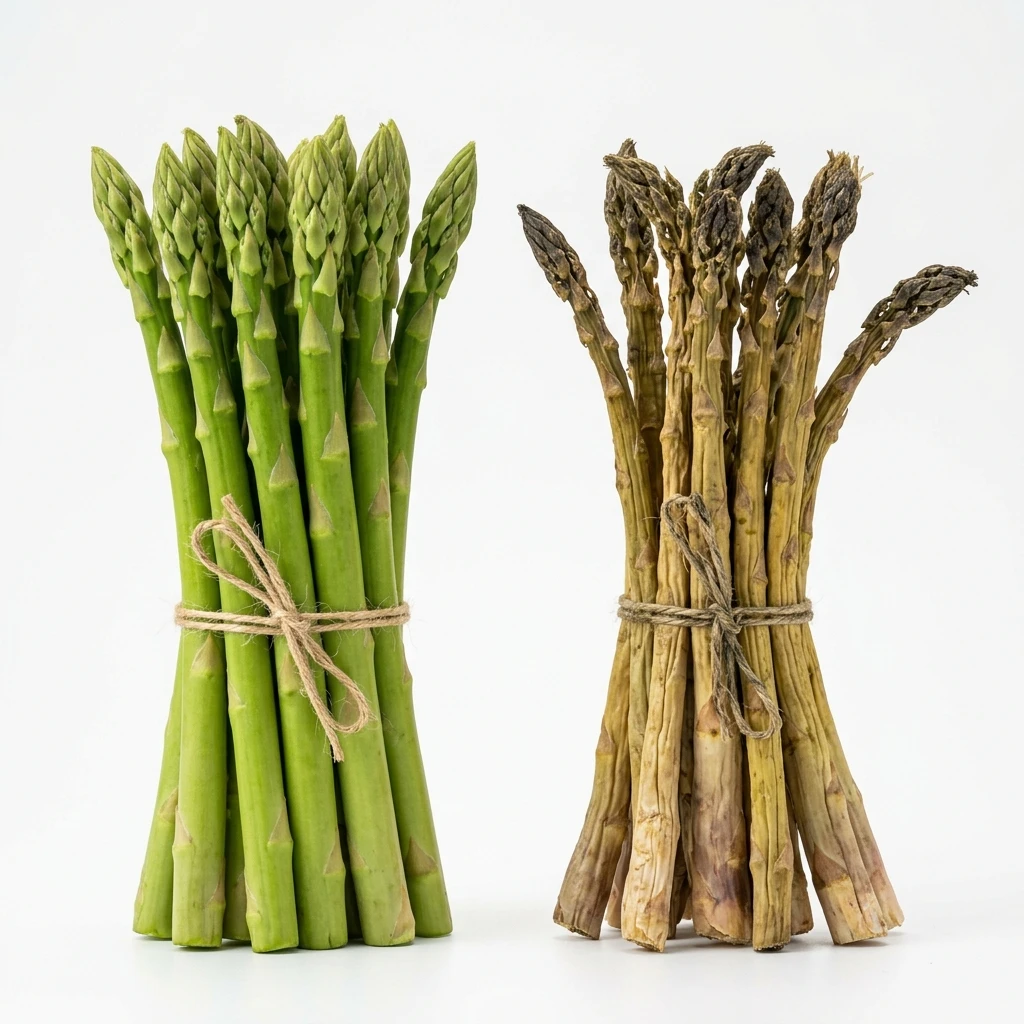
✅ Pontas firmes, verticais e fechadas: Excelente qualidade. Use dentro de 2 a 4 dias. Guarde na posição vertical em uma jarra com 2,5 cm de água na geladeira.
⚠️ Talos desidratados (pele enrugada): Ainda seguros, mas serão amadeirados e fibrosos. Melhor para sopas ou purês.
❌ Pontas viscosas ou úmidas: Estágio inicial de podridão mole bacteriana. Descarte as lanças afetadas imediatamente, pois elas se espalham rapidamente.
❌ Mofo branco-acinzentado nas pontas: Decadência fúngica. Descarte imediatamente.
Quick Safety Tips
- Os espargos estão no Clean 15, o que significa que os aspargos convencionais geralmente são protegidos contra pesticidas: verifique o <a href='/blog/clean-15-pesticide-guide/'>Guia de pesticidas Clean 15</a>
- Sempre retire as pontas lenhosas do fundo antes de cozinhar
- Lave os aspargos em água fria corrente, prestando muita atenção nas pontas onde a areia pode se acumular
Primary Chemical Concerns
Health Risks & Impacts
Multilingual Local Names
Common Storage Pests
Bacterial Soft Rot (Erwinia carotovora)
high riskA destructive bacteria that attacks asparagus tips in warm, wet conditions, turning them into a smelly slime.
Detection
- Water-soaked, slimy tips that collapse when touched
- A foul, sour, decaying smell from the tips
- Rapid spreading of the rot to adjacent spears in the bunch
Prevention
- Keep asparagus dry in storage; never bag them wet
- Store upright in the refrigerator with ends in a tiny amount of fresh water
Corrective Action: What to do?
Discard any slimy spears immediately. Do not cook them, as the bacterial rot changes the taste and is unsafe.
Regulatory Corner: US FDA (21 CFR 173.315) / Codex Alimentarius (Codex Stan 193-1995)
Regulation: FDA 21 CFR 173.315 (Chemicals used in washing fresh produce) & Codex MRL Standards
Legal Limit:Copper sulfate / synthetic dyes: Strictly prohibited (0.0 ppm); Lead MRL: Max 0.1 ppm; Cadmium MRL: Max 0.05 ppm; Chlorpyrifos pesticide MRL: Max 0.01 ppm; Imidacloprid MRL: Max 0.5 ppm
Report Adulteration to US FDA (21 CFR 173.315) / Codex Alimentarius (Codex Stan 193-1995)