
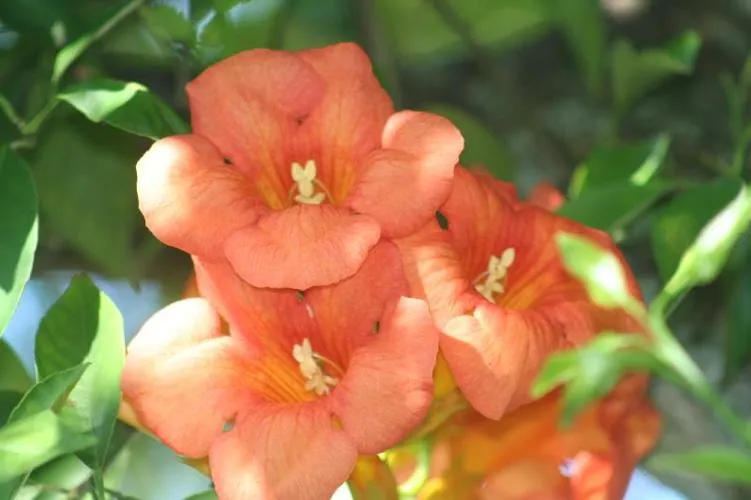
Trumpet Vine
Campsis radicans
How to Identify Trumpet Vine
MILDLY IRRITATING. Touching foliage can cause localized skin redness and itching ('cow-itch vine'). May cause mild digestive upset if ingested by pets.
Care & Growing Guide
Seasonal Blooming & Hardiness
Seasonal Blooming Calendar:
- Peak Bloom: Late winter to early spring.
- Planting Time: Sow seeds directly outdoors in early spring after the last frost, or transplant nursery starts in late spring.
Bloom Timeline
About Trumpet Vine
The Trumpet Vine, botanically classified as Campsis radicans and commonly known as the Trumpet Creeper or Hummingbird Vine, is a spectacular, fast-growing deciduous woody vine belonging to the Bignoniaceae family. Native to the woodlands, riverbanks, and swamp edges of eastern and central North America, this vigorous climber has become a favorite in warm-temperate and subtropical gardens worldwide. Known for its sheer strength and adaptability, it uses aerial rootlets to scale fences, trees, and stone walls, creating a lush, vertical backdrop of dense foliage topped with dramatic trumpet-shaped blossoms.
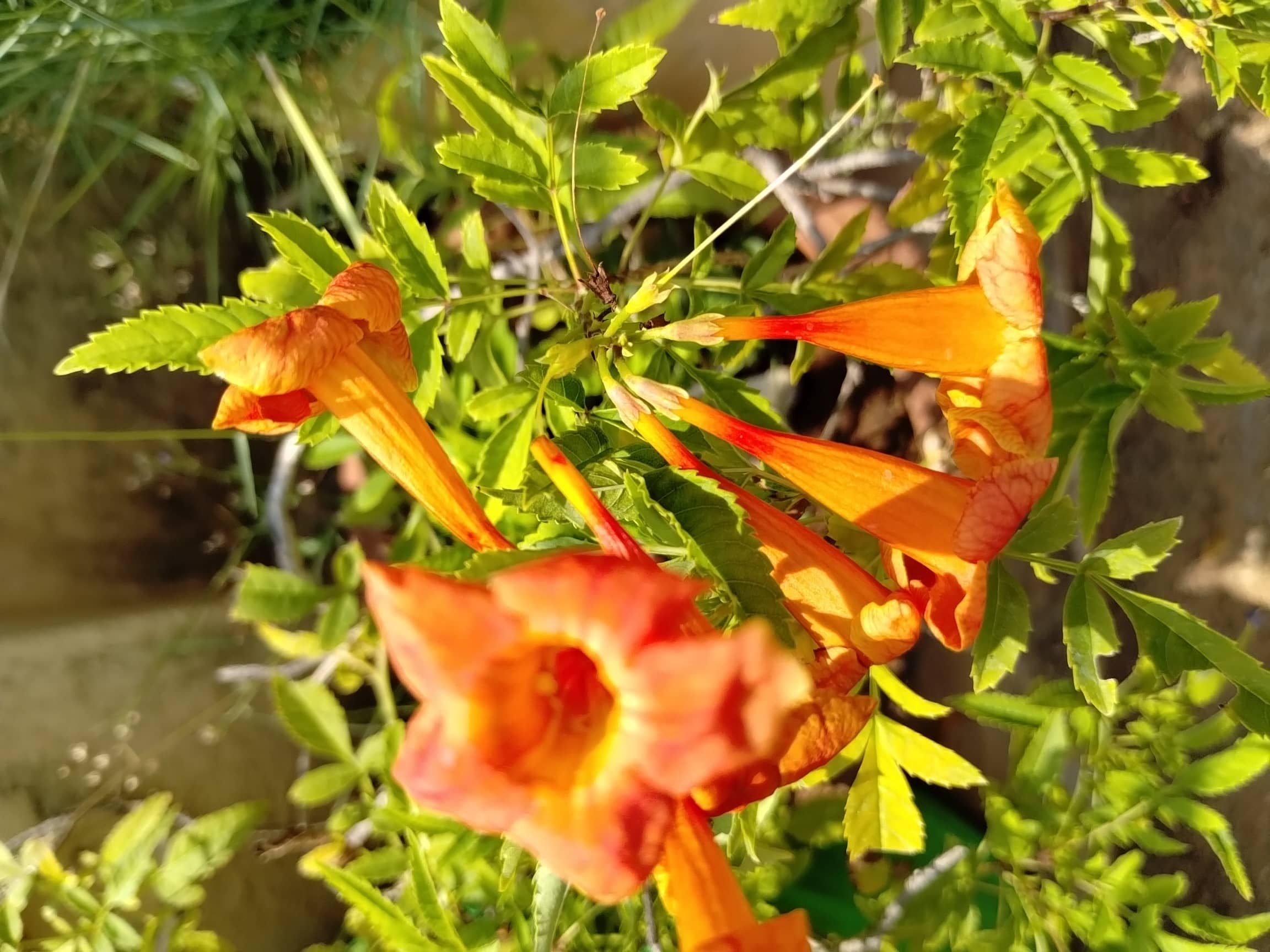
This aggressive climber can easily reach heights of 30 to 40 feet with a similar lateral spread if left unpruned. Its stunning flowers are about 3 inches long, boasting a distinctive funnel-shaped corolla with 5 flared, rounded lobes. The blooms are arranged in terminal clusters of 2 to 8, shining in brilliant hues of reddish-orange, fiery scarlet, or occasionally golden yellow. Its attractive, pinnately compound foliage consists of 7 to 11 dark green, lanceolate leaflets with sharply serrated margins that create a dense canopy before turning a soft, warm yellow in the autumn.
The reproductive blueprint is defined by the floral formula EBr % ⚥ K(5) C(5) A4 G(2). This indicates that the flower is ebracteate, bilaterally symmetrical (zygomorphic), and bisexual. It features a calyx of 5 fused sepals forming a bell-shaped tube, and a corolla of 5 fused petals forming the iconic trumpet tube. The androecium consists of 4 didynamous stamens (two long, two short) fused directly to the inner corolla tube, while the gynoecium is composed of 2 fused carpels with a superior ovary and axile placentation.
Trumpet Vines are incredibly hardy and adaptable, thriving in USDA zones 4 through 10 and surviving temperatures as low as -30°F. They perform best in full sun, which is necessary to stimulate heavy summer flowering, but they tolerate light shade. While they prefer moist, well-draining loamy or sandy soils, they can grow in heavy clay and are exceptionally drought-tolerant once established. Gardeners should note that the main horticultural challenge is managing their vigor; they require sturdy support structures and aggressive pruning in late winter to prevent them from becoming invasive.
Culturally, the Trumpet Vine is synonymous with hot summer days and southern charm. Its genus name, Campsis, is derived from the Greek word for 'bending' or 'curving,' in reference to its elegantly curved stamens, while its species name, radicans, refers to its rooting habit. It is known as लटकनिया (Latkaniya) in Hindi and Kolampi in Malayalam. Historically, Native Americans used its tough, fibrous stems for cordage. Today, it stands as a symbol of fresh energy, fame, and unyielding determination.
Pet safety is an important consideration when planting this climber. While Campsis radicans is technically listed as non-toxic in many directories, its leaves contain calcium oxalate crystals and mild quinones that can cause contact dermatitis ('cow-itch') and mild skin irritation upon handling. If ingested in large quantities by curious dogs or cats, it can lead to stomach discomfort and salivation. Therefore, we advise planting it in areas where pets have limited contact. Check our Pet Guard page for expert tips on managing mild garden irritants.
The Trumpet Vine is often confused with Crossvine (Bignonia capreolata) or Trumpet Honeysuckle (Lonicera sempervirens). To distinguish them, look at the climbing mechanism: Crossvine climbs using branched tendrils with small adhesive claws, whereas the Trumpet Vine relies strictly on aerial rootlets and lacks tendril claws. Its trumpet blooms are also larger and more intensely orange-red. It pairs beautifully with Lotus or Hydrangea for a stunning multi-layered summer display; explore more in our Flower Identifier.
Floral Formula & Features
Ebracteate (no bracts), Zygomorphic (bilaterally symmetrical), bisexual, 5 fused sepals, 5 fused petals forming trumpet shape, 4 stamens (didynamous - 2 long, 2 short), 2 fused carpels with superior ovary
- Scientific Name & Classification: Campsis radicans (Bignoniaceae). Commonly known as Trumpet Creeper and Hummingbird Vine.
- Identification Markers: Vigorous woody vine climbing with aerial rootlets. Showy trumpet-shaped orange/red flowers in terminal clusters of 2–8.
- Floral Formula (EBr % ⚥ K(5) C(5) A4 G(2)): Bilaterally symmetrical, bisexual flower featuring 5 fused sepals, 5 fused petals, 4 didynamous stamens, and 2 fused carpels.
- Growing Requirements: Full sun for maximum flowering; exceptionally drought-tolerant once established. Cold-hardy (Zones 4-10) but requires high-maintenance pruning.
- Cultural Significance: Genus name camsis means 'bending' in Greek; radicalis refers to climbing rootlets. Affectionately called Latkaniya in Hindi.
- Safety & Toxicity: MILDLY IRRITATING. Touching foliage can cause localized skin redness and itching ('cow-itch vine'). May cause mild digestive upset if ingested by pets.
- Common Look-alikes: Often confused with Crossvine, but distinguished by its larger, orange-red trumpet clusters and lack of adhesive tendril claws.
- Internal Links: Train it on sturdy trellises alongside Lotus or Hydrangea for spectacular summer color; discover more climber tips in the Flower Identifier.
Names in Different Languages
Toxicity & Safety
Always keep toxic plants out of reach of children and pets. Consult a veterinarian or medical professional immediately if ingestion is suspected.
Frequently Asked Questions
What is Floral Formula?
A floral formula is a symbolic representation of a flower's structure using letters, numbers, and special symbols. It provides a concise way to describe the arrangement and number of floral parts.
This formula describes the flower's symmetry, sepals, petals, stamens, and carpels in a standardized format.
Formula Sequence
- Bract: Br or Ebr
- Bracteole: Brl or Ebrl
- Symmetry: % (Radial) or ⊕ (Bilateral)
- Sex: ♀ (Female), ♂ (Male), or ⚥ (Bisexual)
- Calyx/Sepal: K<number> (Free or Fused)
- Corolla/Petal: C<number> (Free or Fused)
- Androecium: A<number> (Free or Fused)
- Gynaecium: G<number> (Superior or Inferior Ovary)
Symbol Meanings
- Numbers: Indicate quantity of parts
- Parentheses (): Parts are fused together
- Plus (+): Parts in different whorls
- Underline: Superior ovary position
- Overline: Inferior ovary position
- ∞: Numerous parts (too many to count)
Understanding floral formulas helps botanists quickly identify and classify flowers based on their structural characteristics.
Similar Flowers
Discover flowers that share botanical characteristics
Similar Characteristics
4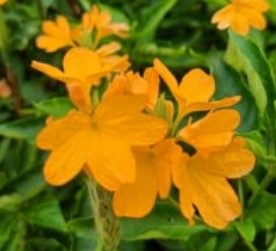
Crossandra Firecracker
Crossandra infundibuliformis
The Firecracker Flower, scientifically known as Crossandra infundibuliformis and popularly called Aboli or Kanakambaram in India, is a beautiful tropical evergreen shrub belonging to the Acanthaceae family. Native to the shady forest understories of southern India and Sri Lanka, particularly the...
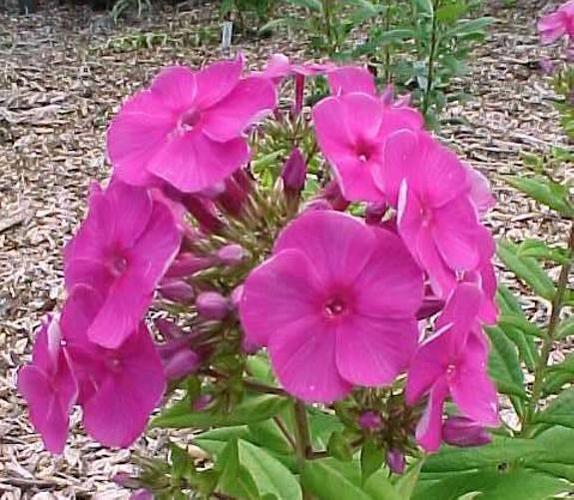
Phlox
Phlox paniculata
The genus Phlox, a cornerstone of the North American garden, encompasses a diverse array of species ranging from low-growing ground covers to towering, stately perennials. Derived from the Greek word for 'flame,' the name perfectly captures the vibrant, fiery intensity of their clustered blossoms...
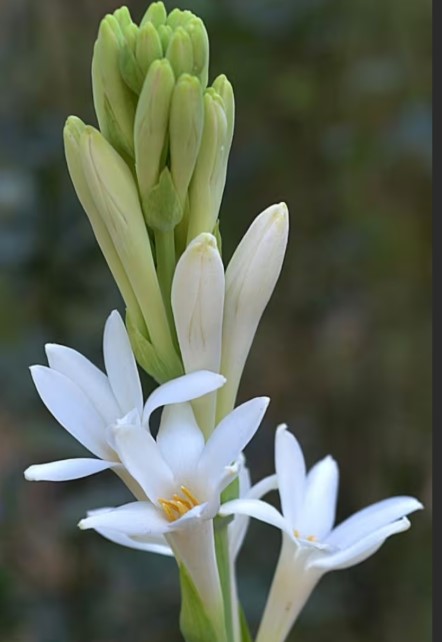
Tuberose Rajinigandha
Polianthes tuberosa
The Tuberose, botanically designated as Polianthes tuberosa (and recently reclassified as Agave amica) and universally celebrated in southern Asia as Rajnigandha, is an exceptionally exquisite, tuberous perennial. Belonging to the family Asparagaceae (the asparagus family, subfamily Agavoideae),...
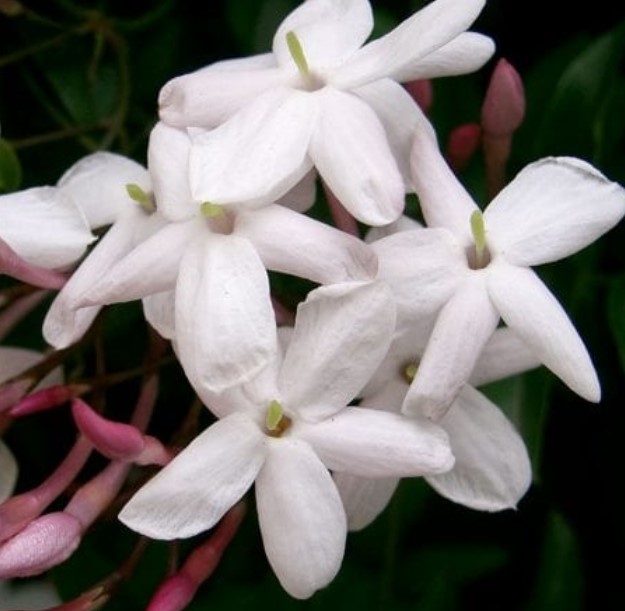
Spanish Jasmine (Royal Jasmine)
Jasminum grandiflorum
Spanish Jasmine, botanically classified as Jasminum grandiflorum and widely known as Royal Jasmine, Catalan Jasmine, or Scented Jasmine, is an exceptionally fragrant semi-evergreen woody vine belonging to the Oleaceae (olive) family. Believed to have originated in the high valleys of the Himalaya...