
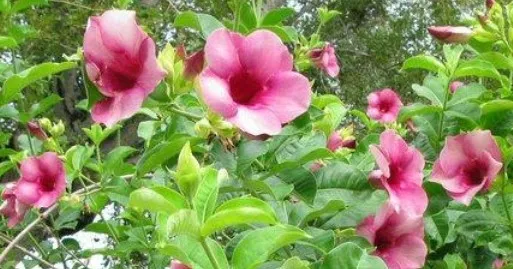
Mandevilla
Mandevilla
How to Identify Mandevilla
Care & Growing Guide
Seasonal Blooming & Hardiness
Seasonal Blooming Calendar:
- Peak Bloom: Late winter to early spring.
- Planting Time: Sow seeds directly outdoors in early spring after the last frost, or transplant nursery starts in late spring.
Bloom Timeline
About Mandevilla
Mandevilla, often referred to as the Rock Trumpet, is the undisputed queen of the tropical vertical garden. Belonging to the Apocynaceae family—the same family that hosts the famous Frangipani and Oleander—this genus comprises over 100 species of vigorous, woody climbing vines and mounding shrubs. Native to the lush forests of Central and South America, particularly Brazil, Mandevilla has become a global favorite for its ability to produce a relentless cascade of large, trumpet-shaped blossoms throughout the warmest months of the year. Its name honors Henry Mandeville, a British diplomat and gardener who first introduced the plant to European horticultural circles in the 19th century.
The visual impact of a Mandevilla in full bloom is nothing short of spectacular. Each flower is a masterwork of geometric elegance, featuring five overlapping petals that flare out from a central tube, creating a flared trumpet shape that can reach up to four inches in diameter. These blooms come in a sophisticated palette of saturation: from the deepest crimsons and velvety reds to soft baby pinks and brilliant, pure whites. A hallmark of many modern cultivars, such as the 'Alice du Pont', is the contrasting yellow throat hidden deep within the blossom, which serves as a beacon for pollinators like hummingbirds and long-tongued bees.
Supporting this floral display is a framework of lush, architectural foliage. The leaves of the Mandevilla are typically elliptical or ovate, characterized by a glossy, leathery texture and a deep "hunter green" color that provides a high-contrast backdrop for the vivid flowers. In the climbing varieties, the vines are exceptionally strong and twin naturally around any available support, capable of scaling trellises or garden walls to heights of 10 to 20 feet in a single season. A distinctive trait of the Mandevilla is the presence of a milky white latex sap within its stems and leaves—a characteristic of the Dogbane family that serves as a potent chemical defense against herbivores.
Success with Mandevilla hinges on recreating its tropical origin: intense light and consistent warmth. It is a "sun-worshipper" that requires at least six to eight hours of direct sunlight to reach its maximum blooming potential. While it is incredibly heat-tolerant, it is sensitive to the cold, making it a perennial only in USDA Zones 10-11; in cooler climates, it is a prized patio annual or a "snowbird" plant that must be brought indoors for the winter. It prefers well-drained, slightly acidic soil and thrives when the soil is allowed to dry out slightly between waterings, preventing the root rot that can plague many tropical climbers.
Beyond its ornamental prowess, the Mandevilla holds a special place in sustainable landscape design for its pollinator-heavy profile. It is a vital nectar source for biodiversity, and its fast growth makes it an ideal choice for creating "living privacy screens" on balconies and decks. Culturally, it has come to symbolize delicate beauty and the tropical "spirit of the sun." Whether you are looking to add a vertical dimension to a small urban garden or seeking a low-maintenance, high-impact centerpiece for a poolside planter, the Rock Trumpet remains an unparalleled choice for injecting a sense of exotic luxury into any outdoor space.
Floral Formula & Features
Actinomorphic (radially symmetrical), bisexual, 5 fused sepals, 5 fused petals forming trumpet, 5 stamens fused to corolla, 2 fused carpels with superior ovary typical of Apocynaceae
- Scientific Name & Classification: Mandevilla spp. (Apocynaceae). Formerly classified under the genus Dipladenia, which is still used to describe the more compact, shrub-like varieties.
- Identification Markers: Characterized by large, 5-petaled trumpet flowers (red, pink, white, or yellow) and glossy, dark green elliptical leaves. Vines are twining and stems exude a milky white sap when broken.
- Floral Formula (⊕ ⚥ K(5) [C(5) A5] G(2)): Radially symmetrical, bisexual, with 5 fused sepals, 5 fused petals (forming the trumpet), 5 stamens fused to the corolla, and a 2-carpellate superior ovary.
- Growing Requirements: Requires full sun (8+ hours) and warm temperatures (USDA Zones 10-11). Needs well-draining soil and a sturdy trellis or support for climbing varieties. Protect from frost.
- Cultural Significance: Named after diplomat Henry Mandeville. Symbolizes elegance, exotic beauty, and the "arrival of summer." A staple of Mediterranean and tropical patio decor.
- Safety & Toxicity: TOXIC. The milky sap is a skin irritant and the entire plant is toxic if ingested by cats, dogs, or horses, containing cardiotonic glycosides. For more details on safety, first aid, and symptoms, visit our Pet Guard Guide for Mandevilla.
- Similar Characteristics and Family: A prominent member of the Apocynaceae family, it shares the milky latex sap and trumpet flower structure with the Plumeria (Frangipani) and Nerium (Oleander). It is distinguished by its twining, vining growth habit and the absence of the intense fragrance found in Frangipani.
- Common Look-alikes: Often confused with Campsis radicans (Trumpet Vine) or Allamanda. Campsis has much more aggressive, woody stems and orange flowers, while Allamanda (Golden Trumpet) usually has strictly yellow flowers and different leaf arrangements.
- Internal Links: For more vertical garden inspiration, explore our Flower Identifier. You may also enjoy the Allamanda, the Bougainvillea, and the Jasmine for a vibrant tropical display.
Names in Different Languages
Botanical Classification: Mandevilla belongs to the Apocynaceae family. Learn how to identify its floral symmetry, stamen arrangement, and structural formulas in our Botanical Family Classification Guide.
Toxicity & Safety
Pet Safety Guide: For detailed toxicity symptoms, first-aid measures, and safe garden alternatives, see our full Pet Guard Profile for Mandevilla.
Frequently Asked Questions
What is Floral Formula?
A floral formula is a symbolic representation of a flower's structure using letters, numbers, and special symbols. It provides a concise way to describe the arrangement and number of floral parts.
This formula describes the flower's symmetry, sepals, petals, stamens, and carpels in a standardized format.
Formula Sequence
- Bract: Br or Ebr
- Bracteole: Brl or Ebrl
- Symmetry: % (Radial) or ⊕ (Bilateral)
- Sex: ♀ (Female), ♂ (Male), or ⚥ (Bisexual)
- Calyx/Sepal: K<number> (Free or Fused)
- Corolla/Petal: C<number> (Free or Fused)
- Androecium: A<number> (Free or Fused)
- Gynaecium: G<number> (Superior or Inferior Ovary)
Symbol Meanings
- Numbers: Indicate quantity of parts
- Parentheses (): Parts are fused together
- Plus (+): Parts in different whorls
- Underline: Superior ovary position
- Overline: Inferior ovary position
- ∞: Numerous parts (too many to count)
Understanding floral formulas helps botanists quickly identify and classify flowers based on their structural characteristics.
Similar Flowers
Discover flowers that share botanical characteristics
Same Family
4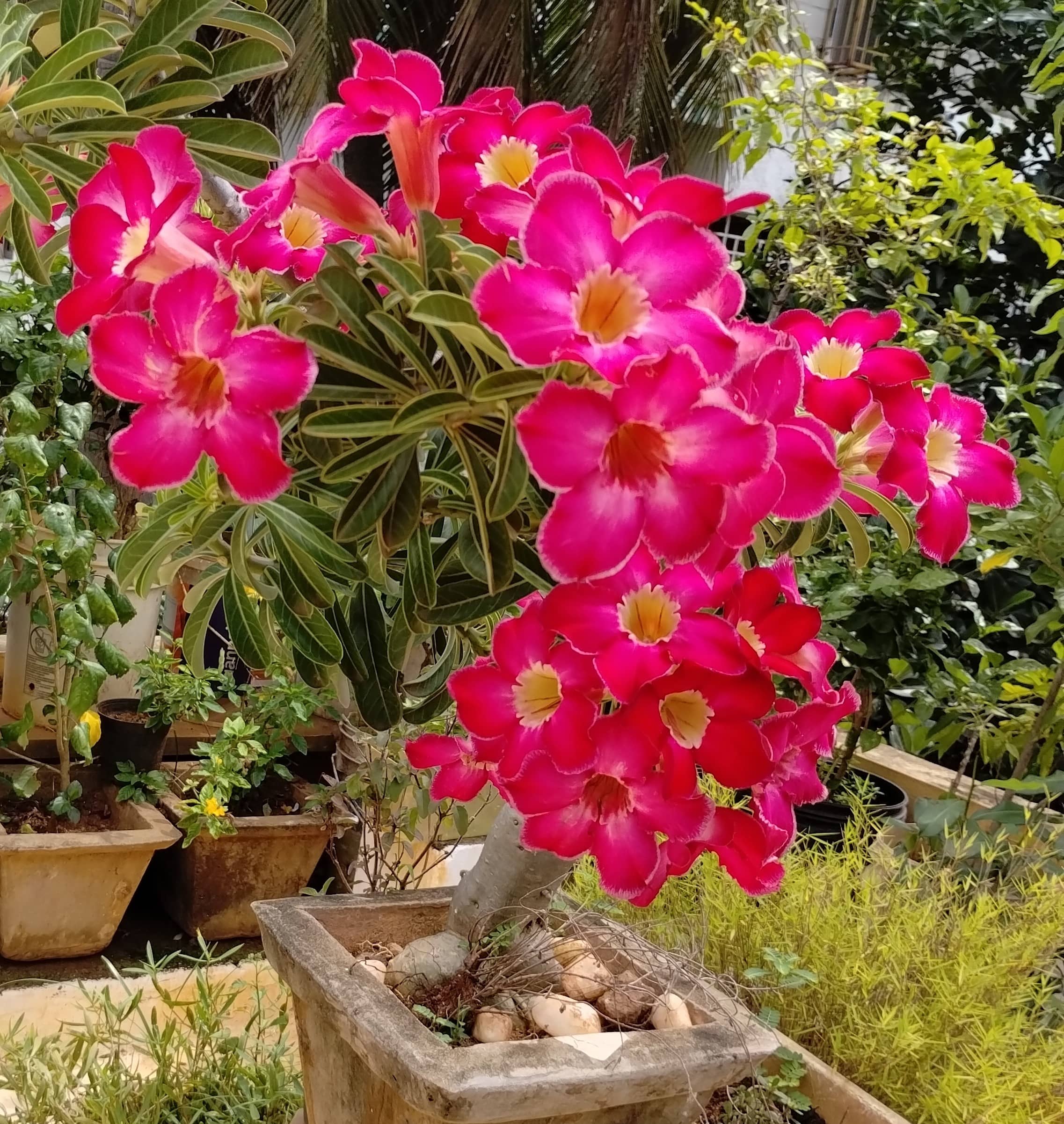
Desert Rose
Adenium obesum
The Desert Rose (Adenium obesum), a member of the Apocynaceae (Dogbane) family, is one of the most sculptural and striking succulent shrubs in the botanical world. Native to the arid regions of sub-Saharan Africa and the Arabian Peninsula, this plant has developed extraordinary adaptations to sur...
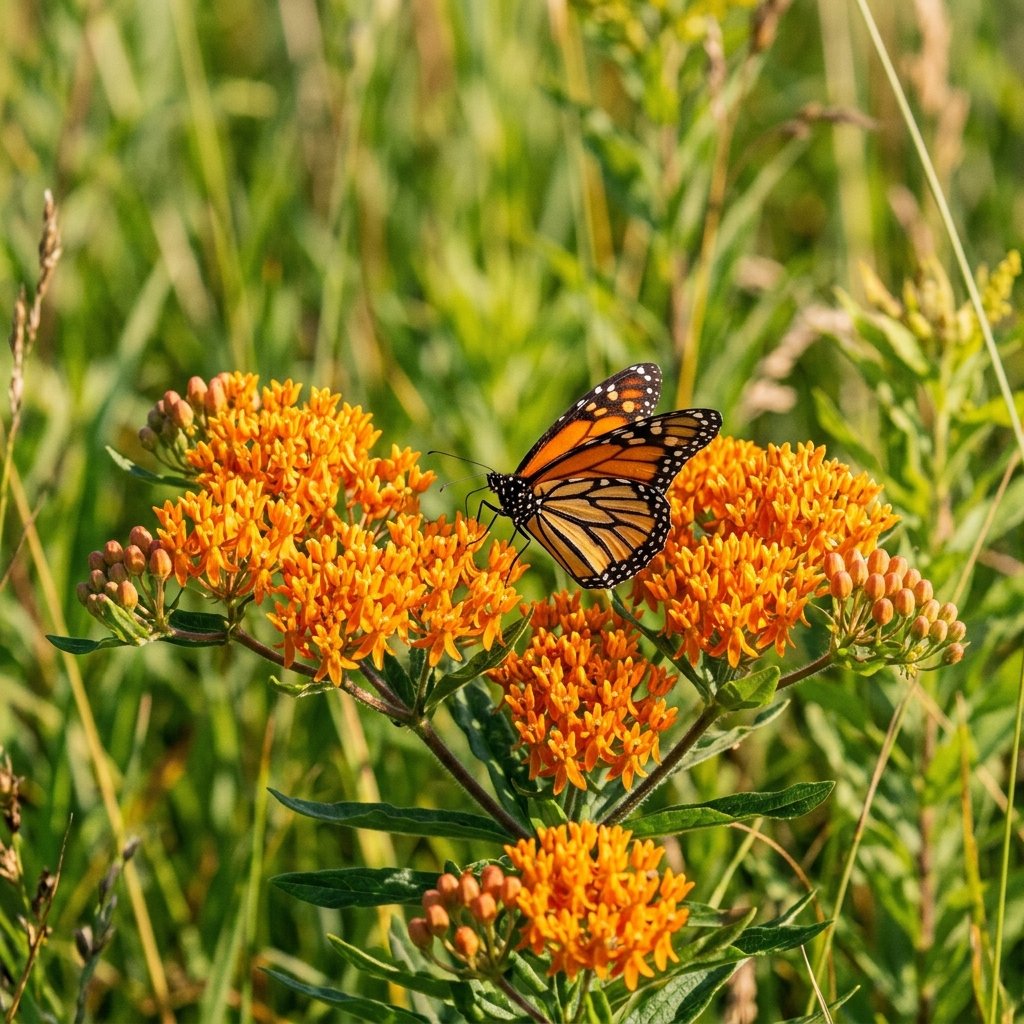
Butterfly Weed
Asclepias tuberosa
Butterfly Weed (*Asclepias tuberosa*) is arguably the most vivid and ecologically vital native wildflower of the American prairie and meadow, blazing in brilliant shades of fiery orange and golden-yellow in midsummer and serving as one of the most important nectar and host plants for the endanger...
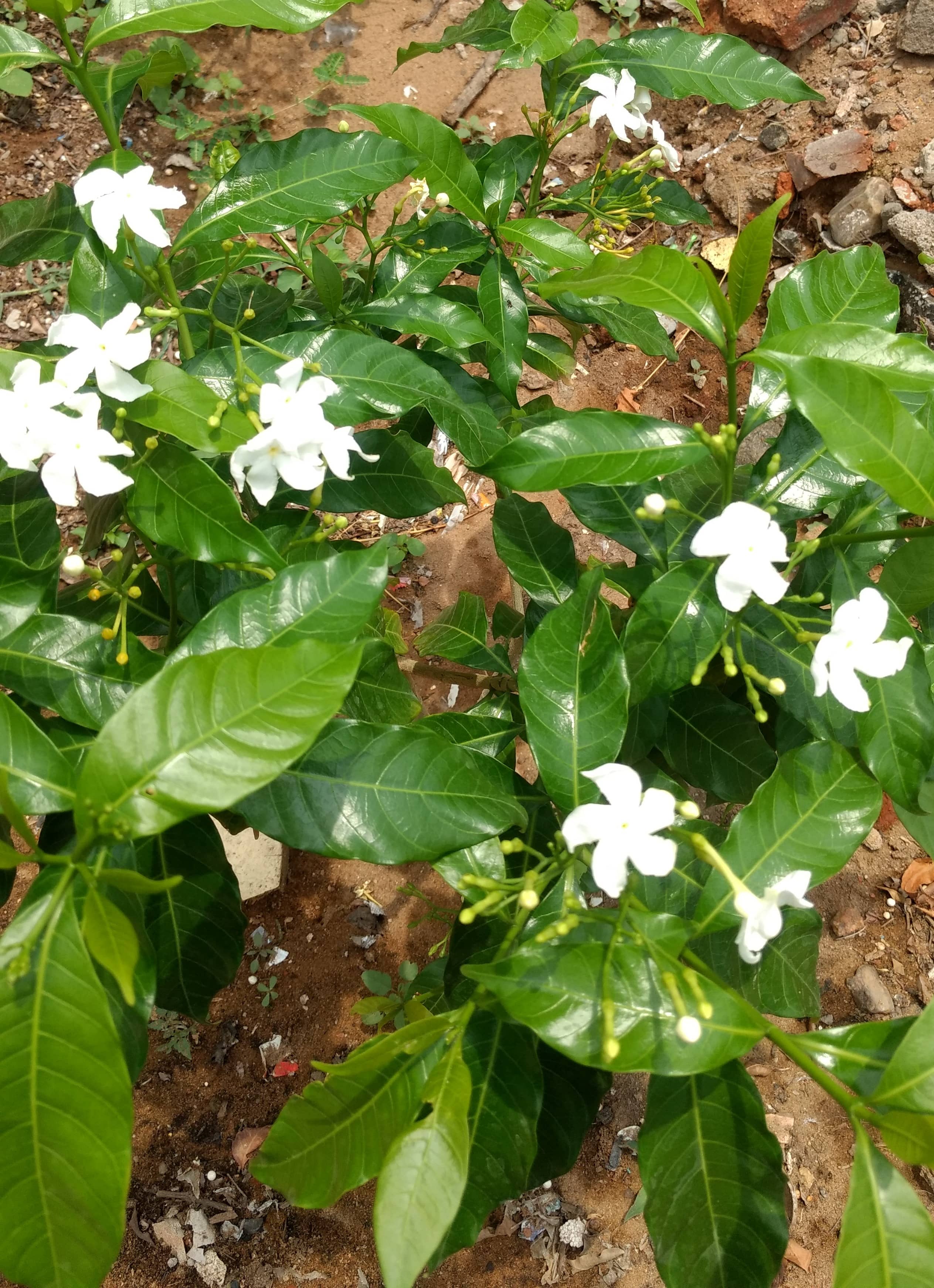
Pinwheel
Tabernaemontana divaricata
Pinwheel, botanically classified as Tabernaemontana divaricata and widely celebrated as Crape Jasmine, Crepe Jasmine, or Chandni, is an exceptionally elegant, evergreen flowering tropical shrub belonging to the Apocynaceae (dogbane) family. Native to the warm, humid, low-elevation woodland plains...
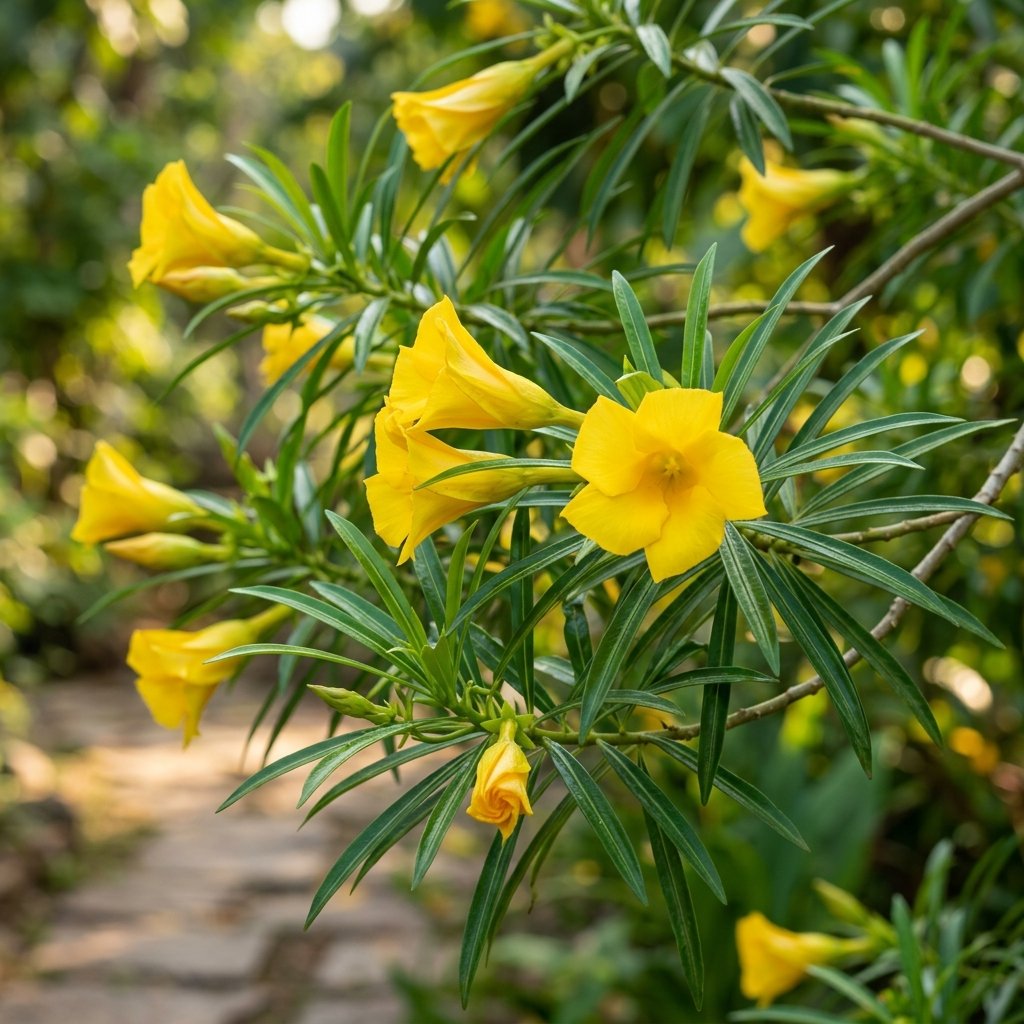
Yellow Oleander (Thevetia)
Cascabela thevetia
Yellow Oleander, botanically classified as *Cascabela thevetia* (formerly *Thevetia peruviana*) and famously celebrated in Indian culture as Pila Kaner, Lucky Nut, or the Be-still Tree, is a highly ornamental, heat-loving evergreen large shrub or small tree. Belonging to the dogbane family Apocyn...
Similar Characteristics
4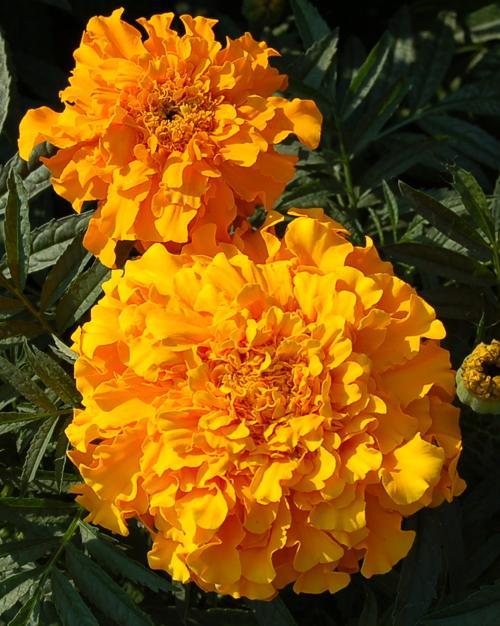
Marigold
Tagetes erecta
The Marigold, botanically classified under the genus Tagetes within the highly diverse Asteraceae (daisy or composite) family, is a cheerful, robust, and exceptionally popular herbaceous annual flower. Native to the warm, sun-drenched grasslands, mountain valleys, and open meadows of Mexico and C...
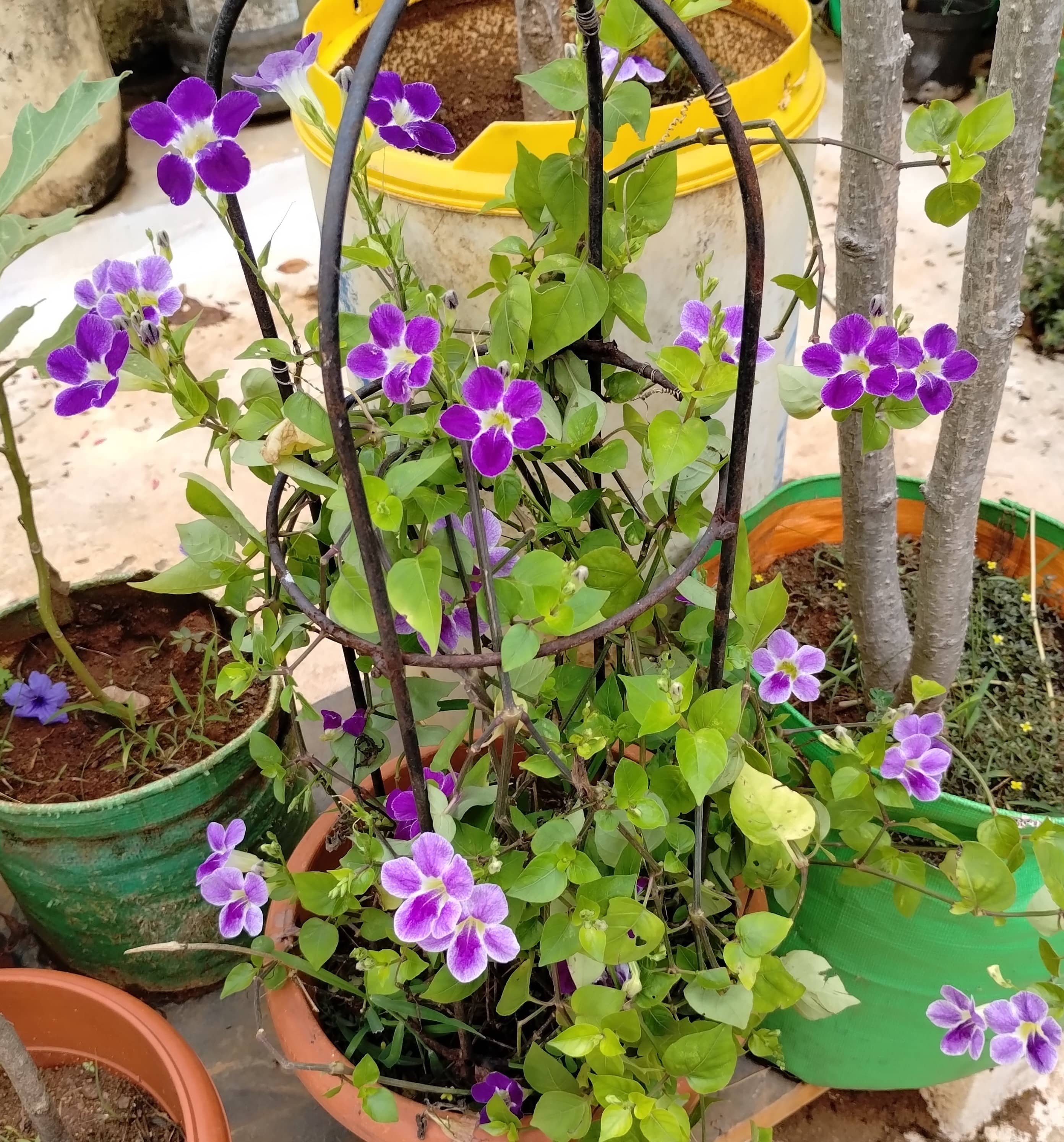
Thunbergia (King's Mantle)
Thunbergia erecta
Thunbergia erecta, popularly known as the "King's Mantle" or "Bush Clock Vine," is a sophisticated and regal tropical shrub that brings a touch of aristocratic elegance to any garden. A member of the Acanthaceae family, this evergreen species is native to the coastal regions of western Africa, fr...
Crossandra Firecracker
Crossandra infundibuliformis
The Firecracker Flower, scientifically known as Crossandra infundibuliformis and popularly called Aboli or Kanakambaram in India, is a beautiful tropical evergreen shrub belonging to the Acanthaceae family. Native to the shady forest understories of southern India and Sri Lanka, particularly the...
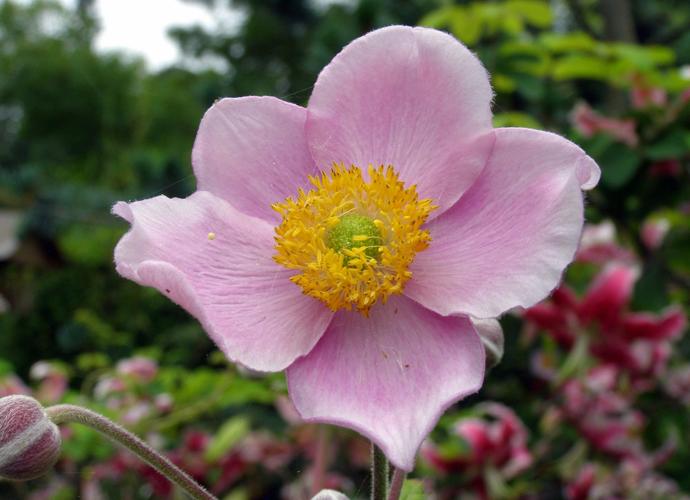
Japanese anemone
Anemone hupehensis, Anemone hybrida
The Japanese Anemone, botanically classified as Anemone hupehensis (and recently reclassified under the genus Eriocapitella), is an exceptionally graceful, late-blooming herbaceous perennial belonging to the Ranunculaceae (buttercup) family. Despite its common name, this elegant species is native...