
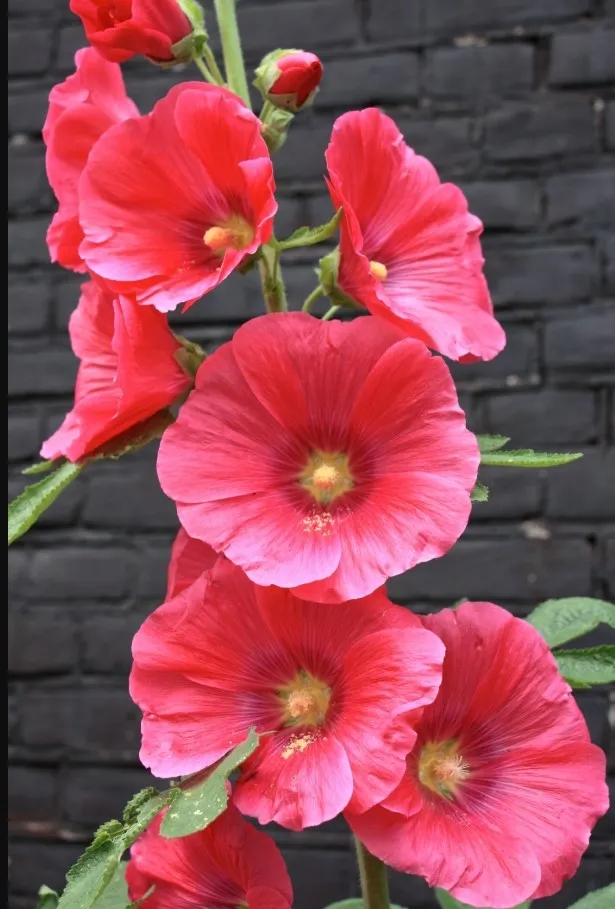
Hollyhock
Alcea rosea
How to Identify Hollyhock
NON-TOXIC. 100% pet-safe for cats, dogs, and horses, verified by ASPCA guidelines. Contains zero toxic alkaloids.
A detailed guide to identifying Hollyhocks (Alcea rosea) by their majestic architectural characteristics:
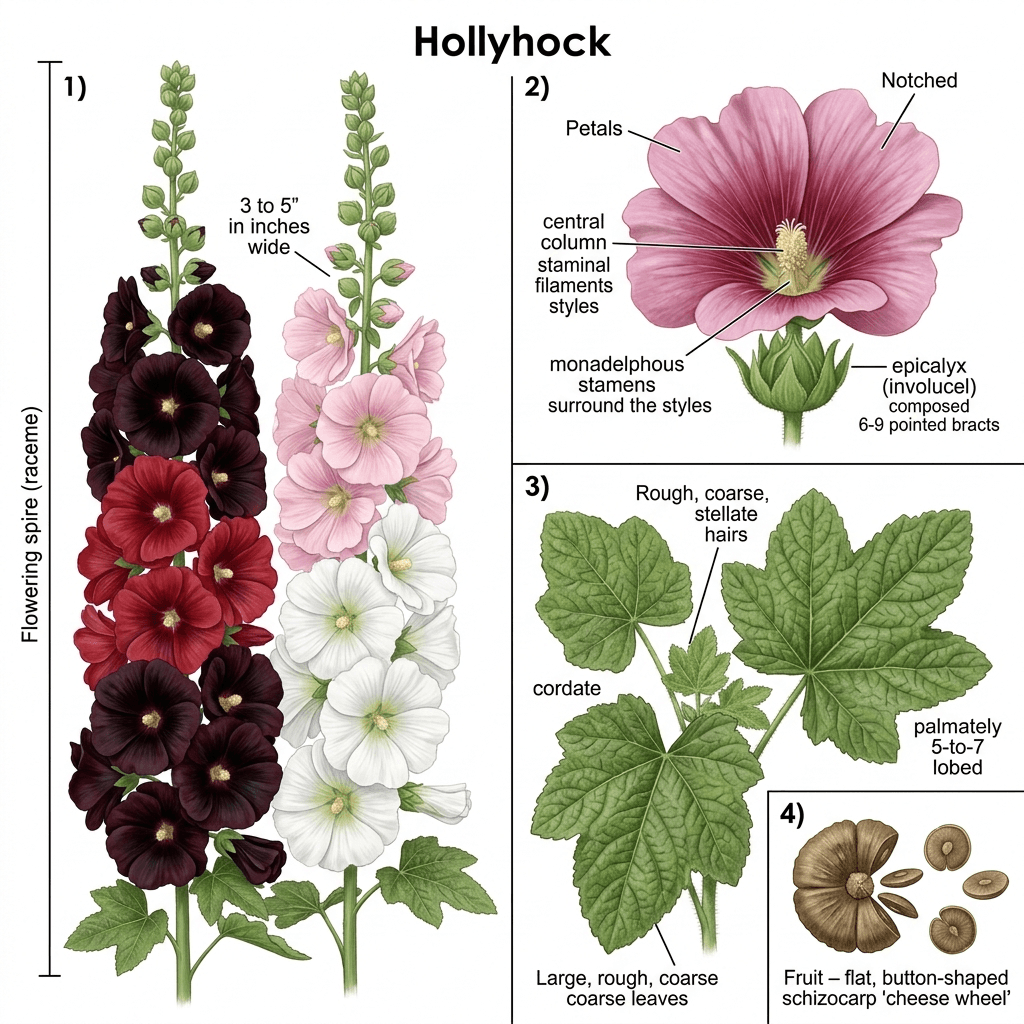
- Towering Unbranched Spire (Raceme): Spectacular, erect, vertical central flowering stalks standing 5 to 9 feet tall, densely studded with dozens of outward-facing blossoms that open sequentially from the base upward over several months.
- Broad Saucer-Shaped Blooms: Large, crepe-textured, cup- or saucer-shaped flowers measuring 3 to 5 inches across. Blossoms display five broad, slightly notched or ruffled petals ranging in color from deep velvety blackish-maroon ('Blacknight') to scarlet, rose-pink, pastel yellow, and pure white.
- Monadelphous Stamen Column: A signature trait of the mallow family (Malvaceae), hundreds of stamens are fused by their filaments into a conspicuous central white-to-yellow tubular column surrounding the styles in the flower throat.
- Epicalyx (Involucel) Bracts: Situated directly beneath the 5-lobed green calyx is an outer whorl of 6 to 9 pointed, leafy involucral bracts (epicalyx) that frame the flower bud.
- Rough Cordate Foliage with Stellate Hairs: Large, rough, coarse leaves measuring 6 to 12 inches across. Lower basal leaves are round to heart-shaped (cordate), while upper leaves become palmately 5- to 7-lobed with wrinkled veins and a covering of raspy, star-shaped (stellate) hairs.
- Flat Wheel-Shaped Schizocarp Fruits: Seed pods form a distinctive button- or cheese-wheel-shaped schizocarp that splits radially into 15 to 25 flat, disc-like, kidney-shaped seeds upon ripening.
Varieties & Growth Forms of Hollyhocks
Hollyhocks are classified by petal configuration and botanical lifespan:
- By Flower Structure & Form:
- Single-Flowered Hollyhocks: The classic heirloom form featuring open, saucer-shaped blossoms with visible central stamen columns, highly attractive to bumblebees and hummingbird moths.
- Double-Flowered Hollyhocks ('Chater's Double'): Ruffled, pom-pom-like blooms packed with countless ruffled petals resembling tissue-paper carnations or peonies.
- Black Hollyhock ('Nigra' / 'Blacknight'): Celebrated historic heirloom boasting deep, glossy, nearly jet-black velvety purple-maroon petals.
- By Growth Habit & Longevity:
- Biennial Garden Types: The traditional form that produces a low rosette of leaves in its first season, sends up towering flowering spires in its second year, and self-seeds prolifically.
- Perennial / Fig-Leaved Types (Alcea ficifolia hybrids): Multi-year perennial selections featuring deeply divided fig-like leaves and superior resistance to hollyhock rust fungus.
- Dwarf / Miniature Cultivars ('Queeny Purple'): Compact bedding selections reaching only 2 to 3 feet in height, suitable for smaller gardens and containers.
Care & Growing Guide
Hollyhock (Alcea rosea) Care & Growing Guide:
- Light: Full direct sunlight (at least 6 hours of direct sun daily). Maximum sunshine produces stout, sturdy flower spikes that resist flopping and enhances vibrant petal pigmentation.
- Watering: Moderate, deep watering. Water at ground level using drip irrigation or soaker hoses. Avoid overhead watering, as wet foliage triggers severe outbreaks of hollyhock rust (Puccinia malvacearum).
- Soil & pH: Fertile, rich, well-draining loamy soil with abundant compost and a neutral to slightly alkaline pH (6.5 to 7.5). Intolerant of heavy, winter-waterlogged soils.
- Temperature & Hardiness: Hardy in USDA Zones 3 through 9. Highly cold-hardy; seeds naturally require cold winter stratification to sprout reliably in spring.
- Support & Wind Protection: Due to their towering 6- to 9-foot height, plant along sunny walls, fences, or shelterbelts, or stake individual spikes early in the season to prevent wind damage.
- Maintenance & Rust Management: Remove and discard rust-infected lower leaves immediately into trash (never compost). Cut down spent flower stalks to ground level after blooming to encourage basal foliage renewal.
Seasonal Blooming & Hardiness
Seasonal Blooming Calendar (US Hardiness Zones 3-9 / Temperate & Warm Climates):
- Peak Bloom: Mid-summer through early autumn (typically June through August/September).
- Sequential Flowering: Individual spikes bloom continuously over 6 to 8 weeks as buds open progressively from base to apex.
- Seed Sowing Window: Direct sow seeds outdoors in late summer or early autumn for next season's blooms, or sow indoors in early spring with 4 weeks of cold stratification.
Bloom Timeline
About Hollyhock
The Hollyhock, botanically designated as Alcea rosea and belonging to the family Malvaceae (the mallow or hibiscus family), is a majestic, towering, and deeply romantic cottage garden classic. Native to the warm, temperate meadows, rocky slopes, and open woodlands of Turkey and southwestern Asia, this spectacular plant was cultivated across China and the Middle East for millennia before spreading along the Silk Road to Europe. Today, it is globally celebrated for its dramatic height and showy, cup-shaped blossoms.
This fast-growing biennial or short-lived perennial exhibits a highly unique two-year lifecycle. In its first year, it develops a low-growing basal rosette of large, rounded, rough, fuzzy, and lobed green leaves. In its second year, it shoots up massive, unbranched, upright flowering spikes that stand 5 to 8 feet tall (dwarf hybrids reach a compact 2 to 3 feet). From mid-summer through autumn (June through September), these towering spikes are densely adorned with large, cup- or saucer-shaped flowers measuring 3 to 5 inches across in single or double forms.
The reproductive structure of the Alcea genus is summarized by the classical mallow-family floral formula Br(3-8) ⊕ ⚿ K(5) C5 A(∞) G(∞). This formula shows that the flowers are bracteate, featuring a highly visible outer epicalyx of 3 to 8 leaf-like bracteoles immediately beneath the calyx. They are radially symmetrical (actinomorphic) and bisexual. The calyx features 5 fused sepals, and the corolla has 5 free, large, overlapping petals. The androecium consists of numerous (∞) stamens with filaments fused to form a prominent central column (monadelphous column) surrounding the style, atop a superior ovary.
Horticulturally, Hollyhocks are exceptionally resilient, easy to grow from seed, and highly adaptable. They perform best in full, direct sun (requiring at least 6 hours daily) and thrive in rich, organic, moist, and well-drained soils, though they are highly drought-tolerant once established. Because their towering spikes can easily topple over in strong winds, they are traditionally planted against supportive backdrops such as sunny fences, walls, or the back of borders. They are susceptible to hollyhock rust, a fungal disease; watering at the base helps keep leaves dry.
The poetic common name 'Hollyhock' is widely believed to originate from the Old English 'holy hock' (holy mallow), a direct reference to its introduction to Europe by crusading knights who brought it back from the Holy Land, where it was used as an ointment for horses. Famed in Sanskrit as Citrasevati (चित्रसेवती) or Karnikara (कर्णिकारः) and in Hindi as Gulphairu (गुलखैरा), the plant carries rich historical lore. In classical Chinese art and Victorian flower language, it was a symbol of ambition, abundance, and majestic beauty.
For pet owners and veterinarians, the Hollyhock represents an exceptionally safe, low-risk, and family-friendly selection. Alcea rosea is classified as completely NON-TOXIC to cats, dogs, and horses by major global animal databases, including the ASPCA. If a pet runs through the tall spikes or chews on the waxy blooms, there is absolutely no danger of toxic chemical poisoning. For detailed instructions on selecting safe vertical perennials and designing active, pet-friendly gardens, visit our general Pet Guard page. (Note: Pruning gloves are recommended as the stiff leaf hairs can cause mild skin scratch irritation.)
Hollyhock is occasionally confused with giant native Swamp Rose Mallow or Hibiscus. It is easily distinguished because Alcea species produce tall, unbranched, vertical flower spikes with bottom-to-top sequential blooming, whereas Hibiscus grows as a branching, woody shrub. It makes an outstanding background plant for garden borders; we recommend pairing it alongside other classic cottage favorites like Wild Pansy or Geranium. To explore more vertical landscaping ideas and companion planting charts, browse our Flower Identifier.
Floral Formula & Features
Epicalyx of 3-8 bracteoles present, Actinomorphic (radially symmetrical), bisexual, 5 fused sepals, 5 free petals, numerous stamens with filaments fused into tube around style (monadelphous), numerous carpels arranged in ring with superior ovary typical of Malvaceae
- Scientific Name & Classification: Alcea rosea (Malvaceae). Commonly known as Garden Hollyhock, Althaea, and Rose Mallow.
- Identification Markers: Towering unbranched flower spikes (5-8 feet), large fuzzy lobed leaves, and 3-5 inch cup-shaped flowers blooming from bottom to top.
- Floral Formula (Br(3-8) ⊕ ⚿ K(5) C5 A(∞) G(∞)): Radially symmetrical, bisexual flowers with 3-8 bracteoles, 5 fused sepals, 5 free petals, and numerous monadelphous stamens.
- Growing Requirements: Full direct sun (6+ hours); rich, well-draining soil. Provide shelter from strong winds or plant against walls and fences (Zones 3-9).
- Cultural Significance: Known as 'holy hock' since Crusaders brought it from the Holy Land. Celebrated in Victorian language of flowers as a symbol of majestic beauty.
- Safety & Toxicity: NON-TOXIC. 100% safe for cats, dogs, and horses, making it a perfect, high-impact background perennial for pet-friendly landscapes.
- Common Look-alikes: Confused with hardy Rose Mallow or Hibiscus, but easily distinguished by its towering unbranched spikes and fuzzy, multi-lobed leaves.
- Internal Links: Provides a stunning vertical backdrop in cottage borders when mixed with low-growing companion plants like Wild Pansy or Geranium; find more in our Flower Identifier.
Names in Different Languages
Botanical Classification: Hollyhock belongs to the Malvaceae family. Learn how to identify its floral symmetry, stamen arrangement, and structural formulas in our Botanical Family Classification Guide.
Toxicity & Safety
Pet Safety Guide: For detailed toxicity symptoms, first-aid measures, and safe garden alternatives, see our full Pet Guard Profile for Hollyhock.
Frequently Asked Questions
What is Floral Formula?
A floral formula is a symbolic representation of a flower's structure using letters, numbers, and special symbols. It provides a concise way to describe the arrangement and number of floral parts.
This formula describes the flower's symmetry, sepals, petals, stamens, and carpels in a standardized format.
Formula Sequence
- Bract: Br or Ebr
- Bracteole: Brl or Ebrl
- Symmetry: % (Radial) or ⊕ (Bilateral)
- Sex: ♀ (Female), ♂ (Male), or ⚥ (Bisexual)
- Calyx/Sepal: K<number> (Free or Fused)
- Corolla/Petal: C<number> (Free or Fused)
- Androecium: A<number> (Free or Fused)
- Gynaecium: G<number> (Superior or Inferior Ovary)
Symbol Meanings
- Numbers: Indicate quantity of parts
- Parentheses (): Parts are fused together
- Plus (+): Parts in different whorls
- Underline: Superior ovary position
- Overline: Inferior ovary position
- ∞: Numerous parts (too many to count)
Understanding floral formulas helps botanists quickly identify and classify flowers based on their structural characteristics.
Similar Flowers
Discover flowers that share botanical characteristics
Same Family
4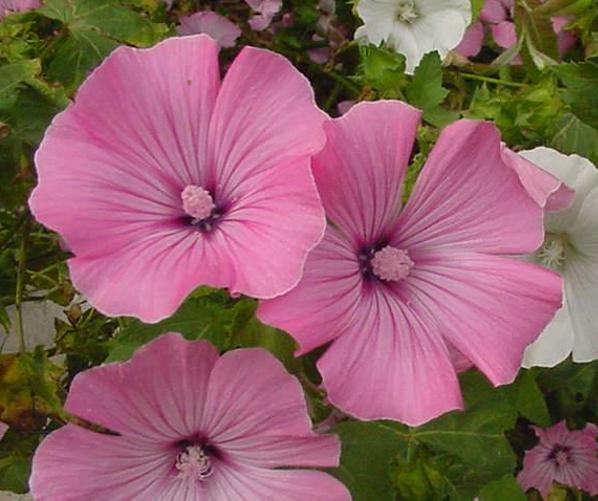
Tree Mallow
Malva arborea
The Tree Mallow, botanically classified as Malva arborea (and previously known as Lavatera arborea), is a robust, fast-growing biennial or short-lived perennial shrub belonging to the Malvaceae (mallow) family. Native to the Mediterranean basin and the rugged, salt-swept coastal cliffs of Western...
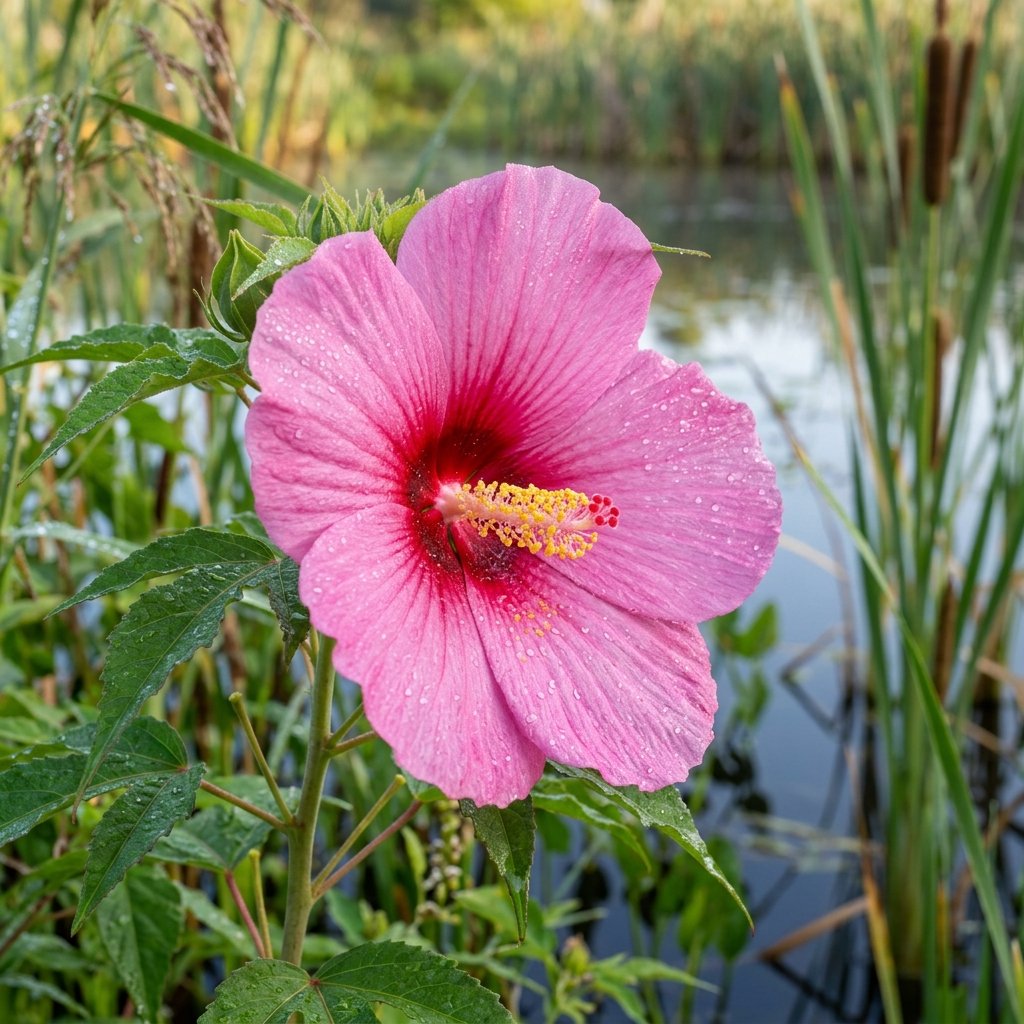
Swamp Rose Mallow
Hibiscus moscheutos
Swamp Rose Mallow (*Hibiscus moscheutos*) produces some of the largest flowers of any hardy perennial wildflower in North America — dinner-plate-sized blooms reaching 6 to 12 inches in diameter — in shades of white, pink, and rose, typically adorned with a dramatic deep crimson or rose-pink centr...
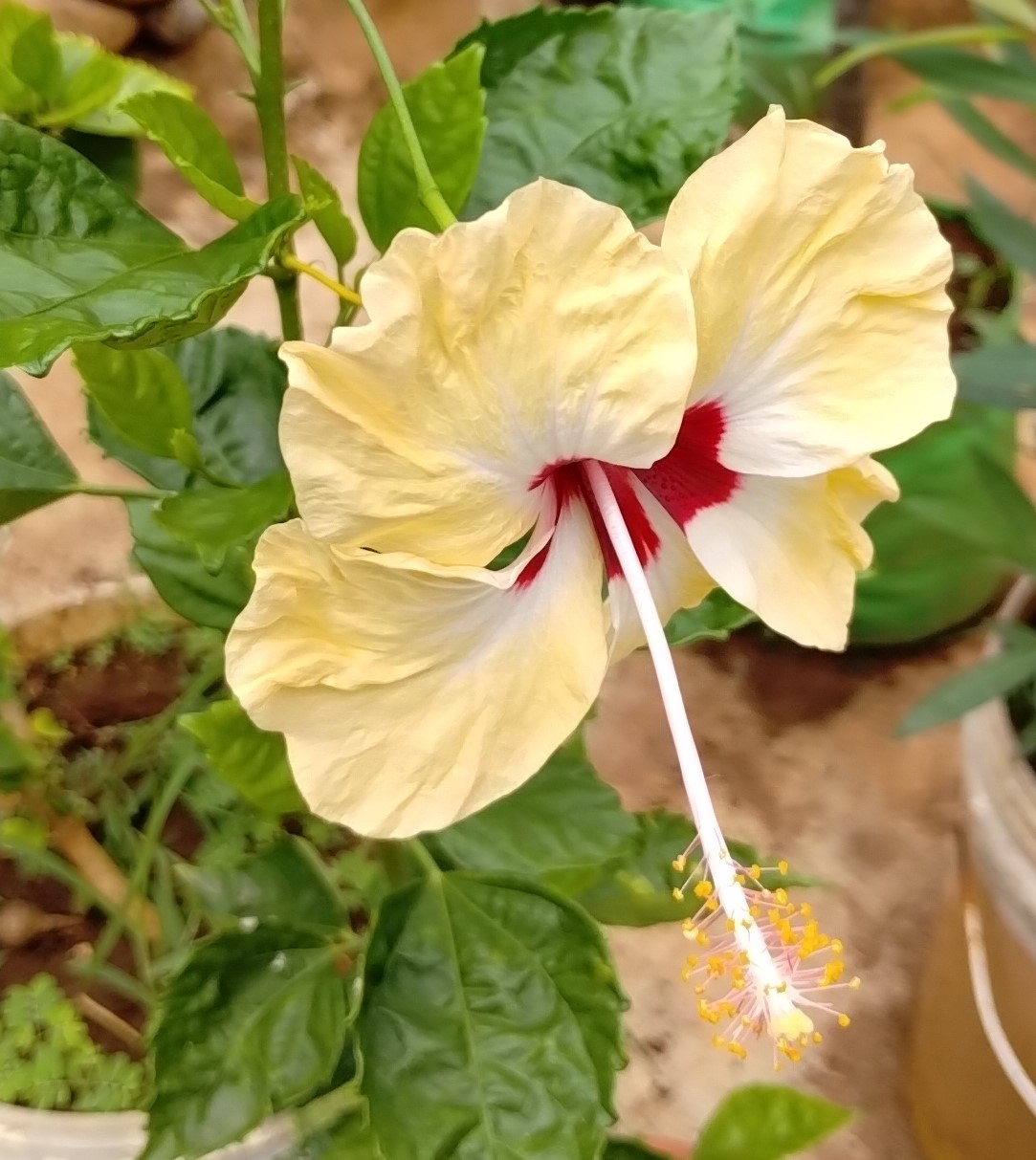
Hibiscus
Hibiscus rosa-sinensis
The Hibiscus, botanically classified as Hibiscus rosa-sinensis and popularly known as the Chinese Hibiscus, China Rose, or Shoe Flower, is a spectacular evergreen flowering shrub belonging to the Malvaceae (mallow) family. Believed to have originated in the warm, humid tropical regions of East As...
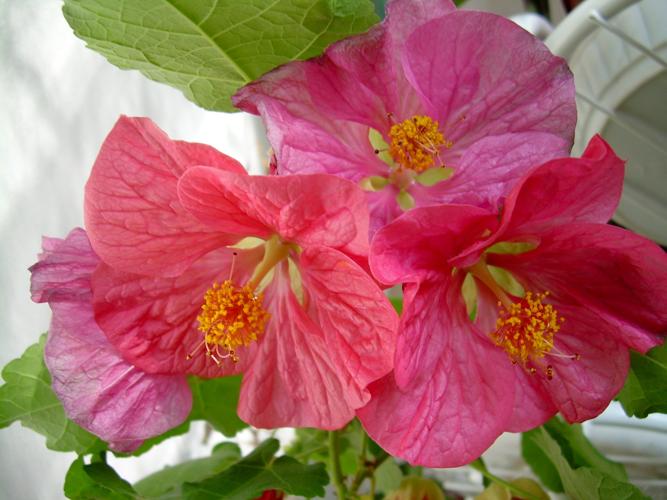
Mallow
Malva sylvestris
The Mallow, botanically designated as Malva sylvestris and commonly known as Common Mallow, High Mallow, Tall Mallow, or Cheeseweed, is an exceptionally versatile, hardy, and resilient biennial to short-lived perennial herb. Belonging to the family Malvaceae (the mallow family), this ancient plan...
Similar Characteristics
4Tree Mallow
Malva arborea
The Tree Mallow, botanically classified as Malva arborea (and previously known as Lavatera arborea), is a robust, fast-growing biennial or short-lived perennial shrub belonging to the Malvaceae (mallow) family. Native to the Mediterranean basin and the rugged, salt-swept coastal cliffs of Western...
Swamp Rose Mallow
Hibiscus moscheutos
Swamp Rose Mallow (*Hibiscus moscheutos*) produces some of the largest flowers of any hardy perennial wildflower in North America — dinner-plate-sized blooms reaching 6 to 12 inches in diameter — in shades of white, pink, and rose, typically adorned with a dramatic deep crimson or rose-pink centr...
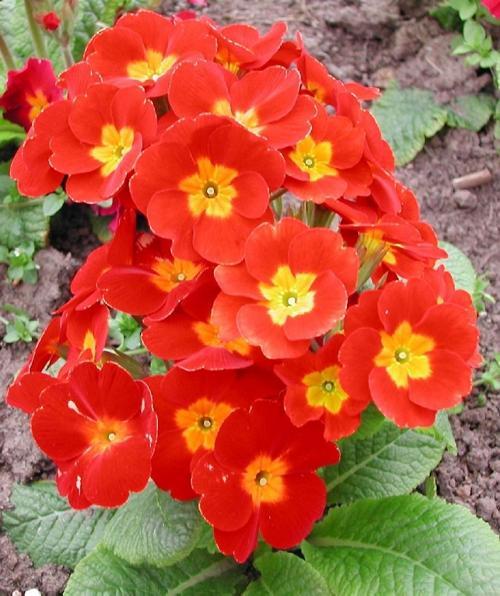
Primula (Common Primrose)
Primula vulgaris
The Primrose, botanically designated as Primula vulgaris and commonly known as the Common Primrose or English Primrose, is an exceptionally charming, early-blooming herbaceous perennial. Belonging to the family Primulaceae (the primrose family), this historic woodland flower is native to the cool...
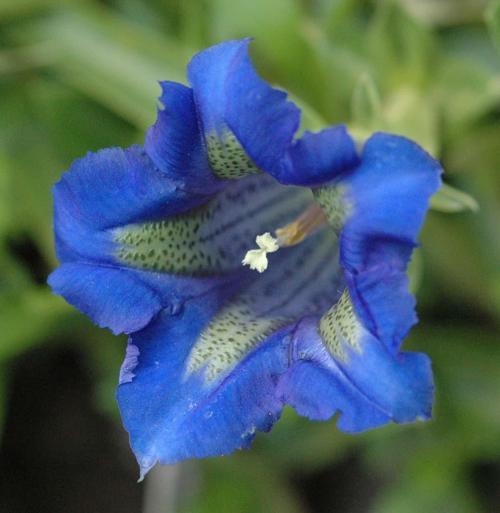
Stemless Gentian
Gentiana acaulis
The Stemless Gentian, botanically classified as Gentiana acaulis and commonly known as the Trumpet Gentian, Large-flowered Gentian, or Gentianella, is an exceptionally exquisite, low-growing alpine perennial. Belonging to the family Gentianaceae (the gentian family, tribe Gentianeae), this high-a...