
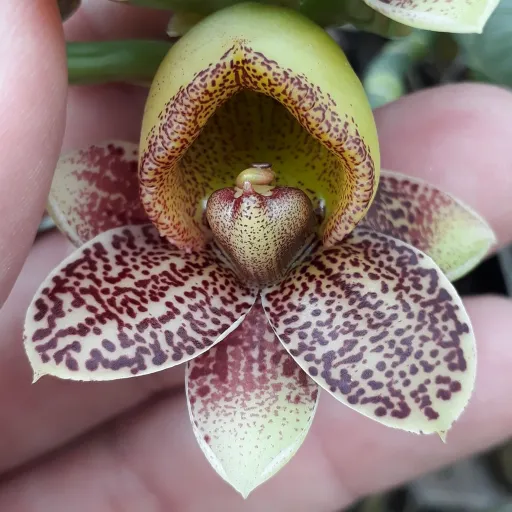
Catasetum Orchid
Catasetum
How to Identify Catasetum Orchid
NON-TOXIC. 100% safe for cats, dogs, and horses, making them excellent, worry-free houseplant choices for pet-friendly spaces.
Care & Growing Guide
Seasonal Blooming & Hardiness
Seasonal Blooming Calendar:
- Peak Bloom: Spring to early summer (typically April through June).
- Planting Time: Sow seeds directly outdoors in early spring after the last frost, or transplant nursery starts in late spring.
Bloom Timeline
About Catasetum Orchid
The Catasetum Orchid, belonging to the botanical genus Catasetum within the prominent Orchidaceae family, is a highly unique and fascinating group of epiphytic perennial orchids. Native to the warm, tropical lowlands and seasonally dry forest canopies of Central and South America—with particular abundance in Brazil, Colombia, and Venezuela—these orchids have evolved to thrive in dynamic climates. They are globally renowned for their incredible adaptation to seasonal changes, shedding their leaves entirely during the dry winter dormancy and growing at an explosive rate during the humid rainy season.
Structurally, Catasetum orchids are easily recognized by their large, swollen, cigar-shaped pseudobulbs. These pseudobulbs serve as vital reservoirs of water and nutrients during the plant's winter rest. During the active spring growing season, each pseudobulb produces several thin, prominently veined, pleated leaves that grow up to 2 feet in height. In late summer and autumn, waxy, highly fragrant flower sprays emerge from the base of the pseudobulbs. Uniquely, this genus exhibits extreme sexual dimorphism, producing separate, completely different male and female flowers on the same or separate plants depending on light intensity.
The reproductive biology of the Catasetum genus is summarized by the floral formula ↓ ⚥ P3+3 A1 G(3). This denotes that the flowers are bilaterally symmetrical (zygomorphic) and structurally bisexual, though they are functionally unisexual. The flower features 6 fleshy tepals in two whorls of three. In the male flower, the single stamen has been modified into a highly sensitive, spring-loaded explosive mechanism. When a visiting euglossine bee brushes against the two needle-like trigger appendages (antennae) inside the column, the pollinarium is violently ejected forward, sticking securely to the bee's back to be transported to a female flower.
In cultivation, Catasetum orchids require a strict wet-and-dry watering regime that closely mimics their tropical habitat. During the active spring and summer growth phase, they require bright, filtered sunlight, warm temperatures (75°F to 85°F), high humidity (60% to 80%), and abundant watering and fertilizing. However, once the leaves begin to yellow and shed in late autumn, watering must be completely stopped. During the dry winter dormancy, they must be kept completely dry and intermediate in temperature (60°F to 70°F) to prevent the pseudobulbs from rotting. They are suitable for USDA zones 10 to 12.
The genus name Catasetum is derived from the Greek 'kata' (downward) and the Latin 'seta' (bristle), referring to the two downward-pointing trigger antennae in the male flowers. Early botanical explorers were so perplexed by the extreme sexual dimorphism of the flowers that they initially classified male and female flowers of the exact same plant as entirely separate genera! Known in Sanskrit as Prakṣepapuṣpam (प्रक्षेपपुष्पम्) and in Hindi as Kaitāseṭam Orkiḍ (कैटासेटम ऑर्किड), they are highly sought after by advanced orchid collectors for their extraordinary floral physics and complex fragrance profiles.
For pet owners, the Catasetum Orchid is an exceptionally safe and highly premium choice. Like all orchids, the Catasetum genus is classified as completely NON-TOXIC to dogs, cats, and horses by major global animal safety databases, including the ASPCA. If a pet plays with or chews on the pleated leaves or papery pseudobulbs, there is absolutely no risk of toxic poisoning. To discover more family-safe orchids and beautiful epiphytes, visit our specific Pet Guard catalog. They pair magnificently in warm indoor spaces with other non-toxic plants like Cattleya Orchid or trailing Wild Pansy; learn more in our Flower Identifier.
Floral Formula & Features
Zygomorphic (bilateral symmetry), Bisexual (though flowers are functionally unisexual - male or female), 6 tepals in 2 whorls of 3 (3 sepals + 3 petals with modified lip), 1 stamen fused with style into column, 3 fused carpels with inferior ovary
- Scientific Name & Classification: Catasetum (Orchidaceae). Famed as Catasetum Orchid, Jumping Orchid, and Trigger Orchid.
- Identification Markers: Swollen, papery cigar-shaped pseudobulbs, pleated leaves, and highly dimorphic male (showy, trigger-equipped) and female (hooded, green) flowers.
- Floral Formula (↓ ⚥ P3+3 A1 G(3)): Bilaterally symmetrical, bisexual in structure, featuring 6 waxy tepals, a single stamen, and a 3-carpellate inferior ovary.
- Growing Requirements: Bright light, high humidity, and heavy water/fertilizer in summer; absolutely zero water during winter dormancy when leaves shed (Zones 10-12).
- Cultural Significance: Name means downward bristle, referencing trigger antennae. Historically confused early botanists who mistook male and female blooms for separate genera.
- Safety & Toxicity: NON-TOXIC. 100% safe for cats, dogs, and horses, making them excellent, worry-free houseplant choices for pet-friendly spaces.
- Common Look-alikes: Confused with Cycnoches (Swan Orchids) or Mormodes (Goblin Orchids), but distinguished by the distinct spring-loaded trigger antennae.
- Internal Links: Mounts beautifully alongside trailing non-toxic epiphytes; pair with Cattleya Orchid or Orchis Orchid, and explore our Flower Identifier.
Names in Different Languages
Botanical Classification: Catasetum Orchid belongs to the Orchidaceae family. Learn how to identify its floral symmetry, stamen arrangement, and structural formulas in our Botanical Family Classification Guide.
Toxicity & Safety
Frequently Asked Questions
What is Floral Formula?
A floral formula is a symbolic representation of a flower's structure using letters, numbers, and special symbols. It provides a concise way to describe the arrangement and number of floral parts.
This formula describes the flower's symmetry, sepals, petals, stamens, and carpels in a standardized format.
Formula Sequence
- Bract: Br or Ebr
- Bracteole: Brl or Ebrl
- Symmetry: % (Radial) or ⊕ (Bilateral)
- Sex: ♀ (Female), ♂ (Male), or ⚥ (Bisexual)
- Calyx/Sepal: K<number> (Free or Fused)
- Corolla/Petal: C<number> (Free or Fused)
- Androecium: A<number> (Free or Fused)
- Gynaecium: G<number> (Superior or Inferior Ovary)
Symbol Meanings
- Numbers: Indicate quantity of parts
- Parentheses (): Parts are fused together
- Plus (+): Parts in different whorls
- Underline: Superior ovary position
- Overline: Inferior ovary position
- ∞: Numerous parts (too many to count)
Understanding floral formulas helps botanists quickly identify and classify flowers based on their structural characteristics.
Similar Flowers
Discover flowers that share botanical characteristics
Same Family
4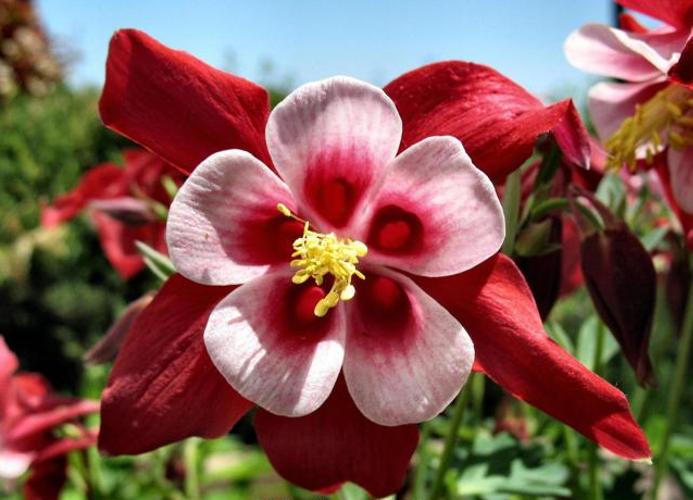
Cattleya orchids
Cattleya
The Cattleya Orchid, botanically classified as Cattleya and celebrated globally as the 'Queen of Orchids' or 'Corsage Orchid,' is a spectacular genus of epiphytic perennial plants in the Orchidaceae family. Native to the tropical rain forests and elevated cloud forests of Central and South Americ...
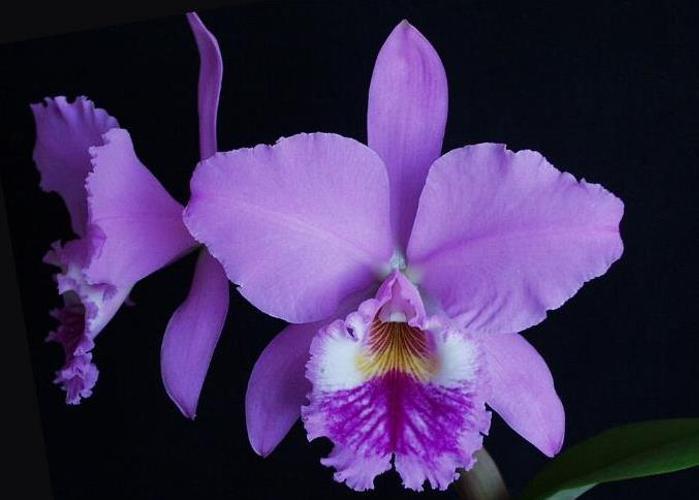
Ruby Lipped Cattleya
Cattleya labiata
The Ruby Lipped Cattleya (Cattleya labiata), often heralded globally as the 'Queen of Orchids', is a legendary epiphytic orchid belonging to the Orchidaceae family. Discovered completely by accident in the Organ Mountains of northeastern Brazil in the early 19th century, its introduction to Europ...
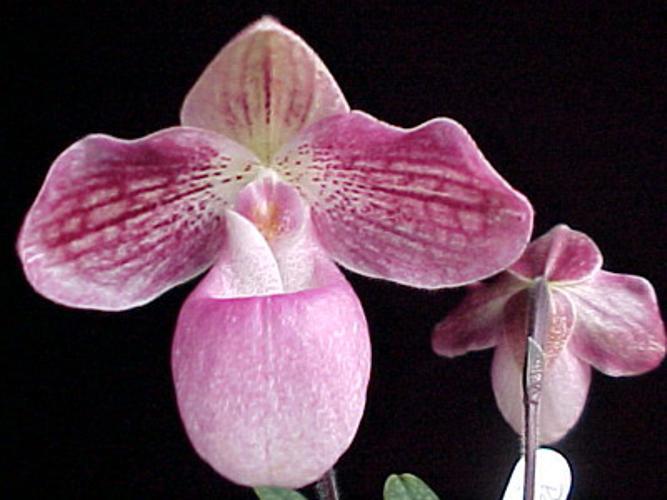
Silver Slipper Orchid
Paphiopedilum micranthum
The Silver Slipper Orchid, botanically designated as Paphiopedilum micranthum and popularly known as the Pocket Orchid, is a critically endangered, terrestrial slipper orchid belonging to the Orchidaceae family. Native to the steep, mist-shrouded limestone cliffs and rocky moss-covered ravines of...
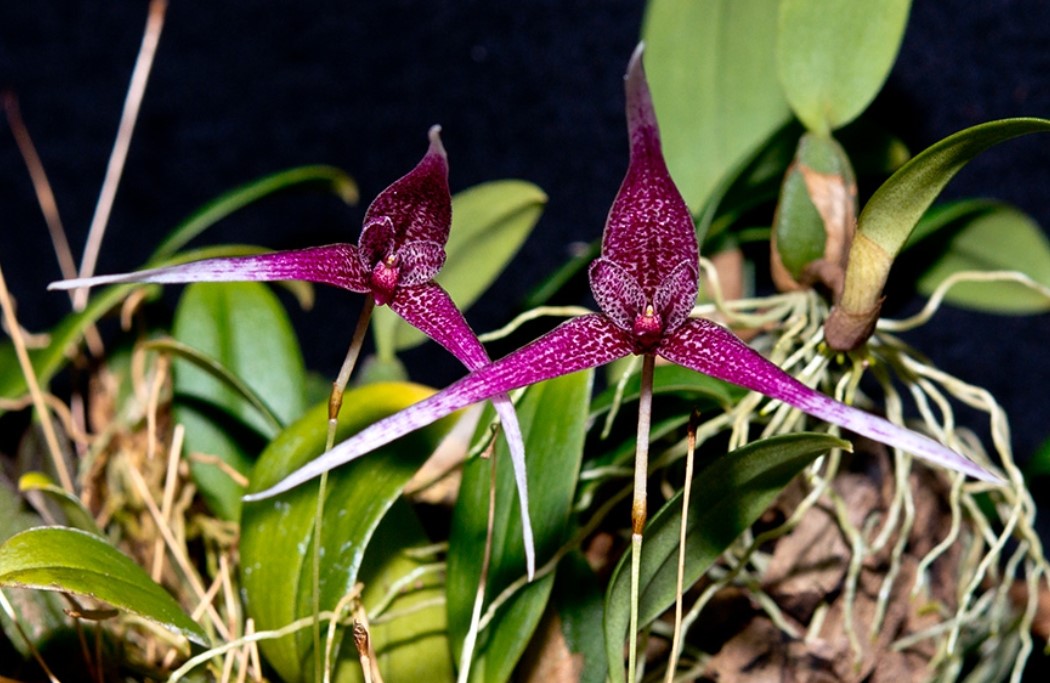
Bulbophyllum Orchid
Bulbophyllum
The Bulbophyllum orchid, representing the largest genus in the Orchidaceae family, is a true botanical marvel boasting over 2,000 highly diverse species. Native to tropical and subtropical rainforests across Asia, Africa, and the Americas, these epiphytic wonders grow primarily on tree bark in hu...
Similar Characteristics
4Ruby Lipped Cattleya
Cattleya labiata
The Ruby Lipped Cattleya (Cattleya labiata), often heralded globally as the 'Queen of Orchids', is a legendary epiphytic orchid belonging to the Orchidaceae family. Discovered completely by accident in the Organ Mountains of northeastern Brazil in the early 19th century, its introduction to Europ...
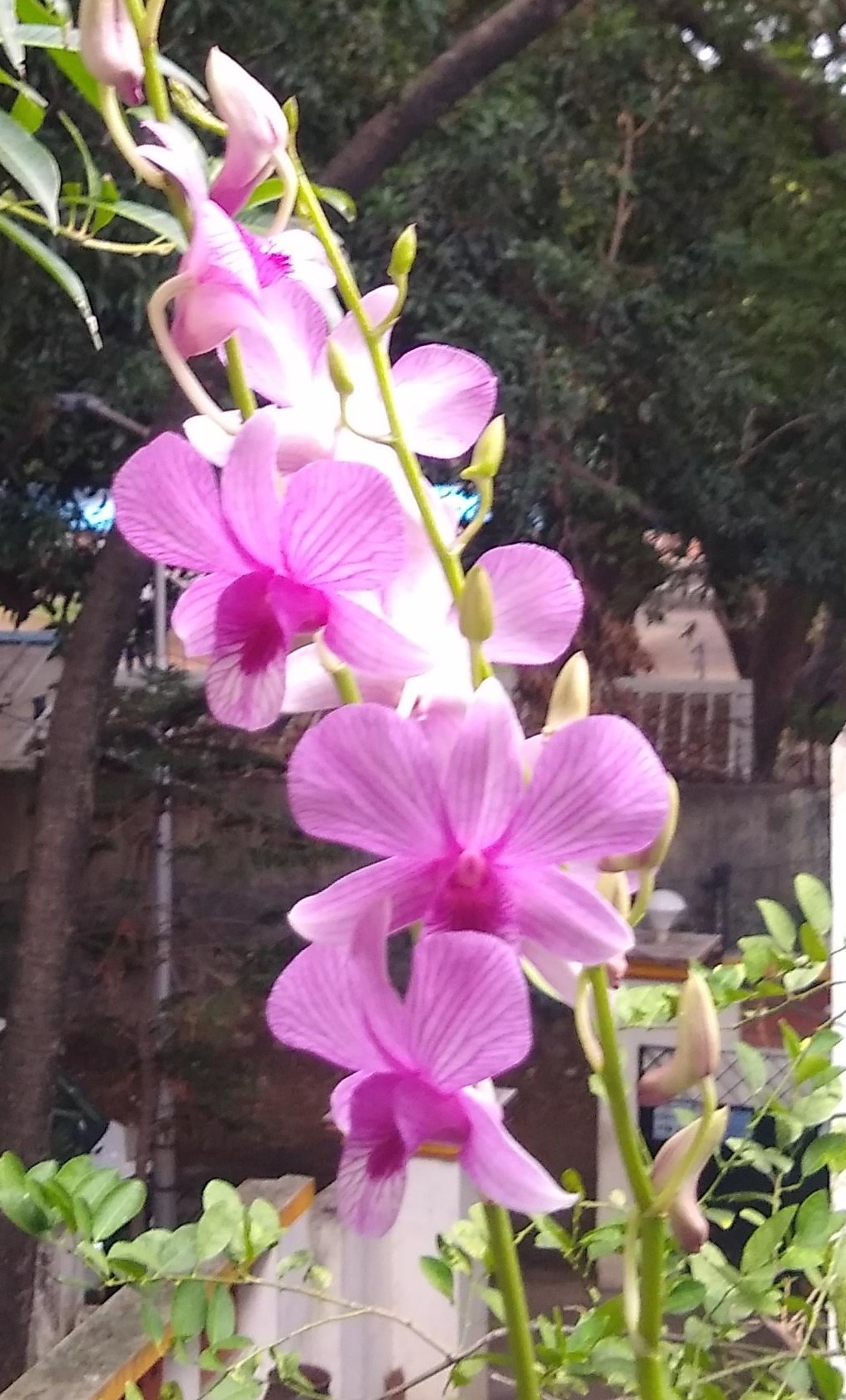
Dendrobium Orchid
Dendrobium
The Dendrobium Orchid, a diverse and captivating genus within the Orchidaceae family, stands as one of the most prolific and popular orchids in the world. With over 1,800 species and countless hybrids, these "tree-living" plants (the name *Dendrobium* literally means "life on a tree" in Greek) ar...
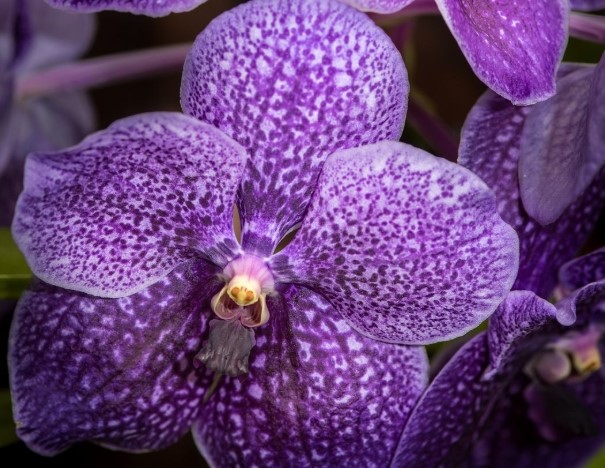
Vanda Orchid
Vanda
The Vanda Orchid, botanically designated under the genus *Vanda*, is an exceptionally spectacular, highly premium epiphytic perennial. Belonging to the family Orchidaceae (the orchid family, tribe Vandeae), this magnificent tropical orchid is native to the warm, highly humid rainforests, mist-shr...
Cattleya orchids
Cattleya
The Cattleya Orchid, botanically classified as Cattleya and celebrated globally as the 'Queen of Orchids' or 'Corsage Orchid,' is a spectacular genus of epiphytic perennial plants in the Orchidaceae family. Native to the tropical rain forests and elevated cloud forests of Central and South Americ...