Meadow Buttercup
Ranunculus acris
How to Identify Meadow Buttercup
Care & Growing Guide
Seasonal Blooming & Hardiness
Seasonal Blooming Calendar:
- Peak Bloom: Summer (typically June through September).
- Planting Time: Sow seeds directly outdoors in early spring after the last frost, or transplant nursery starts in late spring.
Bloom Timeline
About Meadow Buttercup
The Meadow Buttercup (Ranunculus acris) is a ubiquitous, bright, and cheerful herbaceous perennial belonging to the Ranunculaceae family. Native to Europe and Eurasia, it has naturalized widely across North America and other temperate regions globally. While often viewed nostalgically as a classic symbol of summer meadows and childhood games, it is also considered an aggressive, invasive weed in many agricultural pastures.
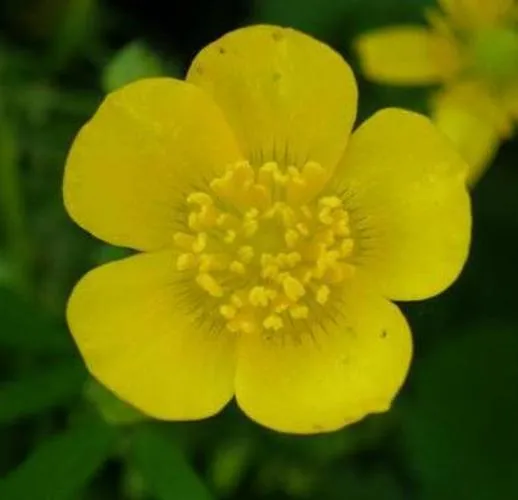
Identification is characterized by its brilliant, highly reflective, glossy yellow flowers. This unique glossy sheen is an evolutionary marvel caused by a specialized layer of air-filled cells just beneath the surface of the petals that reflects light intensely to attract pollinators like bees and flies. The flowers, typically measuring about an inch across, consist of 5 overlapping petals. The foliage is deeply lobed and palmate, becoming smaller and less divided higher up the tall, slender, unbranched stems, which can reach 2 to 3 feet in height.
The floral formula is ⊕ ⚥ K5 C5 A∞ G∞. This indicates a radially symmetrical, bisexual flower. It features 5 free sepals, 5 free petals equipped with tiny nectar scales at their base, numerous stamens (A∞) arranged in spirals, and numerous distinct, free carpels (G∞) positioned on a cone-like receptacle. This primitive floral structure is a hallmark of the Ranunculaceae family.
Growing the Meadow Buttercup requires almost no effort, which is why it spreads so prolifically. It thrives in full sun to partial shade and prefers moist, heavy soils, particularly damp meadows and roadside ditches. It is incredibly cold-hardy, surviving easily in USDA zones 3-9, and spreads rapidly via creeping rhizomes and prolific seed production.
Culturally, it is famous for the childhood game of holding a flower under the chin to see if it casts a yellow reflection (supposedly indicating a love for butter). However, this innocent reputation masks a darker reality for farmers.
The Meadow Buttercup is TOXIC. When the plant is crushed or chewed, it releases protoanemonin, a harsh, bitter toxin. In humans, handling the crushed plant can cause severe contact dermatitis and skin blistering. If ingested by livestock (horses, cows, sheep), it causes severe blistering of the mouth and gastrointestinal tract. Interestingly, the toxin degrades when dried, meaning hay containing dried buttercups is safe for livestock to eat.
It might be confused with other yellow wildflowers like Cinquefoil (Potentilla). However, Cinquefoil belongs to the rose family, lacks the highly reflective glossy sheen on its petals, and has strawberry-like leaves. Explore more complex wildflowers in our Flower Identifier or contrast it with the safe, edible English Marigold.
For more botanical profiles and flower identification features, see our guides on Mallow and Mexican Petunia.
Floral Formula & Features
Radially symmetrical, bisexual. 5 free sepals, 5 free petals with nectar scales, numerous spirally arranged stamens, numerous free carpels (apocarpous) on a cone-shaped receptacle.
- Scientific Name & Classification: Ranunculus acris (Ranunculaceae). Commonly known as Tall Buttercup or Meadow Buttercup.
- Identification Markers: Brilliant, highly glossy yellow flowers with 5 petals. Deeply lobed, palmate leaves on tall, slender stems.
- Floral Formula (⊕ ⚥ K5 C5 A∞ G∞): Radially symmetrical. 5 sepals, 5 petals, numerous stamens, and numerous free carpels on a central cone.
- Growing Requirements: Thrives in moist, heavy soils and full sun. Highly cold-hardy (zones 3-9). Very aggressive spreader.
- Cultural Significance: A classic symbol of summer meadows, famous for the 'do you like butter?' chin-reflection game.
- Safety & Toxicity: TOXIC. Crushed leaves release protoanemonin, causing severe skin blistering and severe mouth/stomach irritation in pets and livestock.
- Common Look-alikes: Often confused with Cinquefoil (Potentilla), which has matte (not glossy) yellow flowers and strawberry-like leaves.
- Internal Links: Compare with another toxic Ranunculaceae member, the Hellebore, or check the Flower Identifier.
Names in Different Languages
Botanical Classification: Meadow Buttercup belongs to the Ranunculaceae family. Learn how to identify its floral symmetry, stamen arrangement, and structural formulas in our Botanical Family Classification Guide.
Toxicity & Safety
Always keep toxic plants out of reach of children and pets. Consult a veterinarian or medical professional immediately if ingestion is suspected.
Frequently Asked Questions
What is Floral Formula?
A floral formula is a symbolic representation of a flower's structure using letters, numbers, and special symbols. It provides a concise way to describe the arrangement and number of floral parts.
This formula describes the flower's symmetry, sepals, petals, stamens, and carpels in a standardized format.
Formula Sequence
- Bract: Br or Ebr
- Bracteole: Brl or Ebrl
- Symmetry: % (Radial) or ⊕ (Bilateral)
- Sex: ♀ (Female), ♂ (Male), or ⚥ (Bisexual)
- Calyx/Sepal: K<number> (Free or Fused)
- Corolla/Petal: C<number> (Free or Fused)
- Androecium: A<number> (Free or Fused)
- Gynaecium: G<number> (Superior or Inferior Ovary)
Symbol Meanings
- Numbers: Indicate quantity of parts
- Parentheses (): Parts are fused together
- Plus (+): Parts in different whorls
- Underline: Superior ovary position
- Overline: Inferior ovary position
- ∞: Numerous parts (too many to count)
Understanding floral formulas helps botanists quickly identify and classify flowers based on their structural characteristics.
Similar Flowers
Discover flowers that share botanical characteristics
Same Family
4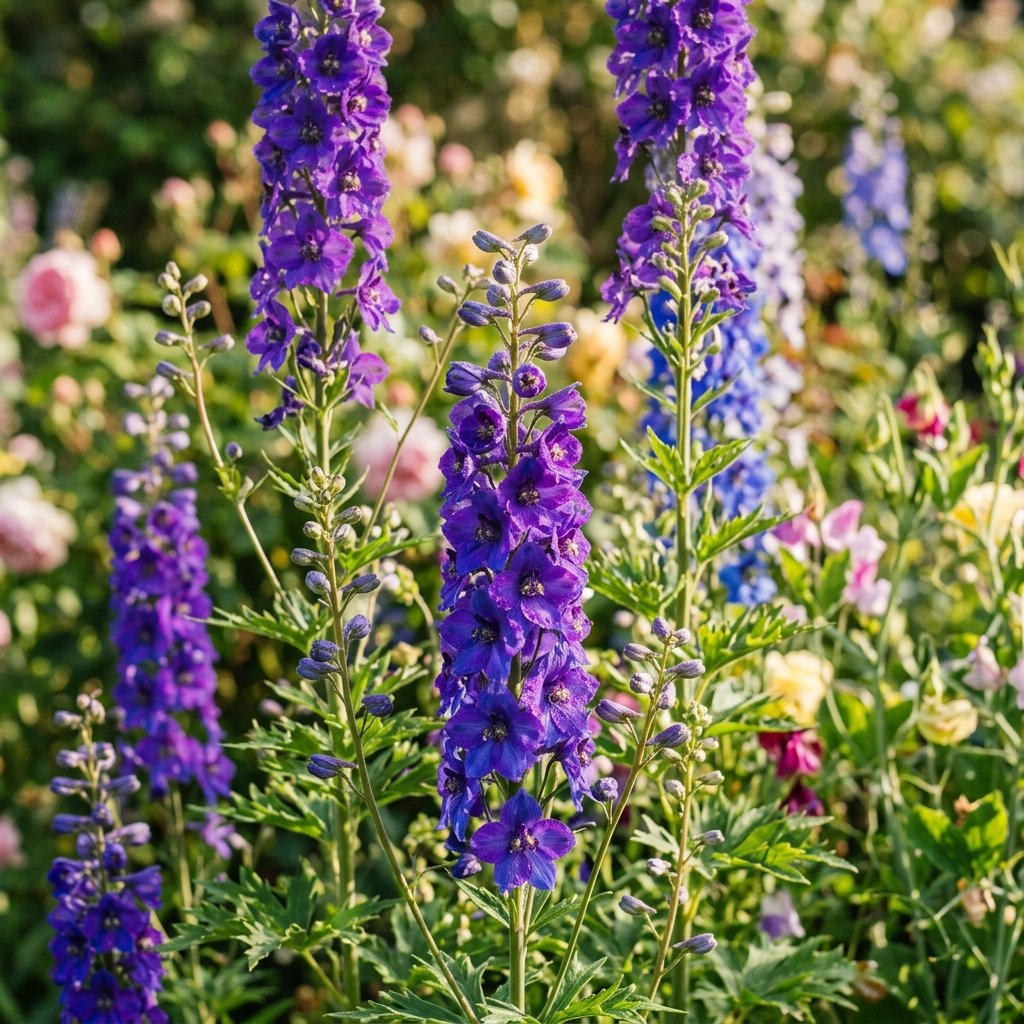
Larkspur
Delphinium
Larkspur, belonging to the genus Delphinium within the buttercup family Ranunculaceae, is a group of highly popular annual and perennial flowering plants famous for their towering, vertical flower spikes. Native throughout the Northern Hemisphere and high-altitude tropical mountains of Africa, la...
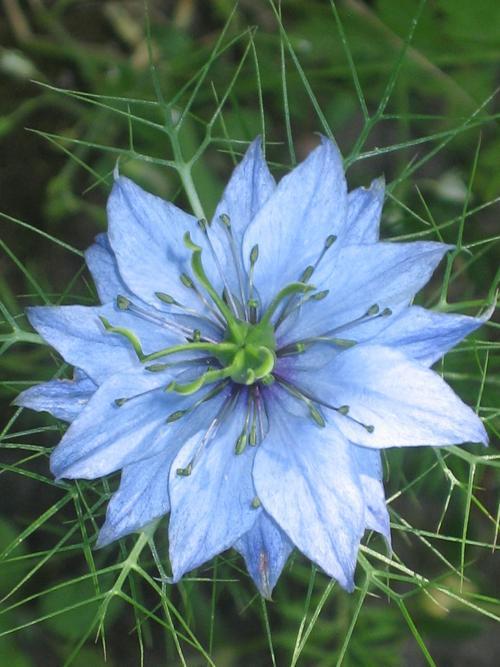
Love in a mist
Nigella damascena
The Love-in-a-mist, botanically designated as Nigella damascena and belonging to the family Ranunculaceae (the buttercup family), is a beloved, old-fashioned hardy annual flower. Native to the sunny hills, open meadows, and coastal fields of southern Europe, North Africa, and southwestern Asia—es...
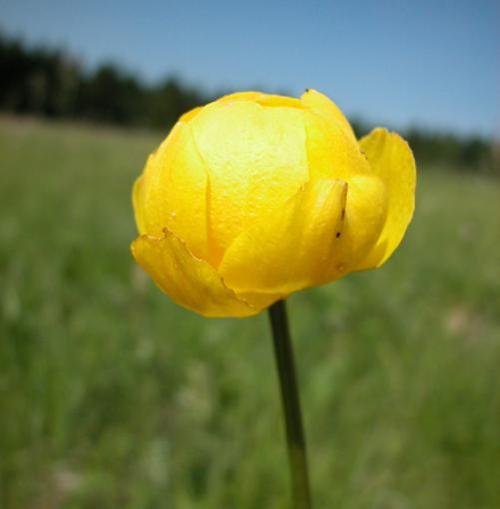
Globe flower
Trollius
The Globe Flower, botanically classified as Trollius and most famous as Trollius europaeus, is a whimsical, moisture-loving herbaceous perennial belonging to the Ranunculaceae (buttercup) family. Native to the cool temperate, alpine, and sub-boreal zones of Europe, northern Asia, and North Americ...
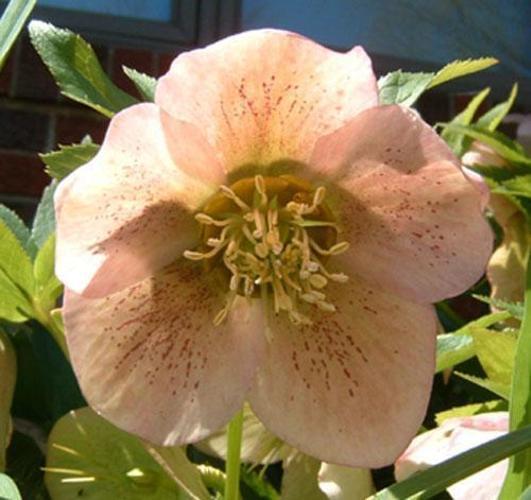
Hellebore (Lenten Rose)
Helleborus orientalis
Hellebores, widely known as the Lenten Rose, Christmas Rose, or Oracle Flower, are enchanting, evergreen perennials belonging to the Ranunculaceae (Buttercup) family. Native primarily to the mountainous and woodland regions of Europe and the Balkans, these remarkable plants are highly prized by g...