
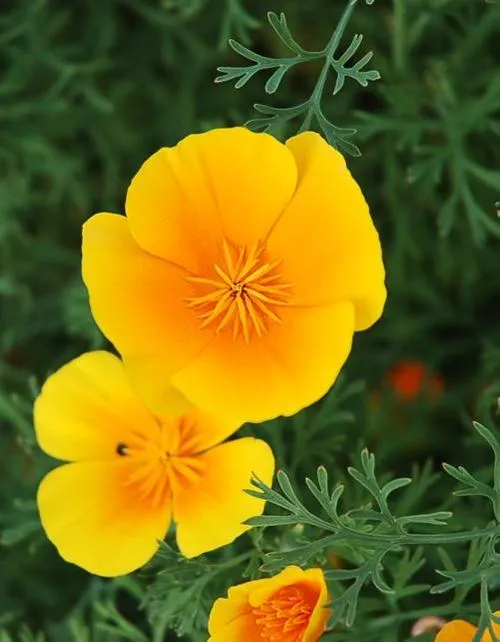
California poppy
Eschscholzia californica
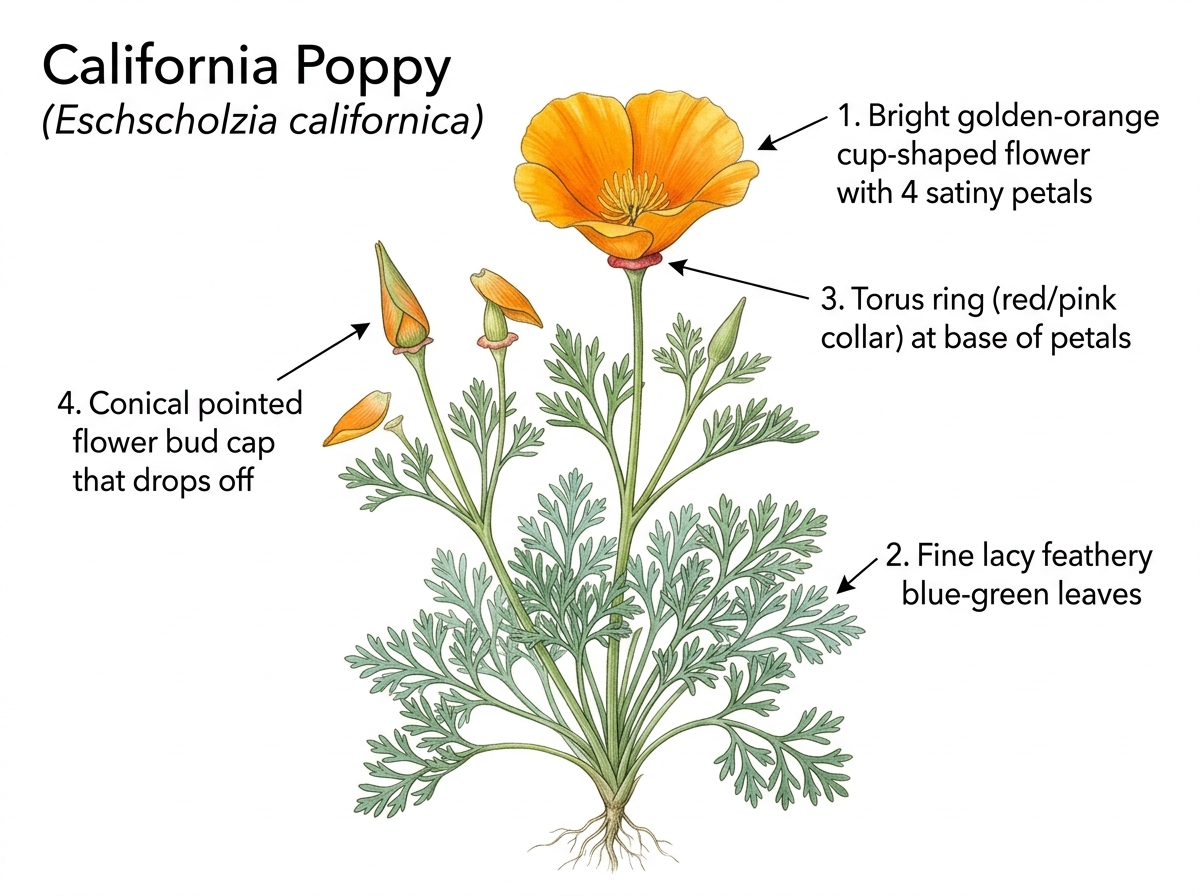
How to Identify California poppy
TOXIC. Contains alkaloids like californidine that can be toxic to cats, dogs, and horses if ingested in significant quantities, causing lethargy and digestive upset. Human Safety: Generally safe for topical or controlled medicinal use, but should not be consumed by children or pregnant women without medical advice.
Care & Growing Guide
Seasonal Blooming & Hardiness
Seasonal Blooming Calendar:
- Peak Bloom: Spring to early summer (typically April through June).
- Planting Time: Sow seeds directly outdoors in early spring after the last frost, or transplant nursery starts in late spring.
Bloom Timeline
About California poppy
Eschscholzia californica, famously known as the California Poppy or Golden Poppy, is a brilliant wildflower that serves as a luminous symbol of the American West. Belonging to the Papaveraceae (Poppy) family, this resilient species is celebrated for its silky, cup-shaped blossoms that range from pale yellow to a deep, fiery orange. Native to the western United States and Mexico, it is the official state flower of California, where it can be seen carpeting vast hillsides in a golden hue during the spring months. Its ability to grow in poor, sandy soils and its remarkable drought tolerance make it a true pioneer of the semi-arid landscape.
The architecture of the California Poppy is both delicate and highly functional. Each flower typically consists of four broad, satiny petals that open only in response to direct sunlight. In a fascinating display of nyctinasty, the blossoms close tightly at night and during cloudy weather, protecting their pollen and reproductive organs from moisture and cold. The center of the flower is filled with a dense cluster of golden stamens, which provide a rich source of pollen for native bees. Beneath the blooms, the foliage is equally distinctive: finely divided, lace-like leaves with a soft, bluish-green (glaucous) cast that provides a cool contrast to the intense warmth of the flowers.
As a botanical survivor, the California Poppy is adapted to the "fire and rain" cycles of the West. While it is technically a perennial in its native range, it is often treated as an annual in colder or wetter climates. The plant develops a deep taproot that allows it to access water deep within the earth, enabling it to persist long after other wildflowers have withered in the summer sun. Once the blooming season ends, the plant produces long, slender seed capsules that burst open with a mechanical snap when dry, scattering hundreds of tiny black seeds several feet away, ensuring the next generation's survival in the rugged terrain.
Cultivating California Poppies is an exercise in "beneficial neglect." They are arguably the easiest wildflowers to grow, provided they are sown in a sunny location with exceptionally well-drained soil. They actually prefer nutrient-poor soils; over-fertilizing often results in lush green foliage but few of the iconic golden flowers. Because they possess a sensitive taproot, they do not transplant well and should always be sown directly into their final garden position. Once established, they require almost no supplemental water, making them the perfect candidate for xeriscaping and sustainable, pollinator-friendly meadows.
Beyond its visual splendor, the California Poppy holds a significant place in the world of ethnobotany and modern wellness. Unlike its cousin, the opium poppy, the California Poppy is non-narcotic and safe for controlled herbal use. It contains mild sedative and analgesic alkaloids that have been used by Native American tribes for centuries to treat toothaches, headaches, and anxiety. Today, it is a popular ingredient in natural sleep aids and stress-relief tinctures. In the landscape, it remains a timeless icon of freedom and natural beauty, reminding us of the enduring resilience of the wild American frontier.
Floral Formula & Features
Ebracteate (no bracts), radially symmetrical (actinomorphic), bisexual, 2 free sepals that fall as flower opens (caducous), 4 free petals (sometimes more in cultivars), numerous free stamens, 2 fused carpels with superior ovary
- Scientific Name & Classification: Eschscholzia californica (Papaveraceae). Named by naturalist Adelbert von Chamisso in honor of his friend and colleague, Johann Friedrich von Eschscholtz.
- Identification Markers: Look for vivid orange or yellow four-petaled flowers and finely divided, bluish-green foliage. The flowers feature a unique "rim" or collar (torus) just below the petals.
- Floral Formula (⊕ ⚥ K(2) C4 A∞ G(2)): Radially symmetrical, bisexual, with 2 fused sepals (often falling off as a cap), 4 free petals, numerous stamens, and a 2-carpellate superior ovary.
- Growing Requirements: Demands full sun and well-drained, even sandy soil (USDA Zones 6-10). Highly drought-tolerant and heat-resistant. Best grown by direct sowing in autumn or early spring.
- Cultural Significance: State flower of California (designated in 1903). Symbolizes wealth, the "Golden State," and the natural beauty of the Pacific coast. Observed annually on California Poppy Day (April 6th).
- Safety & Toxicity: TOXIC. Contains alkaloids like californidine that can be toxic to cats, dogs, and horses if ingested in significant quantities, causing lethargy and digestive upset. Human Safety: Generally safe for topical or controlled medicinal use, but should not be consumed by children or pregnant women without medical advice.
- Similar Characteristics and Family: A member of the Papaveraceae (Poppy) family, it shares the cup-shaped bloom and sap-producing traits of the Papaver (Oriental Poppy) and Argemone (Prickly Poppy) genera. It is distinguished by its unique glaucous foliage and the absence of the milky white latex found in many other poppies.
- Common Look-alikes: Often confused with Papaver rhoeas (Corn Poppy) or Meconopsis (Blue Poppy). E. californica is easily distinguished by its specific "Eschscholtz's" foliage and the distinctive cap-like sepals that fall off as the flower opens.
- Internal Links: For more golden meadow inspiration, visit our Flower Identifier. You might also love the Sunflower, the Marigold, and the Petunia for a vibrant, low-maintenance garden.
- Internal Links: Compare key differences in our California Poppy vs Iceland Poppy comparison, or try our instant Flower Identifier.
Names in Different Languages
Botanical Classification: California poppy belongs to the Papaveraceae family. Learn how to identify its floral symmetry, stamen arrangement, and structural formulas in our Botanical Family Classification Guide.
Toxicity & Safety
Always keep toxic plants out of reach of children and pets. Consult a veterinarian or medical professional immediately if ingestion is suspected.
Frequently Asked Questions
What is Floral Formula?
A floral formula is a symbolic representation of a flower's structure using letters, numbers, and special symbols. It provides a concise way to describe the arrangement and number of floral parts.
This formula describes the flower's symmetry, sepals, petals, stamens, and carpels in a standardized format.
Formula Sequence
- Bract: Br or Ebr
- Bracteole: Brl or Ebrl
- Symmetry: % (Radial) or ⊕ (Bilateral)
- Sex: ♀ (Female), ♂ (Male), or ⚥ (Bisexual)
- Calyx/Sepal: K<number> (Free or Fused)
- Corolla/Petal: C<number> (Free or Fused)
- Androecium: A<number> (Free or Fused)
- Gynaecium: G<number> (Superior or Inferior Ovary)
Symbol Meanings
- Numbers: Indicate quantity of parts
- Parentheses (): Parts are fused together
- Plus (+): Parts in different whorls
- Underline: Superior ovary position
- Overline: Inferior ovary position
- ∞: Numerous parts (too many to count)
Understanding floral formulas helps botanists quickly identify and classify flowers based on their structural characteristics.
Similar Flowers
Discover flowers that share botanical characteristics
Same Family
4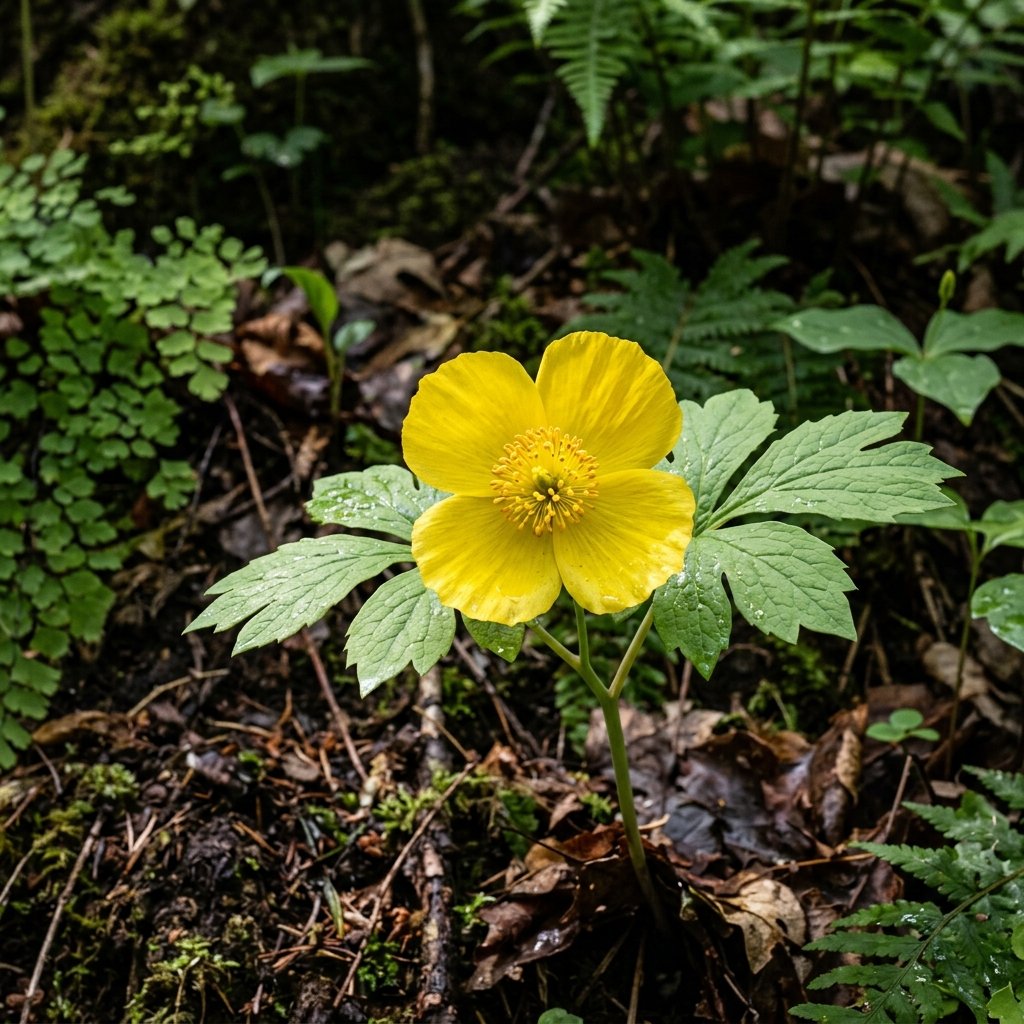
Wood Poppy
Stylophorum diphyllum
Wood Poppy (*Stylophorum diphyllum*), also known as the Celandine Poppy or Yellow Wood Poppy, is one of the showiest and most reliable native wildflowers for the shaded woodland garden, producing large, bright butter-yellow poppy flowers 1.5 to 2 inches across above a rosette of deeply lobed, blu...
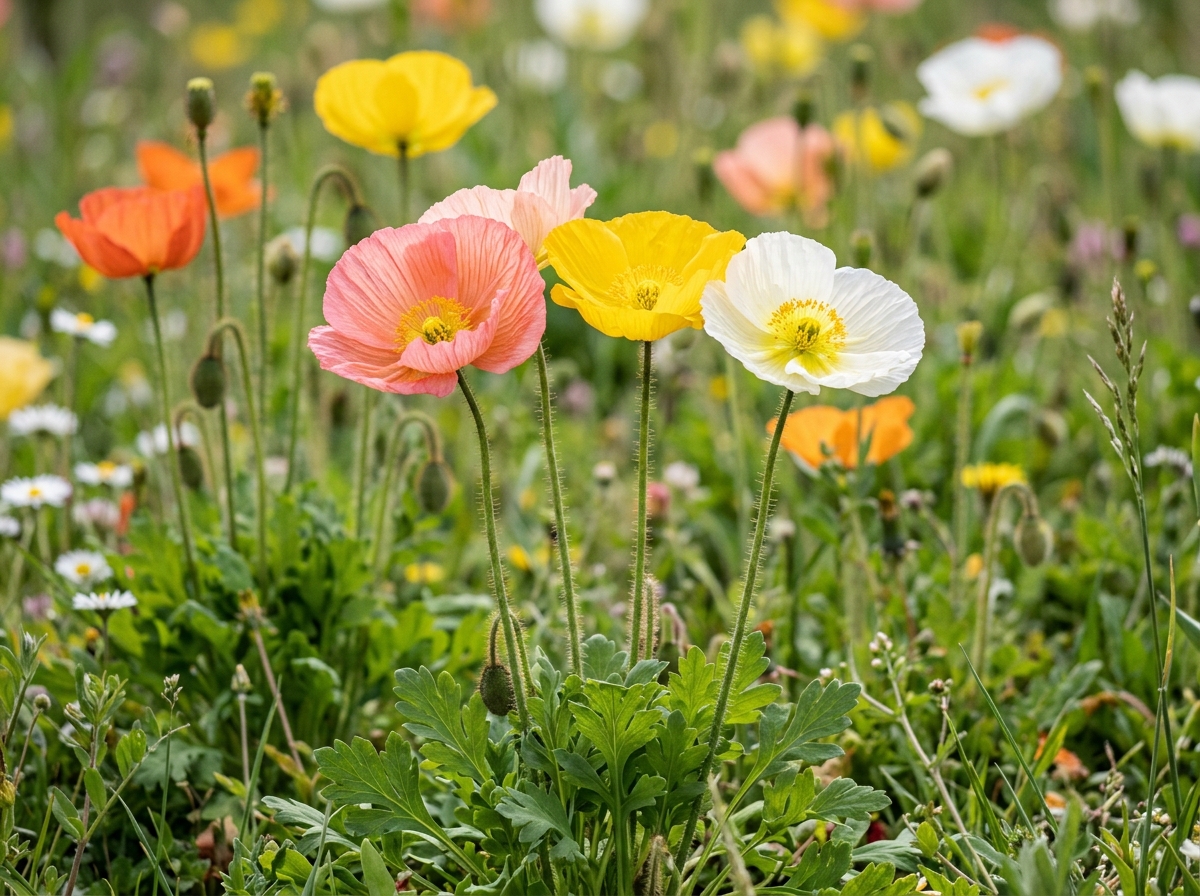
Iceland Poppy
Papaver nudicaule
Iceland Poppy (*Papaver nudicaule*), despite its common name, is native to subpolar regions of Asia and North America rather than Iceland. Beloved for its papery, bowl-shaped blossoms that appear in glowing pastel shades of yellow, orange, salmon, pink, rose, and white, the Iceland Poppy is one o...
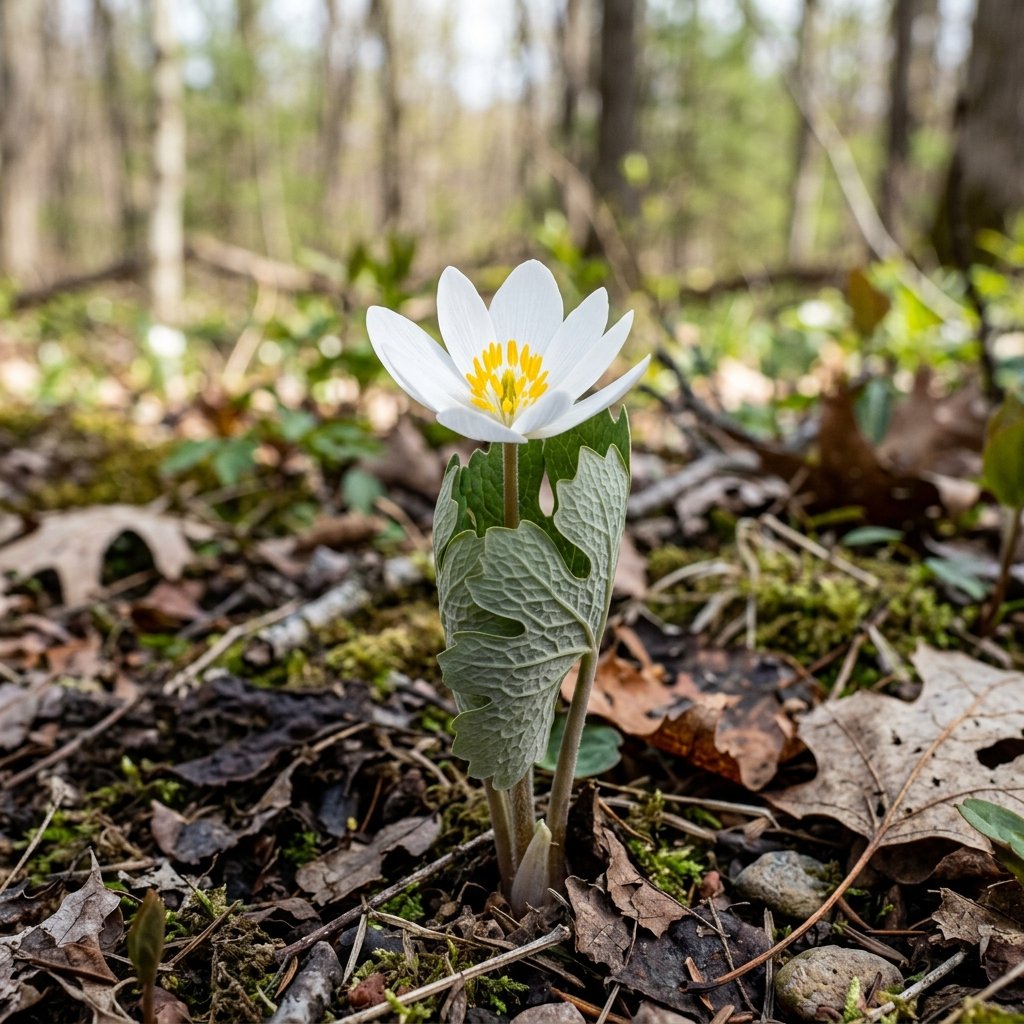
Bloodroot
Sanguinaria canadensis
Bloodroot (*Sanguinaria canadensis*) is one of the earliest and most enchanting spring wildflowers of eastern North American forests, producing pure white, star-like flowers with golden yellow centers that emerge in March and April, often pushing up through the last of the winter snow. It is the...
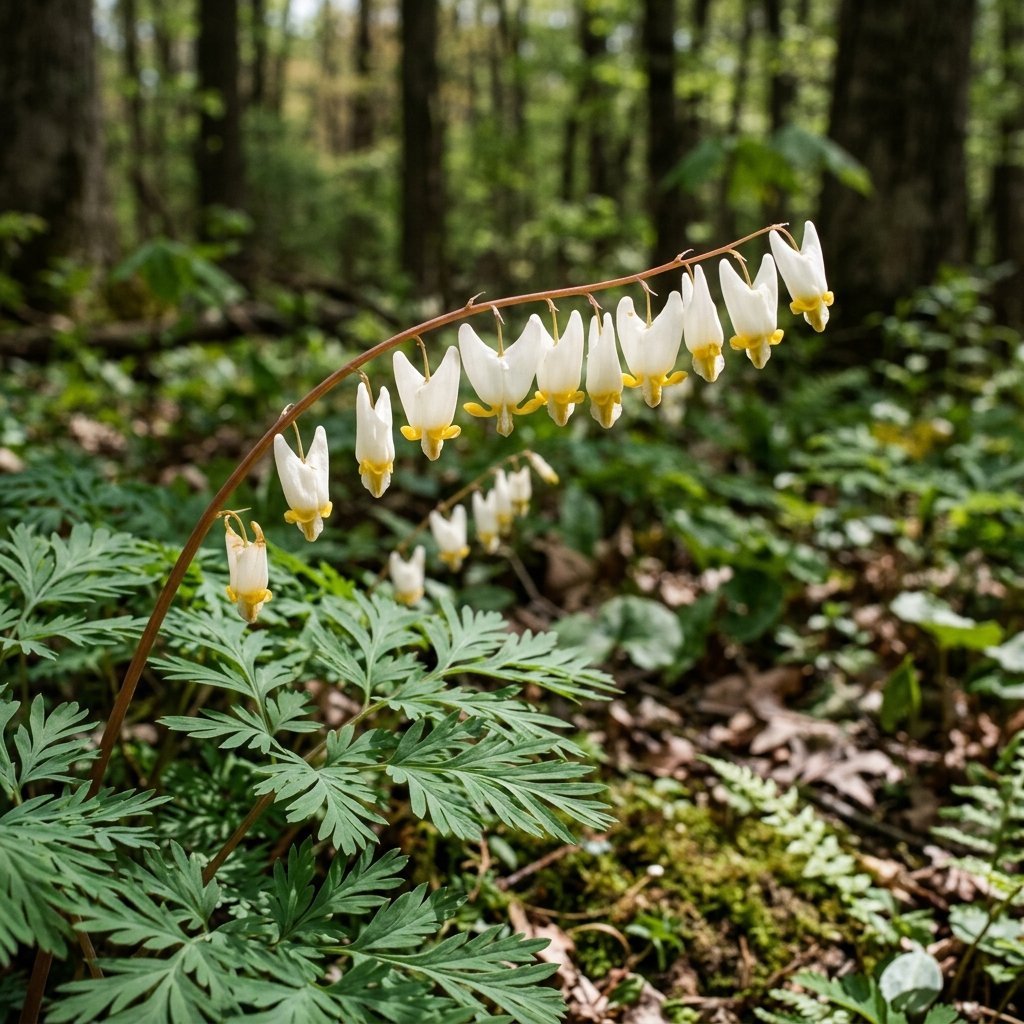
Dutchman's Breeches
Dicentra cucullaria
Dutchman's Breeches (*Dicentra cucullaria*) is one of the most whimsically charming and distinctively shaped wildflowers in the eastern North American spring flora, producing pendulous racemes of pure white flowers shaped precisely like pairs of miniature, upside-down pantaloons or 'breeches' — t...
Similar Characteristics
4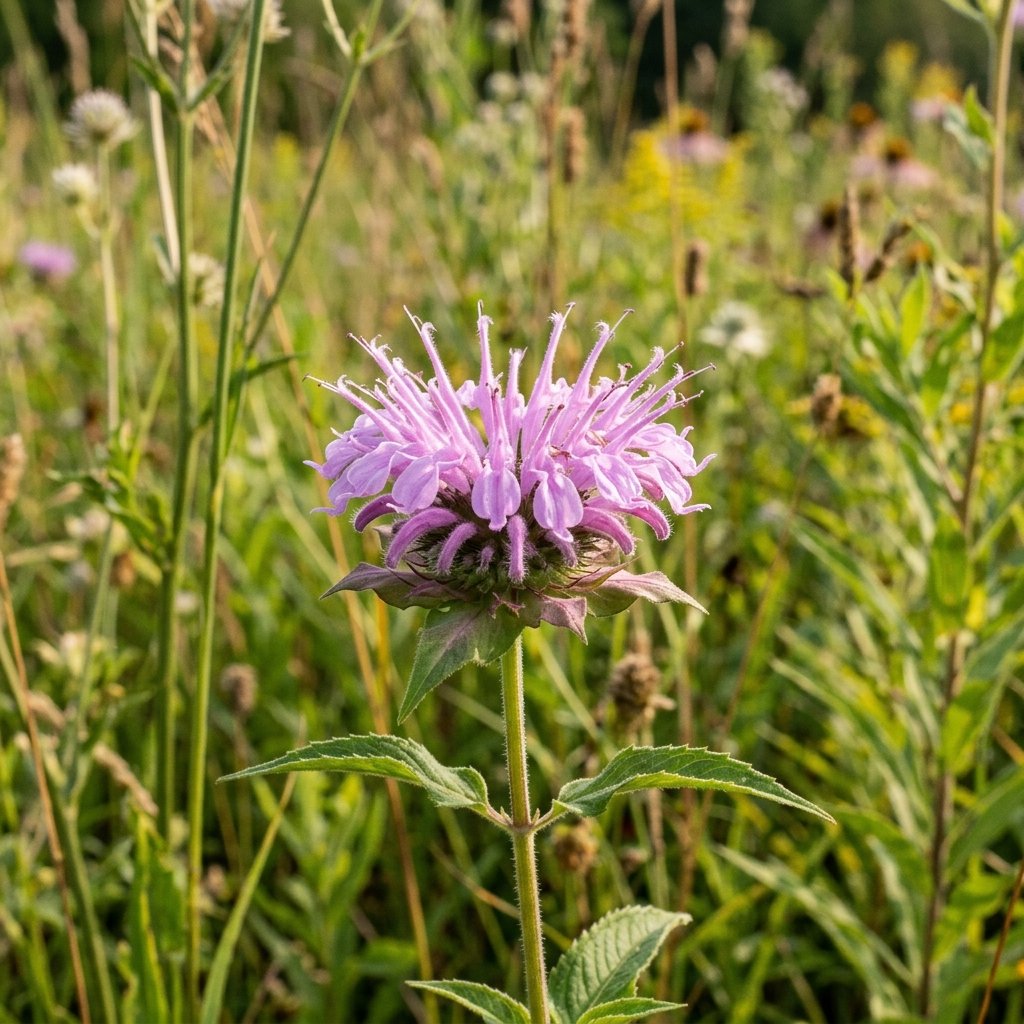
Wild Bergamot
Monarda fistulosa
Wild Bergamot (*Monarda fistulosa*) is one of the most important and widely distributed native wildflowers and medicinal herbs of North America, producing shaggy, globe-shaped heads of tubular lavender to pale pink flowers on sturdy, square stems throughout summer. A member of the mint family (La...
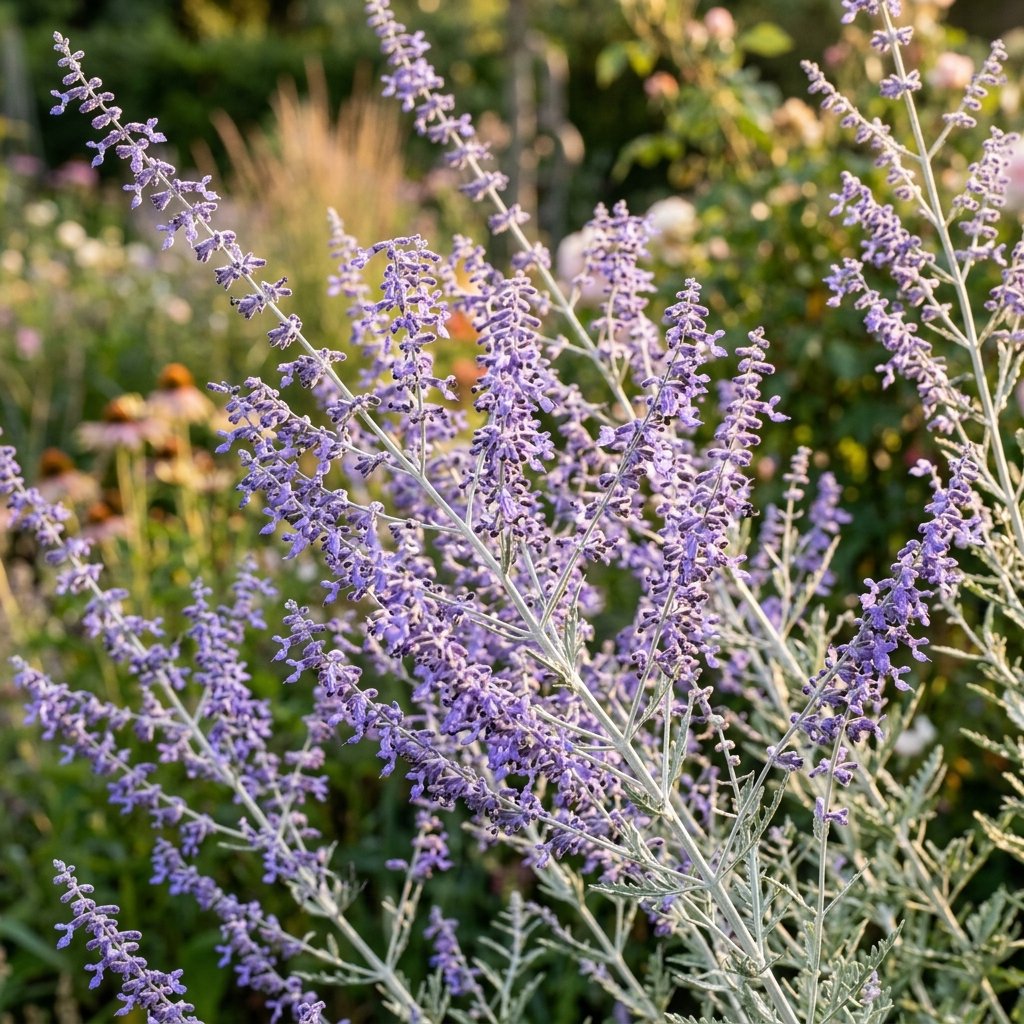
Russian Sage
Salvia yangii
Russian Sage, botanically reclassified as *Salvia yangii* (long celebrated under its classic horticultural synonym *Perovskia atriplicifolia*), is an exceptionally drought-tolerant, graceful, and cloud-like deciduous perennial subshrub. Belonging to the mint family Lamiaceae (tribe Mentheae), thi...
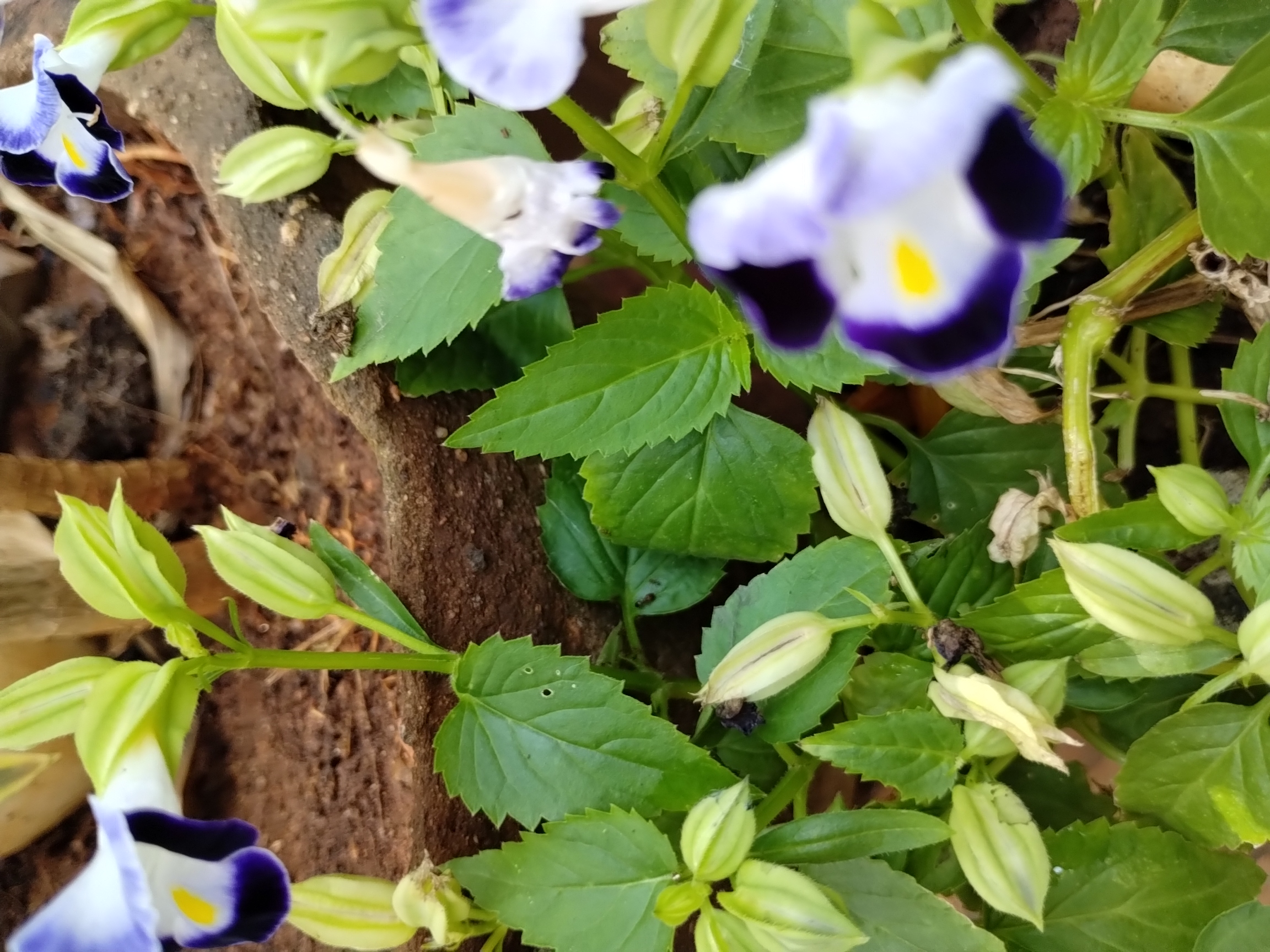
Bluewings
Torenia fournieri
The Wishbone Flower, botanically designated as Torenia fournieri and commonly called Bluewings, is an exceptionally charming, shade-loving tender annual. Belonging to the family Linderniaceae (formerly grouped under Scrophulariaceae), this beautiful plant is native to the moist, shady forest floo...
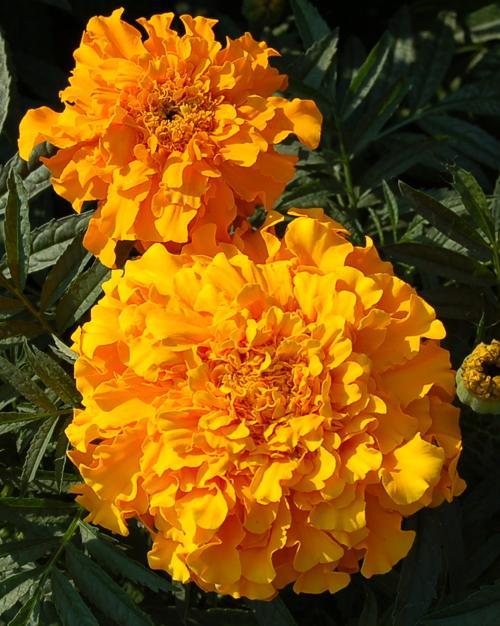
Marigold
Tagetes erecta
The Marigold, botanically classified under the genus Tagetes within the highly diverse Asteraceae (daisy or composite) family, is a cheerful, robust, and exceptionally popular herbaceous annual flower. Native to the warm, sun-drenched grasslands, mountain valleys, and open meadows of Mexico and C...