
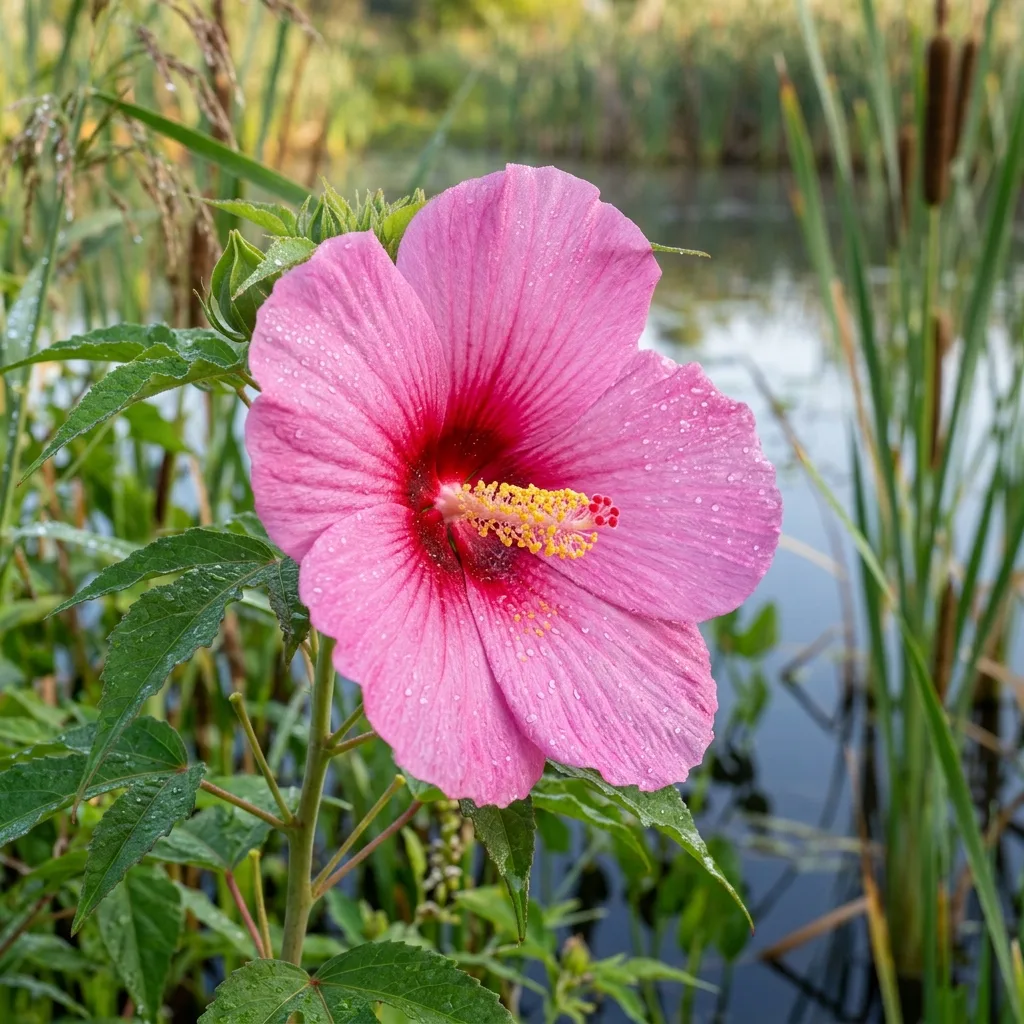
Swamp Rose Mallow
Hibiscus moscheutos
How to Identify Swamp Rose Mallow
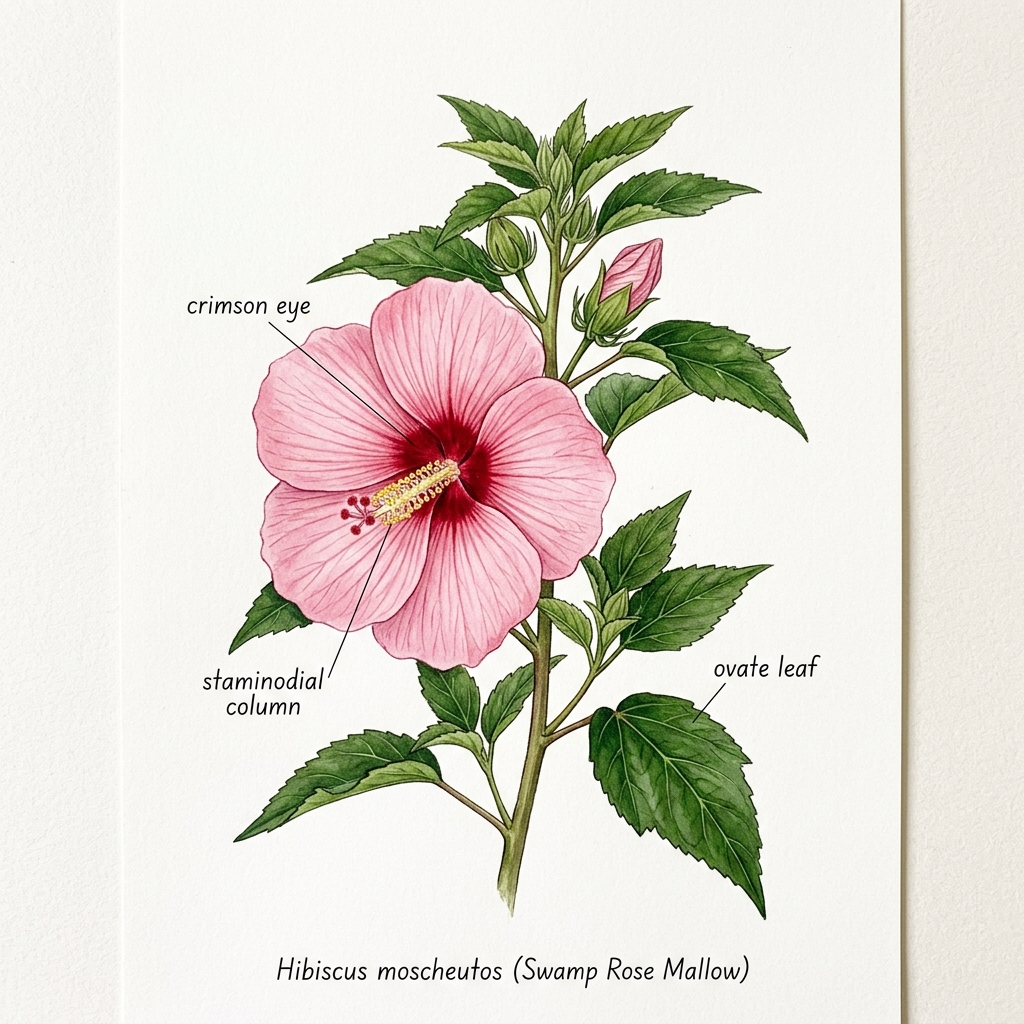
A detailed guide to identifying Swamp Rose Mallows (Hibiscus moscheutos) by its key features:
- Saucer-Sized Blooms: Huge, circular flowers up to 6–8 inches across in shades of pink, white, or red.
- Central Staminal Column: A long, prominent yellow tube of fused stamens extending from the center of the petals.
- Large Heart-Shaped Leaves: Broad, egg-shaped leaves with toothed margins and velvety, hairy undersides.
- Robust Shrubby Stems: Tall, multi-stemmed perennial clumps reaching up to 3 to 7 feet tall.
Care & Growing Guide
Swamp Rose Mallow Care Guide:
- Light: Full sun (6+ hours essential for best flowering)
- Soil: Moist to wet, fertile soil — thrives in rain gardens and pond margins
- Water: Consistently moist; tolerates occasional flooding
- Note: Very late spring emergence — do not disturb soil until plant appears
Seasonal Blooming & Hardiness
Seasonal Blooming Calendar:
- Peak Bloom: July–September
- US Range: USDA Zones 4–9; native to eastern US marshes, tidal wetlands, and pond edges
Bloom Timeline
About Swamp Rose Mallow
Swamp Rose Mallow (Hibiscus moscheutos) produces some of the largest flowers of any hardy perennial wildflower in North America — dinner-plate-sized blooms reaching 6 to 12 inches in diameter — in shades of white, pink, and rose, typically adorned with a dramatic deep crimson or rose-pink central eye. Native to marshes, pond edges, and tidal wetlands of the eastern United States, it belongs to the mallow family (Malvaceae) and is a close native relative of the tropical Hibiscus used in ornamental horticulture and traditional medicine worldwide.
The sheer scale of the Swamp Rose Mallow flower is stunning even to experienced gardeners. Each bloom is centered on a tall staminal column bearing dozens of yellow anthers, surrounded by five large, papery, funnel-shaped petals that are often slightly ruffled at the edges. While each individual flower lasts only a single day, the plant produces a continuous succession of new buds from midsummer through frost, ensuring months of dramatic display. The large, lobed, maple-like leaves are equally attractive and remain in good condition throughout the growing season.
Ecologically, Swamp Rose Mallow is a critical wetland species, providing nectar for hummingbirds and large carpenter bees, and serving as a caterpillar host plant for the Gray Hairstreak butterfly and the Checkered Skipper. In its native tidal marsh habitat, it forms dense colonies that provide habitat and food for various wetland birds and insects. In the garden, modern cultivars derived from H. moscheutos (including the popular 'Luna,' 'Disco Belle,' and 'Lord Baltimore' series) have brought the dramatic size and beauty of Swamp Rose Mallow to ordinary garden borders, where it thrives with ample moisture.
For gardeners, Swamp Rose Mallow is a spectacular but easy-to-grow perennial for moist sites. It thrives in full sun with consistently moist to wet soil and, unlike tropical hibiscus varieties, is cold-hardy to USDA Zone 4. It is very late to emerge in spring (sometimes not appearing until June), so patience is essential. The plant grows rapidly once it starts, reaching 3 to 6 feet in a single season. It is completely non-toxic to pets, making it an excellent choice for families with dogs or cats. Explore more US native wildflowers in our Flower Identifier.
Floral Formula & Features
Actinomorphic, bisexual; 5 fused sepals + epicalyx; 5 free petals; numerous stamens fused into a staminal column; 5 fused carpels with superior ovary
- Scientific Name & Classification: Hibiscus moscheutos (Malvaceae, tribe Hibisceae). Native to eastern US marshes and wetlands; parent of many popular garden Hardy Hibiscus cultivars.
- Identification Markers: Enormous flowers 6–12 inches across, white to pink with a deep crimson central eye. Tall, robust stems 3–6 ft. Large, lobed, maple-like leaves. Blooms July–September in moist sites. Late to emerge in spring.
- Floral Formula (⊕ ☿ K(5) C5 A∞ G(5)): Actinomorphic, bisexual, 5 fused sepals plus an epicalyx of bracts, 5 free petals, numerous stamens fused into a staminal column, 5 fused carpels with superior ovary.
- Growing Requirements: Full sun; consistently moist to wet, fertile soil. Excellent for rain gardens, pond edges, and wet borders. USDA Zones 4–9. Very late spring emergence — mark location.
- Cultural Significance: Native to eastern US tidal marshes. Parent species of many garden Hardy Hibiscus cultivars. One of the largest-flowered native perennial wildflowers in North America.
- Safety & Toxicity: NON-TOXIC. Completely safe for cats, dogs, and humans. An excellent choice for pet-friendly moist gardens and pond edges.
- Common Look-alikes: Easily confused with cultivated tropical Hibiscus (H. rosa-sinensis), which is not cold-hardy. Distinguished from Rose of Sharon (H. syriacus) by its much larger flowers and perennial (not shrubby) habit.
- Internal Links: Compare key differences in our Mallow vs Hibiscus comparison, browse the Sitemap, or explore our Flower Identifier.
Names in Different Languages
Botanical Classification: Swamp Rose Mallow belongs to the Malvaceae family. Learn how to identify its floral symmetry, stamen arrangement, and structural formulas in our Botanical Family Classification Guide.
Toxicity & Safety
Frequently Asked Questions
What is Floral Formula?
A floral formula is a symbolic representation of a flower's structure using letters, numbers, and special symbols. It provides a concise way to describe the arrangement and number of floral parts.
This formula describes the flower's symmetry, sepals, petals, stamens, and carpels in a standardized format.
Formula Sequence
- Bract: Br or Ebr
- Bracteole: Brl or Ebrl
- Symmetry: % (Radial) or ⊕ (Bilateral)
- Sex: ♀ (Female), ♂ (Male), or ⚥ (Bisexual)
- Calyx/Sepal: K<number> (Free or Fused)
- Corolla/Petal: C<number> (Free or Fused)
- Androecium: A<number> (Free or Fused)
- Gynaecium: G<number> (Superior or Inferior Ovary)
Symbol Meanings
- Numbers: Indicate quantity of parts
- Parentheses (): Parts are fused together
- Plus (+): Parts in different whorls
- Underline: Superior ovary position
- Overline: Inferior ovary position
- ∞: Numerous parts (too many to count)
Understanding floral formulas helps botanists quickly identify and classify flowers based on their structural characteristics.
Similar Flowers
Discover flowers that share botanical characteristics
Same Family
3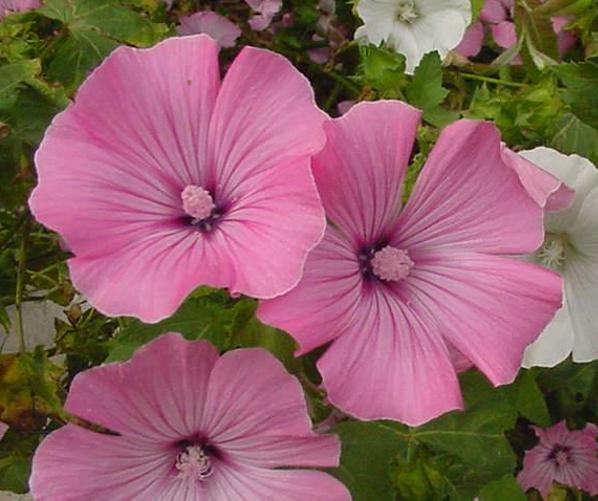
Tree Mallow
Malva arborea
The Tree Mallow, botanically classified as Malva arborea (and previously known as Lavatera arborea), is a robust, fast-growing biennial or short-lived perennial shrub belonging to the Malvaceae (mallow) family. Native to the Mediterranean basin and the rugged, salt-swept coastal cliffs of Western...
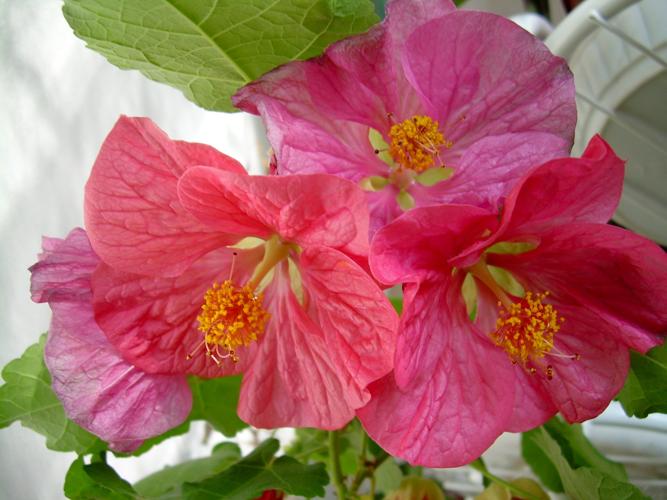
Mallow
Malva sylvestris
The Mallow, botanically designated as Malva sylvestris and commonly known as Common Mallow, High Mallow, Tall Mallow, or Cheeseweed, is an exceptionally versatile, hardy, and resilient biennial to short-lived perennial herb. Belonging to the family Malvaceae (the mallow family), this ancient plan...
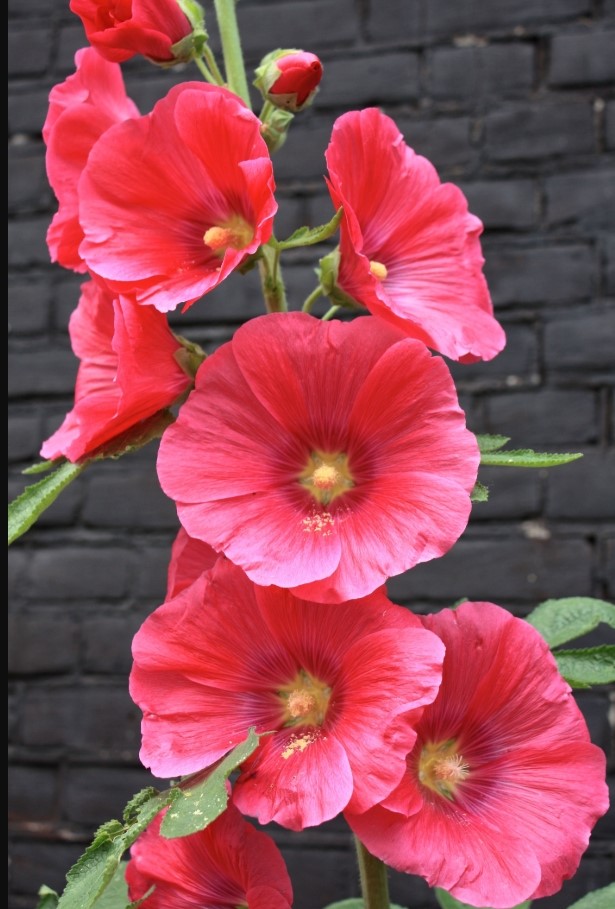
Hollyhock
Alcea rosea
The Hollyhock, botanically designated as Alcea rosea and belonging to the family Malvaceae (the mallow or hibiscus family), is a majestic, towering, and deeply romantic cottage garden classic. Native to the warm, temperate meadows, rocky slopes, and open woodlands of Turkey and southwestern Asia,...
Similar Characteristics
4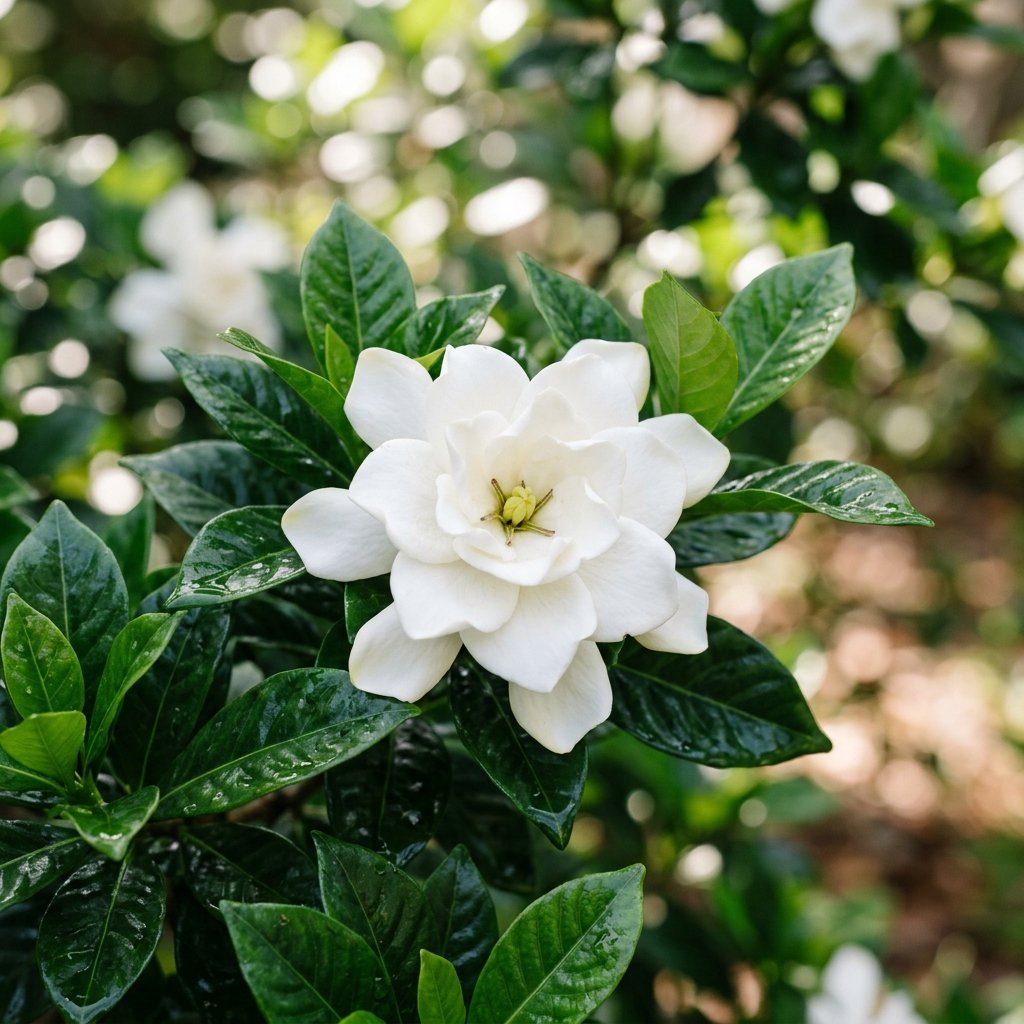
Gardenia
Gardenia jasminoides
Gardenia, botanically classified as Gardenia jasminoides and commonly known as Cape Jasmine, is an exceptionally popular evergreen shrub in the coffee family, Rubiaceae. Native to the subtropical regions of East Asia, it is celebrated worldwide for its waxy, creamy-white blossoms and sweet, intox...
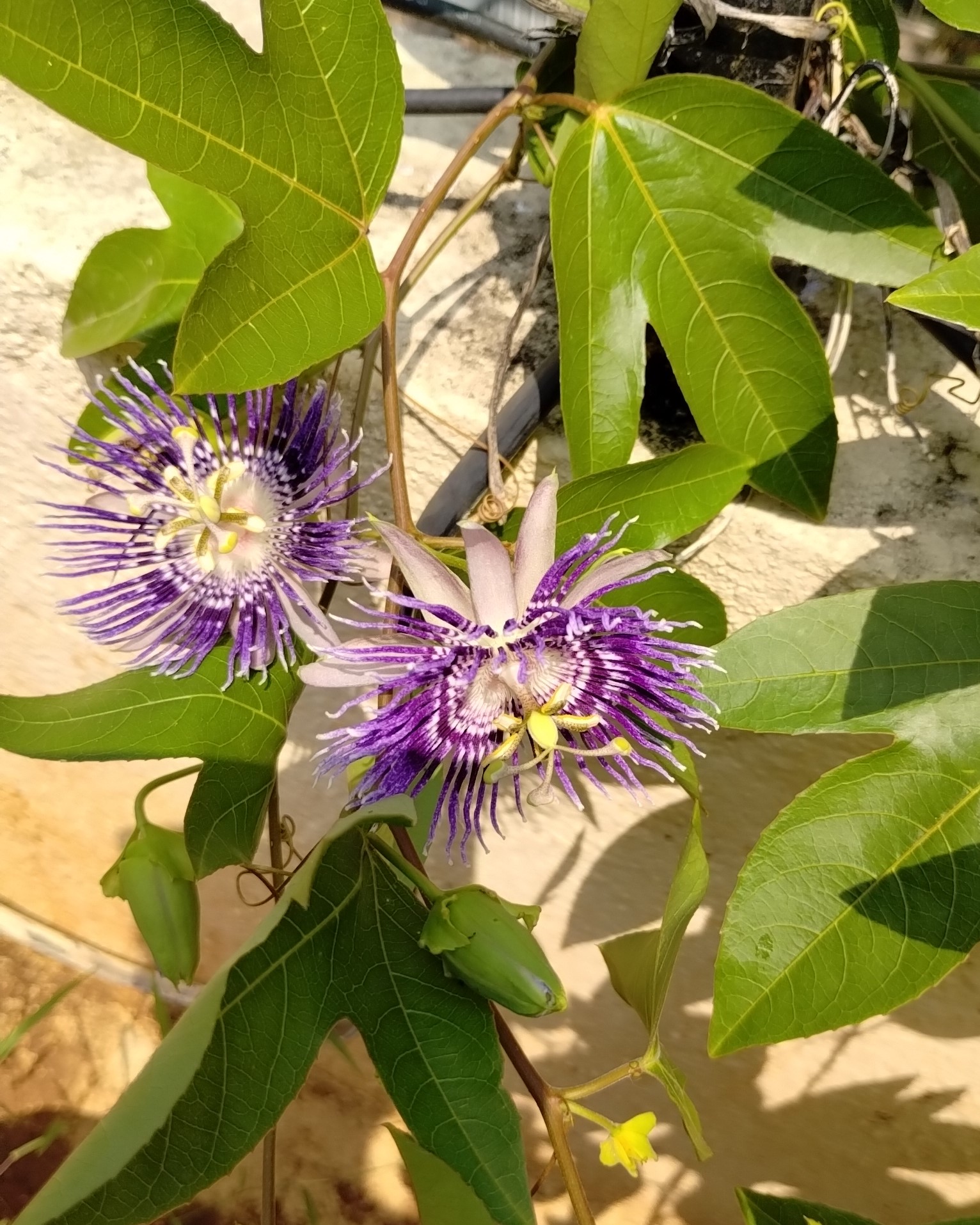
Passion Flower
Passiflora
Passiflora, known universally as the Passion Flower, is a genus of roughly 550 species that contains some of the most intricate and biologically fascinating blossoms on Earth. Primarily native to the tropical and subtropical regions of the Americas, these vigorous climbing vines belong to the Pas...
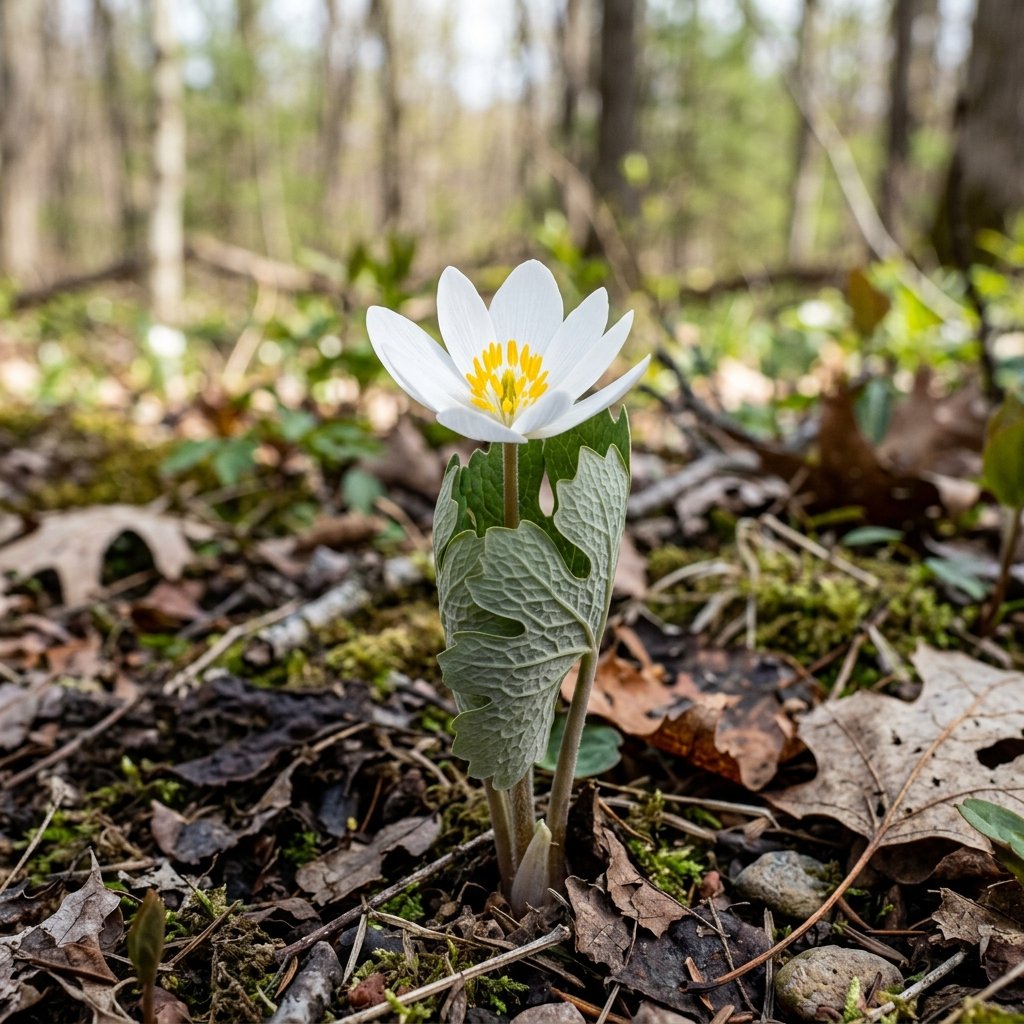
Bloodroot
Sanguinaria canadensis
Bloodroot (*Sanguinaria canadensis*) is one of the earliest and most enchanting spring wildflowers of eastern North American forests, producing pure white, star-like flowers with golden yellow centers that emerge in March and April, often pushing up through the last of the winter snow. It is the...
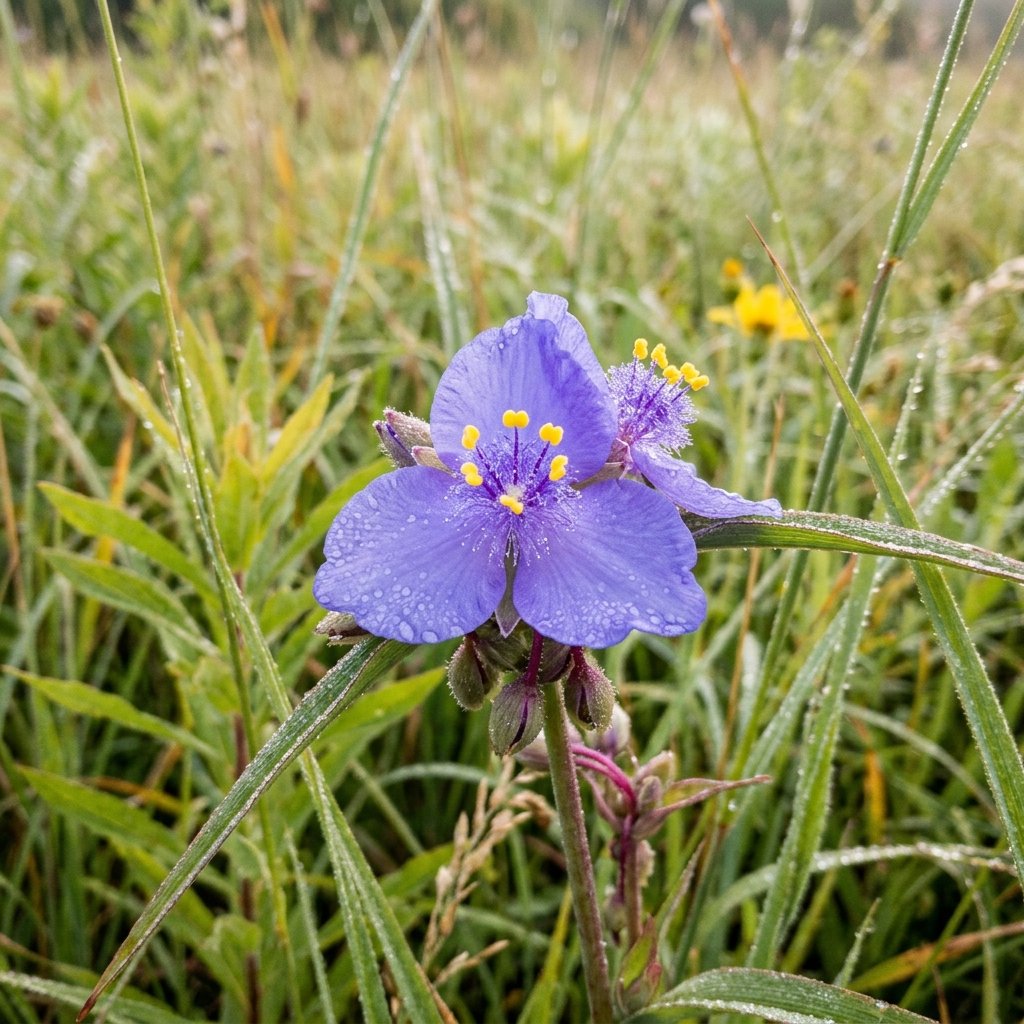
Spiderwort
Tradescantia ohiensis
Spiderwort (*Tradescantia ohiensis* and related species) is a quietly enchanting native wildflower of eastern North America, producing clusters of vivid three-petaled flowers in shades of deep blue-violet, blue, and occasionally white from late spring through summer. Belonging to the Commelinacea...