
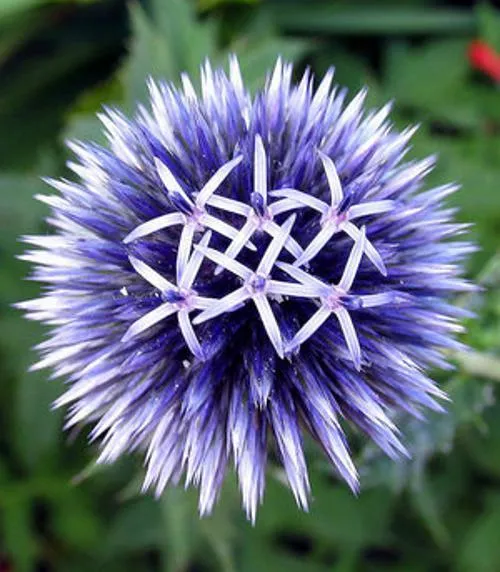
Globe Thistle
Echinops
How to Identify Globe Thistle
NON-TOXIC. 100% pet-safe for cats, dogs, and horses, with its prickly foliage naturally discouraging curious animals from chewing.
Care & Growing Guide
Seasonal Blooming & Hardiness
Seasonal Blooming Calendar:
- Peak Bloom: Summer (typically June through September).
- Planting Time: Sow seeds directly outdoors in early spring after the last frost, or transplant nursery starts in late spring.
Bloom Timeline
About Globe Thistle
The Globe Thistle, botanically classified as Echinops ritro or simply Echinops, is a striking, deeply architectural herbaceous perennial plant belonging to the Asteraceae (sunflower or composite) family. Native to the dry, sun-drenched grasslands, stony hillsides, and rocky mountain slopes of central and southern Europe, the Mediterranean basin, and western Asia, this highly unique species is celebrated for its structural beauty. It stands as a premier choice for xeriscaping and dry garden borders, prized for its ability to produce perfectly spherical, steel-blue flower heads that resemble tiny, spiky sea urchins.
Growing in robust, clump-forming mounds that reach heights of 3 to 5 feet, the Globe Thistle features tall, rigid, slightly branching stems covered in fine, woolly white hairs. The foliage is exceptionally dramatic: deeply cut, thistle-like leaves with sharp, spine-tipped lobes that are matte deep green on top and coated in dense, soft, silvery-white woolly hairs underneath. This silver-and-green leaf contrast provides stunning texturing, even before the plant begins to produce its spectacular spherical flower heads.
Each flower head measures 1.5 to 2 inches across, forming a perfect sphere composed of over 200 tiny, individual tubular florets packed tightly together. The reproductive morphology of each floret is represented by the formula Br ⊕ ⚥ K0 C(5) A(5) G(2). This formula indicates that each floret is bracteate—surrounded by its own spiny bract—radially symmetrical, and bisexual. True sepals are absent or modified into a fine pappus. The corolla consists of 5 fused petals forming a tiny tube, while the 5 stamens are fused around 2 fused carpels with an inferior ovary.
Echinops ritro is exceptionally tough, thriving in conditions that would challenge most other garden perennials. It requires full, hot, direct sunlight, needing at least 6 to 8 hours of daily exposure to flower heavily. It performs beautifully in average, dry, sandy, or rocky soils, and must have excellent, sharp drainage to prevent root rot. It is highly drought-tolerant once established, thanks to its deep, woody taproot, and is extremely cold-hardy, thriving beautifully in USDA zones 3 through 9.
The genus name Echinops is derived from the Greek words 'echinos' (meaning hedgehog) and 'opsis' (meaning appearance), perfectly capturing the spiky, spherical look of its flower heads. The common name Globe Thistle highlights its rounded form, although it is not a member of the true Thistle genus (Cirsium). Known as Cardo pallotta in Italian and ルリタマアザミ (Ruritamaazami) in Japanese, these unique blooms have been cultured since the 16th century and remain highly prized today as high-end everlasting dried flowers.
For pet-owning families, the Globe Thistle is a safe and welcome addition. Although its spiky appearance might look intimidating, Echinops ritro is classified as completely NON-TOXIC to cats, dogs, and horses by major veterinary toxicology databases. Its prickly texture naturally deters curious pets from chewing on the leaves, while providing excellent, safe nesting and feeding hubs for native bees and butterflies. To discover how to create a water-wise, pet-friendly cottage landscape, please browse our Pet Guard catalog.
Globe Thistle is occasionally confused with true noxious thistles (Cirsium) or Globe Amaranth (Gomphrena). It is easily distinguished because Globe Thistle features large, perfectly spherical, metallic steel-blue heads composed of tiny individual tubular florets, whereas true thistles have flat-topped or cup-shaped purple heads surrounded by green spiny bracts. It pairs beautifully with other sun-lovers; we suggest planting it beside Gazania or Cigar Flower. To browse other spiky composite flowers, visit our Flower Identifier.
Floral Formula & Features
Composite flower head (capitulum). Each floret - Bracteate (spiny bracts), radially symmetrical (actinomorphic), bisexual, no sepals (modified to pappus or absent), 5 fused petals forming tube, 5 fused stamens, 2 fused carpels with inferior ovary. Hundreds of florets form spherical head
- Scientific Name & Classification: Echinops spp. (Asteraceae). Famed widely as Globe Thistle, Blue Globe Thistle, and Cardo Pallotta.
- Identification Markers: Deeply divided thistle-like leaves with silvery-white woolly undersides. Perfectly spherical metallic steel-blue or violet flower heads composed of hundreds of tiny tubular florets on tall woolly stems.
- Floral Formula (Br ⊕ ⚥ K0 C(5) A(5) G(2)): Composite spherical capitulum composed of individual bisexual, radially symmetrical florets with inferior ovaries and modified pappuses.
- Growing Requirements: Full sun (6-8 hours); thrives in average, lean, sandy, or rocky dry soils with sharp drainage. Highly drought-tolerant once established (Zones 3-9).
- Cultural Significance: Name translates to 'hedgehog-like' in Greek. Popular in cottage gardens since the Victorian era. Excellent dried flower retaining deep blue color.
- Safety & Toxicity: NON-TOXIC. 100% pet-safe for cats, dogs, and horses, with its prickly foliage naturally discouraging curious animals from chewing.
- Common Look-alikes: Confused with true pasture thistles, but easily distinguished by its perfectly spherical, metallic steel-blue heads and lack of aggressive weed-like spread.
- Internal Links: Architectural focal companion planted beside sunny Gazania or low-growing Cigar Flower; explore more structural Asteraceae in our Flower Identifier.
Names in Different Languages
Botanical Classification: Globe Thistle belongs to the Asteraceae family. Learn how to identify its floral symmetry, stamen arrangement, and structural formulas in our Botanical Family Classification Guide.
Toxicity & Safety
Frequently Asked Questions
What is Floral Formula?
A floral formula is a symbolic representation of a flower's structure using letters, numbers, and special symbols. It provides a concise way to describe the arrangement and number of floral parts.
This formula describes the flower's symmetry, sepals, petals, stamens, and carpels in a standardized format.
Formula Sequence
- Bract: Br or Ebr
- Bracteole: Brl or Ebrl
- Symmetry: % (Radial) or ⊕ (Bilateral)
- Sex: ♀ (Female), ♂ (Male), or ⚥ (Bisexual)
- Calyx/Sepal: K<number> (Free or Fused)
- Corolla/Petal: C<number> (Free or Fused)
- Androecium: A<number> (Free or Fused)
- Gynaecium: G<number> (Superior or Inferior Ovary)
Symbol Meanings
- Numbers: Indicate quantity of parts
- Parentheses (): Parts are fused together
- Plus (+): Parts in different whorls
- Underline: Superior ovary position
- Overline: Inferior ovary position
- ∞: Numerous parts (too many to count)
Understanding floral formulas helps botanists quickly identify and classify flowers based on their structural characteristics.
Similar Flowers
Discover flowers that share botanical characteristics
Same Family
4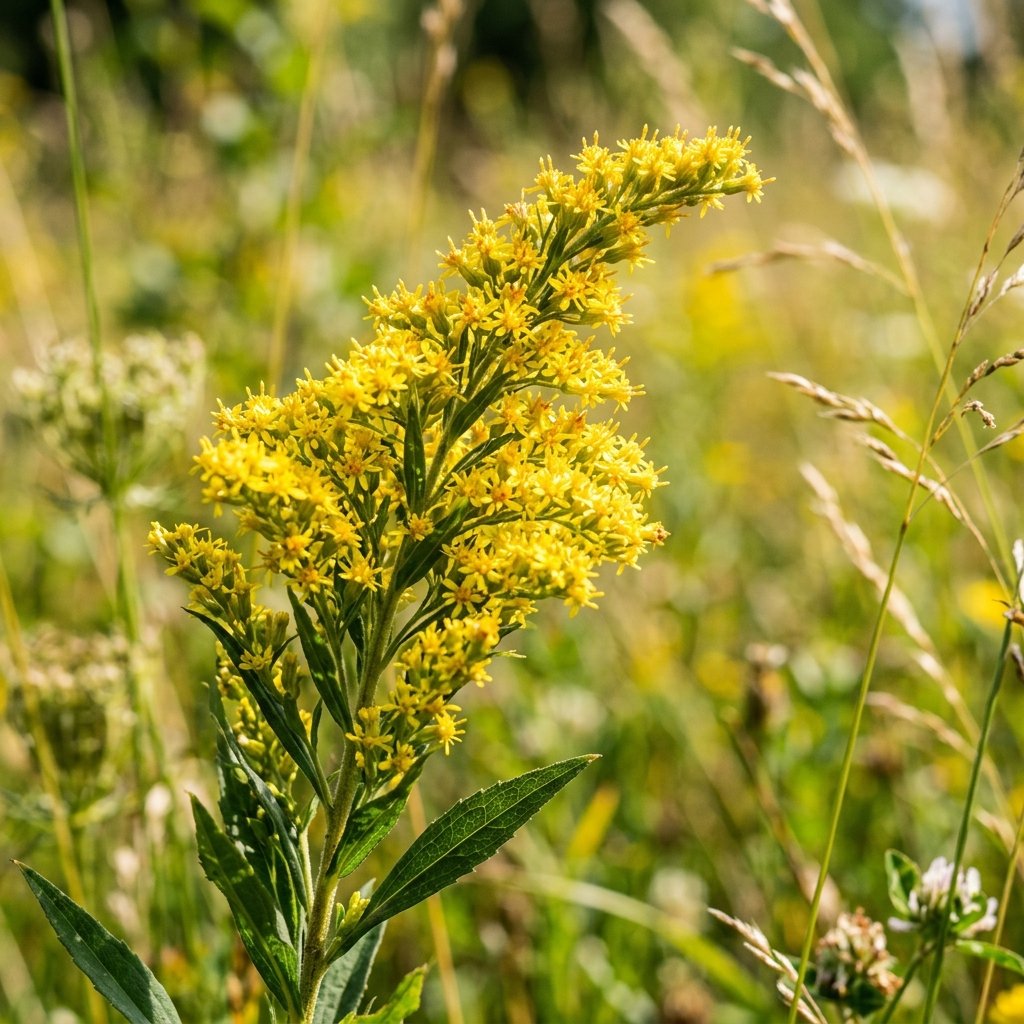
Goldenrod
Solidago canadensis
Goldenrod (*Solidago* spp.) is one of the most ecologically important and visually spectacular native wildflowers of North America, producing brilliant cascading plumes of tiny golden-yellow flowers from late summer through autumn. With over 100 species native to the Americas (most concentrated i...
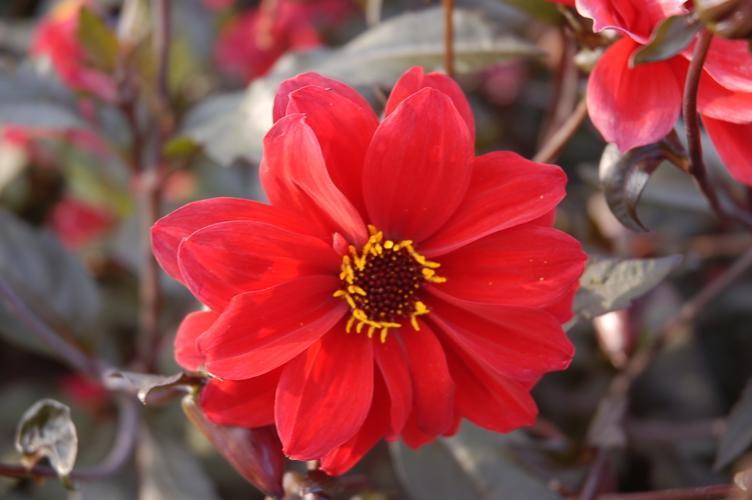
Dahlia 'Bishop of Llandaff'
Dahlia 'Bishop of Llandaff'
The Dahlia 'Bishop of Llandaff', a stunning member of the Asteraceae family, is a highly prized tuberous perennial native to the mountainous regions of Mexico. First introduced in the 1920s, it remains one of the most famous and beloved Dahlia cultivars in the world. It is renowned not just for i...
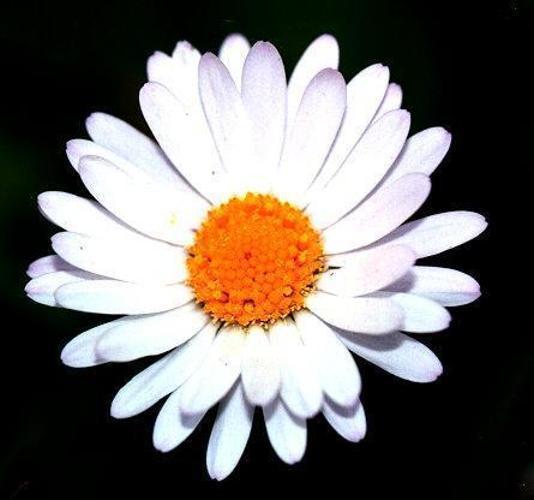
Oxeye Daisy
Leucanthemum vulgare
The Oxeye Daisy, botanically classified as Leucanthemum vulgare and historically celebrated as the Moon Daisy or Dog Daisy, is an exceptionally cheerful, rhizomatous herbaceous perennial belonging to the Asteraceae (daisy or composite) family. Native to the sweeping fields, dry pastures, and sunn...
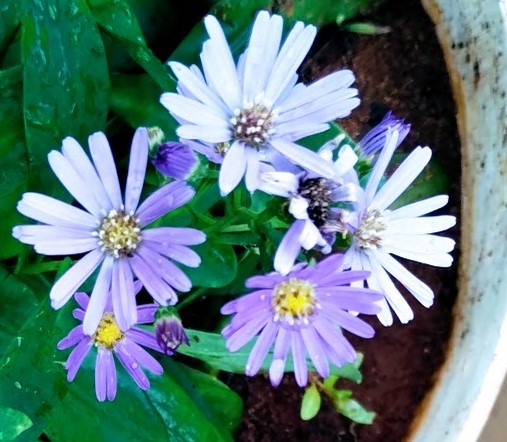
Aster (Michaelmas Daisy)
Symphyotrichum (formerly Aster)
The Aster, commonly known as the Michaelmas Daisy, is a quintessential late-summer and autumn bloomer belonging to the vast Asteraceae family. Native primarily to North America and Eurasia, these resilient perennials are absolute magnets for pollinators. Earning their name from the ancient Greek...
Similar Characteristics
4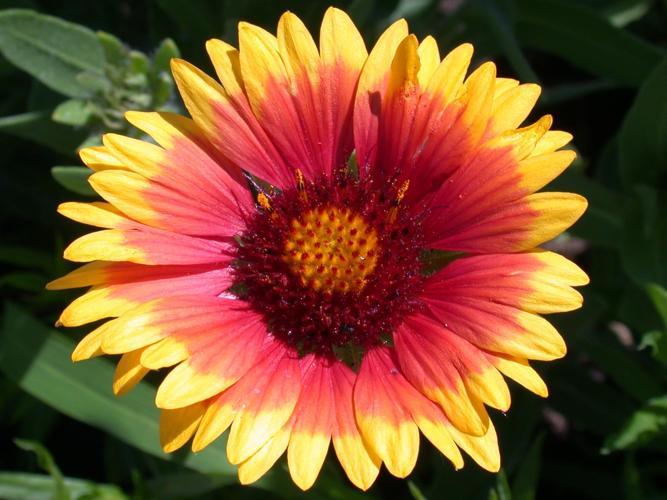
Gaillardia
Gaillardia
Gaillardia, botanically classified within the genus Gaillardia in the Asteraceae (sunflower) family and popularly known as the Blanket Flower or Indian Blanket, is a group of exceptionally cheerful, sun-loving annuals and short-lived perennials. Native to the dry prairies, sandy plains, and pine...
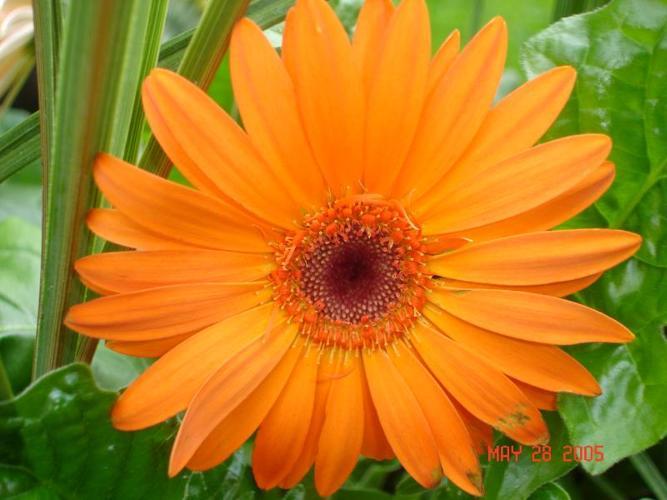
Barberton Daisy
Gerbera jamesonii
The Barberton Daisy, botanically known as Gerbera jamesonii and widely cherished as the Gerbera Daisy or Transvaal Daisy, is an exceptionally cheerful and colorful herbaceous perennial in the Asteraceae (sunflower) family. Native to the rich, subtropical valleys and grassy slopes of South Africa'...
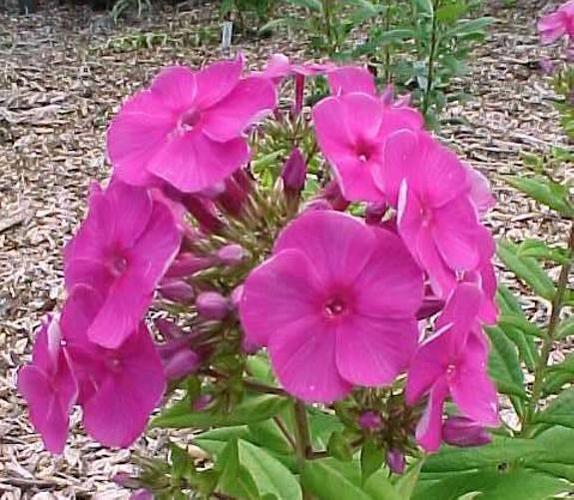
Phlox
Phlox paniculata
The genus Phlox, a cornerstone of the North American garden, encompasses a diverse array of species ranging from low-growing ground covers to towering, stately perennials. Derived from the Greek word for 'flame,' the name perfectly captures the vibrant, fiery intensity of their clustered blossoms...
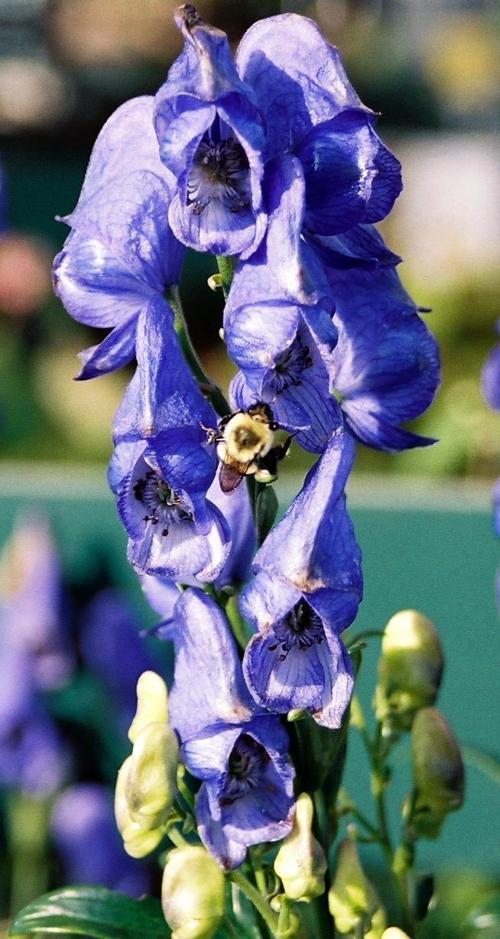
Monkshood
Aconitum napellus
Aconitum napellus, commonly known as Monkshood or Wolfsbane, is a plant of profound beauty and extreme danger, standing as one of the most toxic species in the Northern Hemisphere's temperate regions. A member of the Ranunculaceae (Buttercup) family, it is native to the moist, mountainous meadows...