
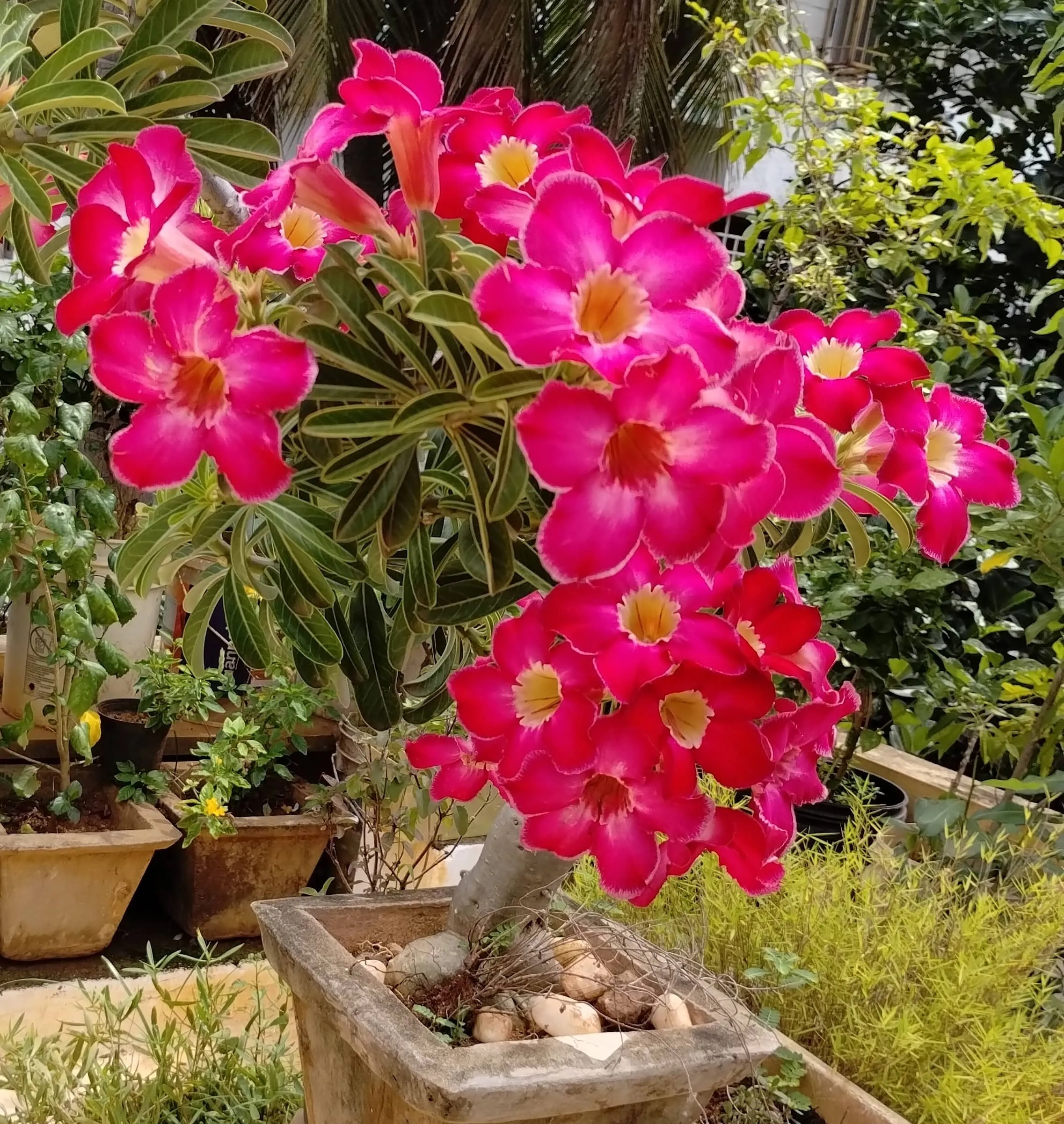
Desert Rose
Adenium obesum
How to Identify Desert Rose
Care & Growing Guide
Seasonal Blooming & Hardiness
Seasonal Blooming Calendar:
- Peak Bloom: Spring to early summer (typically April through June).
- Planting Time: Sow seeds directly outdoors in early spring after the last frost, or transplant nursery starts in late spring.
Bloom Timeline
About Desert Rose
The Desert Rose (Adenium obesum), a member of the Apocynaceae (Dogbane) family, is one of the most sculptural and striking succulent shrubs in the botanical world. Native to the arid regions of sub-Saharan Africa and the Arabian Peninsula, this plant has developed extraordinary adaptations to survive in harsh, drought-prone environments. Its most notable feature is its dramatically swollen trunk, or caudex, which serves as a vital water reservoir during long dry spells.
Visually, the Desert Rose is a masterpiece of natural engineering. It features glossy, dark green, oval-shaped leaves that are spirally arranged at the tips of its grey-brown branches. The flowers are the true showstoppers—trumpet-shaped blooms that appear in clusters, boasting vibrant shades of pink, red, white, or bicolors. These blooms can reach up to 3 inches in diameter and often have a velvety texture that contrasts beautifully with the plant's rugged, succulent form.
Cultivating Adenium obesum requires an understanding of its native habitat. It thrives in full sun, requiring at least 6 to 8 hours of direct sunlight daily to produce its best floral displays. As a succulent, it demands exceptionally well-draining soil—typically a cactus or succulent mix—to prevent root rot, which is its most common cause of failure. While it is incredibly drought-tolerant, it rewards regular watering during its peak growing season (spring and summer), provided the soil is allowed to dry out completely between waterings.
Beyond its beauty, the Desert Rose is a plant of significant cultural and medicinal interest, but it comes with a major warning. Like many members of the Dogbane family, it produces a thick, milky sap that is highly toxic to humans and pets. This sap contains cardiac glycosides, chemical compounds that can cause irregular heartbeats, vomiting, and severe irritation if they come into contact with skin or eyes. In its native Africa, this sap has been used historically by various tribes as a potent arrow poison for hunting large game.
In tropical and subtropical regions, the Desert Rose is a popular choice for xeriscaping and as a sculptural specimen plant. In cooler climates, it is a prized houseplant and is frequently used in the art of bonsai due to its slow growth and naturally thick trunk. Whether grown in a garden or a decorative pot, it offers a unique combination of hardy resilience and delicate, rose-like beauty, making it a favorite among succulent enthusiasts worldwide. For classic garden comparison, check out our guide on the traditional Rose.
Floral Formula & Features
Ebracteate (no bracts), radially symmetrical (actinomorphic), bisexual, 5 fused sepals, 5 fused petals forming trumpet-shaped corolla, 5 stamens fused to corolla tube, 2 free carpels (apocarpous) with superior ovaries
- Scientific Name & Classification: Adenium obesum belongs to the Apocynaceae family. It is a slow-growing succulent shrub native to eastern and southern Africa.
- Identification Markers: Look for the thick, grey-brown swollen trunk (caudex) and glossy green leaves. Flowers are trumpet-shaped with 5 overlapping petals, typically pink or red.
- Floral Formula (EBr ⊕ ⚥ K(5) [C(5) A5] G(2)): The flowers are radially symmetrical, bisexual, with a 5-lobed calyx and corolla, 5 stamens, and a superior ovary with 2 carpels.
- Growing Requirements: Thrives in USDA zones 10-11. Needs full sun, well-draining soil, and minimal water during winter. Very frost-sensitive (keep above 50°F/10°C).
- Regional Names: Known as 'Aboli' in some parts of India, 'Paalaivana Roja' in Tamil, and 'Sabi Star' or 'Impala Lily' in various African regions.
- Pet Safety & Toxicity: HIGHLY TOXIC. Contains cardiac glycosides. Keep away from dogs and cats. Seek immediate vet care if ingested. Check Pet Guard. Often compared with the classic Rose for its gorgeous blooms
- Common Look-Alikes: Often confused with Plumeria (Frangipani), which lacks the swollen trunk, or Pachypodium (Madagascar Palm), which has a spiny trunk.
Names in Different Languages
Botanical Classification: Desert Rose belongs to the Apocynaceae family. Learn how to identify its floral symmetry, stamen arrangement, and structural formulas in our Botanical Family Classification Guide.
Toxicity & Safety
Always keep toxic plants out of reach of children and pets. Consult a veterinarian or medical professional immediately if ingestion is suspected.
Pet Safety Guide: For detailed toxicity symptoms, first-aid measures, and safe garden alternatives, see our full Pet Guard Profile for Desert Rose.
Frequently Asked Questions
What is Floral Formula?
A floral formula is a symbolic representation of a flower's structure using letters, numbers, and special symbols. It provides a concise way to describe the arrangement and number of floral parts.
This formula describes the flower's symmetry, sepals, petals, stamens, and carpels in a standardized format.
Formula Sequence
- Bract: Br or Ebr
- Bracteole: Brl or Ebrl
- Symmetry: % (Radial) or ⊕ (Bilateral)
- Sex: ♀ (Female), ♂ (Male), or ⚥ (Bisexual)
- Calyx/Sepal: K<number> (Free or Fused)
- Corolla/Petal: C<number> (Free or Fused)
- Androecium: A<number> (Free or Fused)
- Gynaecium: G<number> (Superior or Inferior Ovary)
Symbol Meanings
- Numbers: Indicate quantity of parts
- Parentheses (): Parts are fused together
- Plus (+): Parts in different whorls
- Underline: Superior ovary position
- Overline: Inferior ovary position
- ∞: Numerous parts (too many to count)
Understanding floral formulas helps botanists quickly identify and classify flowers based on their structural characteristics.
Similar Flowers
Discover flowers that share botanical characteristics
Same Family
4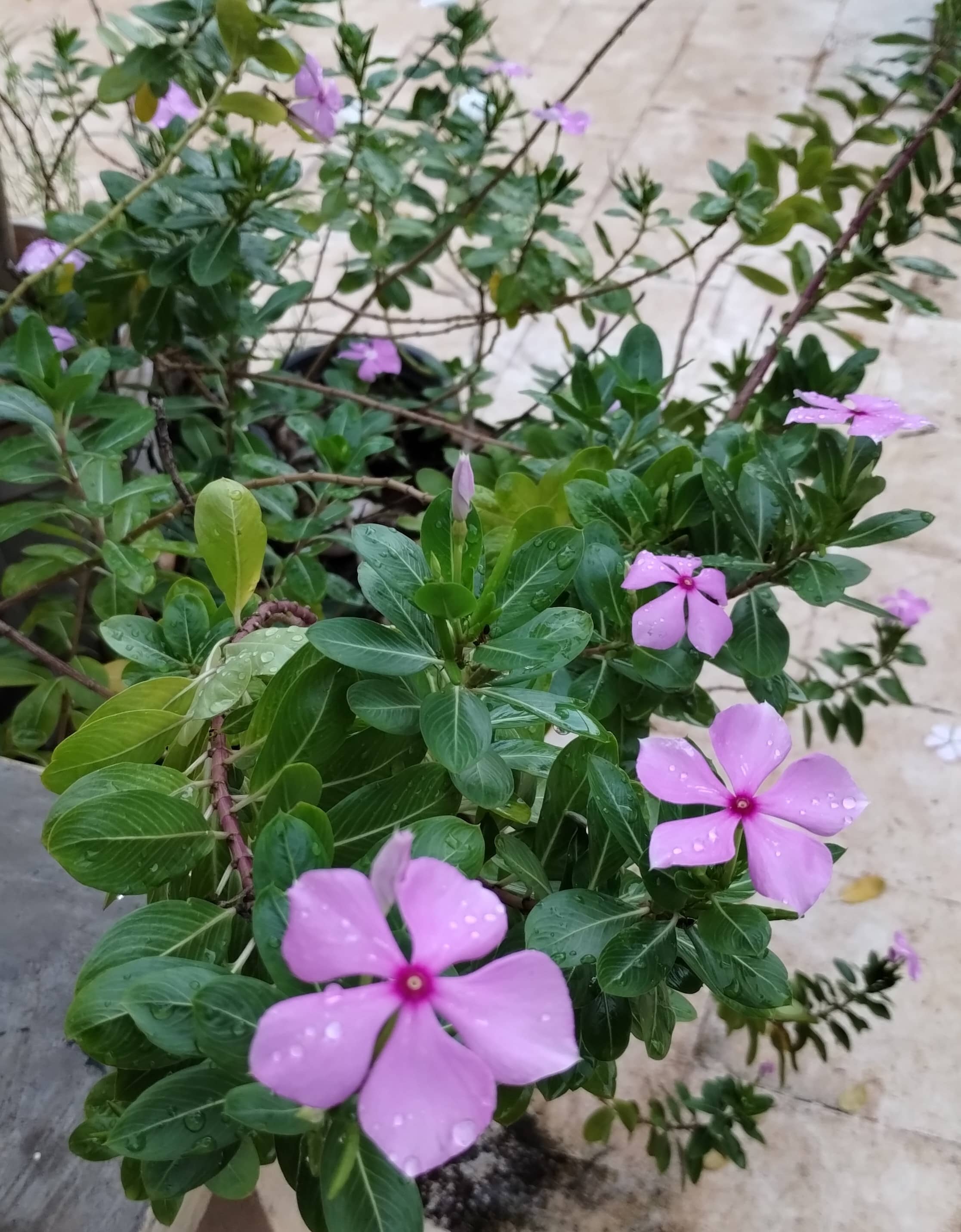
Vinca Rosea
Catharanthus roseus
Vinca Rosea (Catharanthus roseus), widely known as the Madagascar Periwinkle, is a plant of profound duality—equally celebrated as a resilient ornamental and a life-saving pharmaceutical powerhouse. Native to the dry forests of Madagascar but now naturalized across tropical regions worldwide, thi...
Mandevilla
Mandevilla
Mandevilla, often referred to as the Rock Trumpet, is the undisputed queen of the tropical vertical garden. Belonging to the Apocynaceae family—the same family that hosts the famous Frangipani and Oleander—this genus comprises over 100 species of vigorous, woody climbing vines and mounding shrubs...
Butterfly Weed
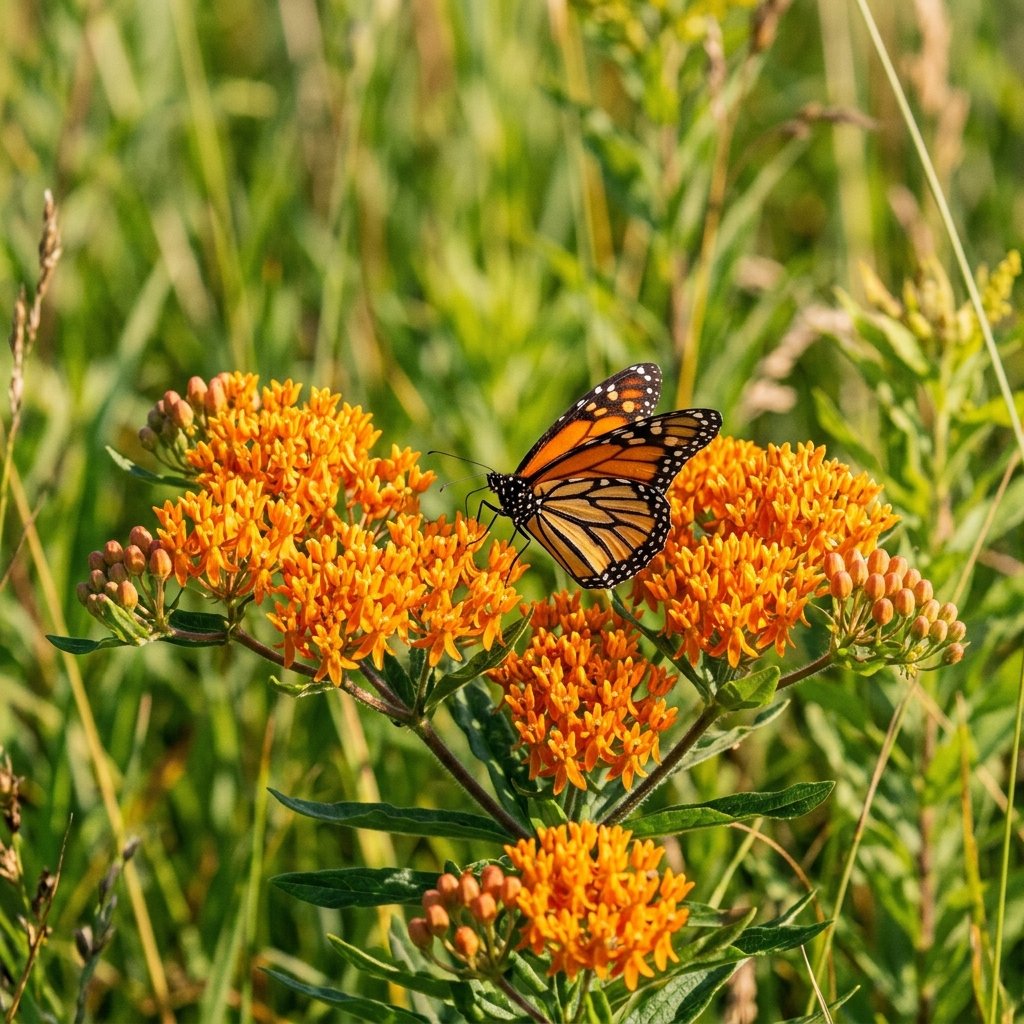
Asclepias tuberosa
Butterfly Weed (*Asclepias tuberosa*) is arguably the most vivid and ecologically vital native wildflower of the American prairie and meadow, blazing in brilliant shades of fiery orange and golden-yellow in midsummer and serving as one of the most important nectar and host plants for the endanger...
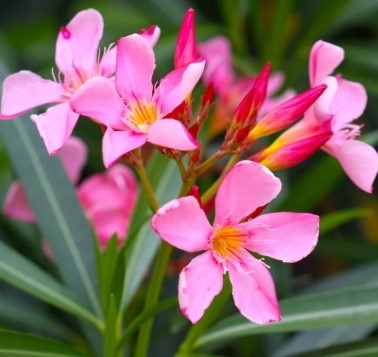
Oleander (Rosebay)
Nerium oleander
The Oleander, botanically designated as Nerium oleander and belonging to the family Apocynaceae (the dogbane family), is a fast-growing, highly resilient, and multi-stemmed evergreen shrub or small tree. Native to the rocky streambeds, coastal valleys, and warm river banks of the Mediterranean ba...
Similar Characteristics
4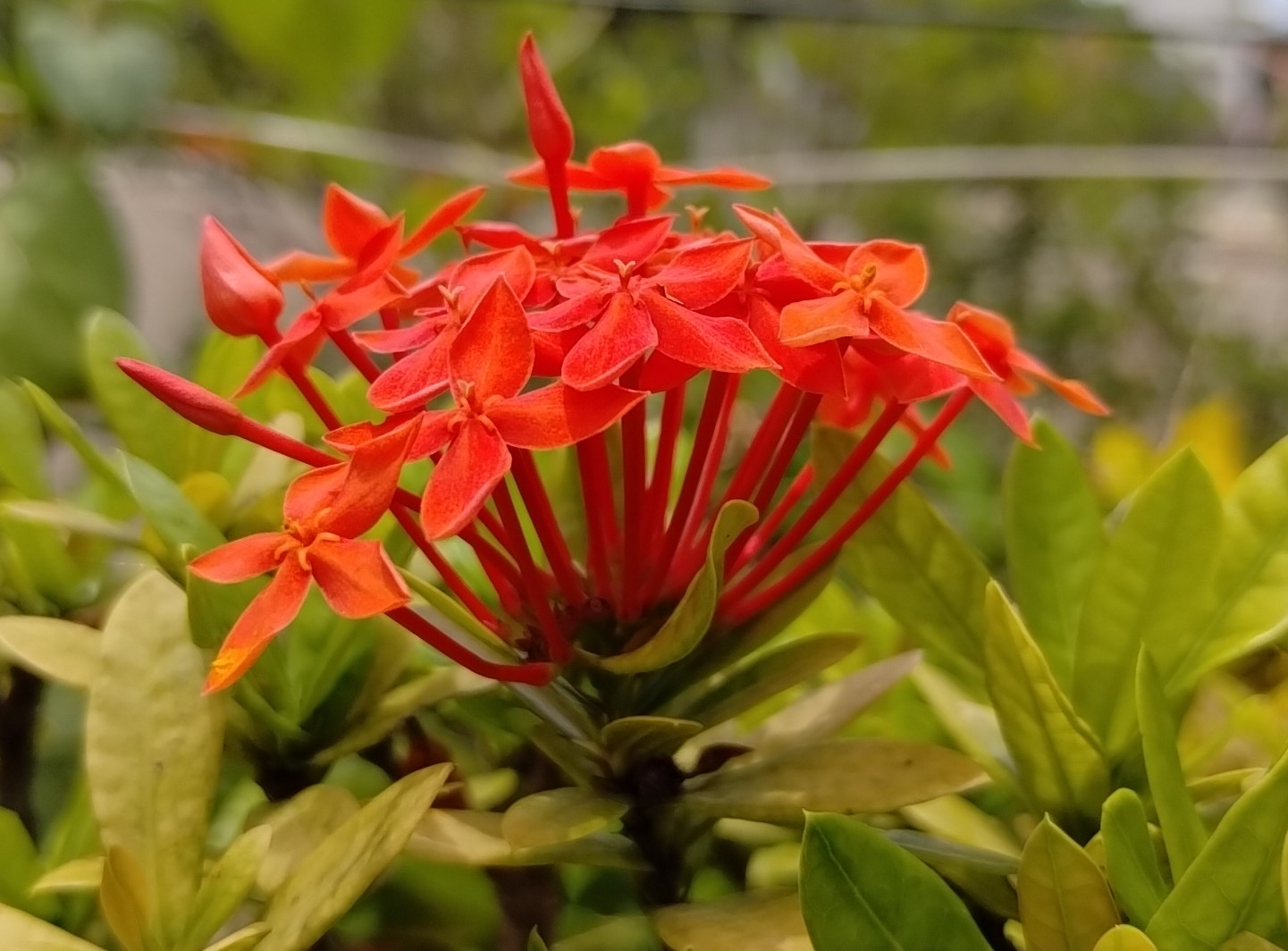
Ixora
Ixora coccinea
Ixora, botanically classified as Ixora coccinea and colloquially celebrated as the Jungle Flame or Flame of the Woods, is an exceptionally vibrant, evergreen flowering shrub belonging to the Rubiaceae (madder or coffee) family. Native to the damp tropical forests, rocky hillsides, and coastal scr...
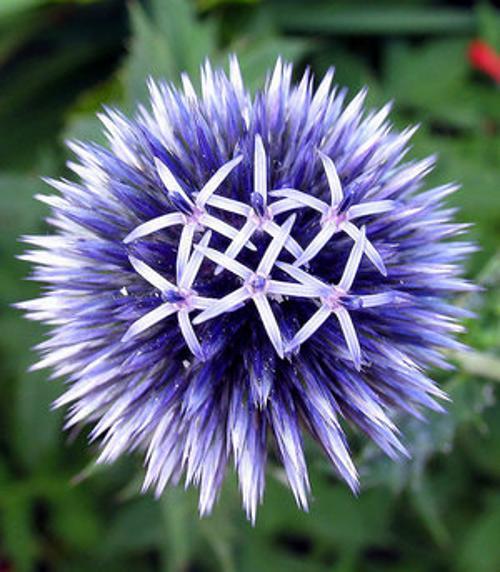
Globe Thistle
Echinops
The Globe Thistle, botanically classified as Echinops ritro or simply Echinops, is a striking, deeply architectural herbaceous perennial plant belonging to the Asteraceae (sunflower or composite) family. Native to the dry, sun-drenched grasslands, stony hillsides, and rocky mountain slopes of cen...
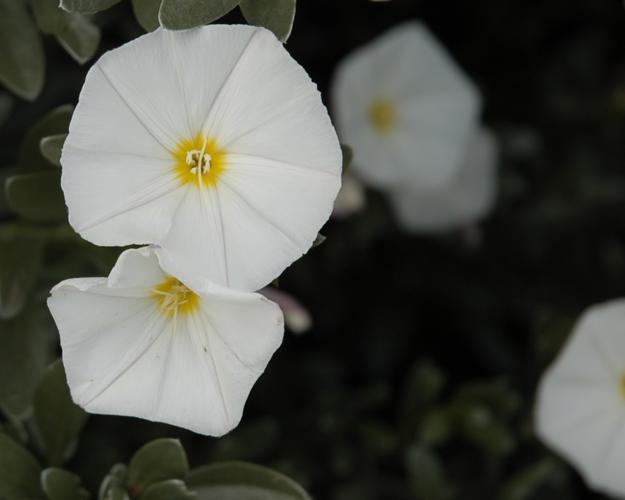
Silverbush
Convolvulus cneorum
The Silverbush, botanically classified as Convolvulus cneorum and widely referred to as the Silvery Bindweed or Bush Morning Glory, is an exceptionally elegant, compact evergreen shrub belonging to the Convolvulaceae (morning glory) family. Unlike its sprawling, climbing vine cousins, this specie...
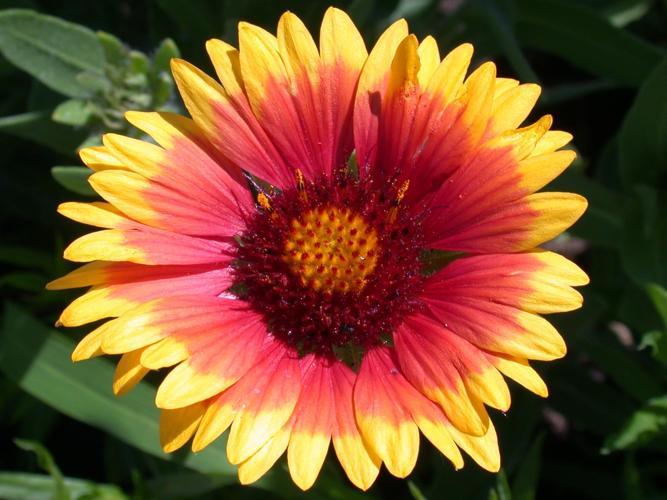
Gaillardia
Gaillardia
Gaillardia, botanically classified within the genus Gaillardia in the Asteraceae (sunflower) family and popularly known as the Blanket Flower or Indian Blanket, is a group of exceptionally cheerful, sun-loving annuals and short-lived perennials. Native to the dry prairies, sandy plains, and pine...