
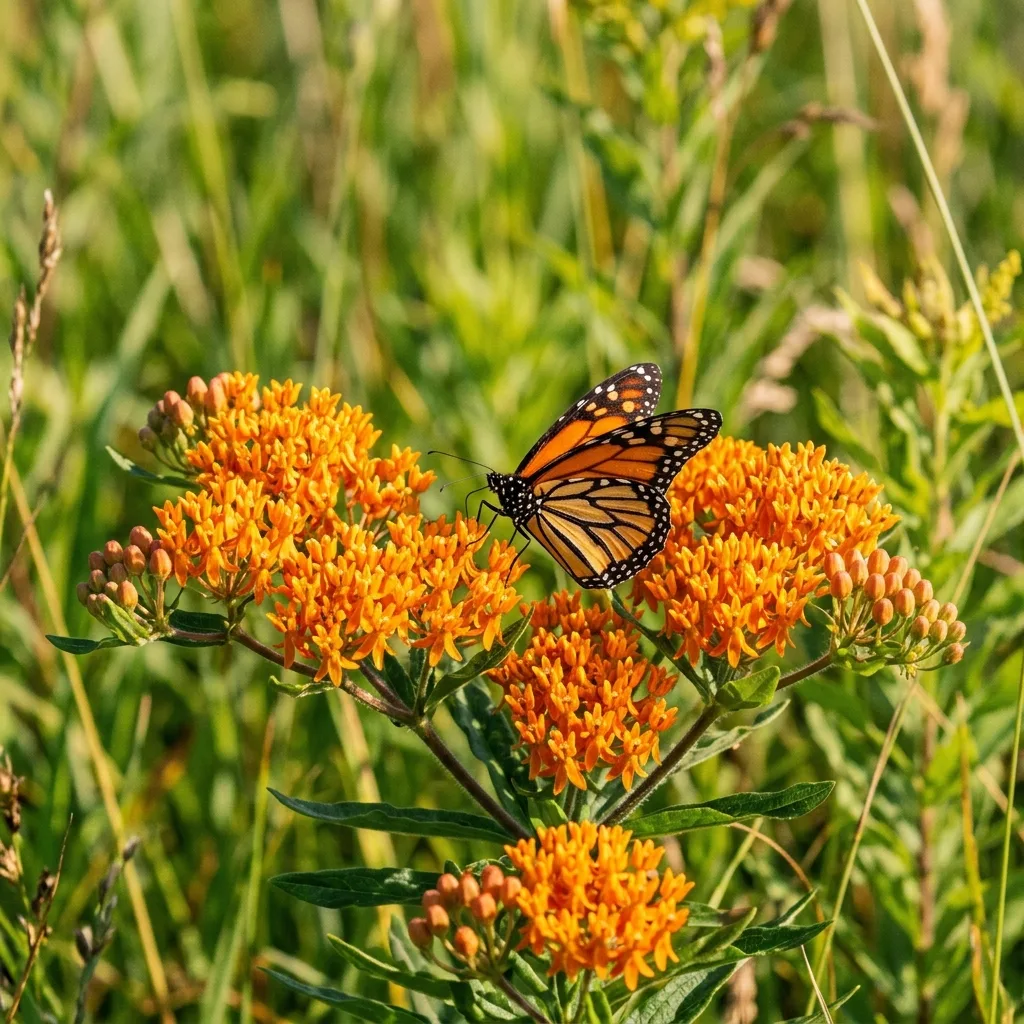
Butterfly Weed
Asclepias tuberosa
How to Identify Butterfly Weed
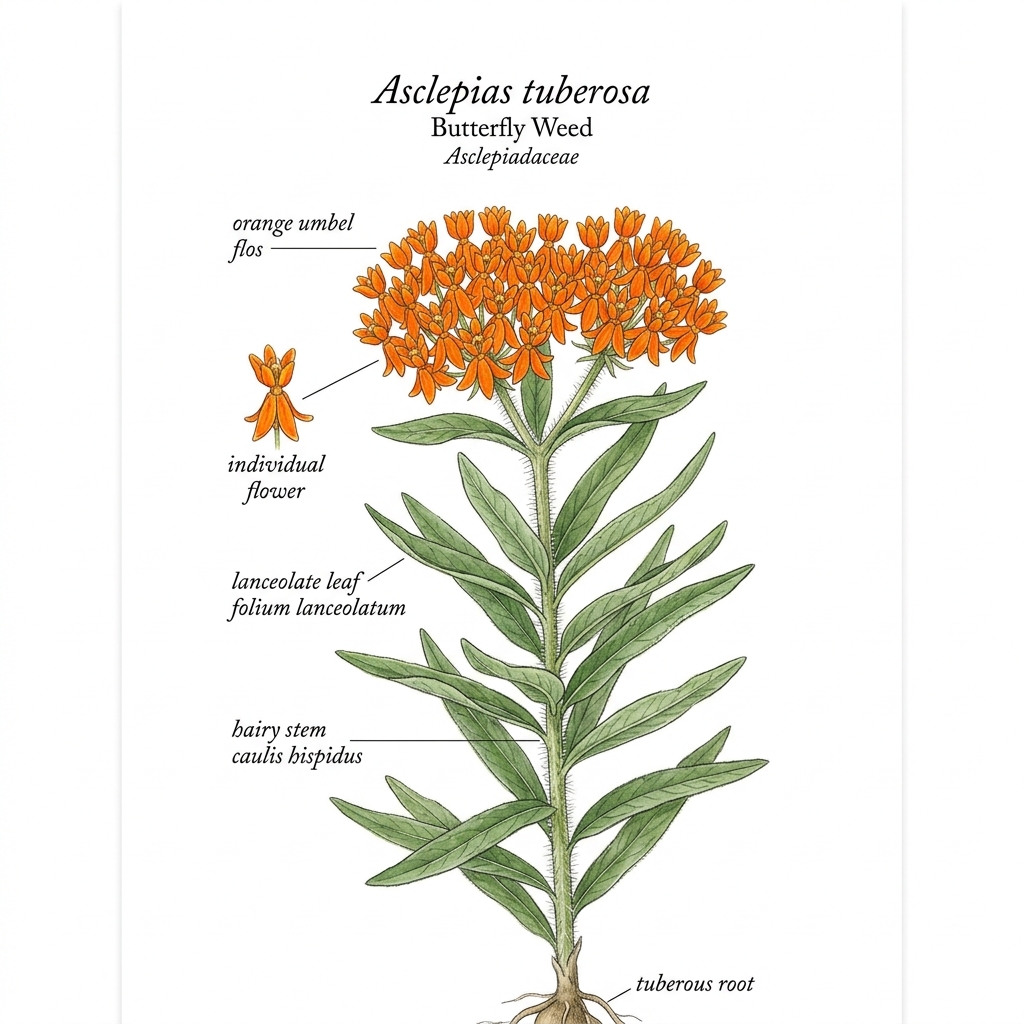
A detailed guide to identifying Butterfly Weeds (Asclepias tuberosa) by its key features:
- Bright Orange Flat Umbels: Clusters of small, five-petalled, bright orange flowers arranged in flat-topped crown shapes.
- Hairy Alternate Leaves: Stiff, lance-shaped leaves covered in fine, rough hairs.
- Clear Non-Milky Sap: Unlike other milkweeds, the sap is clear and watery rather than white and milky.
- Deep Fleshy Taproot: A thick taproot that helps the plant survive in dry, sandy soils.
Care & Growing Guide
Butterfly Weed Care Guide:
- Light: Full sun (6+ hours — essential)
- Soil: Dry, well-draining, sandy or rocky soil; poor soil is fine — avoid wet or clay
- Water: Extremely drought-tolerant; rarely needs supplemental watering
- Note: Deep taproot — choose location carefully as it resents transplanting
Seasonal Blooming & Hardiness
Seasonal Blooming Calendar:
- Peak Bloom: June–September
- US Range: USDA Zones 3–9; native throughout eastern and central US prairies and meadows
- Note: Very late to emerge in spring — may not show until late May or June
Bloom Timeline
About Butterfly Weed
Butterfly Weed (Asclepias tuberosa) is arguably the most vivid and ecologically vital native wildflower of the American prairie and meadow, blazing in brilliant shades of fiery orange and golden-yellow in midsummer and serving as one of the most important nectar and host plants for the endangered Monarch butterfly and dozens of other pollinator species. A member of the milkweed genus (Asclepias) within the Apocynaceae family, it is both the most brilliantly colored and the least 'weedy' of all native milkweeds, making it an outstanding choice for ornamental native plant gardens.
Unlike most milkweed species, Butterfly Weed is notable for its complete lack of the milky sap that gives the genus its name — its sap is clear. This is a distinguishing characteristic, though it remains just as important to Monarchs. The flowers are extraordinary in their construction: the five petals are reflexed downward while five specialized structures called 'hoods' and 'horns' project upward, forming a complex central crown. These structures hold the nectar in a way that requires pollinators to step inside the flower and pick up or deposit pollen masses called pollinia — a highly specialized pollination mechanism unique to milkweeds.
Ecologically, Butterfly Weed holds a central place in the prairie ecosystem. It is a critical nectar plant and larval host plant for the Monarch butterfly (Danaus plexippus), whose larvae feed exclusively on milkweed foliage. The orange flower color is particularly exceptional — it attracts a remarkable diversity of pollinators including Great Spangled Fritillary butterflies, Swallowtails, Painted Ladies, bumble bees, and even hummingbirds. In late summer, the plant produces long, spindle-shaped seed pods that split open to release hundreds of seeds attached to silky white fibers, carried by wind across the meadow.
Despite its common name, Butterfly Weed is the opposite of weedy — it is a refined, well-behaved, and elegant garden perennial. Its deep taproot (which gave it the medicinal name 'Pleurisy Root,' used by Native Americans and early settlers for respiratory ailments) makes it exceptionally drought-tolerant and long-lived once established, but also means it resents transplanting. It is best started from seed or purchased as a young potted plant and placed in its permanent location early. It emerges late in spring, so mark its location to avoid accidentally disturbing it. Explore our Flower Identifier for more prairie natives.
Floral Formula & Features
Actinomorphic, bisexual; 5 reflexed petals, corona of 5 hoods/horns; 5 stamens fused into gynostegium; 2 follicle carpels
- Scientific Name & Classification: Asclepias tuberosa (Apocynaceae, tribe Asclepiadeae). The most brilliantly colored of North America's ~70 native milkweed species.
- Identification Markers: Flat-topped clusters of brilliant orange (sometimes yellow) flowers on hairy, erect stems 1–2.5 ft tall. Lance-shaped alternate leaves. Clear (not milky) sap. Spindle-shaped seed pods in fall. Late to emerge in spring.
- Floral Formula (⊕ ☿ K5 C5 A5 G(2)): Actinomorphic, bisexual, 5 reflexed petals, 5 specialized hoods/horns (corona), 5 fused stamens forming a gynostegium, 2 carpels (follicles).
- Growing Requirements: Full sun; well-draining, dry, sandy or rocky soil. Deeply drought-tolerant. USDA Zones 3–9. Deep taproot — do not transplant. Late spring emergence — mark location.
- Cultural Significance: Critical Monarch butterfly host and nectar plant. Used medicinally by Native Americans (pleurisy, respiratory issues). Listed in the US Native Plant Society's top-10 most important prairie plants for pollinators.
- Safety & Toxicity: ⚠️ CAUTION. Milkweeds contain cardiac glycosides (cardenolides) which are toxic to dogs, cats, and horses if consumed in significant quantities. The orange flowers/foliage should be kept away from pets.
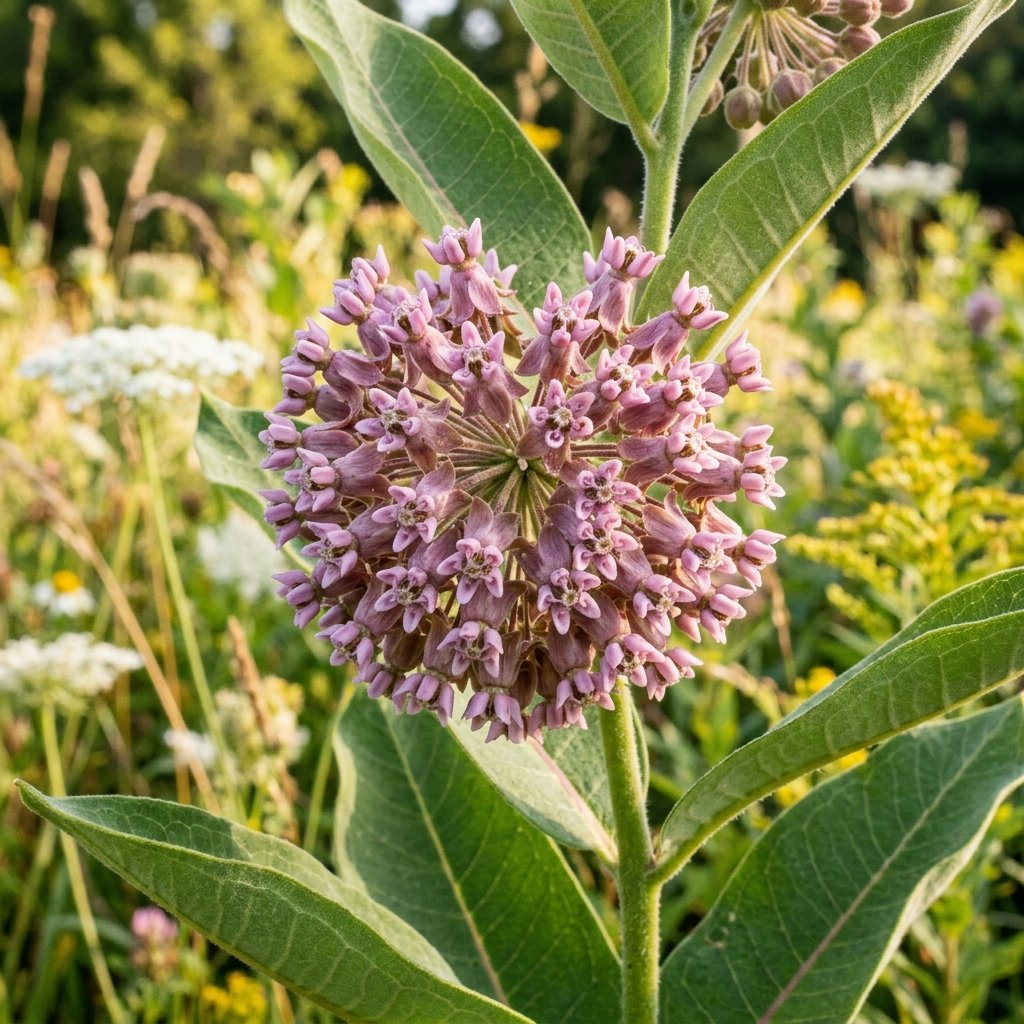
- Common Look-alikes: Sometimes confused with Common Milkweed (A. syriaca), which has much larger, pink globe-shaped flower clusters and milky sap. Also confused with Lantana due to similar flat-topped orange clusters.
- Internal Links: The essential companion to Blazing Star and Goldenrod in a Monarch Waystation garden. See our Flower Identifier.
Names in Different Languages
Botanical Classification: Butterfly Weed belongs to the Apocynaceae family. Learn how to identify its floral symmetry, stamen arrangement, and structural formulas in our Botanical Family Classification Guide.
Toxicity & Safety
Always keep toxic plants out of reach of children and pets. Consult a veterinarian or medical professional immediately if ingestion is suspected.
Pet Safety Guide: For detailed toxicity symptoms, first-aid measures, and safe garden alternatives, see our full Pet Guard Profile for Butterfly Weed.
Frequently Asked Questions
What is Floral Formula?
A floral formula is a symbolic representation of a flower's structure using letters, numbers, and special symbols. It provides a concise way to describe the arrangement and number of floral parts.
This formula describes the flower's symmetry, sepals, petals, stamens, and carpels in a standardized format.
Formula Sequence
- Bract: Br or Ebr
- Bracteole: Brl or Ebrl
- Symmetry: % (Radial) or ⊕ (Bilateral)
- Sex: ♀ (Female), ♂ (Male), or ⚥ (Bisexual)
- Calyx/Sepal: K<number> (Free or Fused)
- Corolla/Petal: C<number> (Free or Fused)
- Androecium: A<number> (Free or Fused)
- Gynaecium: G<number> (Superior or Inferior Ovary)
Symbol Meanings
- Numbers: Indicate quantity of parts
- Parentheses (): Parts are fused together
- Plus (+): Parts in different whorls
- Underline: Superior ovary position
- Overline: Inferior ovary position
- ∞: Numerous parts (too many to count)
Understanding floral formulas helps botanists quickly identify and classify flowers based on their structural characteristics.
Similar Flowers
Discover flowers that share botanical characteristics
Same Family
4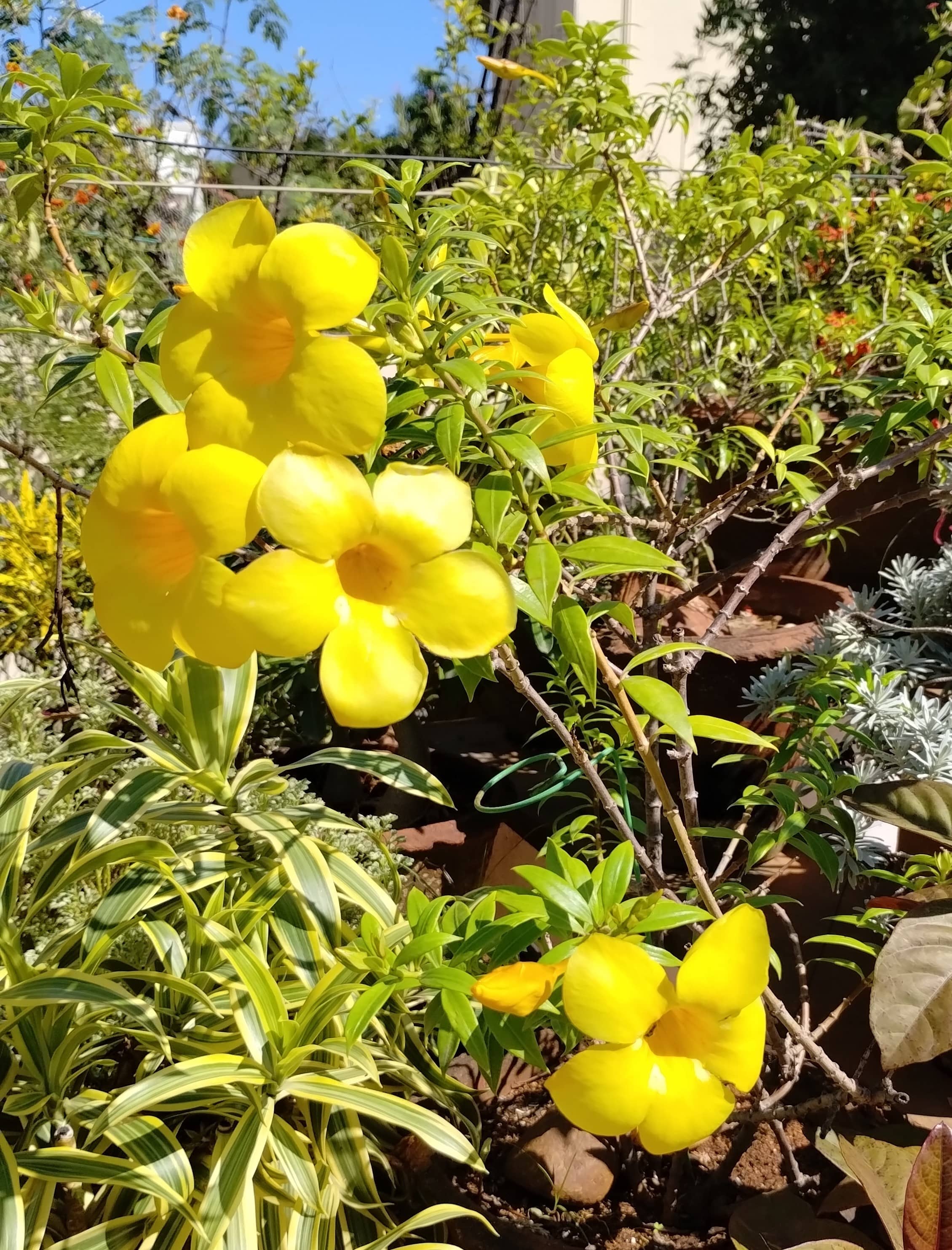
Allamanda
Allamanda cathartica
The Allamanda, botanically designated as Allamanda cathartica and commonly known as the Golden Trumpet, Common Trumpet Vine, or Yellow Bell, is a spectacular tropical evergreen perennial. Belonging to the family Apocynaceae (the dogbane family), this vigorous climbing vine or sprawling shrub is n...
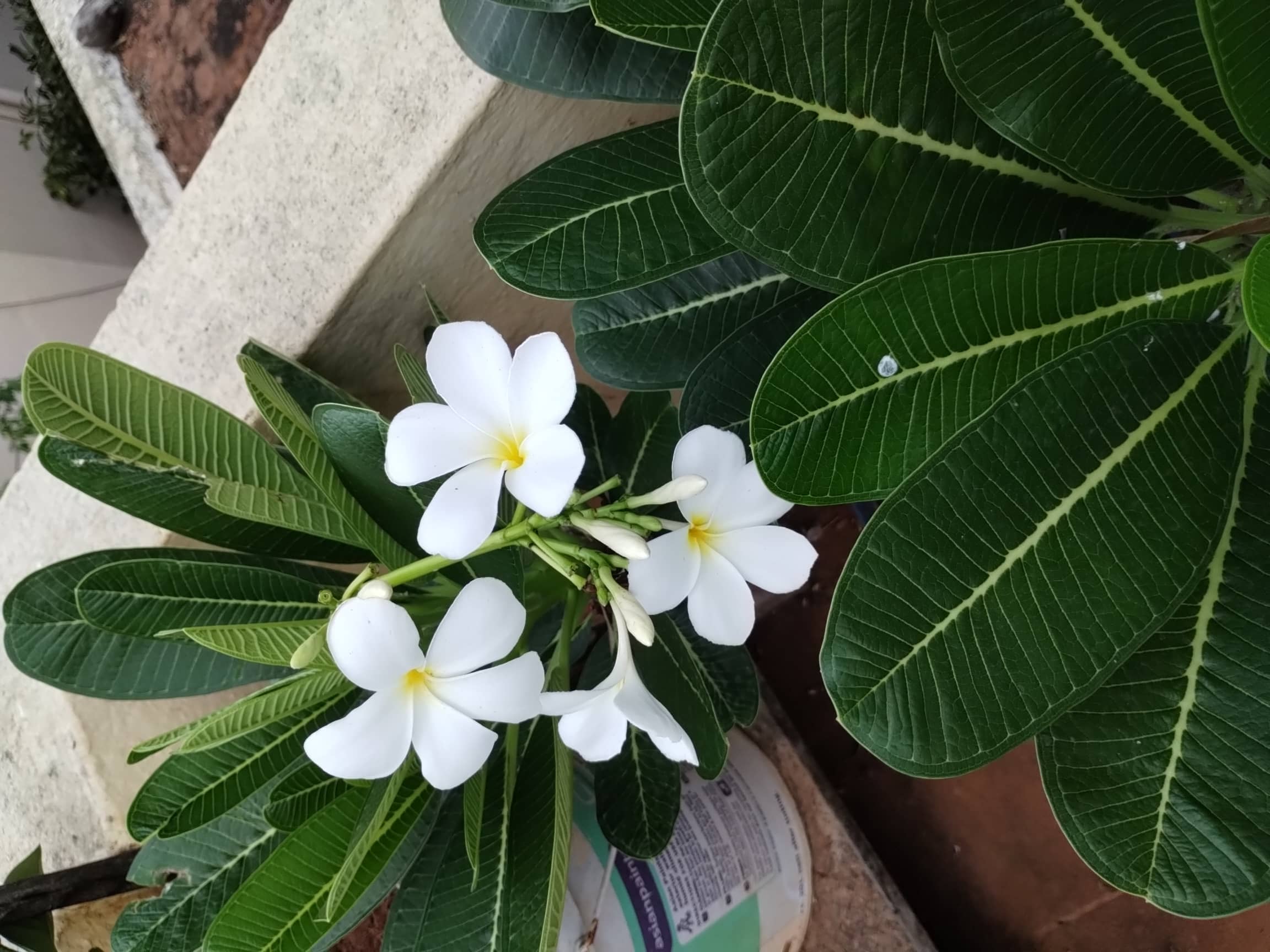
Plumeria
Plumeria Rubra
Plumeria, universally known as the Frangipani, is a genus of deciduous shrubs and small trees that serve as the quintessential symbol of tropical paradise. Belonging to the Apocynaceae (Dogbane) family, these plants are native to Mexico, Central America, and the Caribbean, but they have been embr...
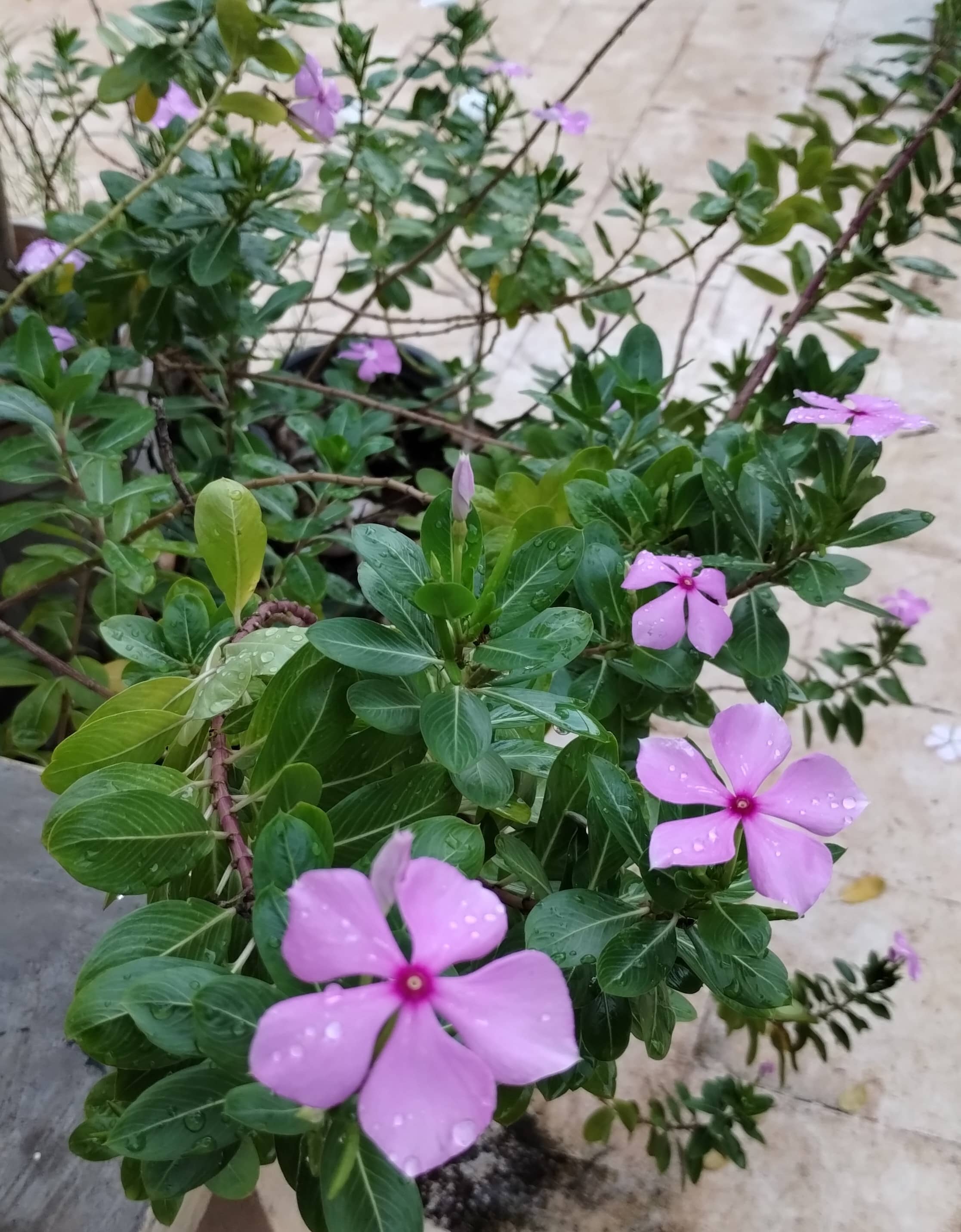
Vinca Rosea
Catharanthus roseus
Vinca Rosea (Catharanthus roseus), widely known as the Madagascar Periwinkle, is a plant of profound duality—equally celebrated as a resilient ornamental and a life-saving pharmaceutical powerhouse. Native to the dry forests of Madagascar but now naturalized across tropical regions worldwide, thi...
Mandevilla
Mandevilla
Mandevilla, often referred to as the Rock Trumpet, is the undisputed queen of the tropical vertical garden. Belonging to the Apocynaceae family—the same family that hosts the famous Frangipani and Oleander—this genus comprises over 100 species of vigorous, woody climbing vines and mounding shrubs...
Similar Characteristics
4
Mexican Aster
Cosmos bipinnatus
The Mexican Aster, botanically designated as Cosmos bipinnatus and commonly referred to as Garden Cosmos or simply Cosmos, is an exceptionally graceful, fast-growing, and heavy-blooming annual. Belonging to the family Asteraceae (the daisy or composite family), this beautiful plant is native to t...
Mandevilla
Mandevilla
Mandevilla, often referred to as the Rock Trumpet, is the undisputed queen of the tropical vertical garden. Belonging to the Apocynaceae family—the same family that hosts the famous Frangipani and Oleander—this genus comprises over 100 species of vigorous, woody climbing vines and mounding shrubs...
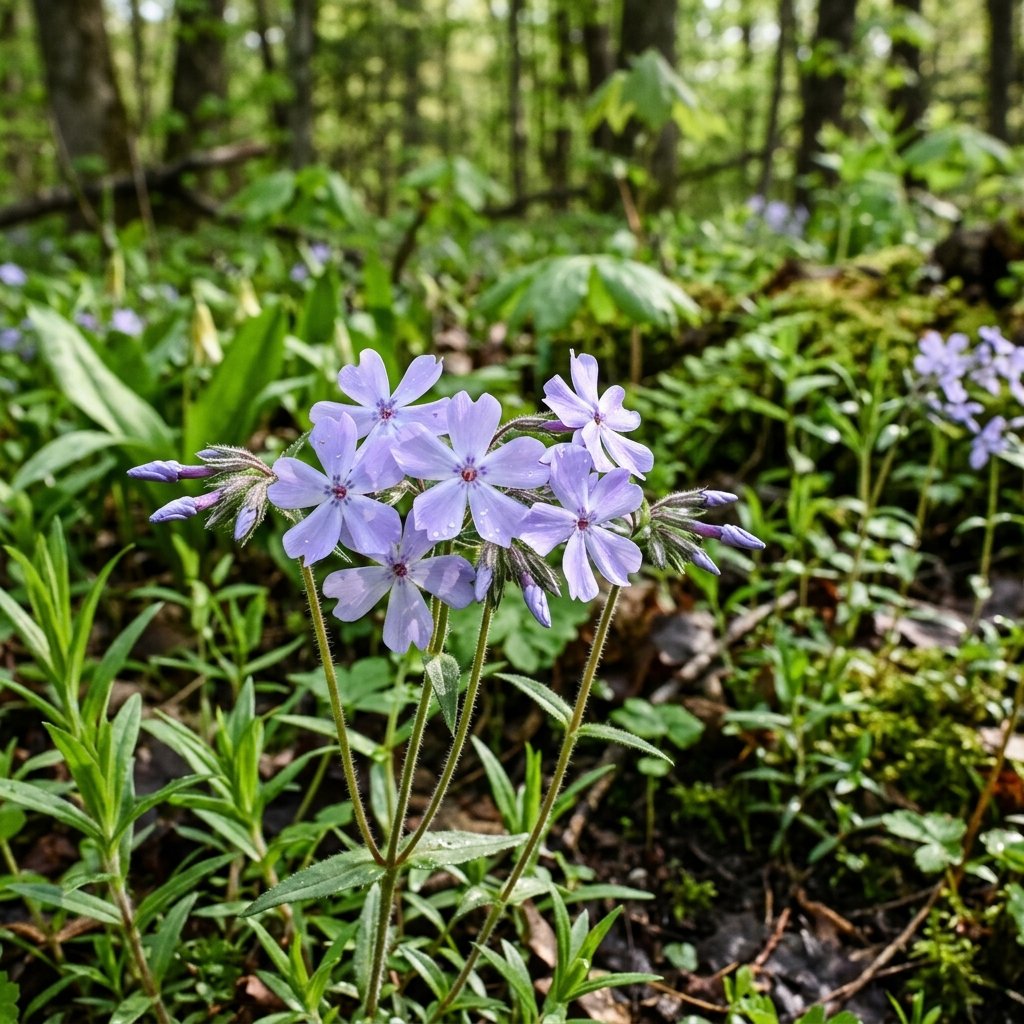
Wild Blue Phlox
Phlox divaricata
Wild Blue Phlox (*Phlox divaricata*), also widely known as Blue Phlox or Woodland Phlox, is one of the most fragrant and visually graceful native wildflowers of eastern North American woodlands, producing loose, open clusters of pale blue to lavender-blue flowers with a sweet, light perfume in Ap...
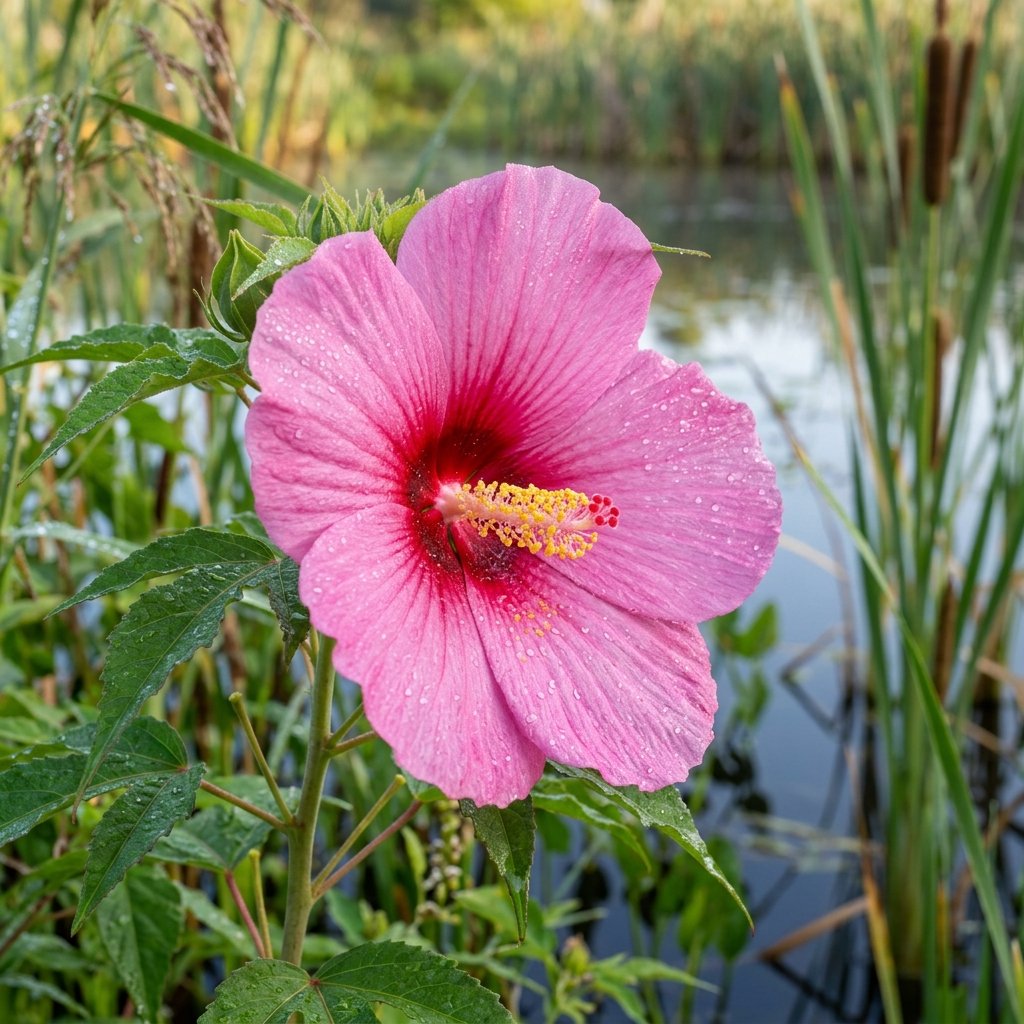
Swamp Rose Mallow
Hibiscus moscheutos
Swamp Rose Mallow (*Hibiscus moscheutos*) produces some of the largest flowers of any hardy perennial wildflower in North America — dinner-plate-sized blooms reaching 6 to 12 inches in diameter — in shades of white, pink, and rose, typically adorned with a dramatic deep crimson or rose-pink centr...