
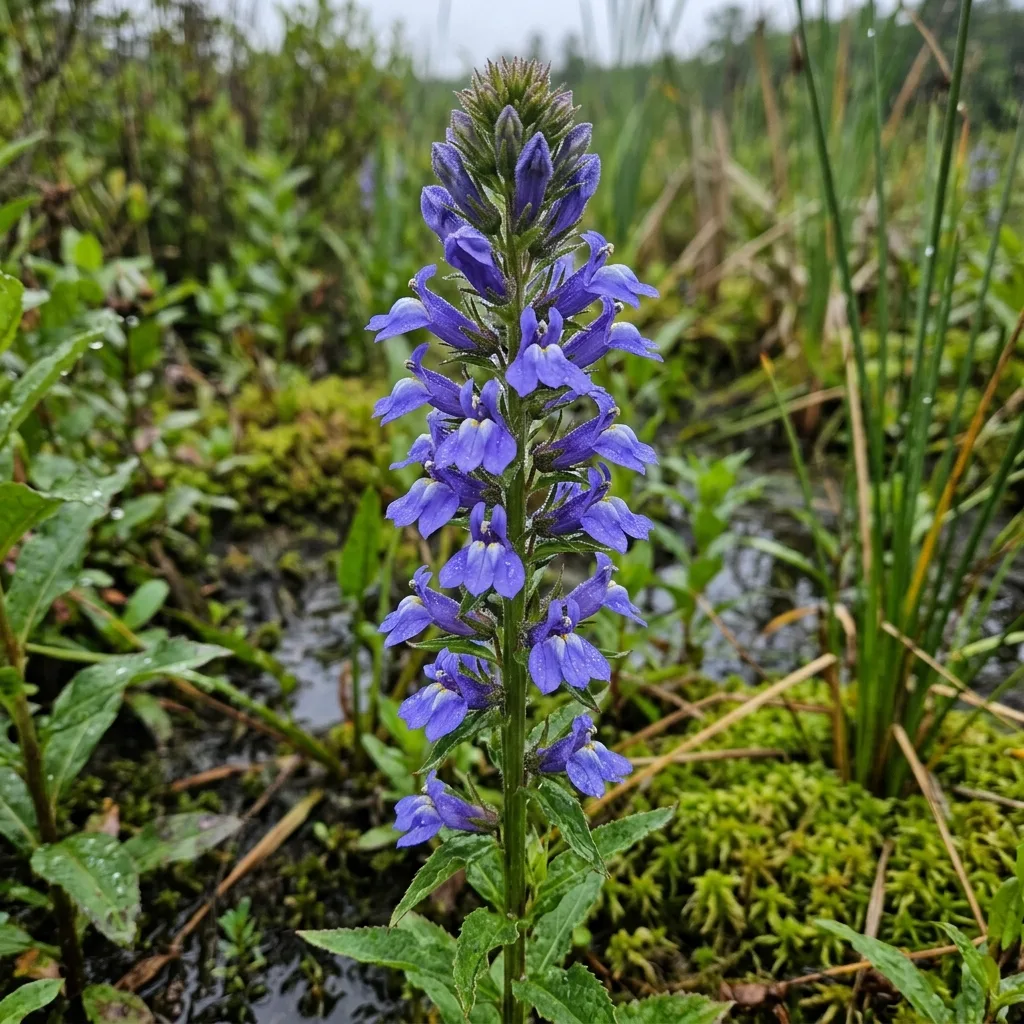
Great Blue Lobelia
Lobelia siphilitica
How to Identify Great Blue Lobelia
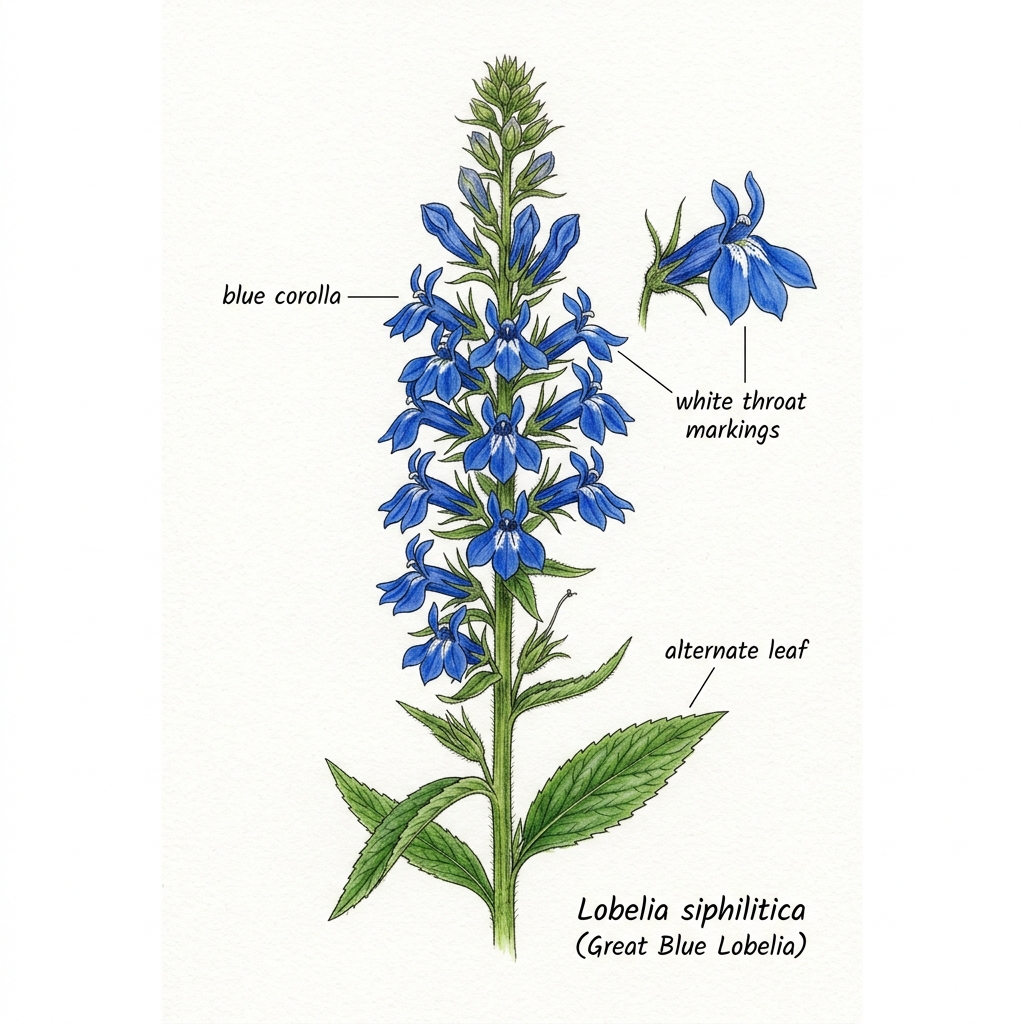
A detailed guide to identifying Great Blue Lobelias (Lobelia siphilitica) by its key features:
- Dense Blue Flower Spikes: Thick, upright racemes of bright blue to lavender two-lipped flowers.
- Striated White Throat: Lower petals marked with white stripes that act as nectar guides for bumblebees.
- Broad Serrated Leaves: Light green, oval-lanceolate leaves with irregular teeth along the edges.
- Fibrous Woodland Roots: Prefers rich, wet soils in shaded woodland edges.
Care & Growing Guide
Great Blue Lobelia Care Guide:
- Light: Full sun to partial shade
- Soil: Moist to wet, humus-rich — ideal for rain gardens and stream banks
- Water: Consistently moist; does not tolerate drought
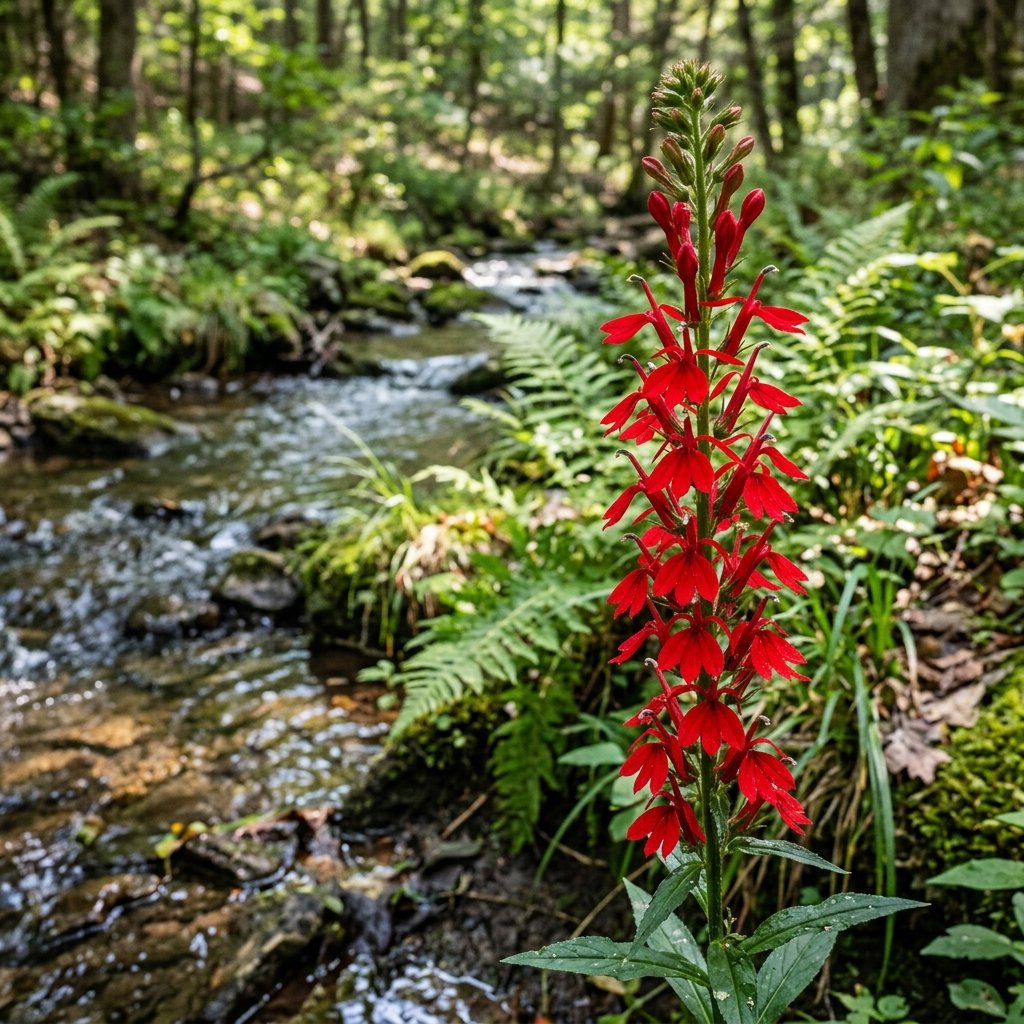
- Companion: Plant with Cardinal Flower for a stunning red-and-blue late-summer combination
Seasonal Blooming & Hardiness
Seasonal Blooming Calendar:
- Peak Bloom: August–October
- US Range: USDA Zones 4–9; native throughout eastern and central US in moist habitats
Bloom Timeline
About Great Blue Lobelia
Great Blue Lobelia (Lobelia siphilitica) is a stunning native wildflower of eastern North America, producing tall spikes of vivid blue-violet to true blue flowers from late summer through fall in moist meadows, stream banks, and woodland edges. The blue-flowered counterpart to the scarlet Cardinal Flower, it shares the same genus and habitat preferences and is equally important ecologically, serving as a primary nectar source for bumble bees, which are the principal pollinators of this species. Its deep, rich blue color — rare in the late-season wildflower palette — makes it an invaluable addition to native gardens.
The individual flowers of Great Blue Lobelia are tubular and two-lipped like those of Cardinal Flower, with the lower lip marked by a white stripe that serves as a nectar guide for pollinators. The flowers are densely arranged along robust, upright spikes reaching 1 to 3 feet tall, which emerge from a rosette of toothed, lance-shaped basal leaves. The plant's curious species name 'siphilitica' reflects a mistaken historical belief — introduced to European physicians by Native Americans — that the root was a cure for syphilis, a claim that proved unfounded but has persisted in the plant's scientific name.
In native plant gardens, Great Blue Lobelia is most powerful when planted alongside Cardinal Flower, creating a striking red-and-blue native combination that blooms simultaneously in late summer and attracts an extraordinarily diverse array of pollinators. While Cardinal Flower primarily attracts hummingbirds, Great Blue Lobelia is the preferred nectar source for bumble bees, creating a garden that serves multiple pollinator guilds. It naturalizes prolifically by self-seeding along moist areas and can form large, lush colonies in rain gardens, bioswales, or pond margins.
Great Blue Lobelia is considerably more shade-tolerant than many native wildflowers and will bloom successfully under light deciduous canopy as long as consistent soil moisture is maintained. It is a short-lived perennial (2–4 years) but is highly reliable from seed and self-seeds prolifically when content. Unlike Cardinal Flower, it also contains toxic alkaloids and should be kept away from pets. For more moist-habitat native wildflowers, explore our full Flower Identifier database.
Floral Formula & Features
Zygomorphic, bisexual; 5 fused sepals; 5 fused two-lipped petals; 5 stamens fused into staminal column; 2 fused carpels with inferior ovary
- Scientific Name & Classification: Lobelia siphilitica (Campanulaceae). The blue-flowered companion species to Cardinal Flower (L. cardinalis), sharing the same native range and habitat.
- Identification Markers: Dense spikes of deep blue-violet tubular flowers with a white-striped lower lip on upright stems 1–3 ft. Toothed, lance-shaped leaves. Blooms August–October in moist to wet sites.
- Floral Formula (↑ ☿ K(5) [C(5) A(5)] G̅(2)): Zygomorphic, bisexual, 5 fused sepals, 5 fused two-lipped petals, 5 stamens forming a staminal column, 2 fused carpels with inferior ovary.
- Growing Requirements: Full sun to partial shade; consistently moist to wet, humus-rich soil. Rain gardens, stream banks, and pond edges. USDA Zones 4–9. Self-seeds reliably when established.
- Cultural Significance: Its species name 'siphilitica' reflects a (mistaken) historical use as a syphilis cure by Native Americans. Primary bumble bee nectar plant in the late-season native garden.
- Safety & Toxicity: ⚠️ TOXIC. Contains lobeline alkaloids toxic to dogs, cats, and humans if ingested. Keep children and pets from eating plant material.
- Common Look-alikes: Closely related to Cardinal Flower (L. cardinalis), distinguished only by its blue (not red) flowers. Also confused with Blue Salvia or Spiderwort at a distance.
- Internal Links: Combine with Cardinal Flower for a stunning red-and-blue hummingbird-and-bee garden. Explore more in our Flower Identifier.
Names in Different Languages
Botanical Classification: Great Blue Lobelia belongs to the Campanulaceae family. Learn how to identify its floral symmetry, stamen arrangement, and structural formulas in our Botanical Family Classification Guide.
Toxicity & Safety
Always keep toxic plants out of reach of children and pets. Consult a veterinarian or medical professional immediately if ingestion is suspected.
Pet Safety Guide: For detailed toxicity symptoms, first-aid measures, and safe garden alternatives, see our full Pet Guard Profile for Great Blue Lobelia.
Frequently Asked Questions
What is Floral Formula?
A floral formula is a symbolic representation of a flower's structure using letters, numbers, and special symbols. It provides a concise way to describe the arrangement and number of floral parts.
This formula describes the flower's symmetry, sepals, petals, stamens, and carpels in a standardized format.
Formula Sequence
- Bract: Br or Ebr
- Bracteole: Brl or Ebrl
- Symmetry: % (Radial) or ⊕ (Bilateral)
- Sex: ♀ (Female), ♂ (Male), or ⚥ (Bisexual)
- Calyx/Sepal: K<number> (Free or Fused)
- Corolla/Petal: C<number> (Free or Fused)
- Androecium: A<number> (Free or Fused)
- Gynaecium: G<number> (Superior or Inferior Ovary)
Symbol Meanings
- Numbers: Indicate quantity of parts
- Parentheses (): Parts are fused together
- Plus (+): Parts in different whorls
- Underline: Superior ovary position
- Overline: Inferior ovary position
- ∞: Numerous parts (too many to count)
Understanding floral formulas helps botanists quickly identify and classify flowers based on their structural characteristics.
Similar Flowers
Discover flowers that share botanical characteristics
Same Family
2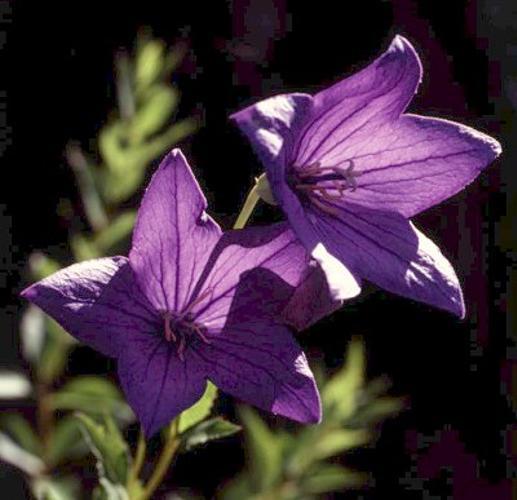
Balloon
Platycodon grandiflorus
The Balloon Flower, scientifically known as Platycodon grandiflorus and commonly called the Chinese Bellflower or Japanese Bellflower, is an exceptionally charming herbaceous perennial belonging to the Campanulaceae (bellflower) family. Native to the grassy slopes, meadows, and forest margins of...
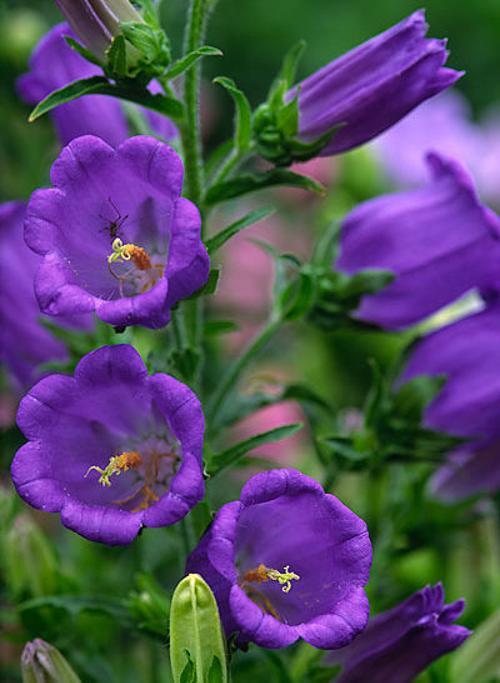
Canterbury bells
Campanula medium
Campanula medium, commonly known as Canterbury Bells, is a quintessential cottage garden biennial that brings a sense of Victorian elegance and whimsical charm to any landscape. Belonging to the Campanulaceae family, this species is native to the sun-drenched hills of Southern Europe, particularl...
Similar Colors
4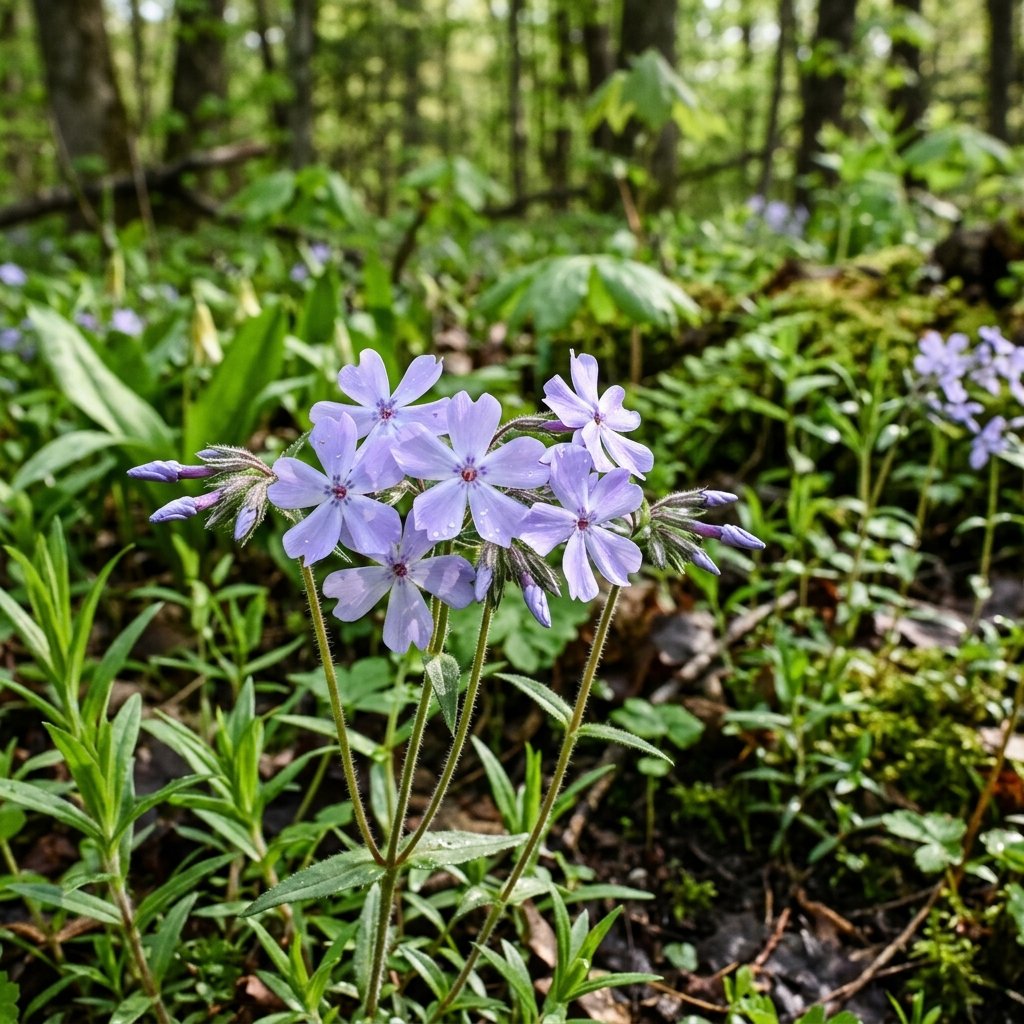
Wild Blue Phlox
Phlox divaricata
Wild Blue Phlox (*Phlox divaricata*), also widely known as Blue Phlox or Woodland Phlox, is one of the most fragrant and visually graceful native wildflowers of eastern North American woodlands, producing loose, open clusters of pale blue to lavender-blue flowers with a sweet, light perfume in Ap...
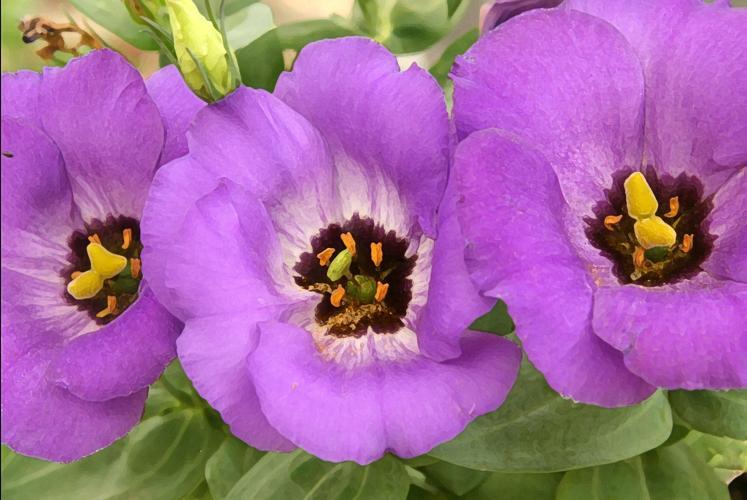
Texas Bluebell (Lisianthus)
Eustoma grandiflorum 'Bolero Deep Blue'
The 'Bolero Deep Blue' is a spectacular cultivar of Eustoma grandiflorum, widely known by its common names: Texas Bluebell, Prairie Gentian, or Lisianthus. Belonging to the Gentianaceae family, this elegant herbaceous annual (or short-lived perennial) is native to the warm, dry prairies and field...
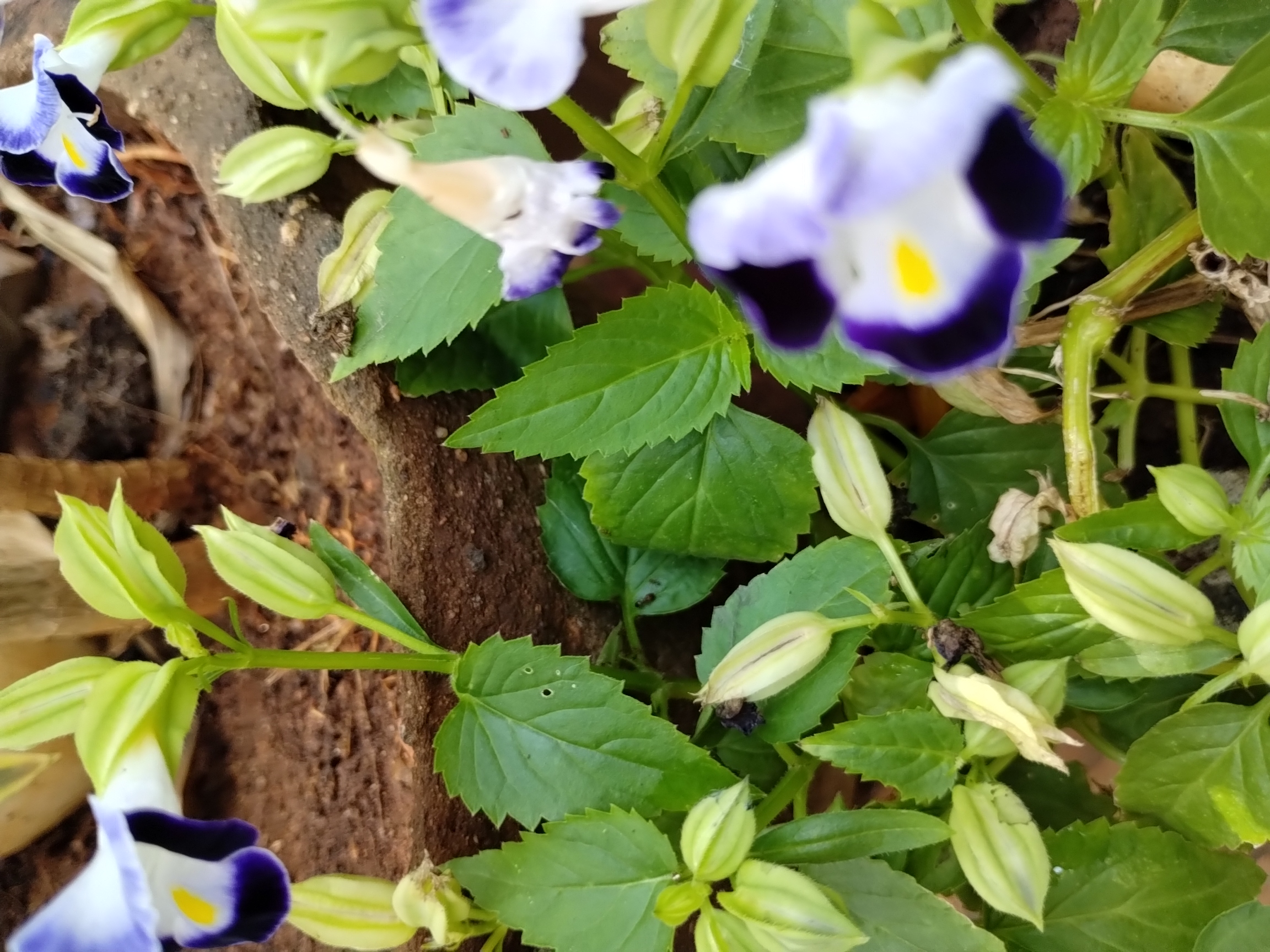
Bluewings
Torenia fournieri
The Wishbone Flower, botanically designated as Torenia fournieri and commonly called Bluewings, is an exceptionally charming, shade-loving tender annual. Belonging to the family Linderniaceae (formerly grouped under Scrophulariaceae), this beautiful plant is native to the moist, shady forest floo...
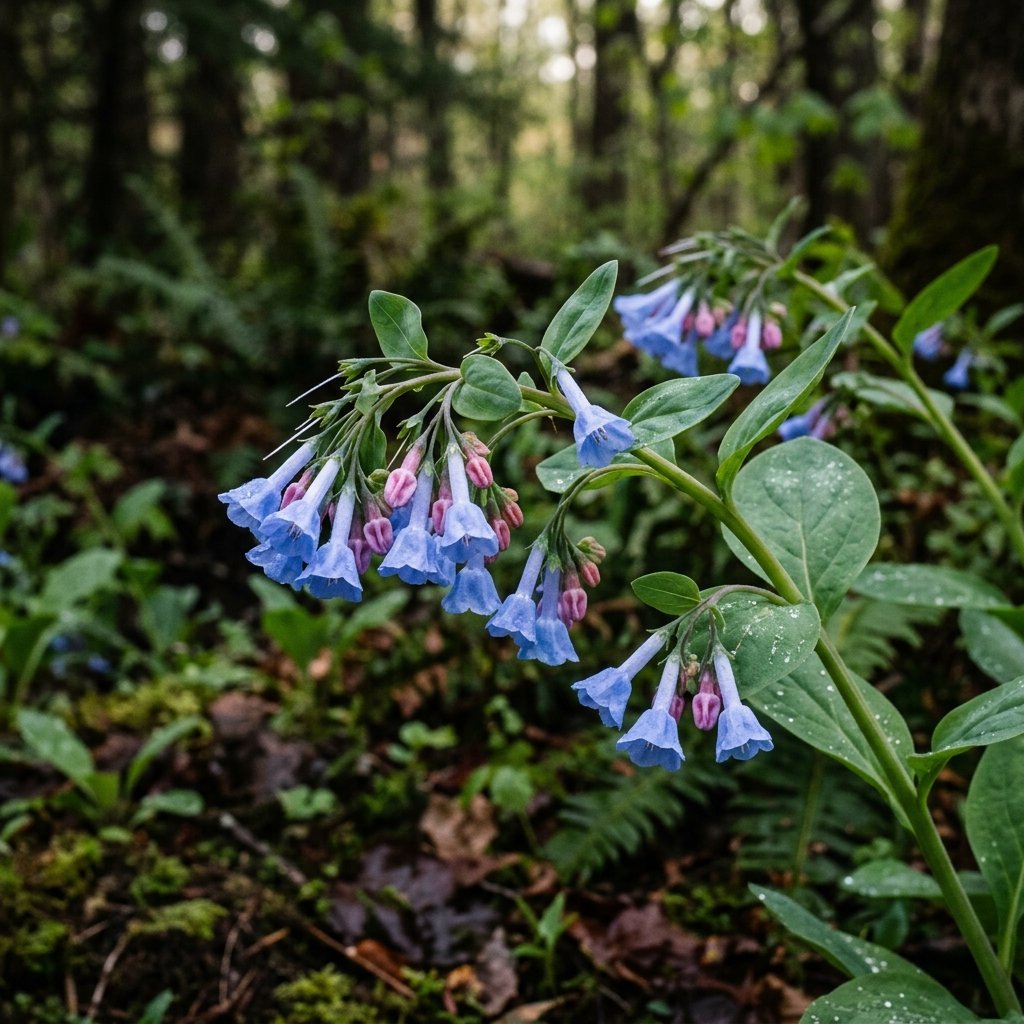
Virginia Bluebells
Mertensia virginica
Virginia Bluebells (*Mertensia virginica*) is among the most enchanting spring wildflowers of eastern North America, producing nodding clusters of sky-blue, trumpet-shaped flowers on arching stems in early spring. A member of the Boraginaceae (borage family), it is native to moist, rich floodplai...
Similar Characteristics
4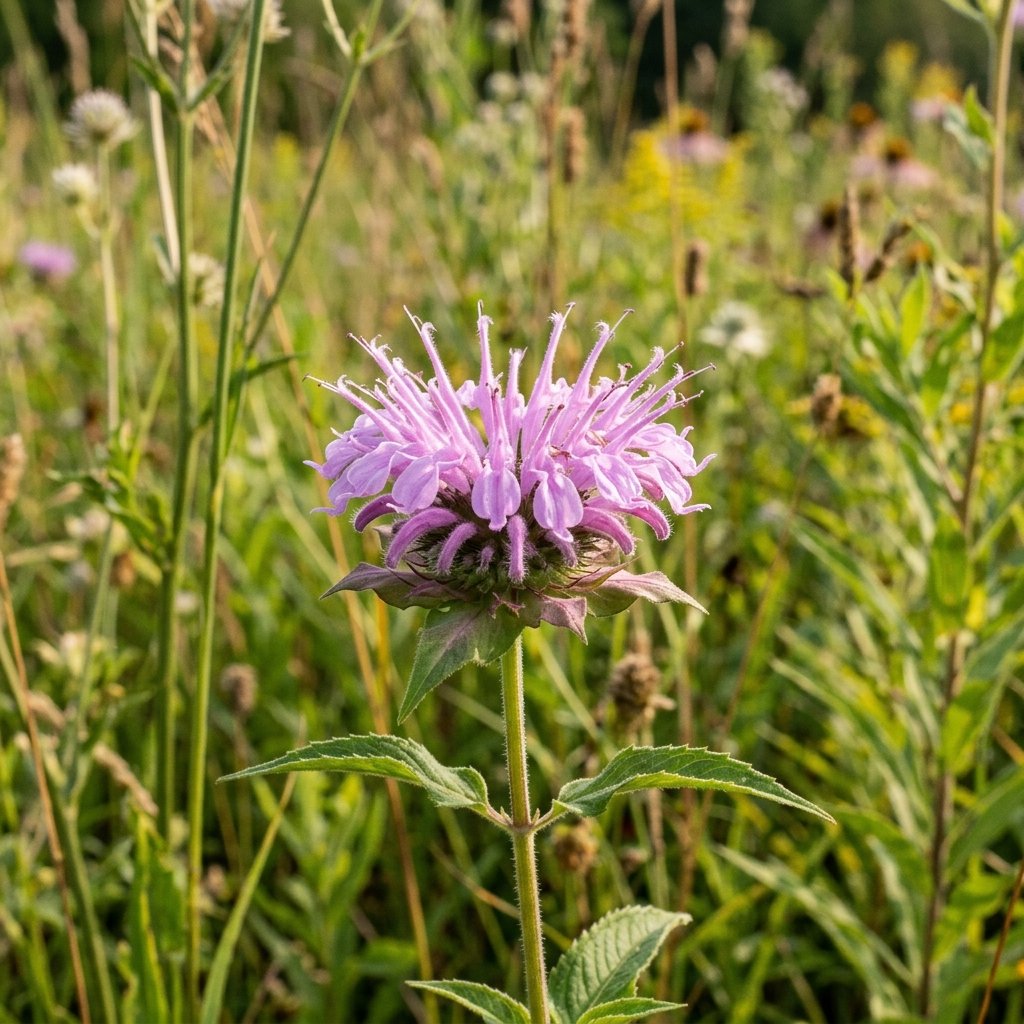
Wild Bergamot
Monarda fistulosa
Wild Bergamot (*Monarda fistulosa*) is one of the most important and widely distributed native wildflowers and medicinal herbs of North America, producing shaggy, globe-shaped heads of tubular lavender to pale pink flowers on sturdy, square stems throughout summer. A member of the mint family (La...
Wild Blue Phlox
Phlox divaricata
Wild Blue Phlox (*Phlox divaricata*), also widely known as Blue Phlox or Woodland Phlox, is one of the most fragrant and visually graceful native wildflowers of eastern North American woodlands, producing loose, open clusters of pale blue to lavender-blue flowers with a sweet, light perfume in Ap...
Bluewings
Torenia fournieri
The Wishbone Flower, botanically designated as Torenia fournieri and commonly called Bluewings, is an exceptionally charming, shade-loving tender annual. Belonging to the family Linderniaceae (formerly grouped under Scrophulariaceae), this beautiful plant is native to the moist, shady forest floo...
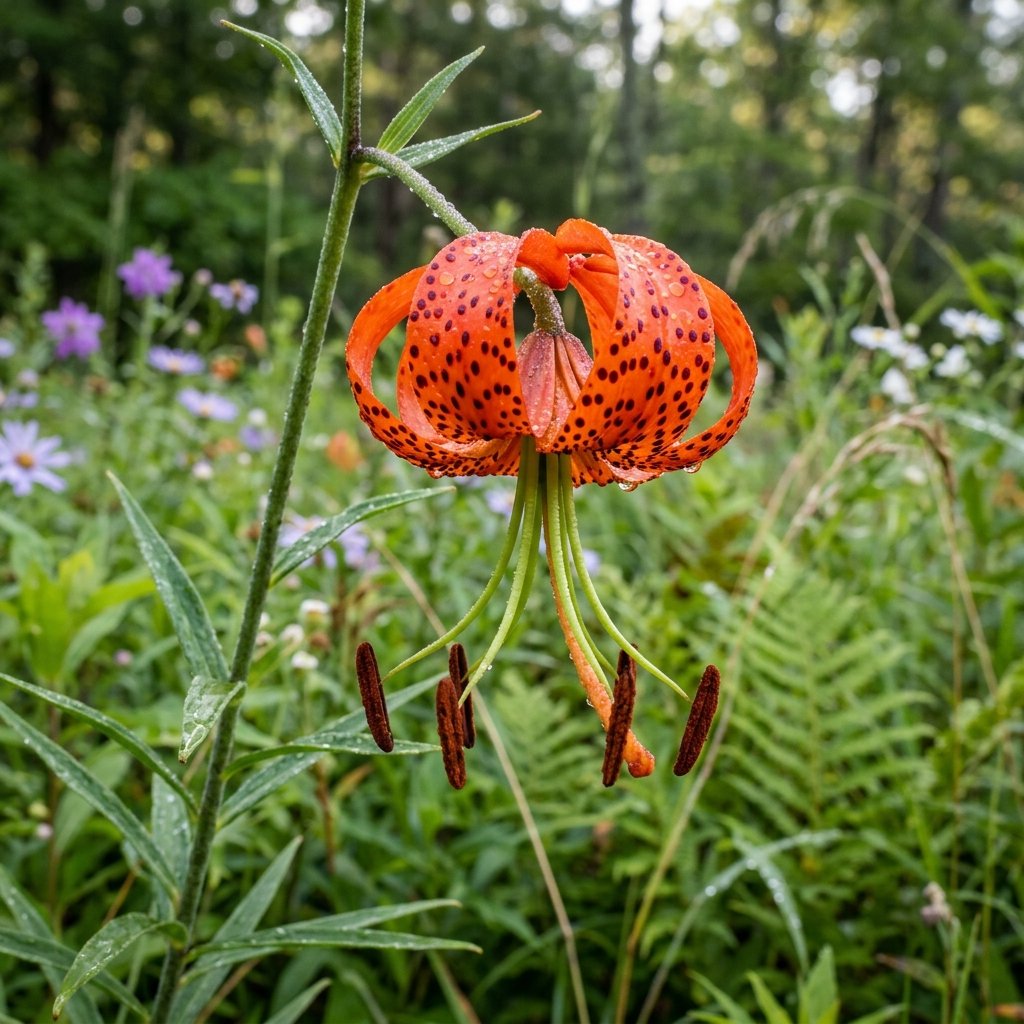
Turk's Cap Lily
Lilium superbum
Turk's Cap Lily (*Lilium superbum*) is the tallest native lily in North America and one of the most spectacular wildflowers of the eastern United States, reaching heights of 4 to 8 feet with multiple nodding, bright orange flowers dramatically spotted with purple-brown and with their petals fully...