
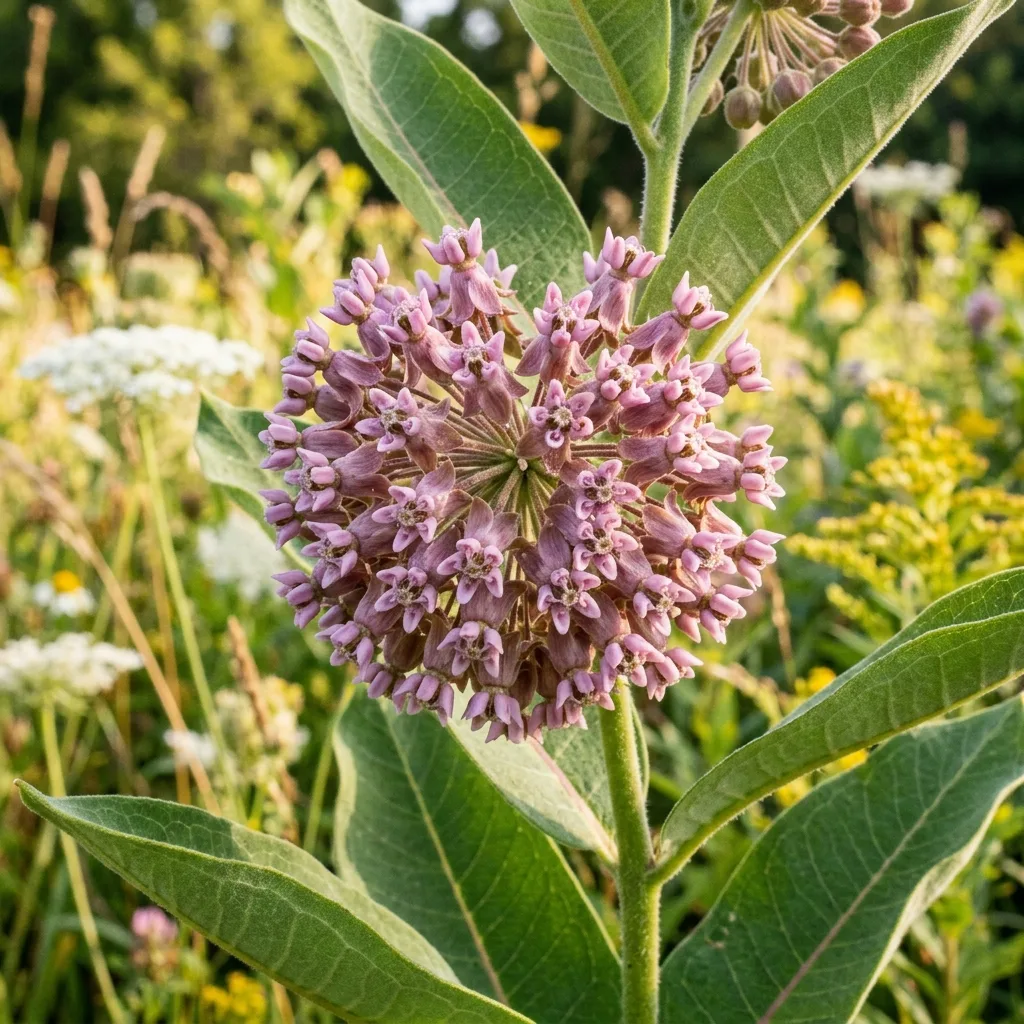
Common Milkweed
Asclepias syriaca
How to Identify Common Milkweed
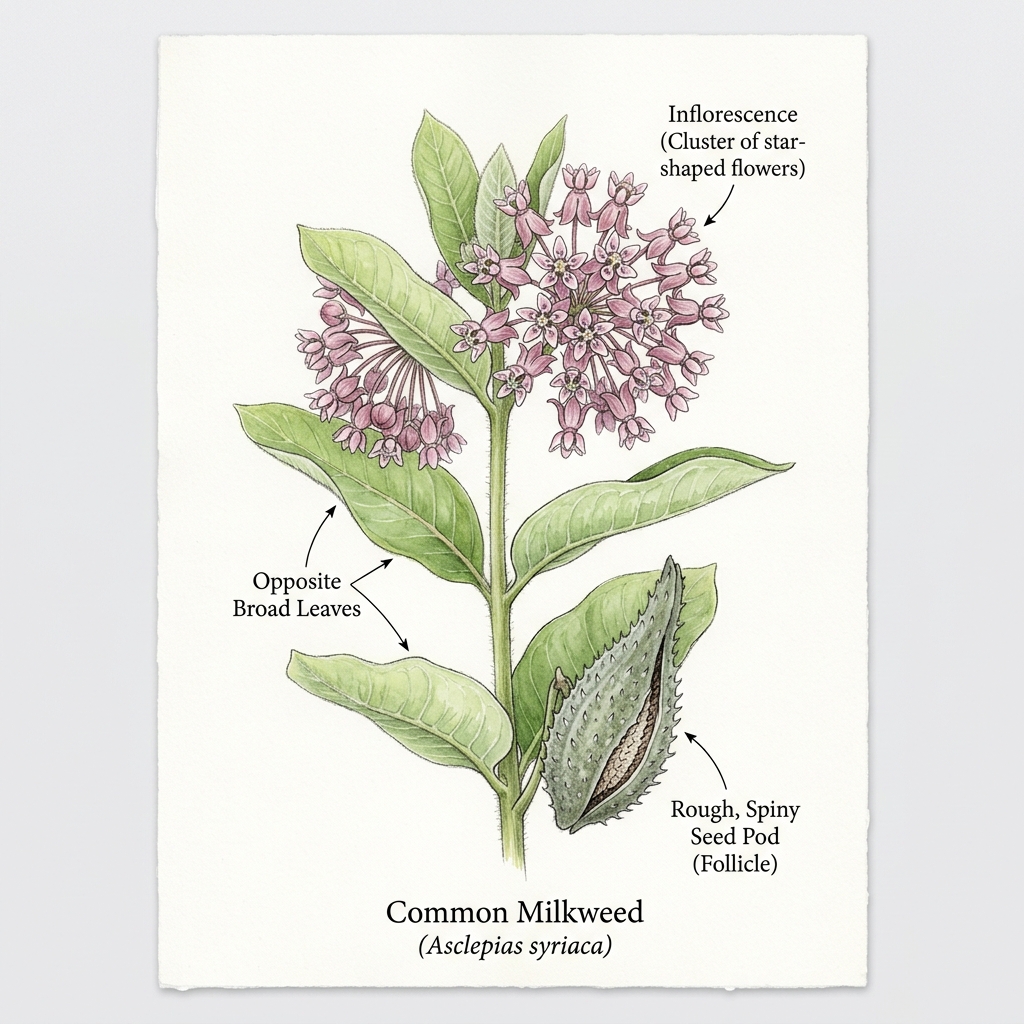
A detailed guide to identifying Common Milkweeds (Asclepias syriaca) by its key features:
- Spherical Pinkish Umbels: Large, round ball-like clusters of sweet-scented, pinkish-purple flowers.
- Broad Velvet Leaves: Large, opposite oval leaves with thick pinkish veins and velvety undersides.
- Sticky Milky Latex: Thick, white milky sap that oozes immediately from any cut stem or leaf.
- Rough Warty Seed Pods: Large, teardrop-shaped green pods covered in soft, warty bumps.
Care & Growing Guide
Common Milkweed Care Guide:
- Light: Full sun (essential)
- Soil: Average to poor, well-draining — tolerates dry and sandy soil
- Spreading: Spreads by rhizomes; divide or contain as needed
- Conservation tip: Every patch planted helps Monarch recovery
Seasonal Blooming & Hardiness
Seasonal Blooming Calendar:
- Peak Bloom: June–August
- US Range: USDA Zones 3–9; native throughout eastern and central US in meadows, roadsides, and prairies
- Fall Interest: Large seed pods split in September–October releasing silky-tufted seeds
Bloom Timeline
About Common Milkweed
Common Milkweed (Asclepias syriaca) is the quintessential wildflower of eastern North American roadsides, meadows, and prairies — a robust, upright perennial producing large, globe-shaped clusters of dusky pink to mauve flowers with an intoxicating sweet fragrance in midsummer, followed by the large, green, warty seed pods that split in autumn to release hundreds of flat brown seeds, each attached to a long silk thread that carries it on the wind. It is both the most abundant milkweed species in North America and one of the most ecologically critical plants on the continent.
The ecological importance of Common Milkweed cannot be overstated. It is the primary larval host plant for the Monarch butterfly (Danaus plexippus) — female Monarchs lay their eggs exclusively on milkweed foliage, and the caterpillars feed on it exclusively, sequestering the toxic cardenolide compounds in their bodies as a defense against predators. The loss of Common Milkweed from the American landscape due to intensive herbicide use in agricultural areas is widely considered the primary driver of the catastrophic 90% decline in the Monarch butterfly population since the 1990s. Restoring Common Milkweed to gardens, roadsides, and meadows is the single most impactful action American gardeners can take for Monarch conservation.
Beyond Monarchs, the fragrant pink flower clusters of Common Milkweed are a magnet for an extraordinary diversity of pollinators, including numerous specialist milkweed bees, bumble bees, hummingbirds, and dozens of butterfly species. The flowers' unusual pollination mechanism — pollen is packaged in complex waxy masses called pollinia that snap onto insect legs — is among the most elaborate in the plant kingdom. In autumn, the opening of the large seed pods and the release of silky-tufted seeds is a beloved late-season spectacle. The hollow stems also provide overwintering habitat for native bees and beneficial insects.
Common Milkweed spreads vigorously by underground rhizomes and can form large colonies in gardens over time, which is generally desirable for Monarch conservation but may require management in small spaces. It grows readily in average to poor soil in full sun and is drought-tolerant once established. Like all milkweeds, it contains cardiac glycosides toxic to dogs and cats if ingested in significant quantities. For its importance to Monarch conservation and as a native plant, it is one of the most highly recommended additions to any American native plant garden. Explore our Flower Identifier for more.
Floral Formula & Features
Actinomorphic, bisexual; 5 reflexed petals, corona of 5 hoods; 5 stamens fused into gynostegium; 2 follicle carpels
- Scientific Name & Classification: Asclepias syriaca (Apocynaceae). The most widespread milkweed species in North America, and the most critical Monarch butterfly host plant.
- Identification Markers: Large globe-shaped clusters of pink-mauve fragrant flowers. Broad, oval, opposite leaves with milky sap when broken. Large green warty seed pods opening to silky-tufted seeds in fall. Height 3–5 ft.
- Floral Formula (⊕ ☿ K5 C5 A5 G(2)): Actinomorphic, bisexual; 5 reflexed petals; 5 specialized hoods forming a corona; 5 fused stamens forming a gynostegium; 2 carpels (follicles).
- Growing Requirements: Full sun; average to poor, well-draining soil. Spreads by rhizomes — may form large colonies. Drought-tolerant. USDA Zones 3–9. Grows readily from seed.
- Cultural Significance: Most critical Monarch butterfly host plant in North America. Decline of Common Milkweed in agricultural areas is the primary driver of Monarch population collapse. Restoration is a national conservation priority.
- Safety & Toxicity: ⚠️ CAUTION. Contains cardiac glycosides (cardenolides) toxic to dogs, cats, and livestock if consumed in significant amounts. The milky sap can irritate skin and eyes.
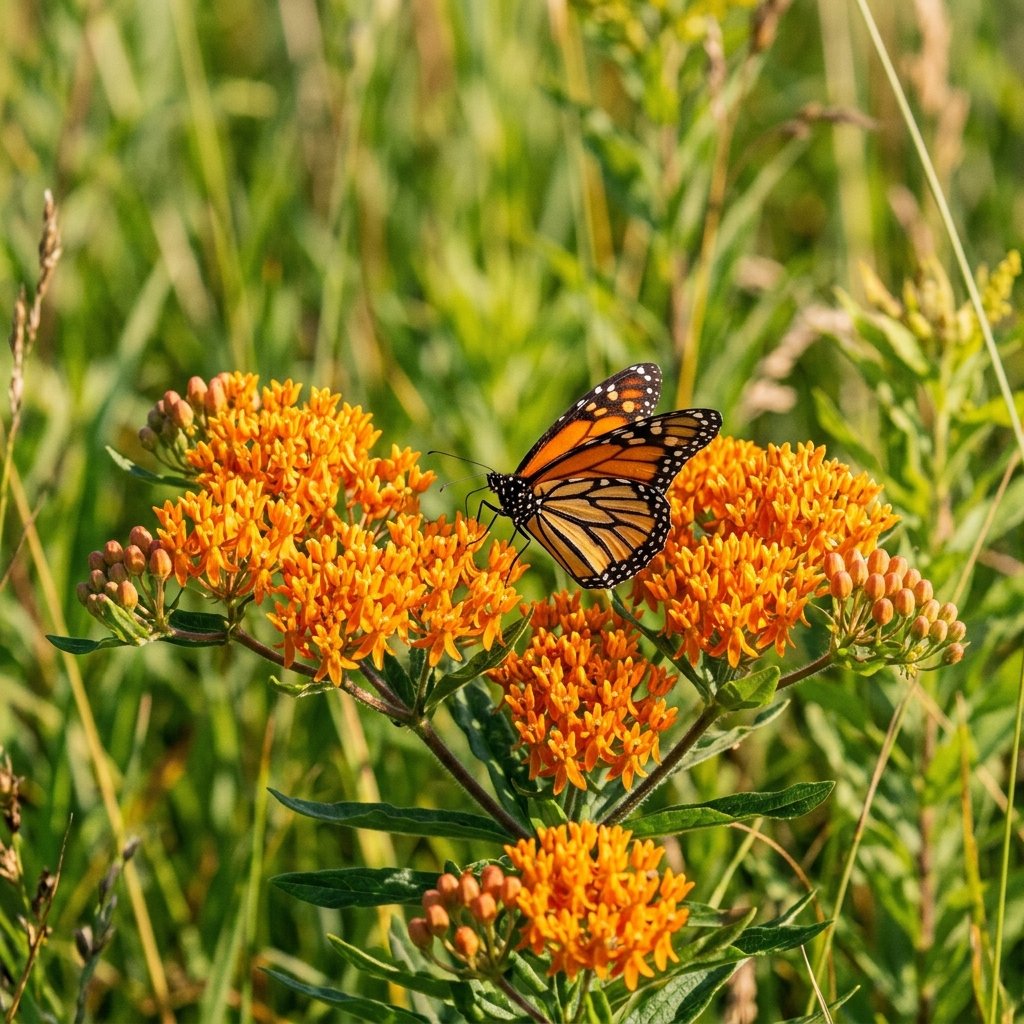
- Common Look-alikes: Similar to Butterfly Weed (A. tuberosa), which has vivid orange flowers and clear (not milky) sap. Also confused with Swamp Milkweed (A. incarnata), which has narrower leaves and grows in wet sites.
- Internal Links: Pairs with Butterfly Weed and Blazing Star to create the ultimate Monarch Waystation. See our Flower Identifier.
Names in Different Languages
Botanical Classification: Common Milkweed belongs to the Apocynaceae family. Learn how to identify its floral symmetry, stamen arrangement, and structural formulas in our Botanical Family Classification Guide.
Toxicity & Safety
Always keep toxic plants out of reach of children and pets. Consult a veterinarian or medical professional immediately if ingestion is suspected.
Pet Safety Guide: For detailed toxicity symptoms, first-aid measures, and safe garden alternatives, see our full Pet Guard Profile for Common Milkweed.
Frequently Asked Questions
What is Floral Formula?
A floral formula is a symbolic representation of a flower's structure using letters, numbers, and special symbols. It provides a concise way to describe the arrangement and number of floral parts.
This formula describes the flower's symmetry, sepals, petals, stamens, and carpels in a standardized format.
Formula Sequence
- Bract: Br or Ebr
- Bracteole: Brl or Ebrl
- Symmetry: % (Radial) or ⊕ (Bilateral)
- Sex: ♀ (Female), ♂ (Male), or ⚥ (Bisexual)
- Calyx/Sepal: K<number> (Free or Fused)
- Corolla/Petal: C<number> (Free or Fused)
- Androecium: A<number> (Free or Fused)
- Gynaecium: G<number> (Superior or Inferior Ovary)
Symbol Meanings
- Numbers: Indicate quantity of parts
- Parentheses (): Parts are fused together
- Plus (+): Parts in different whorls
- Underline: Superior ovary position
- Overline: Inferior ovary position
- ∞: Numerous parts (too many to count)
Understanding floral formulas helps botanists quickly identify and classify flowers based on their structural characteristics.
Similar Flowers
Discover flowers that share botanical characteristics
Same Family
4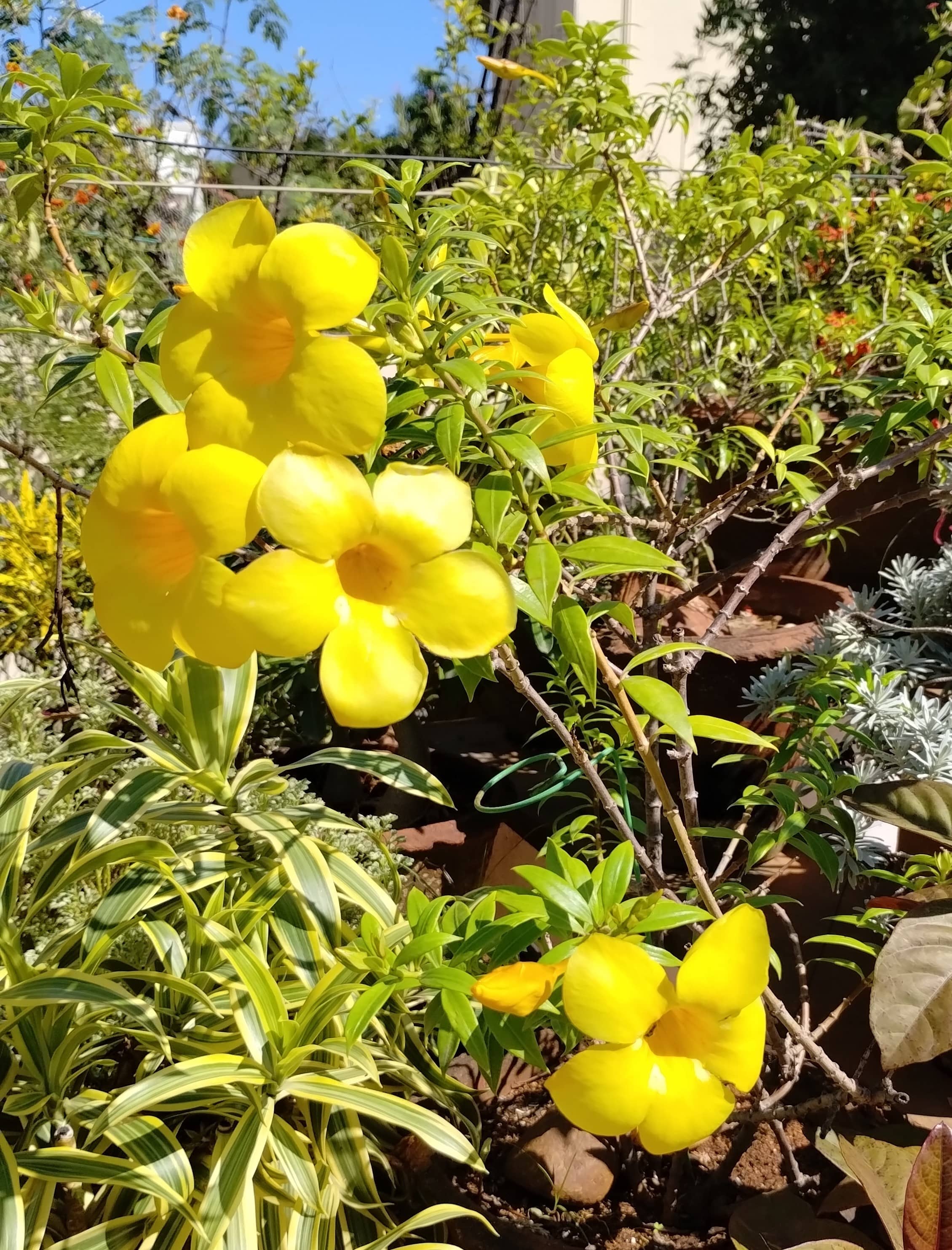
Allamanda
Allamanda cathartica
The Allamanda, botanically designated as Allamanda cathartica and commonly known as the Golden Trumpet, Common Trumpet Vine, or Yellow Bell, is a spectacular tropical evergreen perennial. Belonging to the family Apocynaceae (the dogbane family), this vigorous climbing vine or sprawling shrub is n...
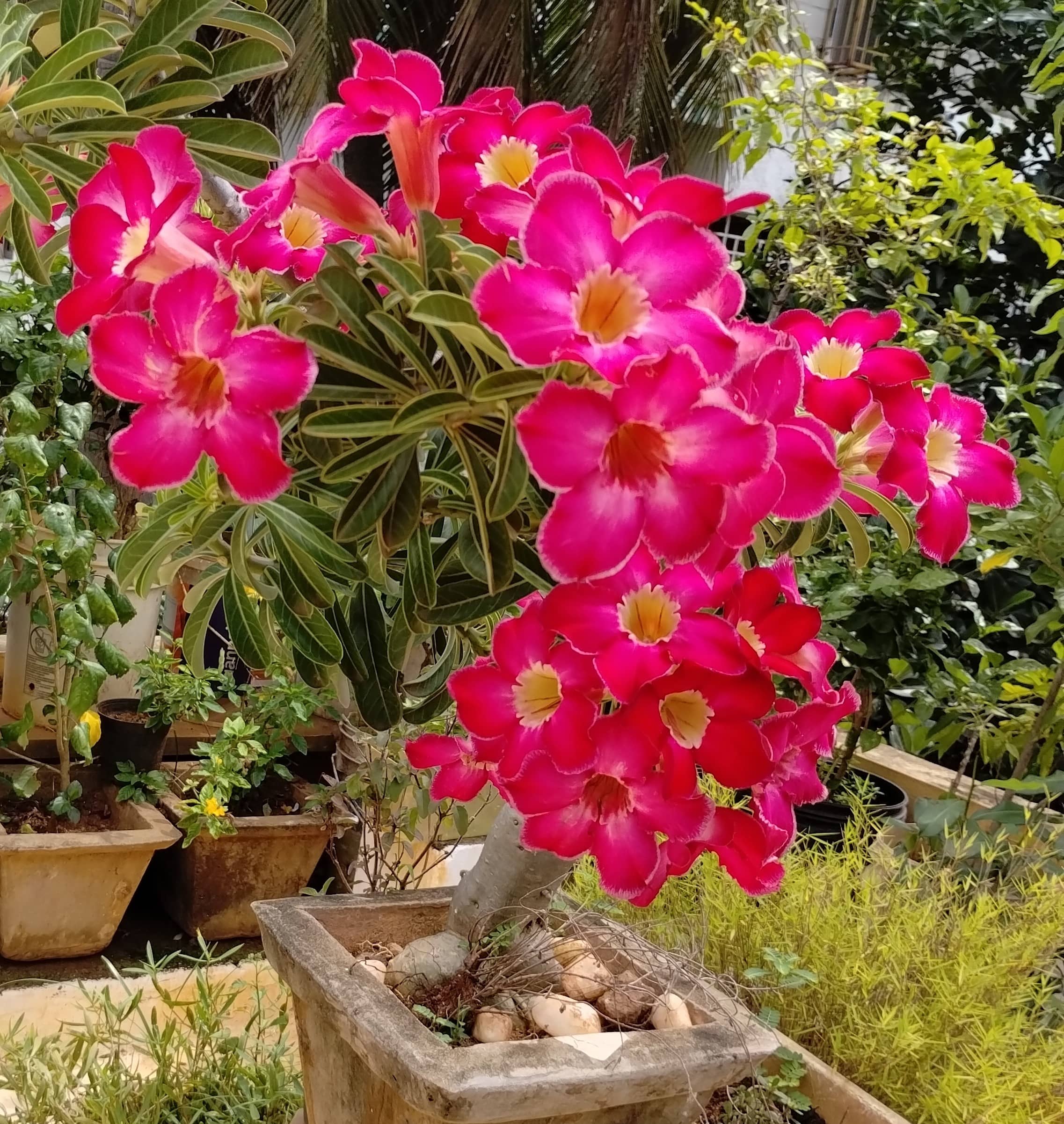
Desert Rose
Adenium obesum
The Desert Rose (Adenium obesum), a member of the Apocynaceae (Dogbane) family, is one of the most sculptural and striking succulent shrubs in the botanical world. Native to the arid regions of sub-Saharan Africa and the Arabian Peninsula, this plant has developed extraordinary adaptations to sur...
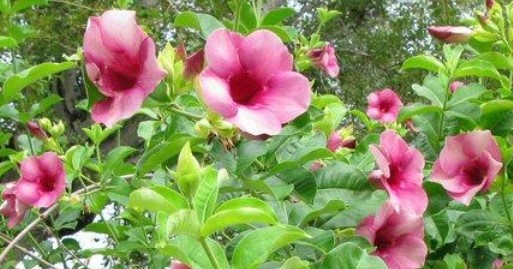
Mandevilla
Mandevilla
Mandevilla, often referred to as the Rock Trumpet, is the undisputed queen of the tropical vertical garden. Belonging to the Apocynaceae family—the same family that hosts the famous Frangipani and Oleander—this genus comprises over 100 species of vigorous, woody climbing vines and mounding shrubs...
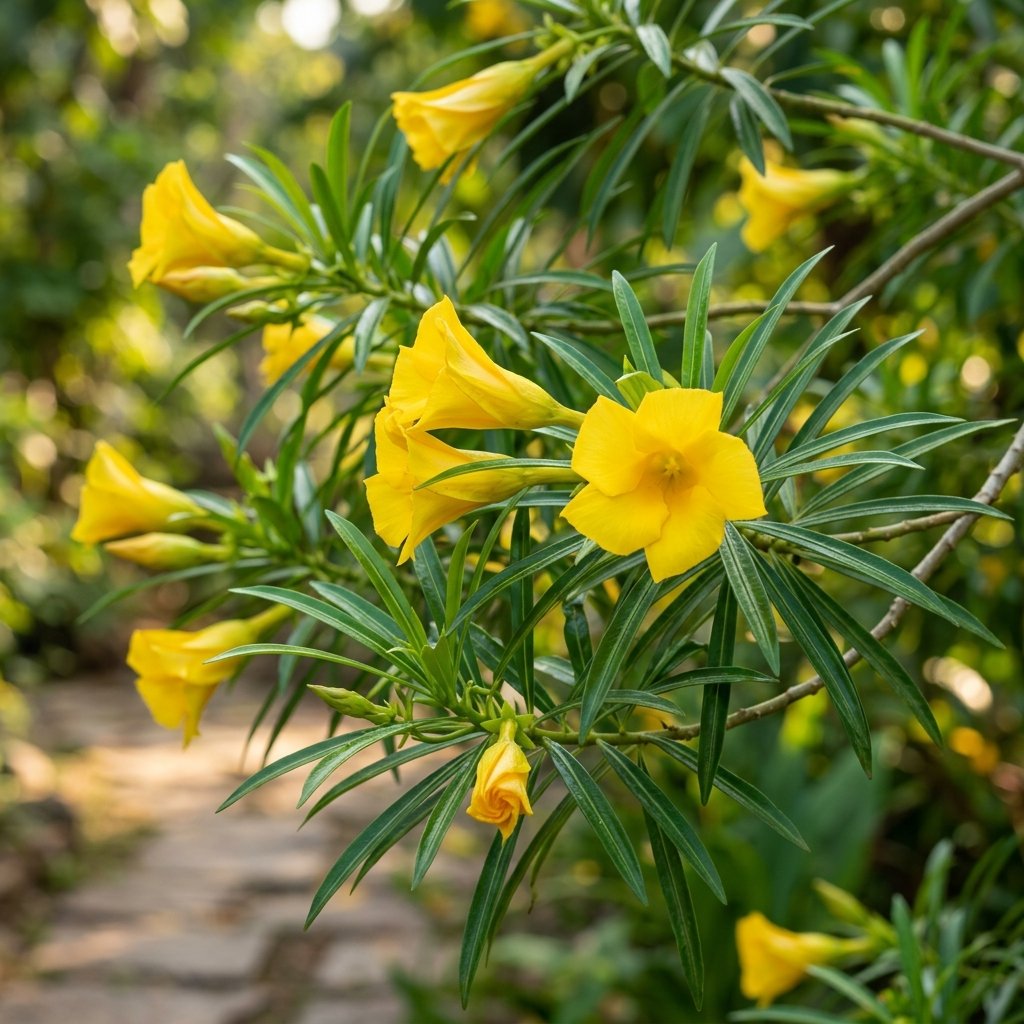
Yellow Oleander (Thevetia)
Cascabela thevetia
Yellow Oleander, botanically classified as *Cascabela thevetia* (formerly *Thevetia peruviana*) and famously celebrated in Indian culture as Pila Kaner, Lucky Nut, or the Be-still Tree, is a highly ornamental, heat-loving evergreen large shrub or small tree. Belonging to the dogbane family Apocyn...
Similar Characteristics
4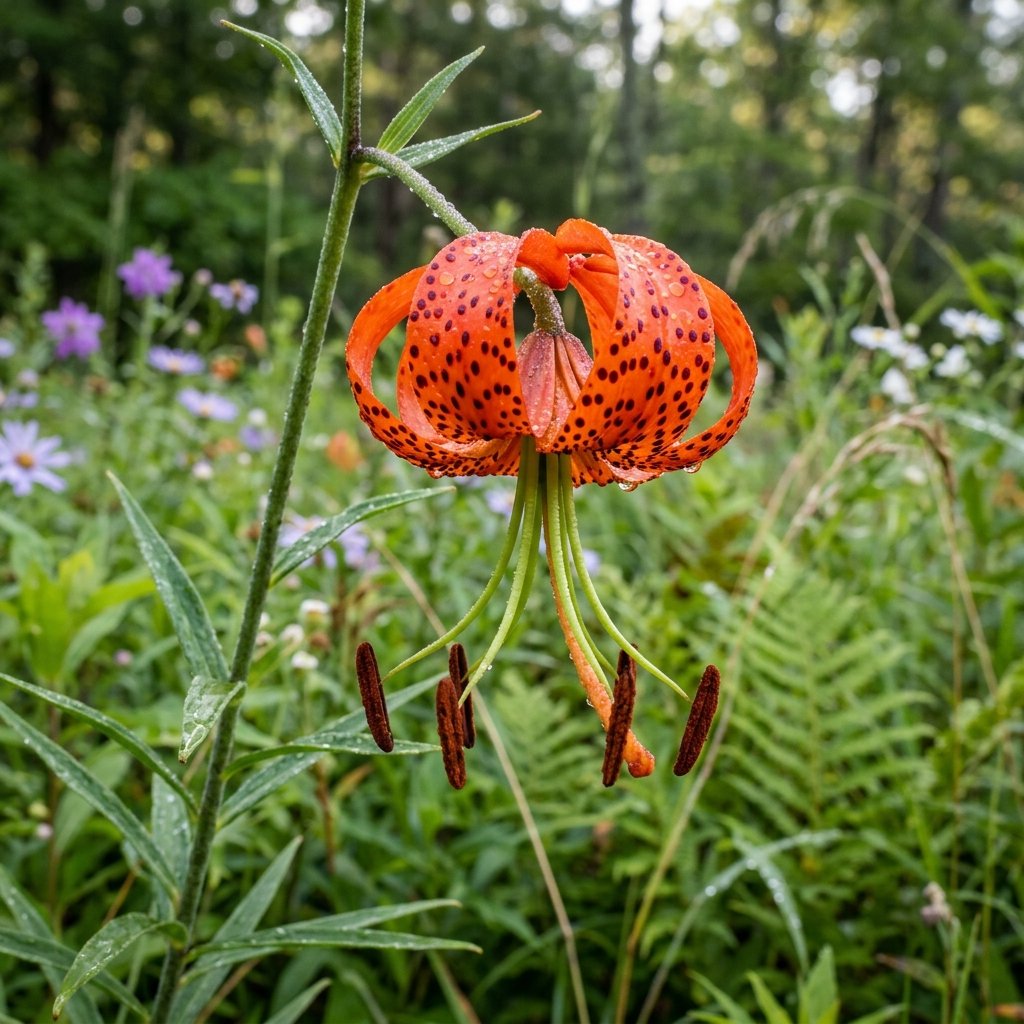
Turk's Cap Lily
Lilium superbum
Turk's Cap Lily (*Lilium superbum*) is the tallest native lily in North America and one of the most spectacular wildflowers of the eastern United States, reaching heights of 4 to 8 feet with multiple nodding, bright orange flowers dramatically spotted with purple-brown and with their petals fully...
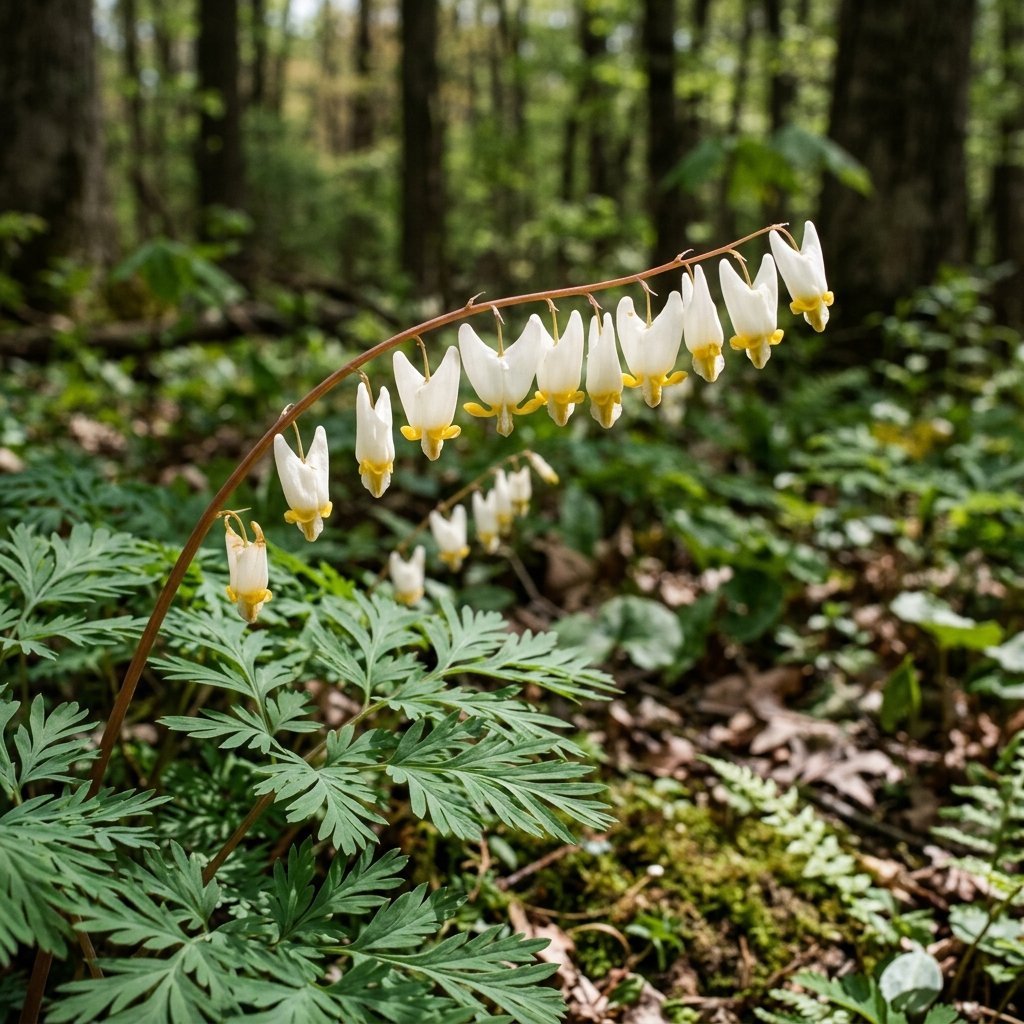
Dutchman's Breeches
Dicentra cucullaria
Dutchman's Breeches (*Dicentra cucullaria*) is one of the most whimsically charming and distinctively shaped wildflowers in the eastern North American spring flora, producing pendulous racemes of pure white flowers shaped precisely like pairs of miniature, upside-down pantaloons or 'breeches' — t...
Pincushion
Scabiosa
The Pincushion Flower, botanically designated under the genus *Scabiosa* (particularly *Scabiosa atropurpurea*, known as the Sweet Scabious or Pincushion Flower), is an exceptionally charming, airy herbaceous perennial or annual. Belonging to the family Caprifoliaceae (the honeysuckle family, tri...
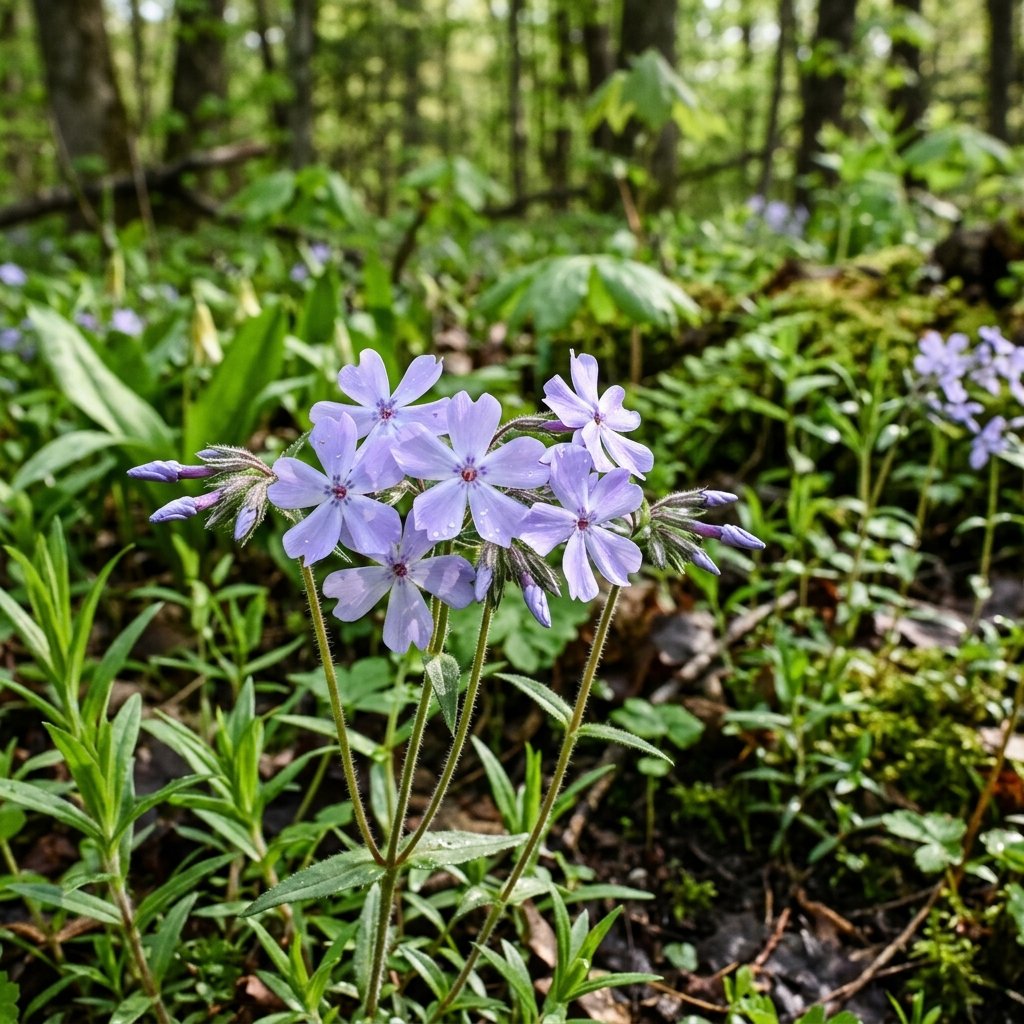
Wild Blue Phlox
Phlox divaricata
Wild Blue Phlox (*Phlox divaricata*), also widely known as Blue Phlox or Woodland Phlox, is one of the most fragrant and visually graceful native wildflowers of eastern North American woodlands, producing loose, open clusters of pale blue to lavender-blue flowers with a sweet, light perfume in Ap...