
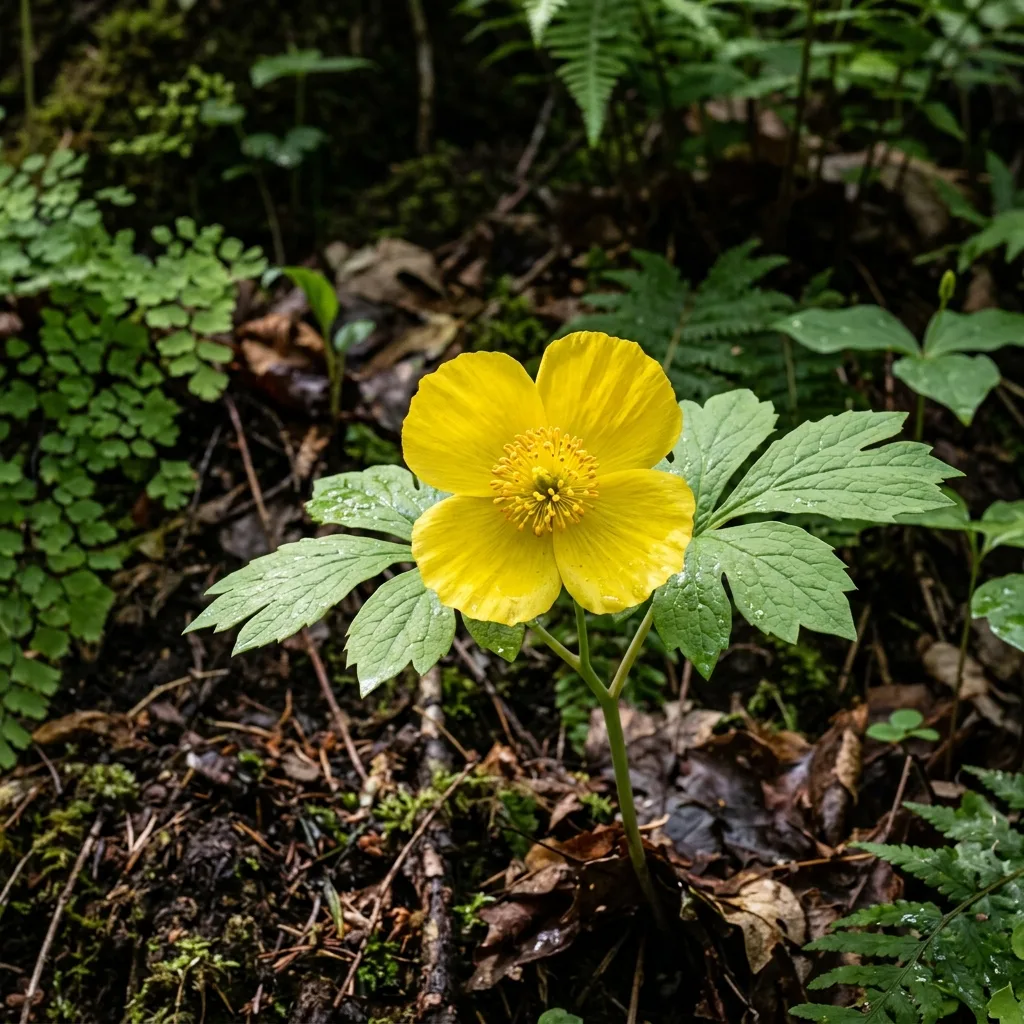
Wood Poppy
Stylophorum diphyllum
How to Identify Wood Poppy
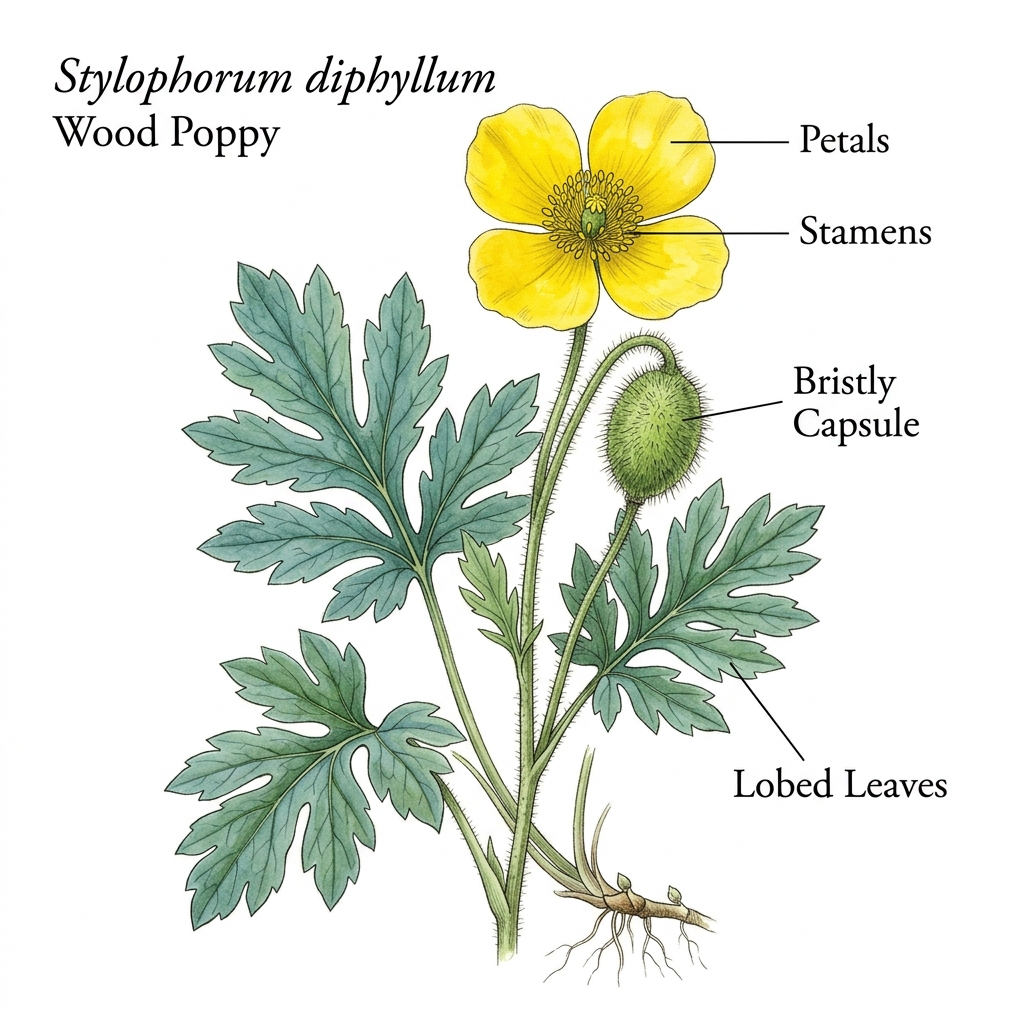
A detailed guide to identifying Wood Poppies (Stylophorum diphyllum) by its key features:
- Four-Petalled Golden Cups: Bright yellow, saucer-shaped flowers up to 2 inches across.
- Deeply Scalloped Lobed Leaves: Silvery-undersided, lobed leaves arranged in opposite pairs.
- Bristly Hanging Pods: Nodding, oval seed capsules covered in soft, white hairs.
- Yellow-Orange Milky Sap: Bright yellow sap that bleeds immediately from cut stems.
Care & Growing Guide
Wood Poppy Care Guide:
- Light: Partial to full shade; tolerates denser shade than most spring wildflowers
- Soil: Moist, humus-rich woodland soil — near streams or low moist areas ideal
- Self-seeding: Spreads readily from seed — allow pods to ripen and drop naturally
- Maintenance: Cut back after blooming to encourage fresh foliage
Seasonal Blooming & Hardiness
Seasonal Blooming Calendar:
- Peak Bloom: April–June (4–8 weeks — longer than most spring wildflowers)
- US Range: USDA Zones 4–8; native in moist, rich deciduous woodlands of eastern and central US
Bloom Timeline
About Wood Poppy
Wood Poppy (Stylophorum diphyllum), also known as the Celandine Poppy or Yellow Wood Poppy, is one of the showiest and most reliable native wildflowers for the shaded woodland garden, producing large, bright butter-yellow poppy flowers 1.5 to 2 inches across above a rosette of deeply lobed, blue-green, pinnately cut leaves from April through June. Belonging to the Papaveraceae (poppy family), it is native to rich, moist deciduous forests and floodplain woodlands from Pennsylvania and Virginia westward to Wisconsin and Missouri.
Unlike the brief-flowered spring ephemerals that surround it, Wood Poppy is a true perennial with attractive foliage that persists well into summer, providing ground cover interest after the flowers have finished. The flowers are produced in continuous succession over a blooming season of 4–8 weeks, each lasting several days — a much longer floral display than most spring woodland wildflowers. The four-petaled, vivid yellow flowers are perfectly sized for early native bumblebee queens and are among the most valuable early spring nectar sources for woodland pollinators.
Like other members of the Papaveraceae family (Bloodroot, Dutchman's Breeches), Wood Poppy contains a distinctive orange to yellow sap in its stems and roots, which was used by some Native American peoples as a dye. The plant spreads readily by seed — the round seed pods ripen in summer and split to release seeds bearing elaiosomes, which are collected and dispersed by ants (myrmecochory). In ideal conditions, Wood Poppy forms large, slowly expanding colonies that carpet a woodland floor with yellow in spring.
For the native garden, Wood Poppy is one of the most rewarding and underused woodland perennials in the eastern US palette. It thrives in partial to full shade with moist, humus-rich soil and is one of the best options for a brightly colored, long-blooming spring wildflower in the shade garden. It is somewhat deer-resistant (the bitter orange sap discourages browsing). All parts of the plant should be considered mildly toxic and kept from pets and children. For more shaded native wildflowers, explore our Flower Identifier.
Floral Formula & Features
Actinomorphic, bisexual; 2 caducous (quickly falling) sepals; 4 free petals; numerous free stamens; 2 fused carpels forming a superior ovary (capsule)
- Scientific Name & Classification: Stylophorum diphyllum (Papaveraceae, tribe Chelidonieae). The 'Yellow Wood Poppy' — sole eastern North American species of the genus Stylophorum.
- Identification Markers: Large (1.5–2 in.) butter-yellow 4-petaled poppy flowers above deeply lobed blue-green leaves. Orange-yellow sap in stems. Rounded seed pods. Blooms April–June in moist woodland shade. Height 12–18 in.
- Floral Formula (⊕ ☿ K2 C4 A∞ G(2)): Actinomorphic, bisexual; 2 caducous sepals; 4 free yellow petals; numerous free stamens; 2 fused carpels with superior ovary.
- Growing Requirements: Partial to full shade; moist, humus-rich, well-draining woodland soil. Self-seeds reliably. USDA Zones 4–8. Longer blooming than most spring ephemerals.
- Cultural Significance: One of the showiest and most reliable yellow-flowered native plants for shaded woodland gardens in eastern North America. Underused and deserving of wider cultivation.
- Safety & Toxicity: ⚠️ MILDLY TOXIC. Contains alkaloids in orange/yellow sap. Mildly toxic if ingested; sap can irritate skin. Keep children and pets from chewing on plant material.
- Common Look-alikes: Closely resembles the invasive Greater Celandine (Chelidonium majus), but Wood Poppy has much larger flowers, deeply lobed (not scalloped) blue-green leaves, and is native to eastern North America.
- Internal Links: Spectacular spring combination with Trillium and Wild Geranium in a shaded woodland garden. Explore our Flower Identifier.
Names in Different Languages
Botanical Classification: Wood Poppy belongs to the Papaveraceae family. Learn how to identify its floral symmetry, stamen arrangement, and structural formulas in our Botanical Family Classification Guide.
Toxicity & Safety
Always keep toxic plants out of reach of children and pets. Consult a veterinarian or medical professional immediately if ingestion is suspected.
Pet Safety Guide: For detailed toxicity symptoms, first-aid measures, and safe garden alternatives, see our full Pet Guard Profile for Wood Poppy.
Frequently Asked Questions
What is Floral Formula?
A floral formula is a symbolic representation of a flower's structure using letters, numbers, and special symbols. It provides a concise way to describe the arrangement and number of floral parts.
This formula describes the flower's symmetry, sepals, petals, stamens, and carpels in a standardized format.
Formula Sequence
- Bract: Br or Ebr
- Bracteole: Brl or Ebrl
- Symmetry: % (Radial) or ⊕ (Bilateral)
- Sex: ♀ (Female), ♂ (Male), or ⚥ (Bisexual)
- Calyx/Sepal: K<number> (Free or Fused)
- Corolla/Petal: C<number> (Free or Fused)
- Androecium: A<number> (Free or Fused)
- Gynaecium: G<number> (Superior or Inferior Ovary)
Symbol Meanings
- Numbers: Indicate quantity of parts
- Parentheses (): Parts are fused together
- Plus (+): Parts in different whorls
- Underline: Superior ovary position
- Overline: Inferior ovary position
- ∞: Numerous parts (too many to count)
Understanding floral formulas helps botanists quickly identify and classify flowers based on their structural characteristics.
Similar Flowers
Discover flowers that share botanical characteristics
Same Family
4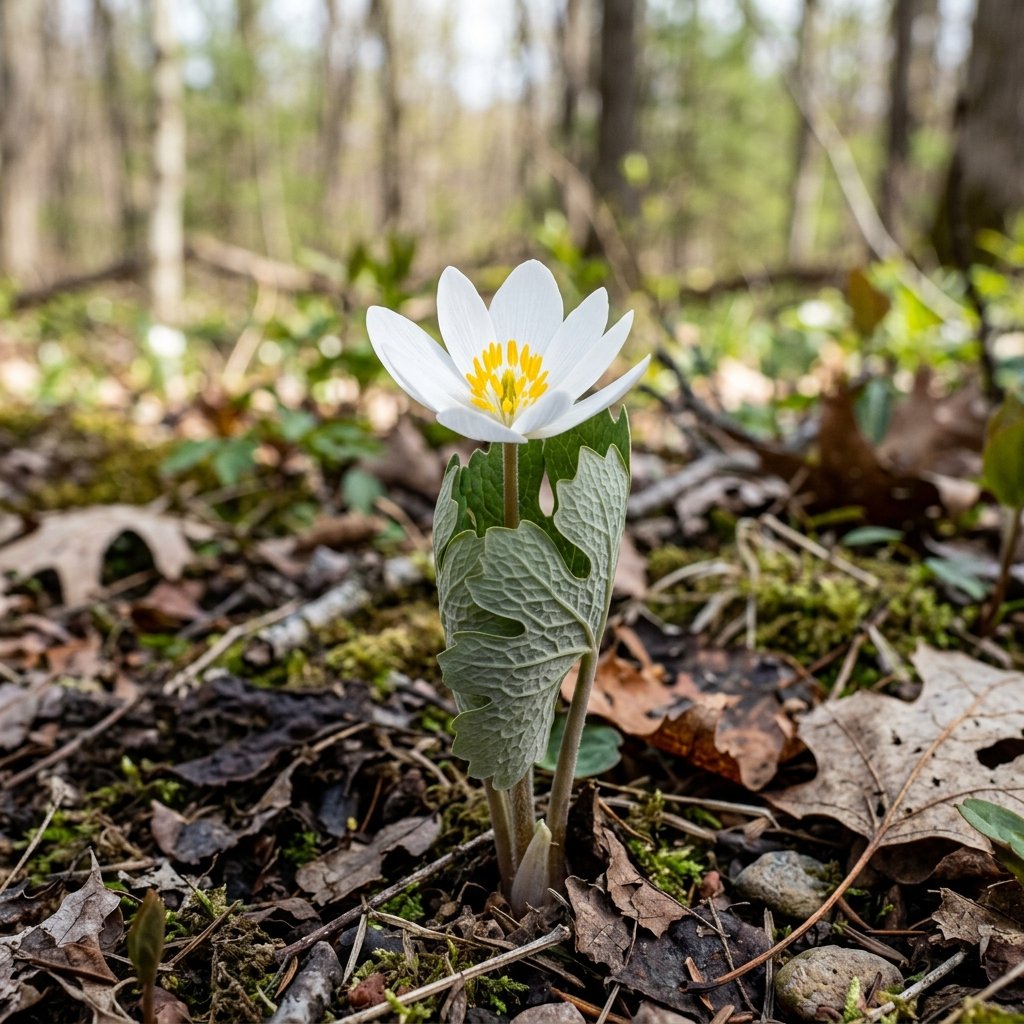
Bloodroot
Sanguinaria canadensis
Bloodroot (*Sanguinaria canadensis*) is one of the earliest and most enchanting spring wildflowers of eastern North American forests, producing pure white, star-like flowers with golden yellow centers that emerge in March and April, often pushing up through the last of the winter snow. It is the...
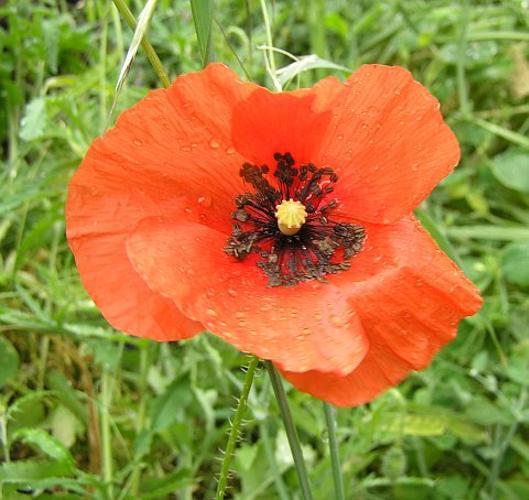
Corn Poppy
Papaver rhoeas
The Corn Poppy, botanically designated as Papaver rhoeas and commonly known as the Field Poppy, Flanders Poppy, or Red Poppy, is an exceptionally iconic, breezy, and resilient annual wildflower. Belonging to the family Papaveraceae (the poppy family, tribe Papavereae), this historically rich plan...
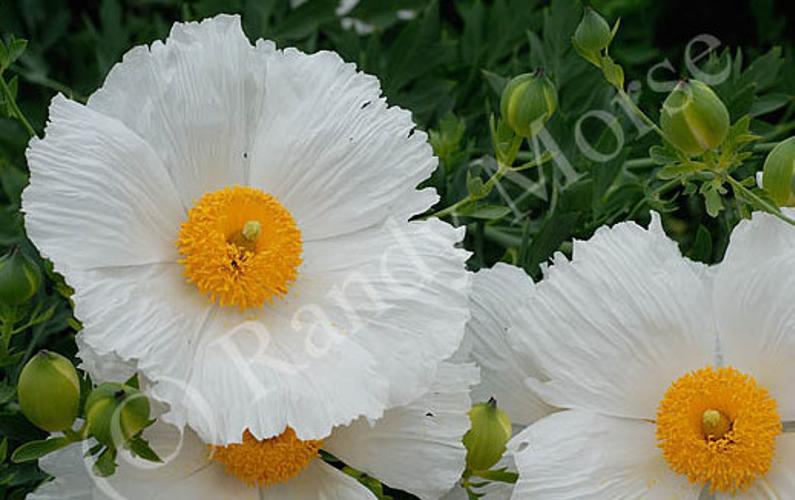
Tree Poppy
Dendromecon rigida
The Tree Poppy, scientifically known as Dendromecon rigida and commonly referred to as the Bush Poppy or California Tree Poppy, is a rare, spectacular evergreen shrub belonging to the Papaveraceae (poppy) family. Endemic to the dry, rocky chaparral slopes and coastal sage scrub of California and...
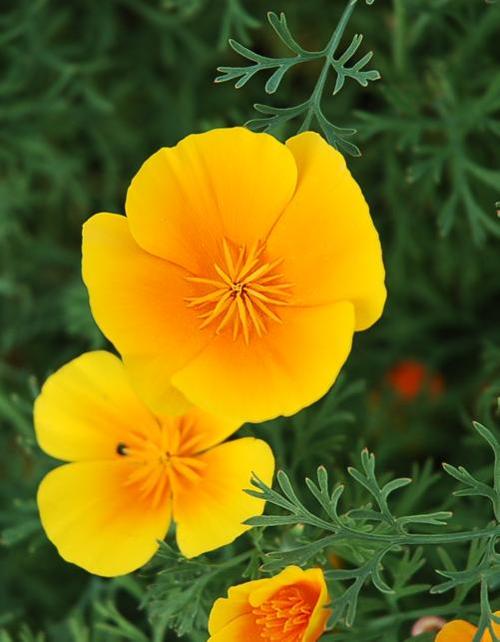
California poppy
Eschscholzia californica
Eschscholzia californica, famously known as the California Poppy or Golden Poppy, is a brilliant wildflower that serves as a luminous symbol of the American West. Belonging to the Papaveraceae (Poppy) family, this resilient species is celebrated for its silky, cup-shaped blossoms that range from...
Similar Characteristics
4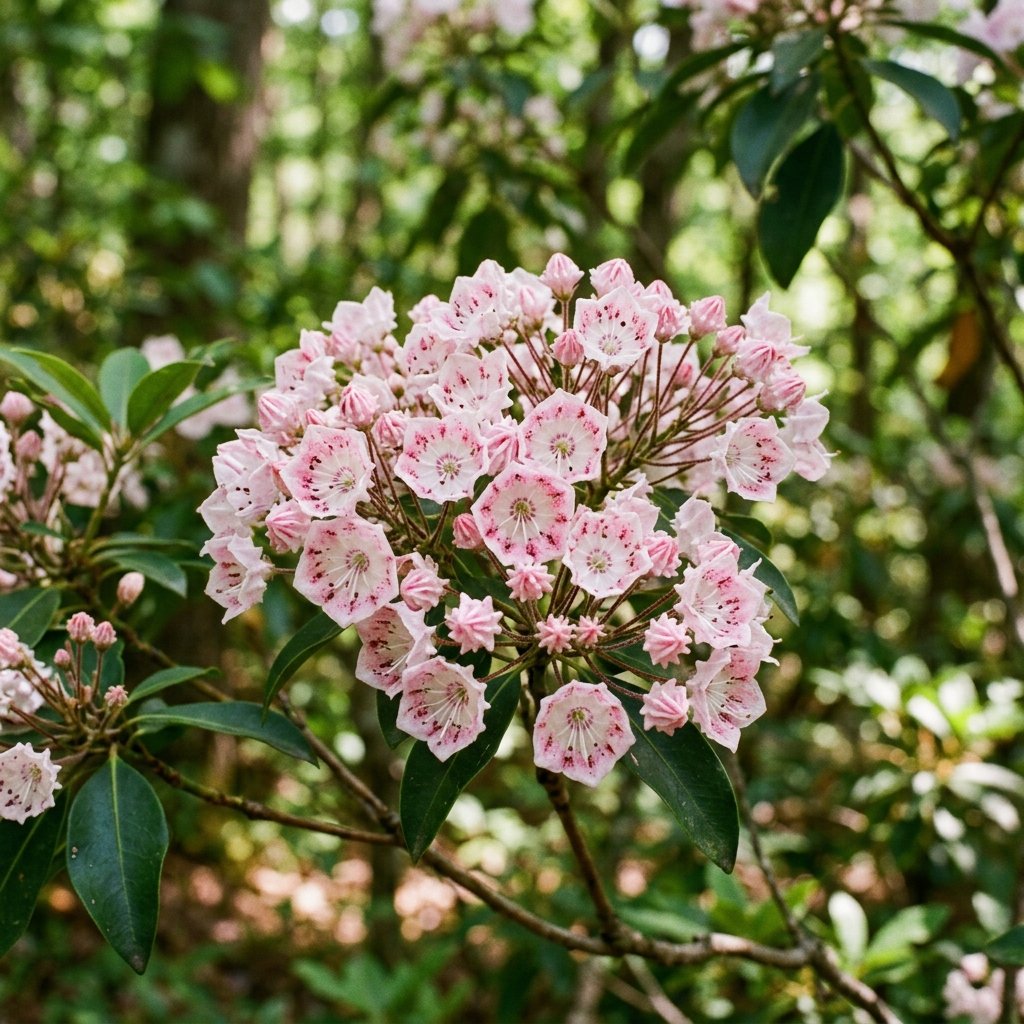
Mountain Laurel
Kalmia latifolia
Mountain Laurel (*Kalmia latifolia*) is one of the most spectacular native flowering shrubs of the eastern United States, producing extraordinary clusters of cup-shaped flowers in shades of white, pink, and deep rose — each blossom decorated with a ring of ten maroon spots and a unique pentagonal...
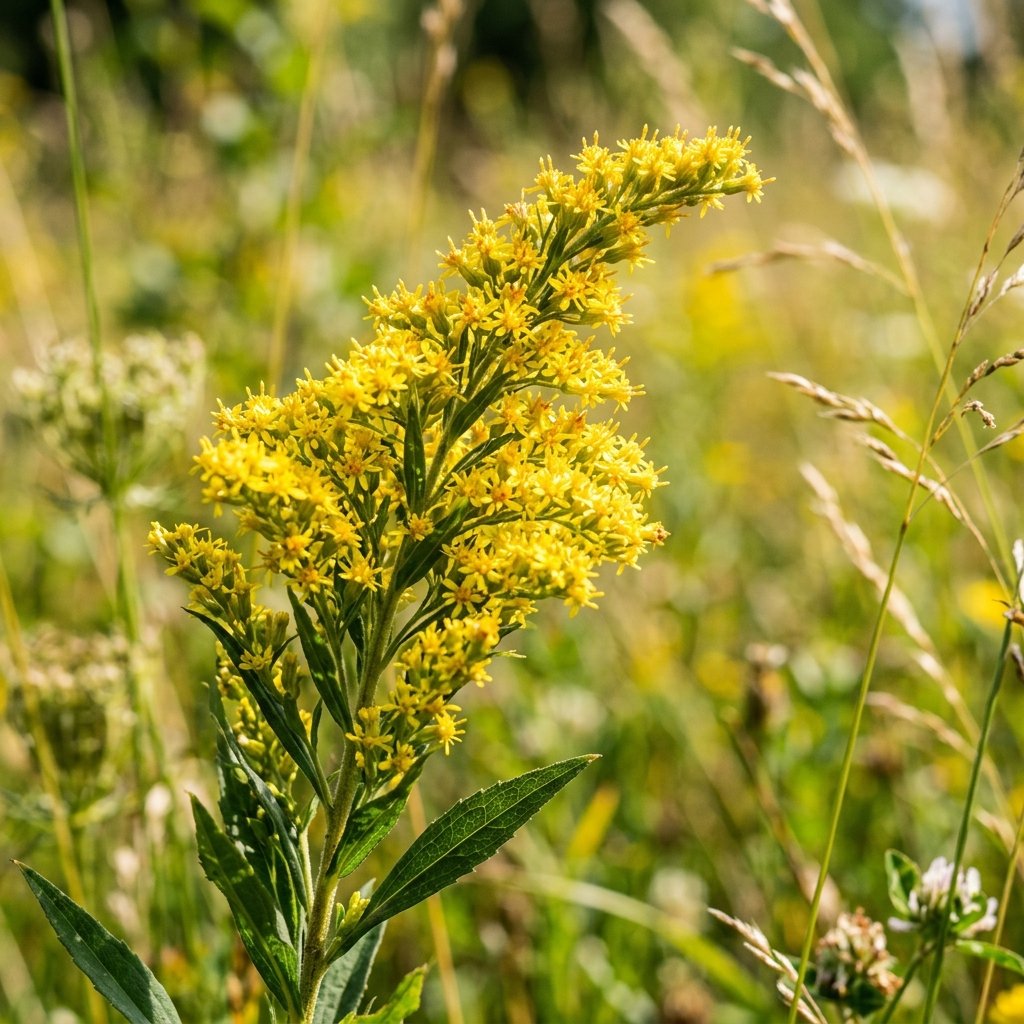
Goldenrod
Solidago canadensis
Goldenrod (*Solidago* spp.) is one of the most ecologically important and visually spectacular native wildflowers of North America, producing brilliant cascading plumes of tiny golden-yellow flowers from late summer through autumn. With over 100 species native to the Americas (most concentrated i...
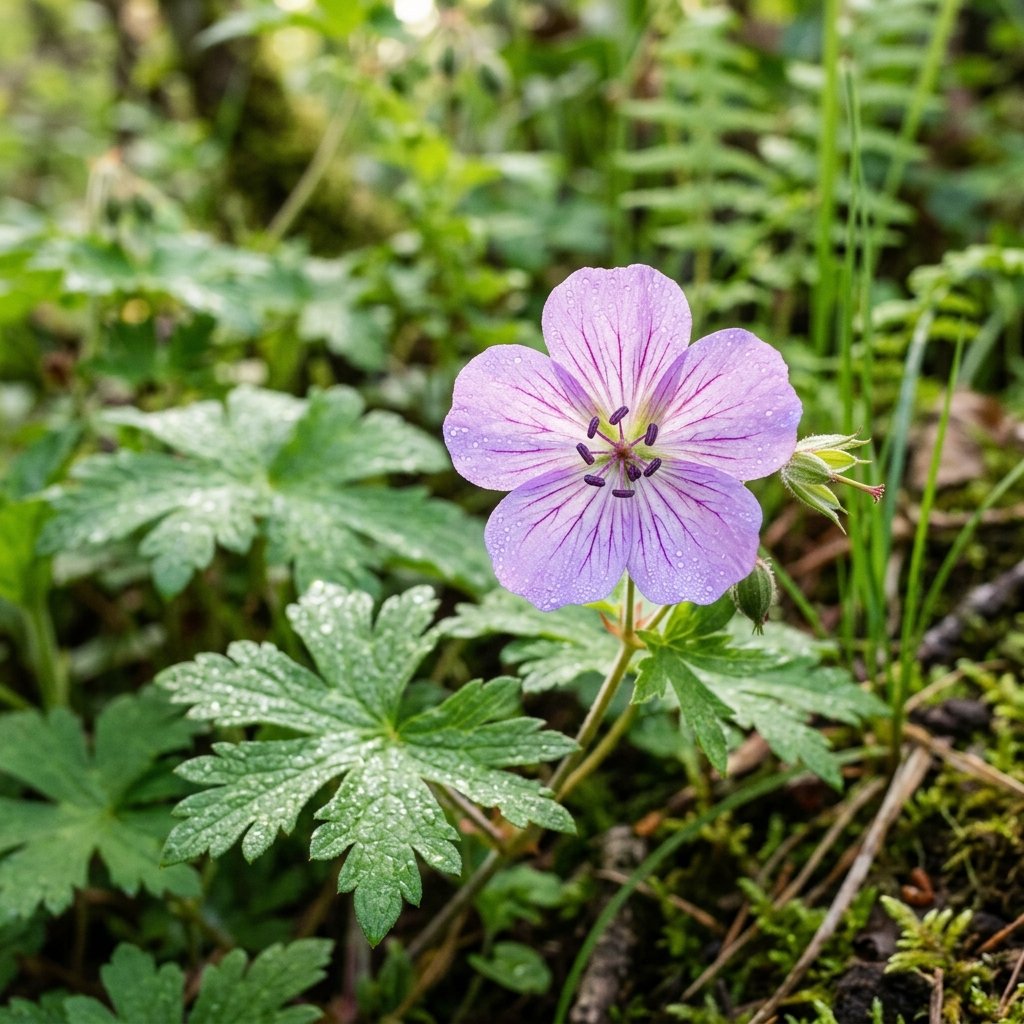
Wild Geranium
Geranium maculatum
Wild Geranium (*Geranium maculatum*), also known as Spotted Cranesbill, is one of the most graceful and widely appreciated native wildflowers of eastern North American woodlands, producing clusters of delicate rosy-lavender to pale pink flowers with five rounded petals above a mound of deeply lob...
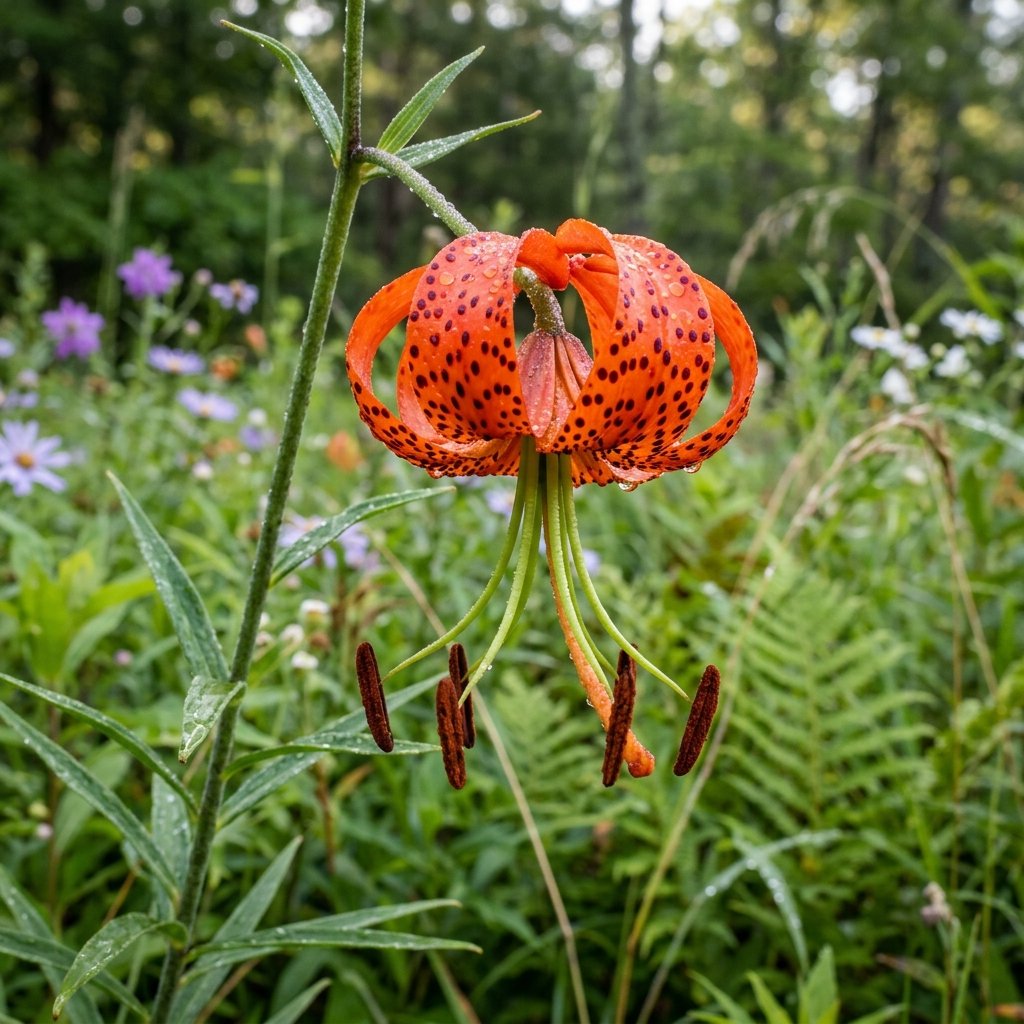
Turk's Cap Lily
Lilium superbum
Turk's Cap Lily (*Lilium superbum*) is the tallest native lily in North America and one of the most spectacular wildflowers of the eastern United States, reaching heights of 4 to 8 feet with multiple nodding, bright orange flowers dramatically spotted with purple-brown and with their petals fully...