
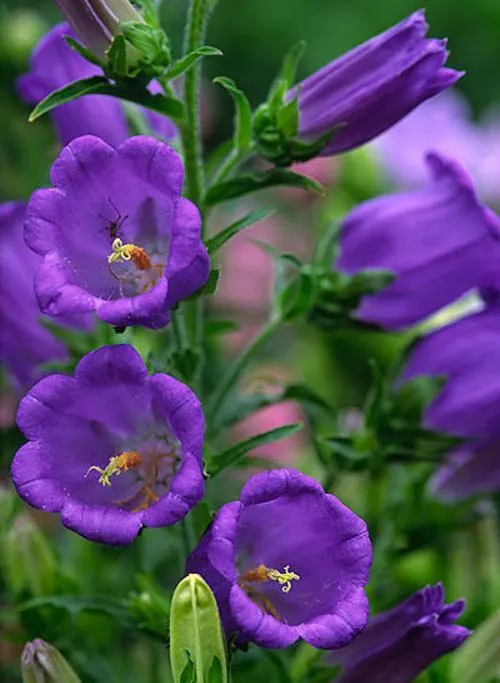
Canterbury bells
Campanula medium
How to Identify Canterbury bells
NON-TOXIC. Safe for cats, dogs, and horses, making them a safe and non-toxic addition for child-friendly gardens.
Care & Growing Guide
Seasonal Blooming & Hardiness
Seasonal Blooming Calendar:
- Peak Bloom: Summer (typically June through September).
- Planting Time: Sow seeds directly outdoors in early spring after the last frost, or transplant nursery starts in late spring.
Bloom Timeline
About Canterbury bells
Campanula medium, commonly known as Canterbury Bells, is a quintessential cottage garden biennial that brings a sense of Victorian elegance and whimsical charm to any landscape. Belonging to the Campanulaceae family, this species is native to the sun-drenched hills of Southern Europe, particularly the Mediterranean regions of Italy and France. Known for its stately spires of large, bell-shaped blossoms, it has been a staple of European horticulture for centuries. The name "Canterbury Bells" is steeped in folklore, said to resemble the bells carried by pilgrims on their way to the shrine of Thomas Becket in Canterbury, England, symbolizing faith and constant gratitude.
The architecture of the Canterbury Bells flower is a masterpiece of symmetrical design. Each blossom features five fused petals that form a deep, upturned bell shape, often reaching two inches in diameter. In many sought-after varieties, a secondary whorl of petals forms at the base of the flower, creating the famous "Cup and Saucer" look (C. medium var. calycanthema). These blossoms come in a sophisticated palette of cool-toned purples, sky blues, delicate rose pinks, and pristine whites. The flowers are arranged in upright racemes on sturdy, hairy stems, providing a vertical dimension that is highly valued in back-of-the-border planting schemes.
The reproductive blueprint of this bellflower is represented by the floral formula EBr ⊕ ⚥ K(5) C(5) A5 G(3). This formula indicates that the bloom is ebracteate, radially symmetrical (actinomorphic), and bisexual. It features 5 fused sepals forming a calyx tube, 5 fused petals forming a bell-shaped corolla, 5 free stamens that surround the central style, and a syncarpous gynoecium of 3 fused carpels forming a single inferior ovary. This botanical layout is highly adapted to attract heavy-bodied insect pollinators, particularly bumblebees.
Cultivation of Campanula medium is straightforward for those in temperate climates (USDA Zones 5-9). It thrives in full sun to partial shade, requiring rich, well-drained soil and a consistent supply of moisture, especially during the bolting phase. Because the heavy flowering spikes can sometimes lean under their own weight, providing subtle staking or planting them in groups for mutual support is recommended. Deadheading (removing spent blooms) is essential not only for aesthetic reasons but also to encourage a secondary, albeit smaller, flush of flowers later in the season. Its resilience and striking form make it an ideal companion for other cottage classics.
Beyond its ornamental beauty, Canterbury Bells is a powerhouse of biodiversity and cultural heritage. It is a magnetic nectar source for bumblebees and honeybees, who are frequently seen crawling deep into the bells to reach the nectar at the base. In the language of flowers, they represent constancy, gratitude, and a "gentle heart," making them popular choices for bridal bouquets and celebratory arrangements. Affectionately known as மணிப்பூ (Manippoo) in Tamil and Campanella in Italian, these blooms remain a timeless and rewarding choice for the modern garden.
From a safety standpoint, Canterbury Bells are an excellent choice for family-friendly and pet-safe gardens. They are completely NON-TOXIC to cats, dogs, and horses, making them a worry-free selection for paths, low borders, and play areas. Curious pets can safely brush past or inspect these tall spires without any risk of chemical poisoning. For further guidance on selecting non-toxic cottage garden classics, please cross-reference our Pet Guard safety hub.
Canterbury Bells are sometimes confused with Foxglove (Digitalis) or their relative, the Balloon Flower (Platycodon grandiflorus). They are easily distinguished from Foxglove by their wider, upturned cup-and-saucer bell shape and lack of speckled throats, and from Balloon Flowers by their taller spike-forming habit rather than sprawling mounds. They serve as an exceptional vertical accent alongside other classic garden beds; we suggest pairing them with Foxglove or Balloon Flower. To explore more bell-shaped flowers, visit our Flower Identifier.
Floral Formula & Features
Ebracteate (no bracts), radially symmetrical (actinomorphic), bisexual, 5 fused sepals forming calyx tube, 5 fused petals forming bell-shaped corolla, 5 free stamens, 3 fused carpels with inferior ovary
- Scientific Name & Classification: Campanula medium (Campanulaceae). The genus name "Campanula" is Latin for "little bell," accurately describing the flower's iconic shape.
- Identification Markers: Large, bell-shaped flowers (up to 2 inches) on tall racemes. The "Cup and Saucer" variety features a colored calyx that mimics the petals. Leaves are dark green, lanceolate, and hairy.
- Floral Formula (EBr ⊕ ⚥ K(5) C(5) A5 G(3)): Radially symmetrical, bisexual, with 5 fused sepals, 5 fused petals, 5 free stamens, and a 3-carpellate inferior ovary typical of the Bellflower family.
- Growing Requirements: Thrives in partial shade to full sun. Prefers nutrient-rich, well-draining soil (USDA Zones 5-9). Requires consistent moisture and may need staking to support heavy flower spikes.
- Cultural Significance: Named after the pilgrim bells of Canterbury. Symbolizes gratitude and constancy. A cornerstone of traditional Victorian and English cottage gardens.
- Safety & Toxicity: NON-TOXIC. Safe for cats, dogs, and horses, making them a safe and non-toxic addition for child-friendly gardens.
- Common Look-alikes: Often confused with Foxglove, but distinguished by wider, open cups and saucers and a complete lack of internal speckles.
- Internal Links: Perfectly suited as a vertical accent planted beside Foxglove or Balloon Flower; discover more bellflowers in our Flower Identifier.
Names in Different Languages
Botanical Classification: Canterbury bells belongs to the Campanulaceae family. Learn how to identify its floral symmetry, stamen arrangement, and structural formulas in our Botanical Family Classification Guide.
Toxicity & Safety
Frequently Asked Questions
What is Floral Formula?
A floral formula is a symbolic representation of a flower's structure using letters, numbers, and special symbols. It provides a concise way to describe the arrangement and number of floral parts.
This formula describes the flower's symmetry, sepals, petals, stamens, and carpels in a standardized format.
Formula Sequence
- Bract: Br or Ebr
- Bracteole: Brl or Ebrl
- Symmetry: % (Radial) or ⊕ (Bilateral)
- Sex: ♀ (Female), ♂ (Male), or ⚥ (Bisexual)
- Calyx/Sepal: K<number> (Free or Fused)
- Corolla/Petal: C<number> (Free or Fused)
- Androecium: A<number> (Free or Fused)
- Gynaecium: G<number> (Superior or Inferior Ovary)
Symbol Meanings
- Numbers: Indicate quantity of parts
- Parentheses (): Parts are fused together
- Plus (+): Parts in different whorls
- Underline: Superior ovary position
- Overline: Inferior ovary position
- ∞: Numerous parts (too many to count)
Understanding floral formulas helps botanists quickly identify and classify flowers based on their structural characteristics.
Similar Flowers
Discover flowers that share botanical characteristics
Same Family
3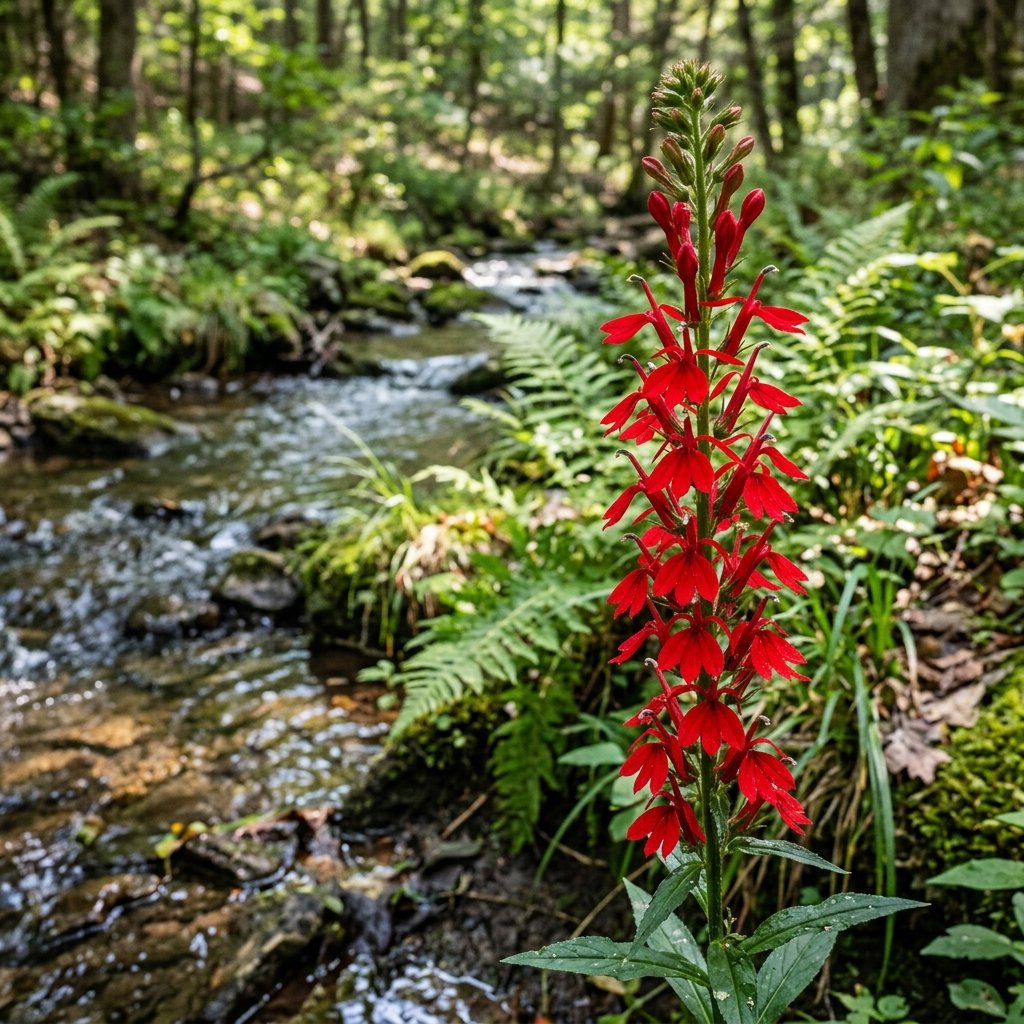
Cardinal Flower
Lobelia cardinalis
Cardinal Flower (*Lobelia cardinalis*) produces one of the most intensely saturated, brilliant scarlet-red flower spikes in all of North American horticulture, a vivid column of color that dominates moist meadows, stream banks, and woodland edges from July through September. Native throughout muc...
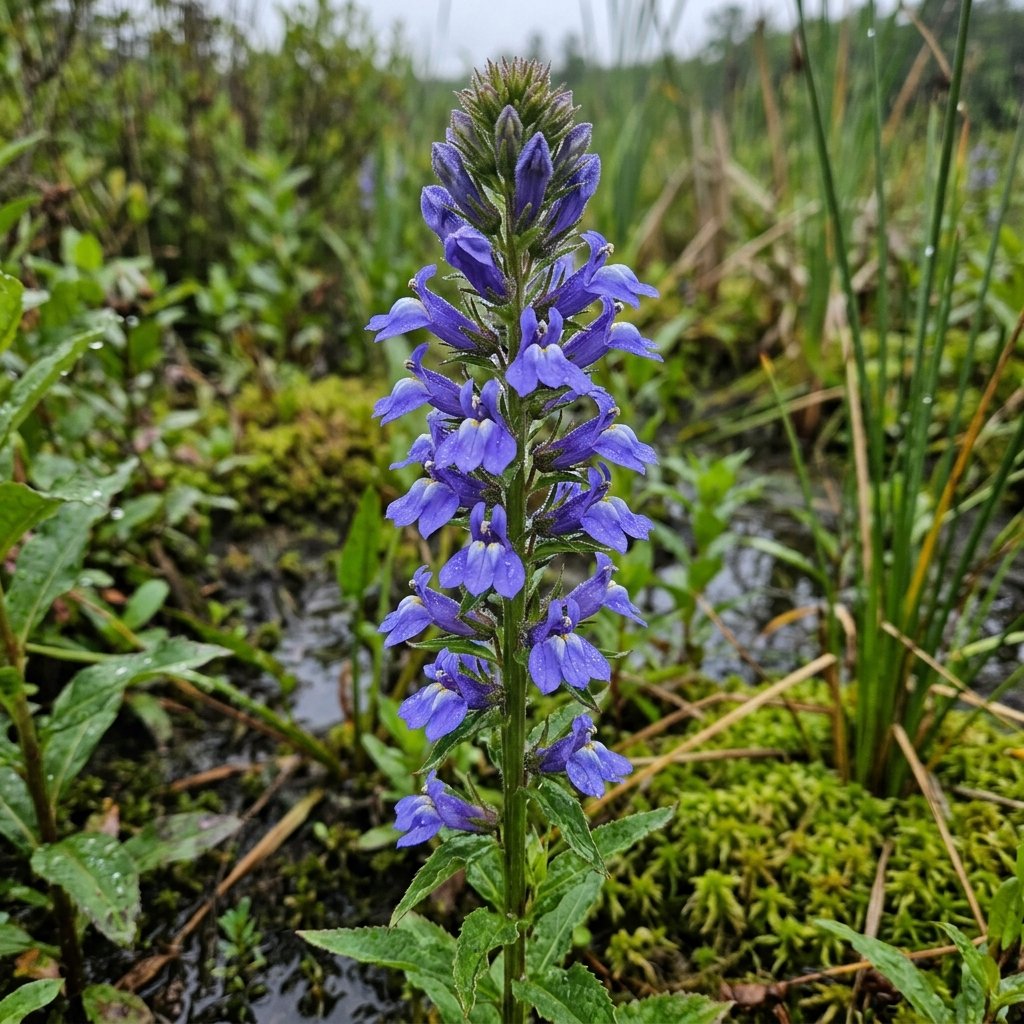
Great Blue Lobelia
Lobelia siphilitica
Great Blue Lobelia (*Lobelia siphilitica*) is a stunning native wildflower of eastern North America, producing tall spikes of vivid blue-violet to true blue flowers from late summer through fall in moist meadows, stream banks, and woodland edges. The blue-flowered counterpart to the scarlet Cardi...
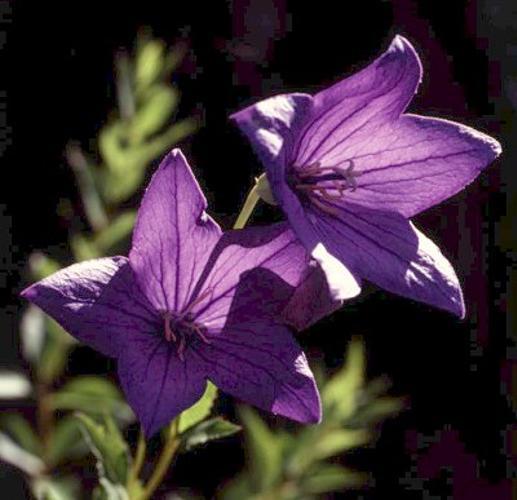
Balloon
Platycodon grandiflorus
The Balloon Flower, scientifically known as Platycodon grandiflorus and commonly called the Chinese Bellflower or Japanese Bellflower, is an exceptionally charming herbaceous perennial belonging to the Campanulaceae (bellflower) family. Native to the grassy slopes, meadows, and forest margins of...
Similar Characteristics
4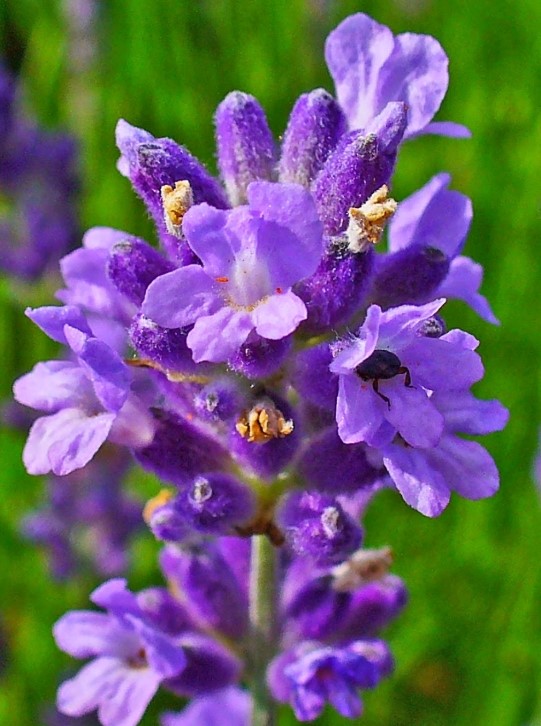
Lavender
Lavandula angustifolia
Lavender, botanically designated under the genus Lavandula and most widely represented by Lavandula angustifolia (English Lavender), is an exceptionally famous, highly aromatic evergreen perennial shrub belonging to the Lamiaceae (mint) family. Native to the sun-baked, rocky limestone hillsides a...
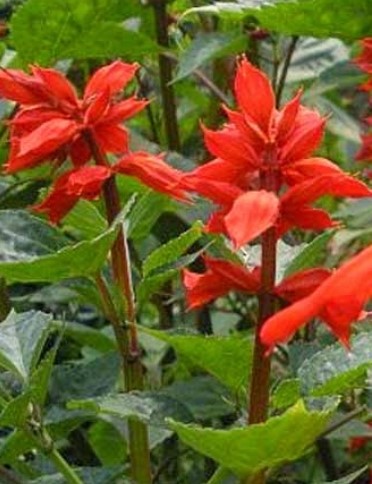
Salvia
Salvia
Salvia, botanically classified under the genus Salvia and commonly known as Sage, is an exceptionally diverse, versatile, and highly valuable plant genus. Belonging to the family Lamiaceae (the mint family, tribe Mentheae), this massive genus comprises nearly 1,000 distinct species distributed ac...
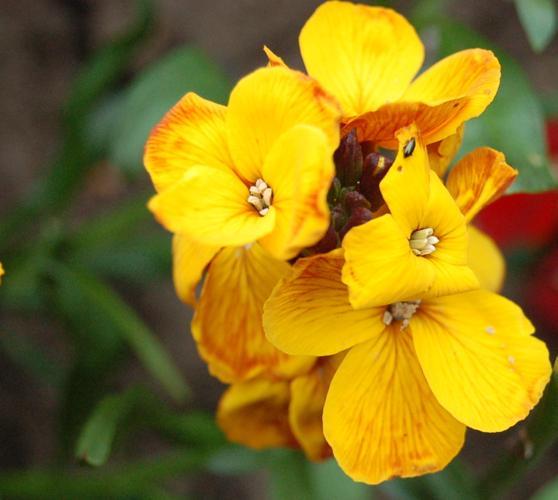
Wallflower
Erysimum cheiri
The Wallflower, botanically known as Erysimum cheiri (formerly classified as Cheiranthus cheiri), is a charming and historic woody-based biennial or short-lived perennial flower belonging to the Brassicaceae (mustard or cabbage) family. Native to the rocky cliffs, coastal regions, and warm sunny...
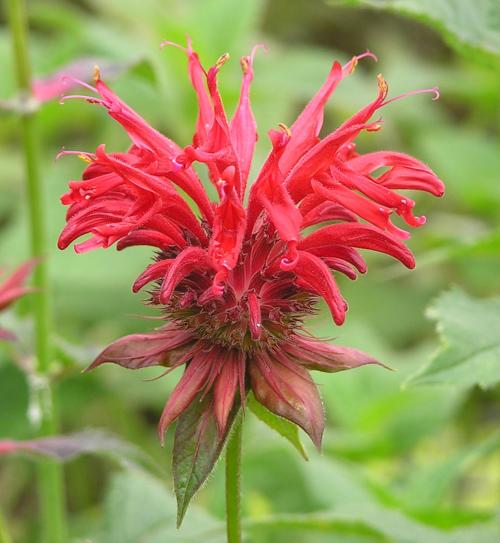
Beebalm
Monarda didyma, Monarda fistulosa
Bee Balm, botanically classified under the genus Monarda within the family Lamiaceae (the mint family), is a spectacular and highly aromatic clump-forming herbaceous perennial. Native to the rich floodplains, moist meadows, woodland margins, and stream banks of eastern North America—ranging from...