
Nitrogen Deficiency
Nitrogen Deficientia
How to Identify Nitrogen Deficiency on Wheat

Visible Symptoms
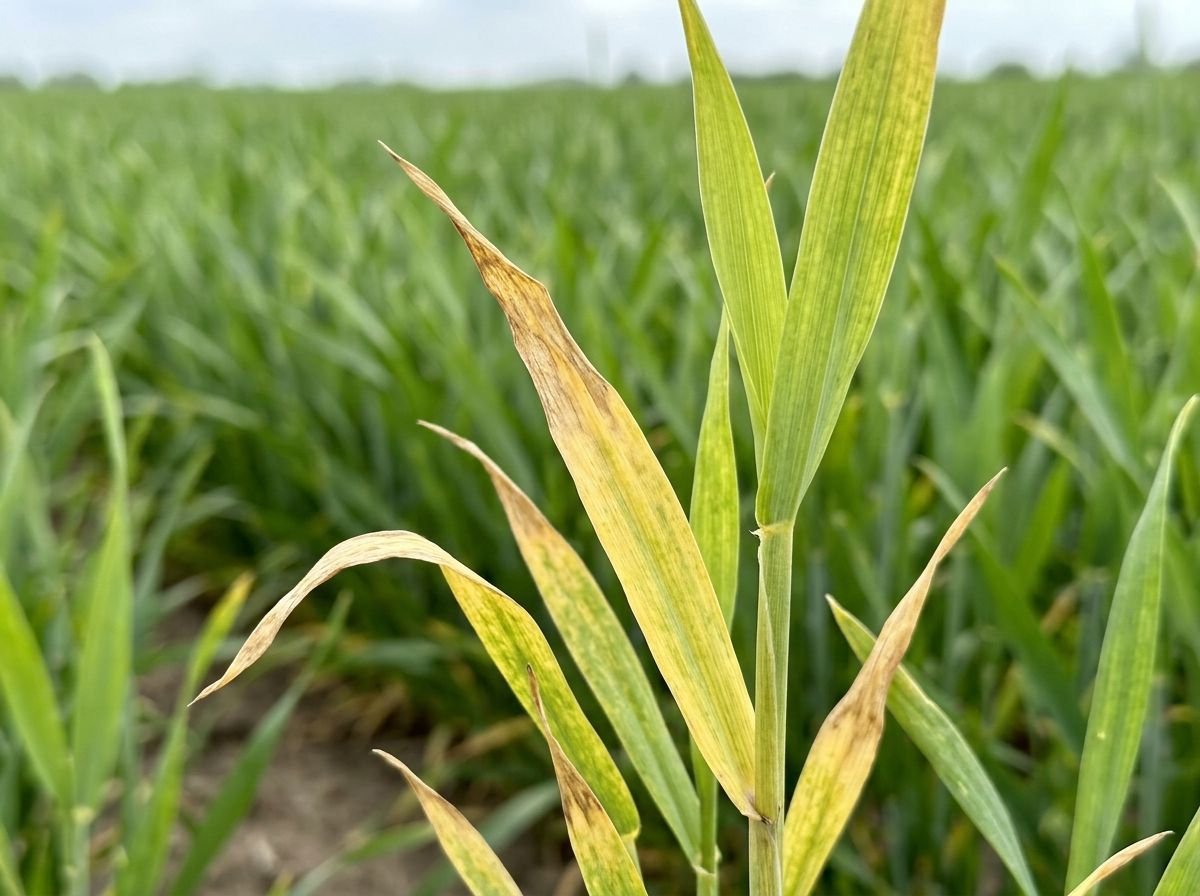
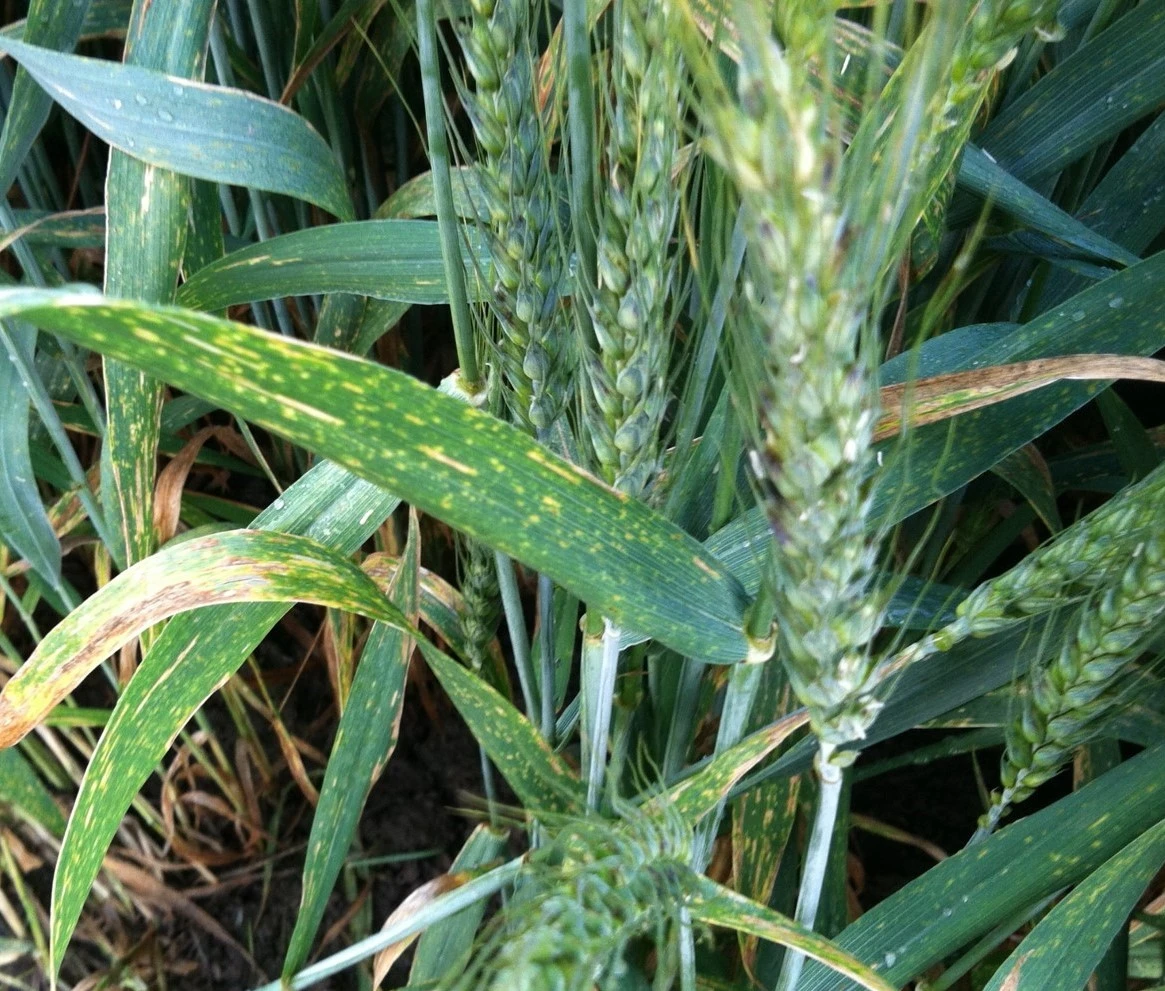
Pale yellowish-green chlorosis progressing uniformly from older basal leaves upward. Leaf yellowing initiates at the leaf tips and travels down the midrib in a V-shaped pattern, with older leaves turning brown and withering prematurely. Wheat stands exhibit stunted height, sparse tillers, thin spindly stems, and reduced head size.
About Nitrogen Deficiency
Nitrogen deficiency is the primary agronomic yield-limiting nutrient stress in global wheat production (*Triticum aestivum*). As nitrogen is highly mobile within the plant, older bottom leaves senesce early as nitrogen is translocated to sustain young emerging shoots and the critical flag leaf. Deficiency severely suppresses tiller development, limits spikelet formation, and lowers the protein and gluten content of the harvested wheat grain. For a side-by-side comparison on telling nitrogen deficiency apart from water stress or disease, see our Symptom Diagnosis Guide.
Nutrient Role & Deficiency Cause
Nitrogen deficiency is the primary agronomic yield-limiting nutrient stress in global wheat production (*Triticum aestivum*). As nitrogen is highly mobile within the plant, older bottom leaves senesce early as nitrogen is translocated to sustain young emerging shoots and the critical flag leaf. Deficiency severely suppresses tiller development, limits spikelet formation, and lowers the protein and gluten content of the harvested wheat grain. For a side-by-side comparison on telling nitrogen deficiency apart from water stress or disease, see our Symptom Diagnosis Guide.
Seasonal Outbreak Calendar
Outbreak risk and activity timeline for Nitrogen Deficiency based on seasonal climate patterns:
Treatment & Correction Guide
Natural & Organic Methods
Chemical & Professional Control
Frequently Asked Questions
Why is the Crown Root Initiation (CRI) stage so critical for nitrogen application in wheat?
Occurring 20 to 25 days after sowing (Zadoks GS 21), the CRI stage is when the seedling shifts from seed-dependent seminal roots to permanent nodal crown roots and initiates tiller buds. Nitrogen starvation at this exact window permanently reduces the number of productive spikes per square meter, causing irreversible yield loss.
What is the classic 'inverted V' yellowing pattern of nitrogen deficiency in wheat?
Nitrogen moves through phloem vascular bundles along the central midrib. When soil nitrogen is scarce, chlorosis begins at the tip of the oldest lower leaf and migrates downward along the midrib first, leaving outer blade edges temporarily green to form a distinct 'V' pattern.
How does late-season nitrogen application at flag leaf/heading affect bread wheat quality?
Applying foliar urea (2% solution) at the boot or post-anthesis stage does not significantly increase grain yield, but directly drives synthesis of endosperm storage proteins (gliadins and glutenins), raising wheat grain protein from 10% to over 12.5%, which is essential for industrial bread dough elasticity and chapati softness.
Can cold winter temperatures induce temporary nitrogen deficiency in wheat?
Yes. When winter soil temperatures fall below 8°C (46°F), microbial mineralization and nitrification stall, and root nitrate absorption slows down. The wheat crop temporarily turns pale yellow even in fertile soil; warming weather or light foliar urea quickly resolves it.
What happens if excess nitrogen is applied to wheat crops?
Excess nitrogen produces overly lush, vegetative canopies with weak, elongated lower stem internodes. This triggers catastrophic crop lodging (plants falling flat in the mud) during late spring thunderstorms and dramatically increases susceptibility to Brown Rust (Puccinia triticina) and Powdery Mildew (Blumeria graminis).
Recommended diagnostics based on crop family and symptoms:
Remedy Disclaimer & Safety Notice
This disease guide is for educational screening purposes only. Pathogen behavior, severity, and host susceptibility can vary dramatically based on seed variety, weather conditions, and regional microclimates. Chemical pesticides and organic treatments are subject to strict regional environmental regulations and registration mandates. Please verify all chemical registrations and review manufacturer safety labels carefully with local certified agronomists or agricultural extension service offices before applying.