
Iron Deficiency
Ferrum Deficientia
How to Identify Iron Deficiency on Wheat

Visible Symptoms
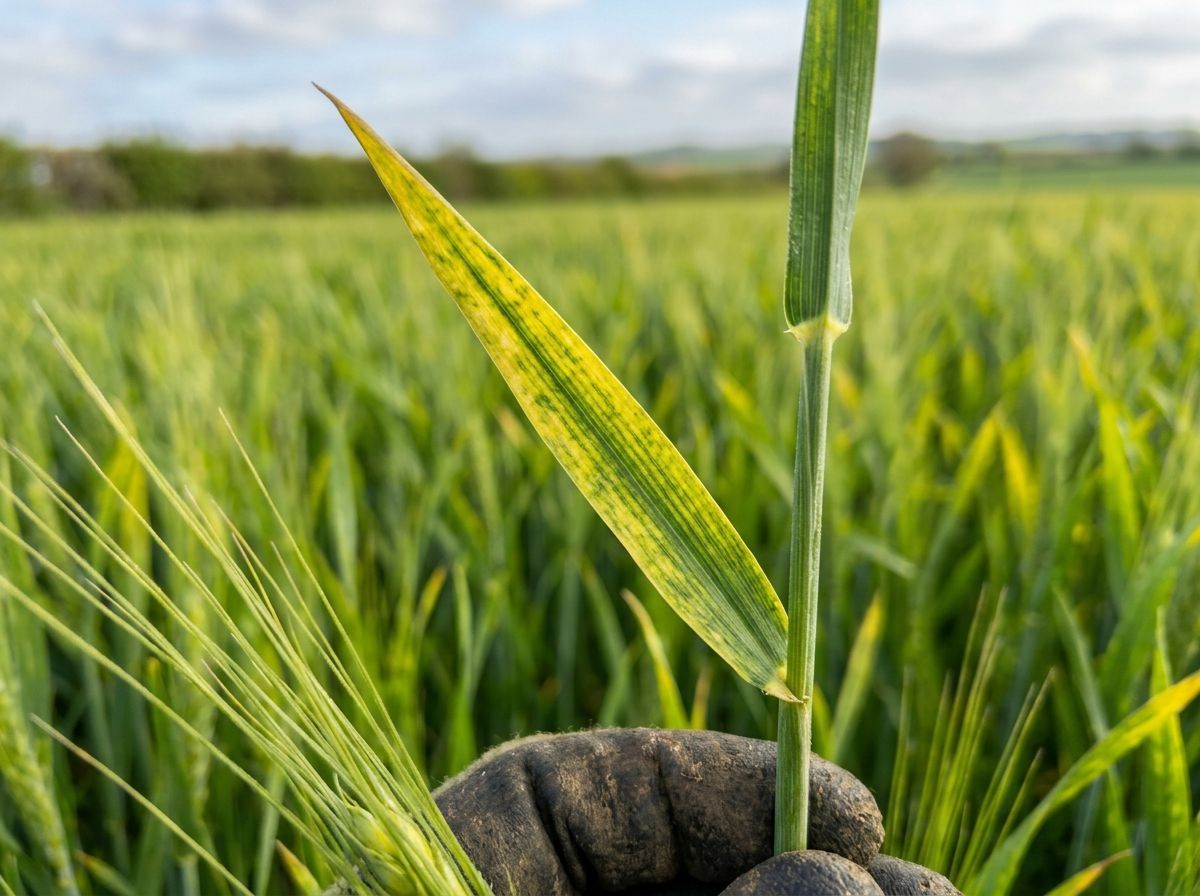
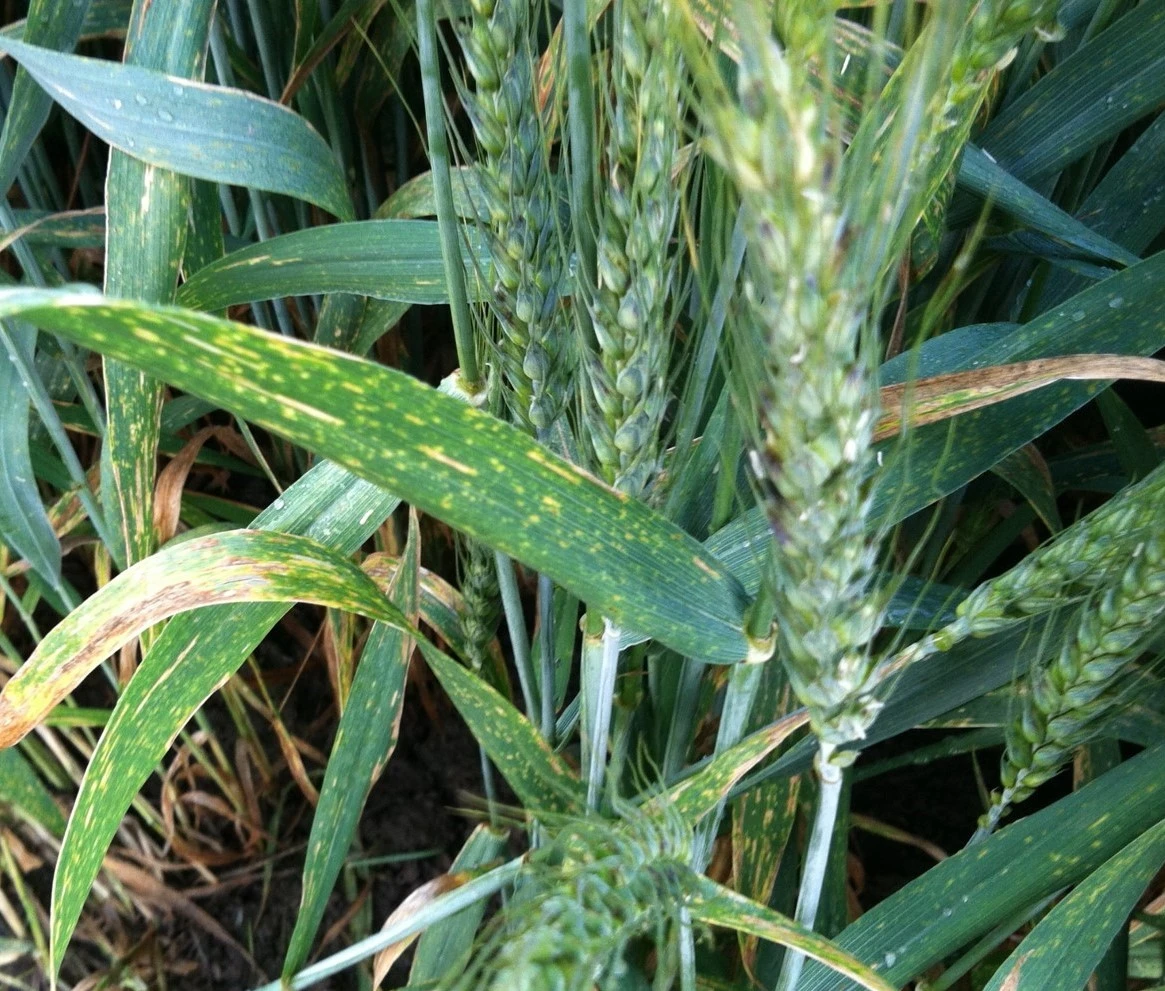
Sharply defined interveinal chlorosis on the youngest upper leaves, where the tissue between the parallel leaf veins turns bright yellow while the veins remain green. In acute cases, newly emerging leaves turn ivory-white or bleached, and leaf tips develop necrotic brown patches.
About Iron Deficiency
Iron deficiency in wheat, commonly known as lime-induced iron chlorosis, occurs predominantly in alkaline, calcareous (high calcium carbonate), or compacted soils with a pH above 7.5. Although soil may contain abundant total iron, high pH locks it in insoluble ferric oxide forms that wheat roots cannot absorb. Because iron is immobile in plant tissue, symptoms manifest intensely on the youngest emerging leaves. For a side-by-side comparison on telling iron chlorosis apart from viral infections, see our Symptom Diagnosis Guide.
Nutrient Role & Deficiency Cause
Iron deficiency in wheat, commonly known as lime-induced iron chlorosis, occurs predominantly in alkaline, calcareous (high calcium carbonate), or compacted soils with a pH above 7.5. Although soil may contain abundant total iron, high pH locks it in insoluble ferric oxide forms that wheat roots cannot absorb. Because iron is immobile in plant tissue, symptoms manifest intensely on the youngest emerging leaves. For a side-by-side comparison on telling iron chlorosis apart from viral infections, see our Symptom Diagnosis Guide.
Seasonal Outbreak Calendar
Outbreak risk and activity timeline for Iron Deficiency based on seasonal climate patterns:
Treatment & Correction Guide
Natural & Organic Methods
Chemical & Professional Control
Frequently Asked Questions
Why does iron deficiency in wheat cause longitudinal ivory-white streaks instead of spots?
Wheat is a monocot grass with parallel venation. Iron is essential for chlorophyll synthesis but immobile in plant vascular tissue. When iron is scarce, the mesophyll cells parallel to and between the veins fail to synthesize chlorophyll, turning yellow or stark white, while the parallel vascular veins stay green, producing longitudinal ivory streaks.
Why is iron chlorosis most severe on calcareous or alkaline soils (pH > 7.5)?
In soils with high calcium carbonate (CaCO3) and pH above 7.5, soluble ferrous iron (Fe²⁺) is rapidly oxidized and precipitated as insoluble ferric hydroxide (Fe(OH)3) and iron carbonate. Even though the soil may contain thousands of pounds of iron, none of it is in a chemical form that wheat roots can absorb.
Why must citric acid always be mixed with Ferrous Sulfate foliar spray on wheat?
In water with alkaline pH or high hardness, dissolved Fe²⁺ rapidly oxidizes into insoluble ferric precipitates that cannot penetrate the wheat leaf cuticle. Adding 1 g of citric acid per 5 g of ferrous sulfate acts as a natural chelating buffer, keeping iron in the soluble ferrous form for rapid cuticular absorption.
What is the difference between Fe-EDTA and Fe-EDDHA for treating wheat iron deficiency?
Fe-EDTA (12% Fe) is unstable in soils with pH above 7.0 (the chelate breaks down and iron precipitates), making it best suited strictly for foliar spraying. Fe-EDDHA (6% Fe) remains chemically stable and plant-absorbable in alkaline soils up to pH 9.0, making it the premier choice for soil application in calcareous fields.
Can cold weather and soil compaction induce iron deficiency in winter wheat?
Yes. Cold, compacted, or waterlogged winter soils restrict root respiration and ATP generation. Wheat roots cannot exude phytosiderophores (natural organic iron-chelating acids) or reduce ferric iron under low oxygen and cold temperatures, inducing temporary 'winter iron chlorosis'.
Recommended diagnostics based on crop family and symptoms:
Remedy Disclaimer & Safety Notice
This disease guide is for educational screening purposes only. Pathogen behavior, severity, and host susceptibility can vary dramatically based on seed variety, weather conditions, and regional microclimates. Chemical pesticides and organic treatments are subject to strict regional environmental regulations and registration mandates. Please verify all chemical registrations and review manufacturer safety labels carefully with local certified agronomists or agricultural extension service offices before applying.