
Japanese Beetles
Popillia japonica
About Japanese Beetles
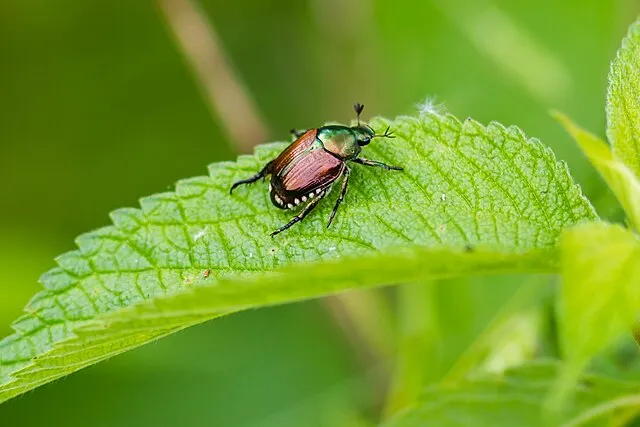
Japanese Beetles (*Popillia japonica*), belonging to the scarab family *Scarabaeidae* of the order *Coleoptera*, are highly destructive, invasive chewing insect pests native to Japan. Accidentally introduced to North America in 1916, they have become a major threat to hundreds of plant species. The adult beetles are voracious foliage chewers, while their soil-dwelling larval grubs feed actively on organic matter and grass roots, making them major pests of both turfgrass lawns and ornamental landscapes.
Identifying a Japanese beetle infestation is straightforward due to the distinct appearance of the adults, which measure 8 to 15 mm in length and display a brilliant metallic green head and thorax with copper-brown wing covers and five patches of white hair along each side of their abdomen. Foliage damage is highly diagnostic: adults 'skeletonize' leaves by devouring tender tissue between veins, leaving behind a brown, dry, paper-lacy leaf skeleton. Grubs are C-shaped, cream-colored with brown heads.
Japanese beetles feed on over 300 plant species, causing severe commercial loss.
| Affected Crops / Plants | Severity Rating | Damage Symptoms |
|---|---|---|
| Roses, Hibiscus, Zinnias | Extreme (⭐⭐⭐) | Skeletonized leaves, destroyed flower buds & petals |
| Grapes, Raspberries, Apples | Extreme (⭐⭐⭐) | Lacy foliage, chewed fruit surfaces, defoliation |
| Beans, Corn, Soybeans | High (⭐⭐) | Chewed silk, skeletonized leaves, lowered crop yields |
Japanese beetles complete their life cycle in one year. Adults emerge in massive numbers during warm summer months (late June through August, preferring 20°C to 30°C) to feed and mate. Females burrow 2 to 4 inches into damp turfgrass soil to lay 40 to 60 eggs, which hatch into C-shaped grubs. These grubs feed on grass roots, causing brown dead patches in lawns that can be peeled back like carpet, before burrowing deep underground to overwinter. For organic management, handpick adults in early morning when they are lethargic and drown them in soapy water. Treat lawns with Milky Spore powder (*Paenibacillus popilliae*) or beneficial nematodes (*Heterorhabditis bacteriophora*) to destroy subterranean grubs. Spraying foliar clays (kaolin clay) or neem oil deters adult feeding. Chemical treatments include spraying contact pyrethroids like permethrin for adult suppression, or applying systemic imidacloprid to lawns in mid-summer for grub prevention. Avoid commercial pheromone traps, which attract significantly more beetles to your yard than they catch. For comprehensive pest guides, browse our Plant Disease Identifier Hub, or explore related chewing pest profiles like Flea Beetles, Cabbage Worms, and Parsley Worms.
Taxonomy & Features
- Invasive Scarab Origin: Named after its origin in Japan. Accidentally introduced to the United States in 1916 and has become a major invasive pest.
- Brilliant Metallic Colors: Adults feature a highly recognizable shiny metallic green head and thorax coupled with warm copper-brown wing covers.
- White Abdominal Tufts: Abdomen features five distinct small patches of white hair lining each side, separating them from look-alikes.
- Leaf Skeletonization: Adults possess chewing mouthparts that selectively chew leaf tissue between veins, leaving a lacy skeletal network.
- Lawn-Destroying Grubs: Soil-dwelling C-shaped cream grubs feed on root zones, severing grass and causing lawn turf to peel back like carpet.
- Milky Spore Control: Spreading Paenibacillus bacteria (Milky Spore) provides permanent biological control by selectively killing turf grubs.
Seasonal Outbreak Calendar
Outbreak risk and activity timeline for Japanese Beetles based on seasonal climate patterns:
Names in Different Languages
Affected Plant Species
Vegetables & Crops
- French Beans
- Sweet Corn
- Soybeans
- Radish
- Asparagus
- Rhubarb
Flowers & Ornamentals
- Roses (Highly susceptible)
- Hibiscus
- Zinnias
- Dahlias
- Marigolds
- Canna Lilies
Fruits & Berries
- Grapes (Highly susceptible)
- Raspberries
- Blackberries
- Apples
- Peaches
- Plums
- Blueberries
Prevention & Cure
Natural & Organic Methods
- Manual Handpicking: Shake beetles off branches early in the morning directly into a bucket of soapy water.
- Milky Spore Drench: Apply Milky Spore powder (*Paenibacillus popilliae*) to lawns to selectively target and kill overwintering grubs.
- Beneficial Nematodes: Drench grass with *Heterorhabditis bacteriophora* predatory nematodes to seek out and consume grubs.
- Neem & Kaolin Clay: Spray foliage with neem oil or kaolin clay to establish a physical and chemical feeding deterrent.
Chemical & Professional Control
- Contact Pyrethroids: Spray Permethrin or Bifenthrin directly on active adult beetles on foliage.
- Systemic Soil Treatments: Apply Imidacloprid or Chlorantraniliprole systemically to turfgrass in mid-summer for grub protection.
- Carbaryl Sprays: Apply Carbaryl (Sevin) for broad-spectrum contact knockdown of heavy adult infestations.
Frequently Asked Questions
Should I buy Japanese Beetle bag traps to protect my garden?
No. Most entomologists strongly advise against using commercial pheromone/scent traps. Research shows these traps release highly potent attractants that draw significantly more beetles into your yard than they actually catch. While your trap may fill up with thousands of beetles, nearby roses and grapes will experience far more skeletonization than if no trap had been hung.
How do I know if my lawn's brown patches are caused by Japanese Beetle grubs?
Grub damage usually appears in late summer or early autumn. If grubs are responsible, they will have severed the grass roots completely. Grasp a handful of brown, dying turf: if it easily lifts and peels back from the soil like a loose piece of carpet, and you observe numerous plump, C-shaped white grubs in the top 2 inches of soil, grubs are the cause.
Are Japanese Beetles harmful to humans or pets?
No. Japanese Beetles do not possess stingers, cannot bite, and do not carry human or animal diseases. They are strictly plant pests. However, some dogs might experience mild stomach upset if they consume a large quantity of the hard-shelled beetles.
Recommended diagnostics based on crop family and symptoms:
Remedy Disclaimer & Safety Notice
This disease guide is for educational screening purposes only. Pathogen behavior, severity, and host susceptibility can vary dramatically based on seed variety, weather conditions, and regional microclimates. Chemical pesticides and organic treatments are subject to strict regional environmental regulations and registration mandates. Please verify all chemical registrations and review manufacturer safety labels carefully with local certified agronomists or agricultural extension service offices before applying.