
Late Blight
Phytophthora infestans
About Late Blight
Late Blight (*Phytophthora infestans*), an exceptionally devastating, rapid-acting disease caused by an oomycete (water mold) belonging to the family *Peronosporaceae* of the order *Peronosporales*, is famous for causing the historic Irish Potato Famine of the 1840s and remains a premier threat to global nightshade crops. Often classified alongside fungal diseases, *Phytophthora* is biologically more closely related to brown algae. It operates as a highly aggressive necrotrophic pathogen that quickly destroys tissues of potatoes and tomatoes.
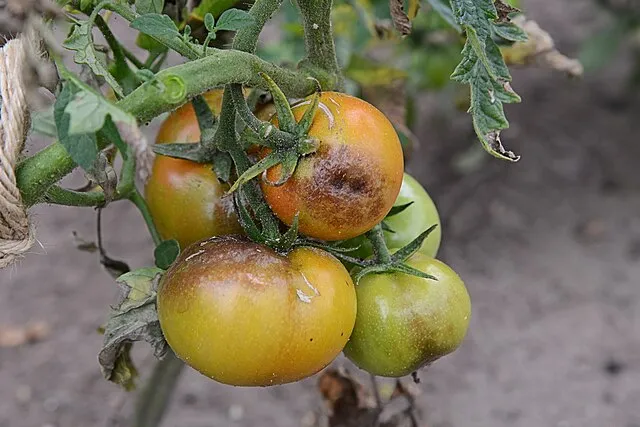
Identifying late blight involves recognizing large, irregular, water-soaked, dark brown or black oily blotches that appear on leaves and stems. In cool, highly humid conditions, a delicate, white, downy or fuzzy growth consisting of spore-bearing sporangia develops on leaf undersides, forming a ring around the margins of leaf spots. Stems develop dark brown, firm, girdling lesions. Infected potato tubers show a firm, dry, reddish-brown rot, while green and ripening tomato fruits display firm, dark, marbled brown spots.
Late blight primarily targets member species of the Solanaceae family.
| Affected Crops / Plants | Severity Rating | Damage Symptoms |
|---|---|---|
| Potatoes (Solanum tuberosum) | Extreme (⭐⭐⭐) | Rapid leaf collapse, stem rot, tuber decay (dry rot) |
| Tomatoes (Solanum lycopersicum) | Extreme (⭐⭐⭐) | Firm oily brown fruit spots, blackened stems, total plant death |
| Eggplants, Peppers, Petunias | High (⭐⭐) | Water-soaked leaf lesions, shoot dieback, flower blight |
The late blight pathogen overwinters as dormant mycelium inside infected potato tubers, volunteer potatoes, or cull piles. In spring, as temperatures rise to 10°C to 25°C and humidity levels increase, the pathogen produces microscopic sporangia. These sporangia are carried by wind currents over several miles or splashed by rain. Upon landing on wet leaves, they either germinate directly or release tiny, mobile, swimming zoospores that navigate water films to penetrate leaf cuticles. The disease cycle is incredibly rapid; a new generation of spores can be produced in as little as 3 to 5 days, allowing it to turn a healthy field into a blackened, rotting mass within a week. For organic management, immediately pull up and destroy the entire infected plant, and apply preventive foliar sprays of liquid copper fungicides or biological formulas with *Bacillus amyloliquefaciens* or *Bacillus subtilis*. Chemical control relies on protective or systemic oomycete-specific fungicides containing chlorothalonil, mancozeb, or metalaxyl, applied preventatively before the disease establishes. Prevent outbreaks by planting certified disease-free seed potatoes, destroying all potato volunteer plants and cull piles, spacing plants to optimize air flow, and watering early at the base of the plant. For comprehensive support, browse our Plant Disease Identifier Hub, or read related guides on Early Blight, Downy Mildew, and Fusarium Wilt.
Taxonomy & Features
- Historical Famine Pathogen: Caused by Phytophthora infestans (meaning 'plant destroyer' in Greek), the historic pathogen responsible for the Irish potato famine of 1845.
- Oily Leaf Blotches: Leaves display expanding, water-soaked, dark brown or black oily spots surrounded by a pale chlorotic green border.
- Fuzzy Spore Ring: During humid mornings, leaf undersides display a delicate white downy halo of active sporangia surrounding the spots.
- Reddish-Brown Tuber Rot: Potato tubers develop a dark, metallic surface rot that extends as dry, spongy, reddish-brown decay inside.
- Firm Tomato Lesions: Ripening tomato fruits develop distinctive, firm, chocolate-brown wrinkled spots that rot the entire fruit quickly.
- Swimming Zoospores: Fungal relative is a water mold, releasing mobile biflagellate zoospores that literally swim in dew drops to invade leaves.
Seasonal Outbreak Calendar
Outbreak risk and activity timeline for Late Blight based on seasonal climate patterns:
Names in Different Languages
Affected Plant Species
Vegetables & Crops
- Potatoes
- Tomatoes
- Eggplants (Brinjals)
- Peppers (Capsicum)
- Tomatillos
Flowers & Ornamentals
- Petunias
- Calibrachoa
- Nicotiana (Flowering Tobacco)
Fruits & Berries
- None documented (Oomycete specifically targets nightshade Solanaceae family vegetable crops and weeds)
Prevention & Cure
Natural & Organic Methods
- Certified Seed: Plant strictly certified disease-free seed potatoes to prevent importing dormant mycelium.
- Cull Pile destruction: Destroy and completely bury volunteer potatoes and waste tuber cull piles near growing plots.
- Copper Spraying: Apply liquid copper formulations immediately when cool, foggy, or humid weather is forecast.
- Volatile Sanitation: Pull up, bag, and immediately dispose of or burn infected plants; do not compost diseased residues.
Chemical & Professional Control
- Oomycete-Specific Metalaxyl: Apply systemic fungicides containing Metalaxyl or Mefenoxam to block active oomycete replication.
- Chlorothalonil Barriers: Apply chlorothalonil preventatively every 5 to 7 days during high disease pressure periods.
- Fosetyl-Aluminium: Use systemic phosphonate drenches to boost the plant's natural immune defense against water molds.
Frequently Asked Questions
Why is Late Blight considered more dangerous than Early Blight?
While Early Blight (Alternaria) is a slow-spreading fungal disease that causes localized leaf spotting and yellowing, Late Blight (Phytophthora) is an extremely aggressive oomycete that can spread over miles on wind currents. Under cool, humid conditions, its disease cycle completes in only 3 days, allowing it to completely blacken, rot, and kill entire acres of healthy potato or tomato crops in under a week.
Can the late blight pathogen swim?
Yes! Because Phytophthora infestans is an oomycete (water mold) and is closely related to brown algae, it produces specialized asexual spores called sporangia that can release 8 to 12 microscopic, kidney-shaped zoospores. These zoospores possess two flagella (hairs) that enable them to literally swim through films of dew or water on a leaf surface to locate natural openings and infect the plant.
Should I compost tomato or potato plants killed by Late Blight?
Absolutely not. Composting late-blight-infected plants is highly dangerous. The pathogen can survive inside living tissues (such as infected potato tubers) or as spores in moist soil. Composting will fail to kill the mold and will likely spread the spores throughout your garden next season. You should always pull, bag, and throw away or burn infected plants.
Recommended diagnostics based on crop family and symptoms:
Remedy Disclaimer & Safety Notice
This disease guide is for educational screening purposes only. Pathogen behavior, severity, and host susceptibility can vary dramatically based on seed variety, weather conditions, and regional microclimates. Chemical pesticides and organic treatments are subject to strict regional environmental regulations and registration mandates. Please verify all chemical registrations and review manufacturer safety labels carefully with local certified agronomists or agricultural extension service offices before applying.