
Red Rot (Sugarcane)
Colletotrichum falcatum
About Red Rot (Sugarcane)
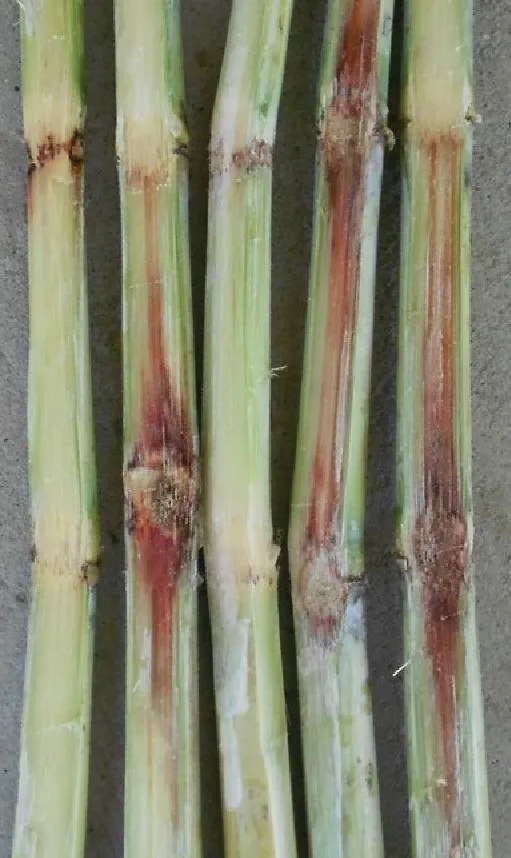
Red Rot of sugarcane is a highly destructive fungal disease caused by the specialized ascomycete pathogen *Colletotrichum falcatum* (teleomorph *Glomerella tucumanensis*). Often referred to as the 'cancer' of sugarcane, it is a major threat to sugarcane crops across tropical and subtropical regions. The fungus behaves as a vascular parasite, invading the internal stem tissue, breaking down sucrose, and blocking water transport. If left unchecked, it causes internal rotting, drying of stalks, and complete collapse of the sugarcane plant.
Identifying red rot involves examining both leaves and split stalks. The earliest external symptom is the yellowing and wilting of the third or fourth leaves from the top, which gradually dries up along the margins. The most definitive diagnostic cue is revealed by splitting the sugarcane stalk longitudinally: the internal pith turns bright red with characteristic white horizontal patches running crosswise. Affected stalks emit a sour, acidic alcohol-like odor due to sucrose fermentation, and the rind eventually sinks and shrivels.
The red rot pathogen targets commercial sugarcane and related grass species.
| Crop/Plant Type | Severity Rating | Impact Description |
|---|---|---|
| Commercial Sugarcane | Extreme (⭐⭐⭐) | Hollowed-out red stalks, complete sucrose loss, acidic fermentation, and crop collapse |
| Sorghum & Maize | High (⭐⭐) | Reddish stem streaks, foliar leaf lesions, and stunted stalk development |
| Wild Cereal Grasses | Medium (⭐) | Minor red lesions on leaf midribs; acts as a persistent wild host reservoir |
The fungus overwinters in infected crop debris, stubble, and seed setts. It spreads via water splash, rain, and contaminated harvesting tools, entering stems through node cracks and boreholes made by sugarcane stem borers. Organic management focuses on planting certified disease-free seed setts, crop rotation with paddy or green manures, and using hot-water treated setts. Chemical control includes treating setts with carbendazim or thiophanate-methyl before planting. For more crop health resources, check our Plant Disease Identifier Hub, or explore similar fungal profiles like Rust Disease, Root Rot, and Loose Smut.
Taxonomy & Features
- Red Pith with White Bands: Longitudinal splitting of stalks reveals bright red internal pith marked with diagnostic white horizontal bands.
- Fermented Alcohol Odor: Diseased stalks yield a sour, fermented vinegar-like smell due to the conversion of sucrose into alcohol.
- Foliar Midrib Lesions: Reddish spots and streaks appear on leaf midribs, which serve as early airborne spore reservoirs.
- Girdling Stalk Collapse: Rind shrinks and turns dark brown-black, causing the heavy sugarcane stalks to break and fall over.
- Sett-Borne Infection: Survives inside infected seed setts, making clean planting material the most critical control point.
- Borer Tunnel Association: Fungal spores enter sugarcane stalks through wounds created by stem borers, accelerating disease severity.
Seasonal Outbreak Calendar
Outbreak risk and activity timeline for Red Rot (Sugarcane) based on seasonal climate patterns:
Names in Different Languages
Affected Plant Species
Vegetables & Crops
- None
Flowers & Ornamentals
- None
Fruits & Berries
- Sugarcane
- Sorghum
- Corn
Prevention & Cure
Natural & Organic Methods
- Certified Seed Setts: Sowers must only use disease-free cane setts harvested from healthy seed nurseries.
- Hot Water Soaking: Pre-treat seed setts in hot water (50°C) with aerated steam for 2 hours before sowing.
- Crop Rotation: Rotate sugarcane fields with paddy rice or leguminous green manures for 2-3 years.
Chemical & Professional Control
- Fungicide Sett Drench: Dip cane setts in 0.1% carbendazim solution for 15 minutes before planting.
- Systemic Sprays: Apply carbendazim or thiophanate-methyl to soil and plant bases during early tillering.
- Trash Burning: Burn crop stubble and trash after harvest in heavily infected fields to destroy resting spores.
Frequently Asked Questions
Why is sugarcane red rot called the 'cancer' of sugarcane?
It gets this name because once the fungus establishes itself inside the stalk, it spreads systemically throughout the vascular tissues, converting the cane's sucrose into acid and rotting it internally with no chemical cure.
Can I harvest and crush red rot infected sugarcane?
No. The fungus ferments the sucrose in the cane, turning it into alcohol and acids. Trying to crush infected cane yields sour, poor-quality juice that prevents crystallization and ruins sugar production.
How does red rot sugarcane spread?
It is primarily spread by planting infected seed setts, rain splashes, irrigation water moving through infected fields, and wind-blown spores entering stalks via borer tunnels.
Recommended diagnostics based on crop family and symptoms:
Remedy Disclaimer & Safety Notice
This disease guide is for educational screening purposes only. Pathogen behavior, severity, and host susceptibility can vary dramatically based on seed variety, weather conditions, and regional microclimates. Chemical pesticides and organic treatments are subject to strict regional environmental regulations and registration mandates. Please verify all chemical registrations and review manufacturer safety labels carefully with local certified agronomists or agricultural extension service offices before applying.