
Citrus Canker
Xanthomonas citri
About Citrus Canker
Citrus canker is a highly contagious and economically devastating bacterial disease caused by the pathogen Xanthomonas citri subsp. citri. It affects nearly all commercial citrus varieties, including oranges, lemons, limes, and grapefruits. While the disease does not harm human health, it causes significant damage to the citrus industry by inducing premature leaf and fruit drop, and by creating unsightly, corky lesions on the fruit that make it unmarketable. Because of its rapid spread, citrus canker is often a major barrier to international trade, leading to strict quarantine measures worldwide.
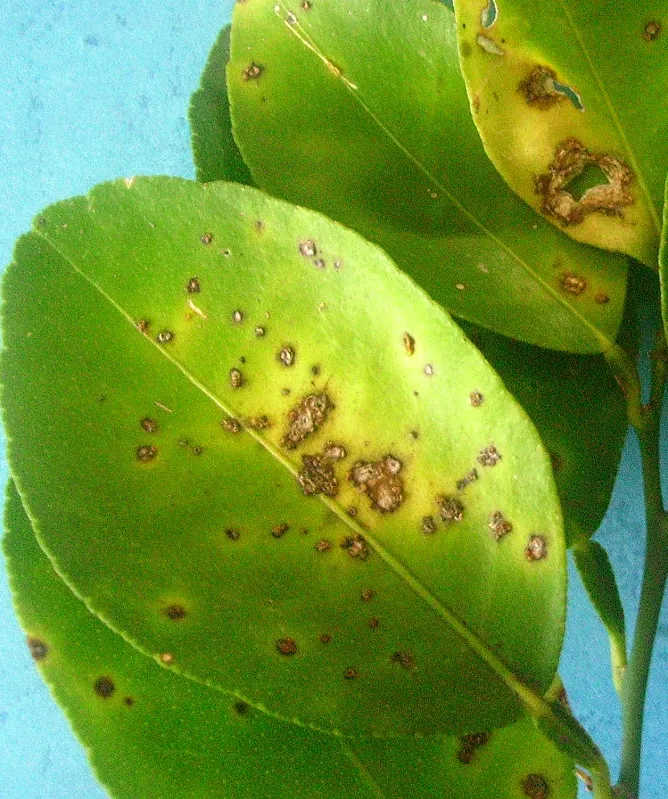
The disease is characterized by the appearance of small, circular, raised lesions on leaves, twigs, and fruit. These lesions are typically light brown and corky in texture, often surrounded by a prominent, oily-looking yellow halo (chlorotic halo). Unlike many other citrus diseases, canker lesions are visible on both the upper and lower surfaces of the leaves and possess a crater-like appearance in the center as they mature. In severe cases, the lesions can merge, leading to large areas of necrotic tissue that eventually girdle twigs and kill young shoots.
The disease is highly contagious and spreads rapidly in warm, wet weather.
| Crop/Plant Type | Severity Rating | Impact Description |
|---|---|---|
| Grapefruits & Limes | Extreme (⭐⭐⭐) | Raised corky lesions, leaf yellowing halos, severe leaf and fruit drop, and twig dieback |
| Oranges & Lemons | High (⭐⭐) | Corky blemishes on rind, premature fruit drop, and mild defoliation |
| Tangerines & Kumquats | Medium (⭐) | Localized leaf lesions, minor fruit spotting, and low yield impact |
Management of citrus canker requires a strict program of prevention and sanitation, as there is no absolute cure once a tree is heavily infested. Cultural practices focus on reducing moisture and wind spread, such as using windbreaks to shield orchards and avoiding any work in the groves during wet weather. For commercial and home growers, the primary defensive tool is the regular application of copper-based bactericides, which provide a protective film that prevents the bacteria from establishing new infection sites. In some regions, entire orchards have been destroyed to contain outbreaks. For agricultural disease guides, check our Plant Disease Identifier Hub, or read related articles on Citrus Greening, Sooty Mold, and Bacterial Canker. For specialized diagnosis of related crop threats, see our guide on Asian Citrus Psyllid.
Taxonomy & Features
- Corky Circular Lesions: Raised, light-brown lesions on leaves and fruit that have a rough, corky, or "crater-like" texture.
- Yellow Chlorotic Halo: Most lesions are surrounded by a distinct, bright yellow halo, which is a classic diagnostic sign of the infection.
- Bilateral Leaf Lesions: Canker spots are clearly visible on both the upper and lower surfaces of infected leaves.
- Fruit Defacement: Lesions on fruit are superficial but ruin the skin's appearance and can lead to premature fruit drop.
- Ooze in Wet Weather: During rain or high humidity, active lesions produce a bacterial ooze that facilitates rapid spread via water splash.
- Leafminer Association: Often found in conjunction with citrus leafminer trails, which serve as primary infection pathways.
Seasonal Outbreak Calendar
Outbreak risk and activity timeline for Citrus Canker based on seasonal climate patterns:
Names in Different Languages
Affected Plant Species
Vegetables & Crops
- None (Exclusively affects Rutaceae family)
Flowers & Ornamentals
- Calamondin (Ornamental citrus)
- Murraya (Orange Jasmine - occasional host)
Fruits & Berries
- Grapefruit (Highly susceptible)
- Lemon
- Lime (Mexican/Key Lime)
- Orange
- Pomelo
- Kumquat
Prevention & Cure
Natural & Organic Methods
- Sanitation & Pruning: Prune out infected twigs and branches during dry weather and immediately destroy the clippings; sanitize tools with 10% bleach.
- Windbreaks: Plant tall, non-host trees around the citrus grove to reduce wind speed and minimize the distance that wind-blown rain can carry bacteria.
- Copper Fungicides (Bordeaux): Apply organic-approved copper-based bactericides (like Bordeaux mixture) every 21 days during the growing season.
- Tool Hygiene: Always disinfect pruning shears, ladders, and clothing between trees using isopropyl alcohol or specialized agricultural disinfectants.
- Resistant Cultivars: Plant less susceptible varieties like Calamondin or certain Tangerines if canker is prevalent in your local area.
Chemical & Professional Control
- Copper Hydroxide Sprays: Apply fixed copper compounds (e.g., Kocide) to provide a protective film that prevents bacterial entry.
- Antibiotic Treatments: In some regions, agricultural-grade Streptomycin is used as a therapeutic spray, though this is strictly regulated to prevent resistance.
- Leafminer Control: Apply systemic insecticides to control citrus leafminers, as their tunnels are the most common entry points for canker bacteria.
Frequently Asked Questions
Can I eat fruit that has citrus canker lesions?
Yes. Citrus canker is a plant disease that does not affect human health. The fruit pulp remains safe to eat and the flavor is usually unaffected, although the skin is visually unappealing.
Will citrus canker kill my lemon tree?
While canker rarely kills mature trees directly, it causes severe defoliation, twig dieback, and fruit drop. This significantly weakens the tree over time and reduces its lifespan and productivity.
How can I tell canker apart from citrus scab?
Canker lesions usually have a distinct yellow halo and a crater-like center, and they appear on both sides of the leaf. Scab lesions are more irregular, wart-like, and typically only appear on one side of the leaf.
Recommended diagnostics based on crop family and symptoms:
Remedy Disclaimer & Safety Notice
This disease guide is for educational screening purposes only. Pathogen behavior, severity, and host susceptibility can vary dramatically based on seed variety, weather conditions, and regional microclimates. Chemical pesticides and organic treatments are subject to strict regional environmental regulations and registration mandates. Please verify all chemical registrations and review manufacturer safety labels carefully with local certified agronomists or agricultural extension service offices before applying.