
Stink Bug
Pentatomidae
About Stink Bug
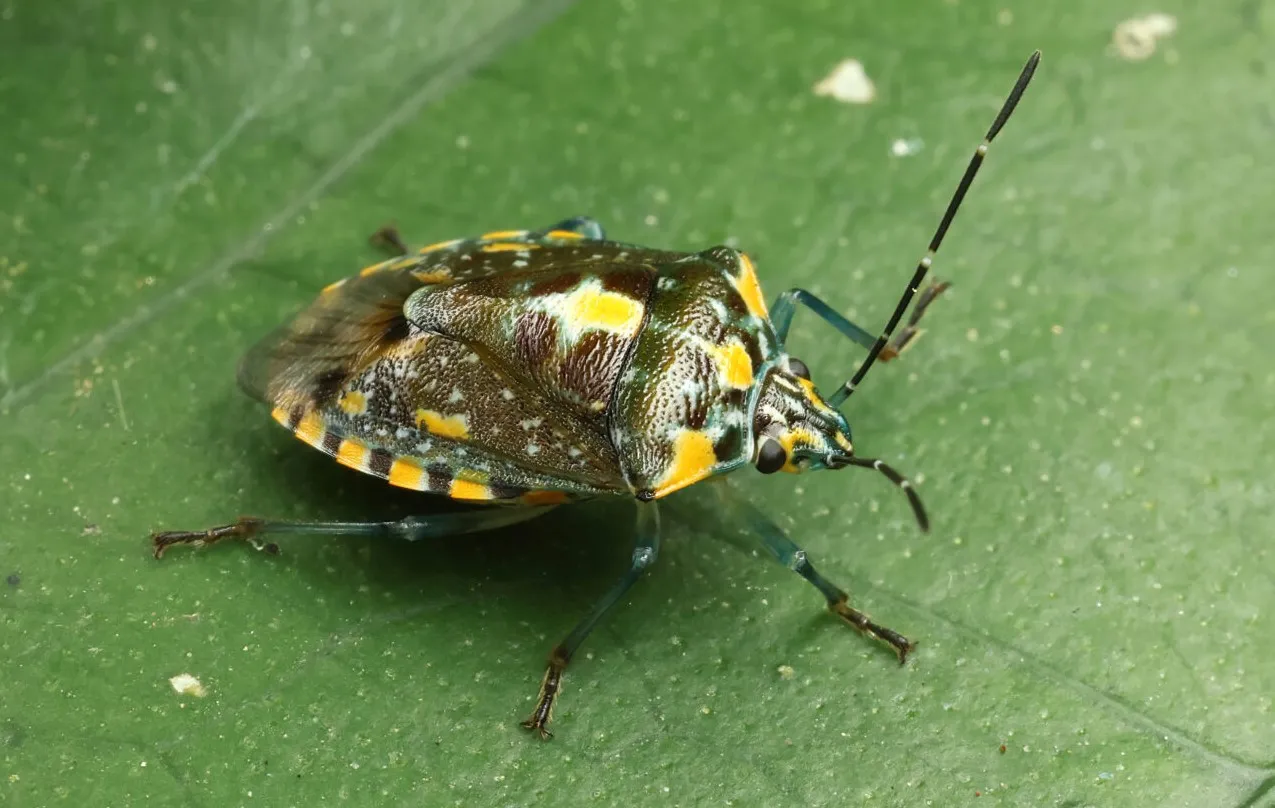
The Stink Bug (family Pentatomidae, featuring highly notorious invasive species like the Brown Marmorated Stink Bug, Halyomorpha halys) is a major, highly widespread sucking insect pest belonging to the order Hemiptera. Globally recognized by their distinct shield-shaped bodies, stink bugs are voracious feeders that target a massive range of agricultural hosts, including apples, peaches, sweet corn, and ornamentals. Adult stink bugs feature a hard, speckled grey-brown or green shield and are notorious for releasing a pungent, highly unpleasant odor when disturbed or crushed. Using their needle-like mouthparts, they pierce plant skin, injecting digestive enzymes and sucking out vital plant juices, leading to severe crop deformities and yield losses.
Identifying Stink Bug damage involves checking developing fruits, seed pods, and foliage. The most distinct symptom on tomatoes and peppers is 'cloudy spot'—irregular, spongy, light-yellow or white patches on fruit skin with hard, pithy tissue underneath. Maturing tree fruits develop 'cat-facing' (deep, puckered, woody scars) or sunken brown spots. In sweet corn, feeding through husks causes shriveled, brown, or distorted kernels. Look for adult shield-shaped bugs (12–17 mm) and barrel-shaped, light-green or yellow eggs laid in highly organized, tight clusters of 20 to 30 on leaf undersides.
Stink Bugs thrive in warm, dry summer climates (22°C to 32°C). In late spring, overwintering adults emerge from sheltered spots—including woodland borders and inside human homes—to mate, laying clusters of barrel-shaped eggs on leaves. The nymphs emerge in 4 to 7 days, passing through five growth stages over 4 to 6 weeks before becoming winged adults. They complete 1 to 3 generations per season. In autumn, adults swarm onto sunny buildings and crop edges, seeking tight cracks to hibernate.
| Crop/Plant Type | Severity Rating | Impact Description |
|---|---|---|
| Apples, Peaches & Pears | Extreme (⭐⭐⭐) | Cat-facing scars, internal corky browning, ruined fresh market value |
| Tomatoes, Peppers & Beans | High (⭐⭐) | Spongy cloudy spots, blossom drop, and empty, shriveled seed pods |
| Sweet Corn & Sunflowers | Medium (⭐) | Deformed kernels, slow grain fill, and cosmetic head damage |
Effective stink bug control focuses on preventing early adult populations from establishing. Natural methods include morning handpicking, kaolin clay coatings, and releasing Samurai wasps. Chemical controls rely on applying contact pyrethroids or systemic neonicotinoids during high swarm pressures. For complete crop pest resources, visit our Plant Disease Identifier Hub, or explore related threat profiles like Leafhopper, Cucumber Beetle, and Bacterial Canker.
Taxonomy & Features
- Pungent Stink Defense: Scent glands release a strong, unpleasant trans-2-decenal aroma to deter predators.
- Distinct Shield Shape: Adult bugs exhibit a hard, flat dorsal shield shape colored green or brown.
- Fruit Cat-Facing Scars: Feeding on young developing fruits leaves sunken, dry, woody, and puckered scars.
- Spongy Cloudy Spots: Sucking damage on tomatoes creates irregular spongy light spots with hard white pith underneath.
- Barrel Egg Clusters: Lays clusters of neat, barrel-shaped light green or yellow eggs under host leaves.
- Woodland Hibernation: Overwinters inside tree bark cracks, agricultural borders, and human attic spaces.
Seasonal Outbreak Calendar
Outbreak risk and activity timeline for Stink Bug based on seasonal climate patterns:
Names in Different Languages
Affected Plant Species
Vegetables & Crops
- Sweet Corn
- Tomatoes
- Sweet Peppers
- Green Beans
- Soybeans
Flowers & Ornamentals
- Sunflowers
- Zinnias
- Dahlias
- Butterfly Bush
Fruits & Berries
- Apples
- Peaches
- Pears
- Raspberries
- Blueberries
Prevention & Cure
Natural & Organic Methods
- Manual Knockdown: Shake plants early in the morning when bugs are sluggish, knocking them directly into a bucket of soapy water.
- Kaolin Clay Spray: Apply kaolin clay (surround WP) suspension spray to leaves and fruits to create a dusty physical feeding barrier.
- Beneficial Parasitoids: Release predatory Samurai Wasps (Trissolcus japonicus) which target and parasitize stink bug egg masses.
- Trap Cropping: Plant trap crops like sunflowers or sorghum on garden borders to attract and concentrate stink bugs away from prime crops.
Chemical & Professional Control
- Pyrethroid Sprays: Apply contact pyrethroids like bifenthrin or lambda-cyhalothrin during active adult swarm cycles.
- Neonicotinoid Systemic: Treat non-organic crops with dinotefuran or thiamethoxam under heavy crop damage pressure.
- Carbaryl Cover Spray: Apply carbaryl to fruit orchards during ripening periods when heavy stink bug migration occurs.
Frequently Asked Questions
Why do Stink Bugs smell so bad when crushed?
Stink bugs possess specialized scent glands on their thorax that release an unpleasant, pungent mixture of trans-2-decenal and trans-2-octenal compounds as a defensive deterrent against predators.
What is 'cat-facing' on fruits?
'Cat-facing' is a distinct scarring deformity on peaches and apples caused by stink bugs sucking sap from young developing fruit, leaving sunken, woody scars.
How do Stink Bugs feed on plants?
They have needle-like piercing-sucking mouthparts (rostrum) that pierce plant tissue, inject digestive enzymes to liquefy cell contents, and suck out the nutrient sap.
Recommended diagnostics based on crop family and symptoms:
Remedy Disclaimer & Safety Notice
This disease guide is for educational screening purposes only. Pathogen behavior, severity, and host susceptibility can vary dramatically based on seed variety, weather conditions, and regional microclimates. Chemical pesticides and organic treatments are subject to strict regional environmental regulations and registration mandates. Please verify all chemical registrations and review manufacturer safety labels carefully with local certified agronomists or agricultural extension service offices before applying.