
Bacterial Canker
Clavibacter michiganensis
About Bacterial Canker
Bacterial Canker (caused primarily by the gram-positive bacterium Clavibacter michiganensis in tomatoes, and Pseudomonas syringae in stone fruit trees) is a highly destructive, contagious bacterial disease capable of causing total crop failure. It is classified in the phylum Actinomycetota (Actinobacteria) or Proteobacteria depending on the specific causal organism. The pathogen thrives inside the plant's internal vascular xylem tissue, multiplying rapidly and plugging water-transporting channels. This results in progressive wilting, leaf death, stem splits, and fruit blemishes. Bacterial canker is highly persistent, capable of surviving for years in seed coats, crop residues, wooden stakes, and soil, making it a dreaded nursery threat.
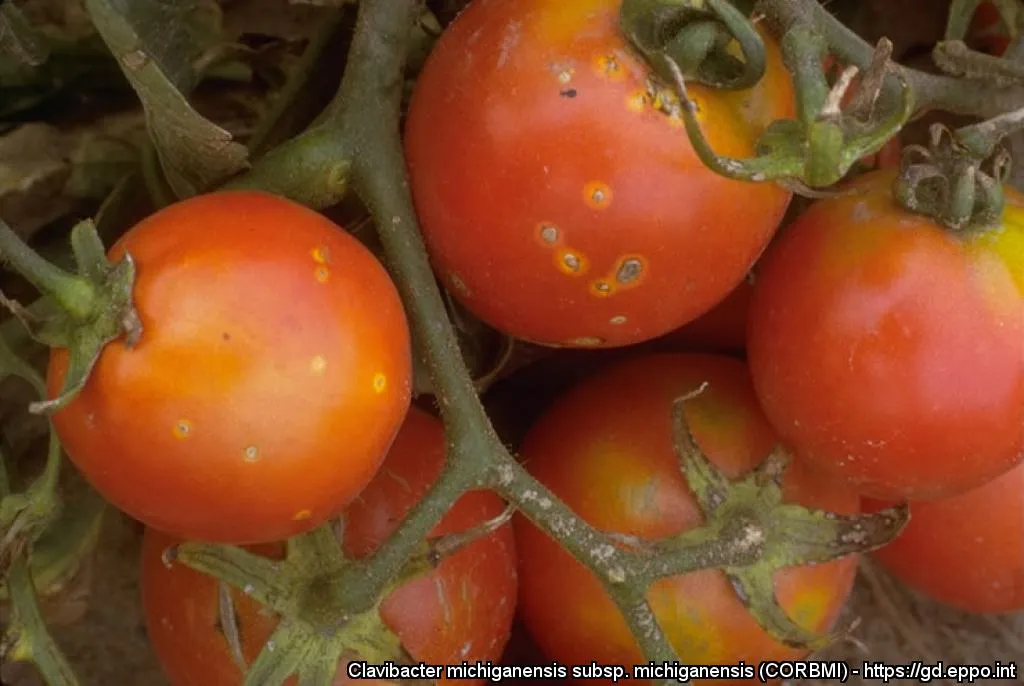
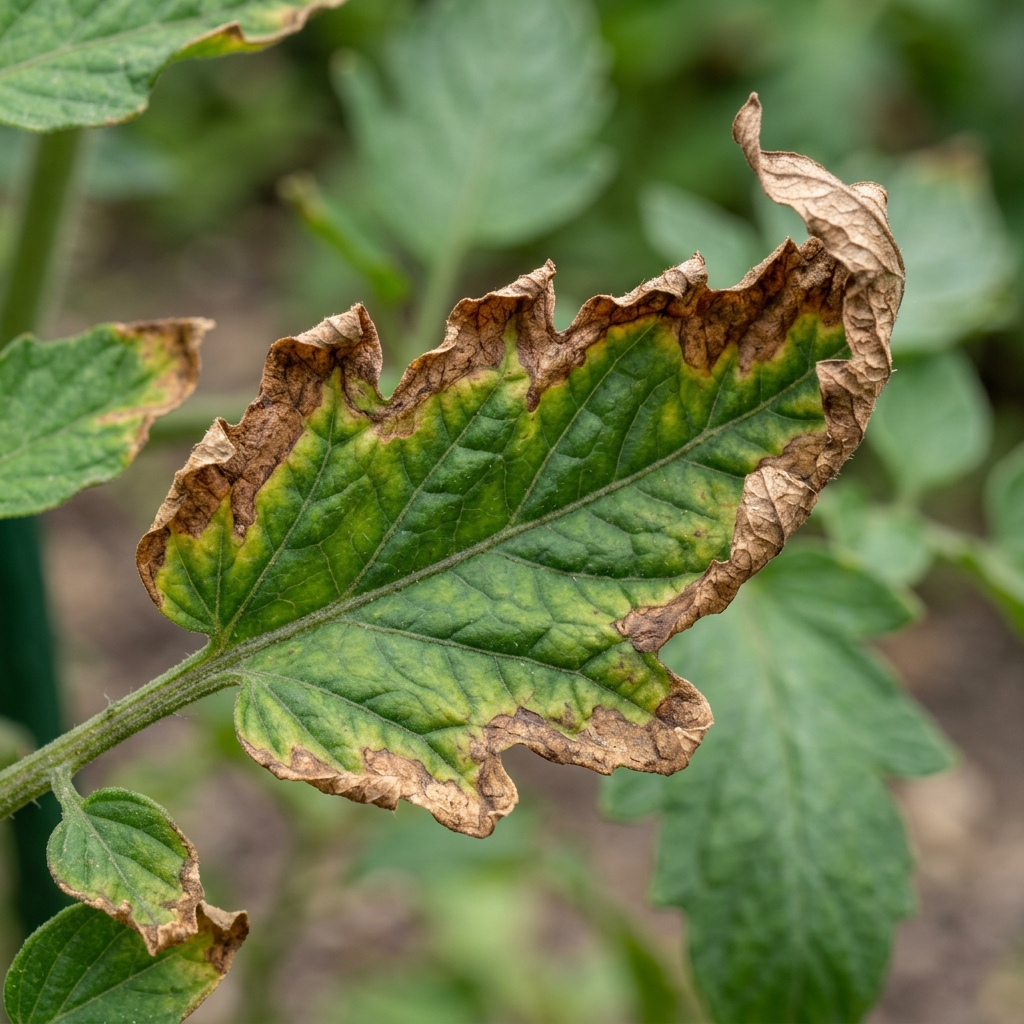
Identifying Bacterial Canker requires examining foliage, stems, and fruits. The earliest visual symptom on tomatoes is 'marginal necrosis'—where leaf margins turn brown and dry while the leaf center remains green, often curling upward. Stems develop dark, sunken streaks that eventually crack open, revealing yellow-to-brown, water-soaked pith. Squeezing cut stems may yield a yellow bacterial ooze. In stone fruits, symptoms include deep, sunken, oozing cankers on branches (gummosis) that exude sticky amber gum. Tomato fruits develop characteristic 'bird's-eye spots': tiny white circles with raised brown centers.
Bacterial Canker pathogens thrive in warm, wet, humid conditions (23°C to 28°C). Bacteria enter plants through natural openings (stomata, hydathodes) or mechanical wounds caused by pruning, wind damage, or insect feeding. Once inside, they move systemically through the xylem. The disease spreads rapidly during overhead watering or rainstorms, splash-infecting neighboring plants. In stone fruit trees, infections occur during autumn leaf fall or winter pruning, overwintering inside active cankers.
| Crop/Plant Type | Severity Rating | Impact Description |
|---|---|---|
| Tomatoes & Peppers | Extreme (⭐⭐⭐) | Systemic wilting, split stems, bird's-eye fruit spots, total harvest failure |
| Cherries & Plums | High (⭐⭐) | Oozing branch cankers, shoot dieback, and eventual tree death |
| Petunias & Zinnias | Medium (⭐) | Water-soaked leaf spots, slow growth, cosmetic damage |
Managing Bacterial Canker requires strict sanitation and preventive treatments, as there is no cure once it becomes systemic. Natural strategies focus on hot-water seed treats, dry-weather pruning, and applying organic copper sprays. Chemical options include applying preventative copper hydroxide or agricultural streptomycin sulfate early in the season. For comprehensive disease management resources, visit our Plant Disease Identifier Hub, or explore related threat profiles like Citrus Canker, Peach Leaf Curl, Crown Gall Disease, or compare fruit spot symptoms with Bacterial Speck and Bacterial Spot.
Taxonomy & Features
- Bird's-Eye Spot Blemishes: Fruits develop distinctive tiny white spots with dark, scab-like brown raised centers.
- Marginal Leaf Necrosis: Leaf edges turn dry, brown, and crispy while center remains green, curling upwards.
- Internal Vascular Plugging: Bacteria colonize and plug the xylem tissue, leading to sudden, progressive wilting.
- Sunken Oozing Cankers: Stone fruit tree branches exhibit deep bark fissures that ooze a sticky, amber-colored gum.
- Splitting Woody Stems: Mature stems show long, dark, sunken streaks that split open to reveal yellowing pith.
- Splashing Water Vector: Spread easily through agricultural fields by rain splashes, heavy dew, and overhead sprinklers.
Seasonal Outbreak Calendar
Outbreak risk and activity timeline for Bacterial Canker based on seasonal climate patterns:
Names in Different Languages
Affected Plant Species
Vegetables & Crops
- Tomatoes
- Sweet Peppers
- Chili Peppers
- Eggplants
- Potatoes
Flowers & Ornamentals
- Pansies
- Petunias
- Zinnias
- Morning Glories
Fruits & Berries
- Cherries
- Plums
- Peaches
- Apricots
- Nectarines
Prevention & Cure
Natural & Organic Methods
- Seed Treatment: Soak tomato seeds in hot water (50°C) for 25 minutes before planting to eliminate internal bacteria.
- Sanitation Pruning: Prune infected leaves and branches only during dry weather, sterilizing tools in 70% isopropyl alcohol between cuts.
- Foliar Copper Soap: Apply organic copper octanoate liquid soap spray to leaf surfaces early in the season to inhibit bacterial colonies.
- Crop Rotation: Implement a strict 3-year crop rotation, keeping solanaceous crops completely out of previously infected soil areas.
Chemical & Professional Control
- Streptomycin Sulfate: Apply agricultural streptomycin sulfate sprays early in the season to prevent bacterial leaf infections.
- Copper Hydroxide Spray: Apply copper hydroxide (like Kocide) mixed with mancozeb to establish a highly effective protective barrier.
- Oxytetracycline Treatment: Inject or spray agricultural oxytetracycline in commercial stone fruit orchards showing heavy canker pressure.
Frequently Asked Questions
What is 'bird's-eye spot' on tomato fruit?
'Bird's-eye spot' is a classic symptom where infected tomato fruits develop tiny, circular white spots (3-6 mm) with raised, dark, scab-like brown centers, closely resembling a bird's eye.
How does Bacterial Canker spread through a garden?
The bacteria spread rapidly via splashing water (rain or overhead irrigation), contaminated pruning tools, handling wet plants, and infected seeds.
Can a plant recover from systemic Bacterial Canker?
No, once the bacteria enter the plant's internal vascular system, it causes irreversible plugging, wilting, and stem cracking. Affected plants must be pulled and destroyed.
Recommended diagnostics based on crop family and symptoms:
Remedy Disclaimer & Safety Notice
This disease guide is for educational screening purposes only. Pathogen behavior, severity, and host susceptibility can vary dramatically based on seed variety, weather conditions, and regional microclimates. Chemical pesticides and organic treatments are subject to strict regional environmental regulations and registration mandates. Please verify all chemical registrations and review manufacturer safety labels carefully with local certified agronomists or agricultural extension service offices before applying.